Iron Deficiency on Anacharis / Elodea: Causes, Checks &
Quick answer
Iron deficiency on Anacharis / Elodea shows as pale or yellow new growth at stem tips with dark green veins while older whorls stay green. First step: Dose chelated iron or a complete liquid aquarium fertilizer and confirm nitrate is not zero.
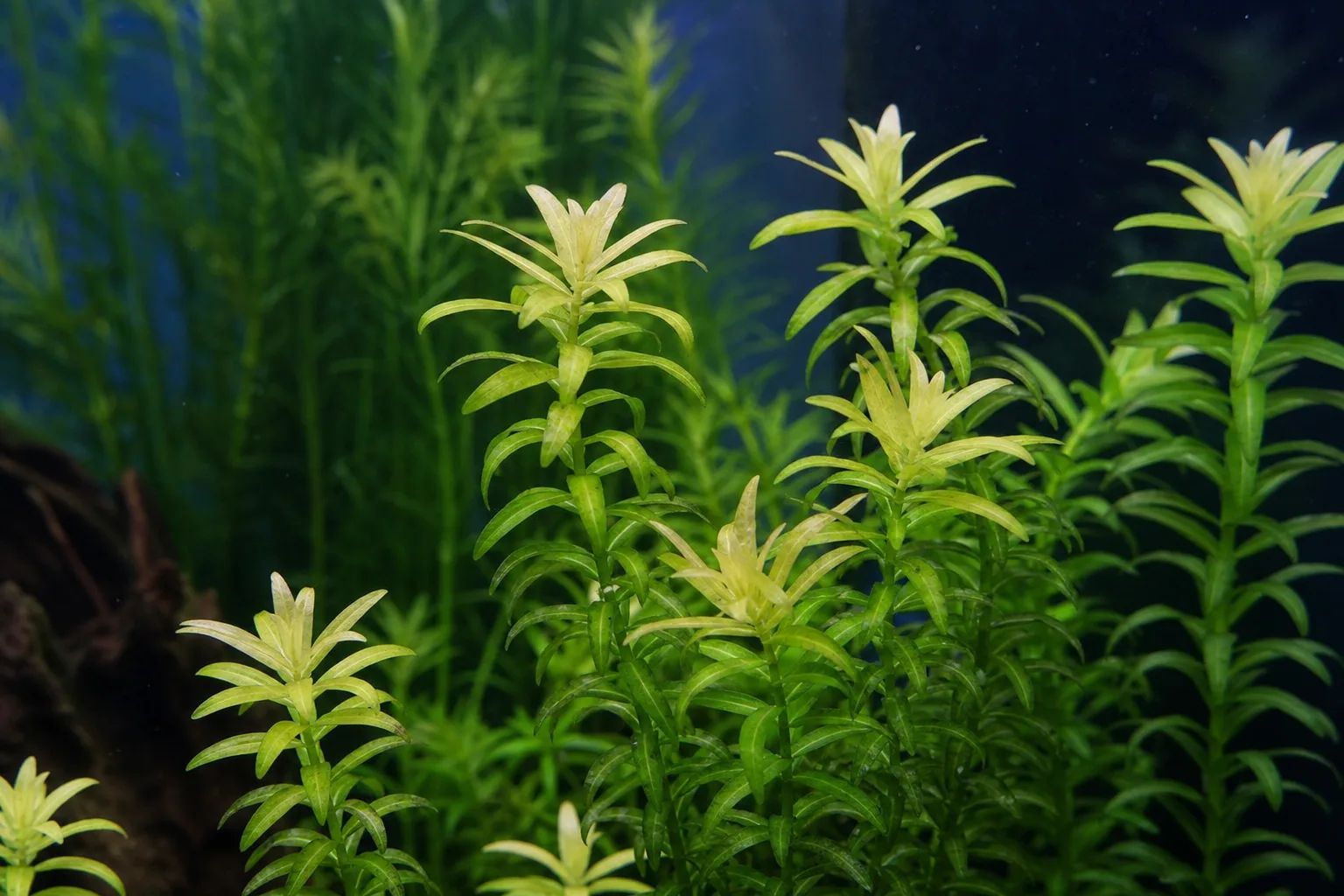
Iron Deficiency on Anacharis / Elodea: Causes, Checks & Fixes
This guide covers iron deficiency on Anacharis / Elodea. See also the general Iron Deficiency guide, watering, and light pages for this plant.
Iron Deficiency on Anacharis / Elodea: Causes, Checks & Fixes
Quick answer
Iron deficiency on Anacharis (Egeria densa) shows as pale, yellow, or almost white new whorls at the stem tips while the veins stay dark green-classic interveinal chlorosis on the freshest growth. Older leaves lower on the stem usually remain normal green because iron is immobile inside the plant and cannot be moved from mature tissue to feed new leaves.
First step: dose chelated iron or a complete liquid aquarium fertilizer and confirm nitrate is not zero. Anacharis pulls micronutrients through its water-column leaves, not potting soil. In shrimp-only or lightly stocked tanks with moderate-to-strong light, low dissolved iron is the most common trigger-fish waste supplies nitrogen but little iron.
This guide covers submerged aquarium culture only. For baseline product choice and weekly cadence, see the Anacharis fertilizer guide. For washed-out color without clear vein pattern, see pale leaves and faded leaves. For bottom-up yellowing, see nitrogen deficiency.
What iron deficiency looks like on Anacharis
Healthy Anacharis whorls are bright emerald green with firm stems. Iron shortage targets new growth first because the plant cannot redistribute stored iron downward from older leaves.
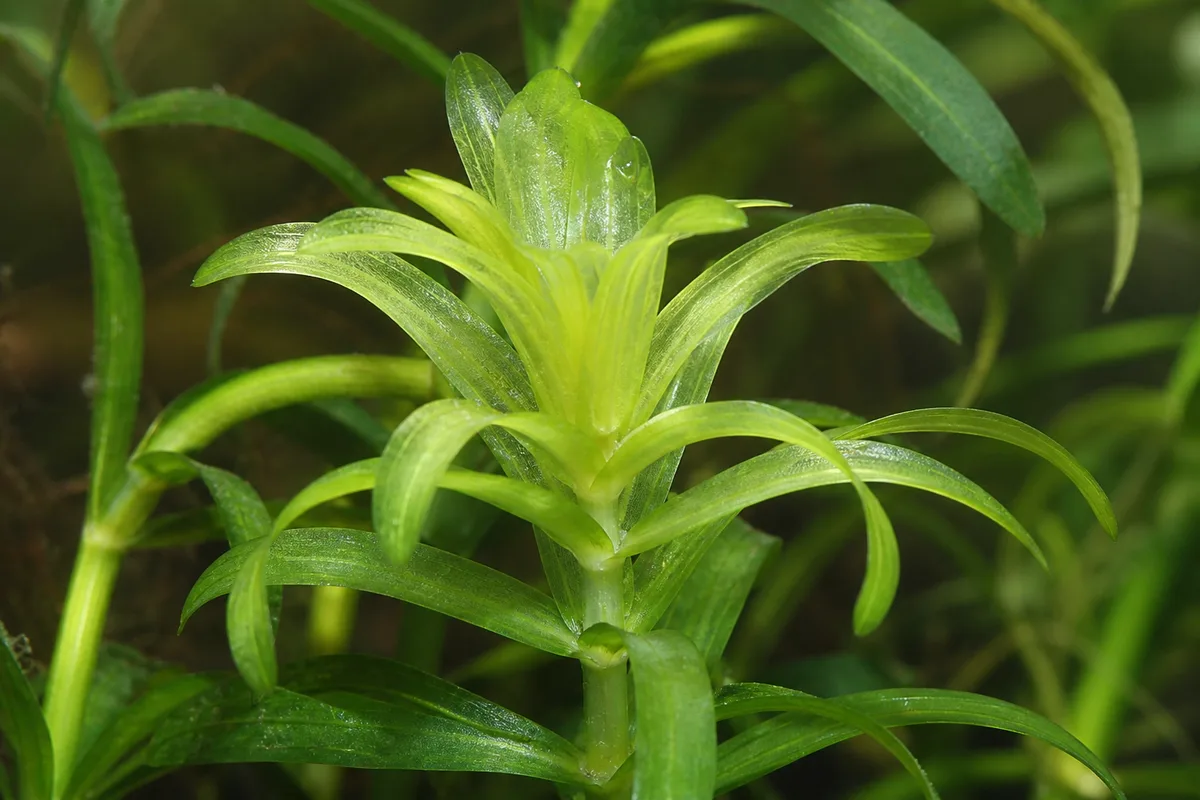
Iron Deficiency symptoms on Anacharis / Elodea - compare with healthy tissue on the same plant.
Classic iron pattern (confirm this before dosing):
- Newest whorls at stem tips emerge pale yellow, lime green, or nearly white
- Veins remain darker green against lighter tissue between them-interveinal chlorosis
- Older whorls down the stem stay green for days or weeks while only the apex looks sick
- Stems stay firm-not the translucent mush of melt or overdose
- Growth may slow-new internodes shorten and leaves look thin when iron stays low through multiple whorls
What it is not:
- Yellow oldest leaves first with green tips → nitrogen deficiency, not iron
- Whole-plant washout after shipping within the first 7–14 days → transition melt, not a call for iron on day three
- Long internodes reaching for the surface with dull green everywhere → insufficient light before micronutrient tweaks
- Algae-coated whorls after a dose spike → overfertilization, not iron hunger
Anacharis is expressive: the position of pale tissue on the stem matters more than the word “yellow” in a forum title.
Why Anacharis runs short on iron
Anacharis is a column-feeding submerged stem plant in the Hydrocharitaceae family. Its thin whorled leaves absorb iron, manganese, and other trace elements directly from the water. That design makes it excellent at pulling nitrate from fish waste-but it also means micronutrients must be dissolved in the tank, not buried in gravel.
Common iron-deficiency triggers on Anacharis:
- Shrimp-only or betta-only tanks - Minimal fish bioload supplies some nitrogen through waste but does not replace iron and other micronutrients that comprehensive fertilizers provide.
- Trace-only dosing in low-stock tanks - Products like Seachem Flourish add iron but assume fish supply macronutrients; in sparse tanks you may need a fuller formula such as Tropica Specialised Nutrition that includes nitrogen, phosphorus, potassium, and the full trace package.
- Moderate-to-high light without matching micronutrients - Strong photosynthesis consumes iron faster. Review Anacharis light needs if tips pale while PAR is high.
- New setup with inert substrate - Plain gravel or sand adds no iron; the water column starts lean until you dose.
- Heavy water changes with RO or very soft water - Dilutes trace elements unless you remineralize or redose after changes.
Fish waste helps nitrogen. It does not reliably supply chelated iron at the levels fast-growing Anacharis needs in a planted display.
Iron deficiency vs. nitrogen deficiency vs. transition melt vs. low light
Use this table before you buy another bottle. Symptom position is the fastest field test on Anacharis stems.
| Pattern | Affected tissue | Vein color | Stem feel | Likely cause | First check |
|---|---|---|---|---|---|
| Pale/yellow new tips, green veins | Newest whorls | Dark green | Firm | Iron deficiency | Dose iron; confirm light |
| Yellow old leaves, green tips | Bottom whorls | Fades with leaf | Firm | Nitrogen deficiency | Test nitrate |
| Whole stem fades after purchase | All whorls | No clear vein pattern | May soften | Transition melt | Wait 7–14 days |
| Long internodes, dull green overall | Whole plant | Normal | Firm | Low light | PAR at stem depth |
| Algae on leaves + recent dose increase | All whorls | Normal | Firm | Overfertilization | Pause ferts; test nitrate |
Overlap happens. A shrimp tank can be low in both nitrate and iron-test nitrate before assuming iron alone will fix pale tips. If nitrate reads zero, address nitrogen first or use a comprehensive liquid that includes both.
How to confirm iron deficiency (not melt or nitrogen)
Work through this checklist in order. One clear pattern beats guessing from a photo.
- Symptom position - Pale new whorls with green veins while lower leaves stay green strongly supports iron deficiency. Yellow bottom leaves with green tips points to nitrogen instead.
- Tank age and purchase date - Stems added in the last 14 days may show yellowing from emersed-to-submersed transition. Hold iron diagnosis until firm submerged tips appear.
- Nitrate test - In planted community tanks, nitrate often reads 10–20 ppm when fish supply nitrogen. Zero or near-zero with bottom-up yellowing suggests nitrogen shortage; adequate nitrate with pale new tips supports iron.
- Stocking level - Shrimp-only, nano betta, or lightly planted tanks need regular micronutrient dosing. Heavily stocked community tanks more often need trace-only supplements.
- Light adequacy - Iron is unusable if photosynthesis cannot run. Confirm 8–10 hour photoperiod and roughly 30–50 PAR at substrate depth per the light guide. Pale tips under dim light may need more usable PAR before iron alone helps.
- Recent fertilizer changes - Switching to a macro-heavy product without trace elements, or skipping doses for several weeks after large water changes, can starve new growth of iron even when nitrate looks fine.
- Copper or medication history - Copper ich treatments and some algicides stress Anacharis; rule out chemical damage if pale tips followed medication, not a dosing gap.
When iron is confirmed
Proceed to dosing when new tips show interveinal chlorosis, older whorls stay green, nitrate is not zero, and the plant is past the first-week melt window. If all three nutrient and melt checks conflict, dose one targeted fix and re-evaluate in seven days-do not stack iron, nitrogen, and light changes on the same day.
First fix: dose chelated iron or complete liquid fertilizer
First action: add chelated iron to the water column at label strength after your next water change. One clear step-not iron plus macros plus root tabs on day one.
Product options for Anacharis (pick one path):
- Seachem Flourish Iron (ferrous iron gluconate) - 1 mL per 10 US gallons (~40 L) targets ~0.10 mg/L iron. Seachem lists iron-deficiency signs as chlorosis between veins on new growth and short slender stems. Safe for shrimp when used at label rates.
- Seachem Flourish (trace package including iron) - 1 capful (5 mL) per 250 L (~60 US gallons) weekly-about 0.8 mL per 10 US gallons at full strength. Best when fish already supply nitrogen.
- Tropica Specialised Nutrition - 6 mL per 50 L per week for lightly stocked or shrimp-heavy tanks needing macros plus traces in one bottle.
- API Leaf Zone (iron and potassium only) - Useful when you have confirmed iron shortage and want to avoid extra nitrogen in an already high-nitrate tank. Follow the bottle rate for your gallon count.
Use a 1 mL syringe on tanks under 20 gallons. Pour the dose into high-flow areas so it distributes before it settles.
Confirm nitrate is not zero before blaming iron alone. If the test strip reads zero in a planted shrimp tank, a comprehensive liquid with nitrogen may resolve pale tips faster than iron-only-but the vein pattern on new growth still tells you whether iron was the primary gap.
Step-by-step recovery and when to re-dose
After the first iron or comprehensive dose:
- Do not trim healthy green lower stems unless they block light-photosynthetic tissue helps recovery.
- Remove only mushy or algae-coated whorls so decay does not foul the water.
- Keep photoperiod stable at 8–10 hours; sudden light increases can stress pale tissue.
- Wait 7 days before increasing dose-watch new whorls, not old pale leaves.
- Re-dose weekly at label strength if new tips green up but the next whorl emerges pale again. High-light tanks may need twice-weekly small iron doses because plants consume iron rapidly.
- Retest nitrate if bottom leaves begin yellowing while tips recover-split deficiency can need both nitrogen and iron over two weeks.
In shrimp tanks, avoid doubling iron and copper-containing products on the same day. Hold ich medications until stems show firm green new growth if possible.
Recovery timeline and what to watch
| Phase | Timing | Good signs | Bad signs |
|---|---|---|---|
| First dose | Days 1–3 | No livestock stress; water stays clear | Ammonia spike; shrimp lethargy |
| New whorl check | Days 5–10 | Next whorl greener than the last | New tips still white; stems soften |
| Established rhythm | Days 10–21 | Consistent green tips on trims | Bottom leaves yellow while tips green (nitrogen gap) |
| Maintenance | Week 4+ | Weekly dose prevents relapse | Pale tips return every cycle-raise light review |
Damaged chlorotic whorls rarely re-green. Judge success by the next one or two whorls emerging fully green. Mild iron shortage in a shrimp tank with adequate light often shows improvement within 7–14 days of weekly dosing. Tanks that went months without any micronutrients may need a full month of consistent trace feeding before dense color returns.
If tips stay white after three weeks at label iron dose and PAR is adequate, rule out magnesium deficiency on older leaves (veins stay green on old tissue, not new) or revisit nitrogen testing before escalating dose.
What not to do
- Do not dose iron during the first 1–2 weeks after purchase - Yellowing on newly shipped Anacharis is usually transition melt, not iron hunger. Extra nutrients on dying emersed leaves fuel algae.
- Do not confuse bottom-up yellowing with iron - That pattern needs nitrogen or comprehensive fertilizer, not iron-only in most cases.
- Do not push iron to “fix” low light - Pale, stretched stems under dim PAR need the light guide first; iron cannot replace photons.
- Do not stack iron with copper medications - Anacharis is sensitive to copper-based aquatic herbicides; many trace mixes contain small copper levels-pause dosing during copper ich treatment.
- Do not use liquid carbon (Flourish Excel) on Anacharis - Glutaraldehyde products are widely reported to melt Anacharis / Elodea overview; they are not a substitute for iron.
- Do not check soil moisture or repot - This plant grows submerged in aquarium water. Water-column tests and dosing logs diagnose iron-not potting mix.
How to prevent iron deficiency next time
Match micronutrient dosing to stocking and light, not the largest number on a label:
- Shrimp-only or lightly stocked planted tank - Weekly comprehensive liquid at label strength (or half strength for the first month on a new setup), per the Anacharis fertilizer guide.
- Moderately stocked community tank - Weekly trace supplement after a water change; fish waste covers much of the nitrogen demand.
- High-light or CO₂-injected tank - Increase micronutrient frequency before stems pale; fast growth pulls iron faster.
- After large water changes - Redose traces at the post-change proportion if you change more than 40% weekly with very soft or RO water.
Test nitrate monthly in planted displays. Keep photoperiod on a timer. Trim tall stems weekly so lower whorls receive light-shaded pale lower leaves are often a light problem misread as iron.
Never release trimmings into ponds or streams-Egeria densa spreads aggressively outside tanks.
When to worry (shrimp, fish, chronic chlorosis)
Escalate if new tips stay white after three weeks of label iron dosing with confirmed adequate light and non-zero nitrate-consult a local fish store or planted-tank forum with photos of new vs. old whorls. Chronic interveinal chlorosis despite dosing can indicate very high pH reducing iron availability; test GH/KH and consider whether your iron product matches water chemistry (ferrous gluconate products like Seachem Flourish Iron are commonly used in freshwater planted tanks).
If stems turn translucent and mushy-not merely pale-rule out chemical damage, heat stress, and overfertilization before adding more iron.
For overview context on column feeding and legal disposal of trimmings, see the Anacharis care overview.
When to use this page vs other Anacharis / Elodea guides
- Anacharis / Elodea watering guide - Use for routine moisture checks before assuming iron deficiency is the main issue.
- Anacharis / Elodea problems hub - Browse all 34 common issues on this species.