Heat Stress on Anacharis / Elodea: Causes, Checks & Fixes
Quick answer
Heat stress on Anacharis usually means water above 28°C (82°F), a summer room spike, or moving stems from cool to hot water too fast. First step: measure tank temperature with a thermometer and trim translucent melt.
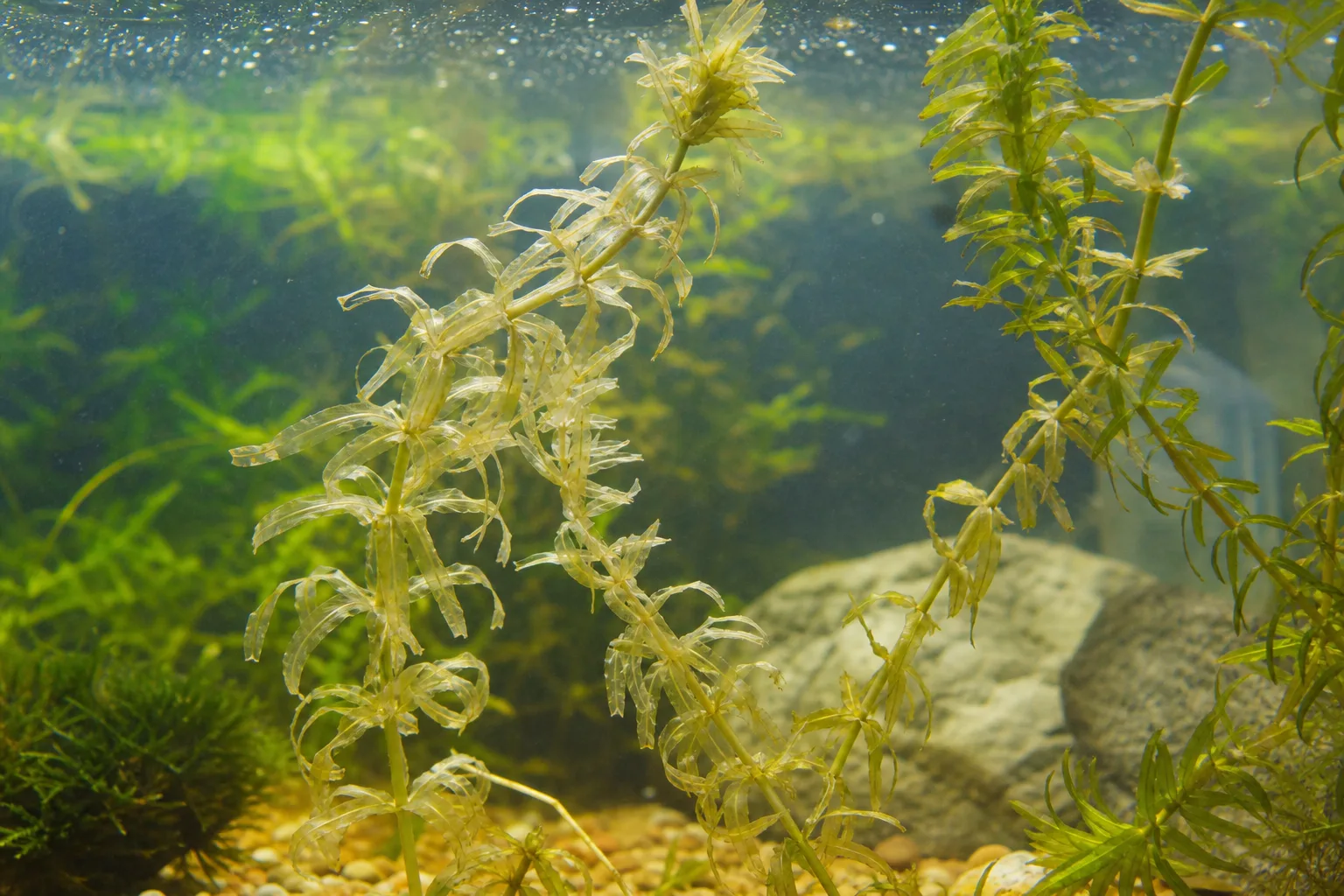
Heat Stress on Anacharis / Elodea: Causes, Checks & Fixes
This guide covers heat stress on Anacharis / Elodea. See also the general Heat Stress guide, watering, and light pages for this plant.
Heat Stress on Anacharis / Elodea: Causes, Checks & Fixes
Quick answer
Heat stress on Anacharis (Egeria densa) means the water column got too warm for this cool-water oxygenator-not that the plant needs more humidity or drier soil. The first visible sign is usually translucent melt: whorls turn gelatinous, leaves shed in sheets, and pearling stops while fish may linger near the surface because warm water holds less oxygen.
First step: measure tank temperature with a thermometer at mid-depth. If the reading is above 28°C (82°F), you are in the stress band where growth slows and melt accelerates; above 32°C (90°F), Egeria densa senescence is documented. Trim mushy tissue immediately so decay does not foul the tank, then cool the water gradually.
This guide is for submerged aquarium, turtle-tub, and pond culture only. For baseline temperature targets and acclimation steps, see the Anacharis watering guide. For pond shade when summer heat spikes, see Anacharis light needs.
What heat stress looks like on Anacharis
On a healthy stand, problems from too much heat usually appear in this order:
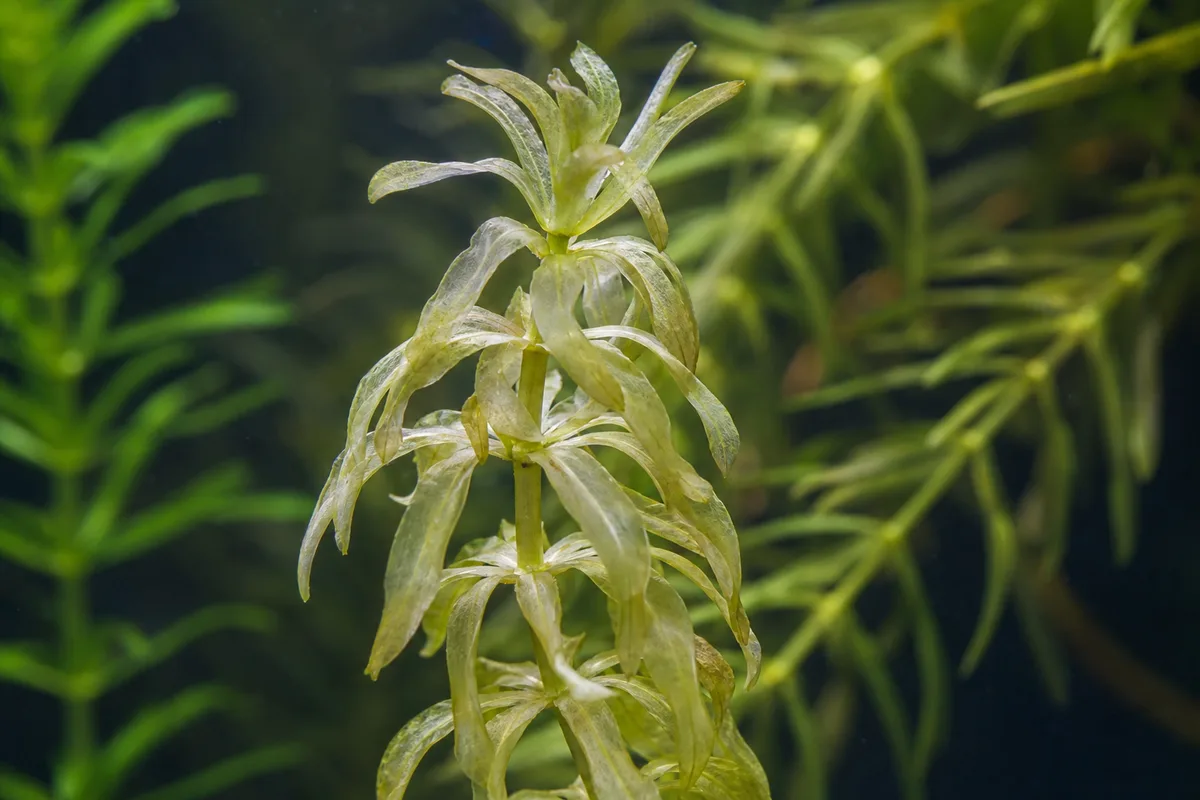
Heat Stress symptoms on Anacharis / Elodea - compare with healthy tissue on the same plant.
- Translucent, mushy whorls - leaves lose color and texture, turning see-through before detaching; stems feel soft between your fingers.
- Pearling stops - oxygen bubbles on leaf edges fade as photosynthesis and metabolism decline under heat load.
- Lower stem melt first - especially on stems planted deep or sitting nearest a heater outlet; floating tops may look greener briefly while bases liquefy.
- Rapid leaf shedding - whorls fall off in clusters over one to three days after a temperature jump, not gradually over two weeks like transition melt.
- Tank-wide decline in hot rooms - unheated aquariums in summer can creep to 30°C+ when ambient room temperature rises, even if the heater never runs.
These signs differ from transplant shock, which follows a new purchase without a measured temperature spike, and from transparent leaves caused by liquid-carbon or copper exposure where temperature tests normal.
Why Anacharis melts in hot water (and why houseplant advice fails)
Anacharis is a submerged freshwater stem plant native to cool-temperate and subtropical waters in South America. In aquarium culture it behaves as a cool-water grower: the ideal band is roughly 60–77°F (15–25°C), with practical comfort around 65–74°F in unheated and goldfish tanks. It tolerates short warm spells, but it is not a true tropical plant like Cabomba in a 30°C betta display.
Documented temperature thresholds for diagnosis:
| Range | Effect on Egeria densa |
|---|---|
| 60–77°F (15–25°C) | Best growth, dense whorls, active pearling |
| 77–82°F (25–28°C) | Growth slows; lower-leaf melt more common after stress events |
| Above 82°F (28°C) | Heat stress zone - melt episodes increase (Washington State Noxious Weed Control Board) |
| Above 86°F (30°C) | Senescence and decomposition risk in field populations (Queensland dense waterweed assessment) |
| Above 90°F (32°C) | Reduced shoot growth and photosynthetic output; sustained exposure triggers senescence |
Common triggers in home setups:
- Tropical community or betta tanks held at 78–82°F year-round - workable for fish, marginal for Anacharis long term.
- Oversize or stuck-on heater - wattage sized for a larger tank, or thermostat drift, creates hot zones near the substrate.
- Summer room heat on unheated tanks - water tracks room temperature; a tank under a west window can exceed 28°C by afternoon.
- Warm transfer shock - moving stems from a 68°F goldfish tub into an 80°F display without bag floating.
- Outdoor tub or pond surface heating - shallow containers and full afternoon sun push water past 28°C; see light guide shade notes.
- Emersed farm plants dropped into hot water - supplier stems grown out of water melt faster when temperature and CO₂ differ; acclimate per the propagation guide.
Because Anacharis feeds from the water column with leaves only two cell layers thick, it cannot “sweat” or close stomata like terrestrial plants. Heat damage shows up directly as tissue breakdown. Checking soil moisture, pot drainage, or ambient humidity will not diagnose this problem.
How to confirm heat stress in this order
Work through this numbered checklist before stacking multiple fixes:
- Thermometer reading at mid-tank - Submersible probe or calibrated stick-on strip at mid-depth, not at the surface or substrate alone. Heat stratification can hide a hot layer near the heater.
- Recent temperature event - Heat wave, AC failure, heater adjustment, sun on the tank stand, or warm partial water change within the last 72 hours? A yes with mushy stems strongly supports heat stress.
- Heater audit - Correct wattage for tank volume? Thermostat set above target fish temperature? Heater fully submerged per manufacturer instructions? A heater running continuously in summer may mean the room is already hot.
- Symptom position - Melt climbing from bases near equipment, or tank-wide after room spike? Localized hot-zone damage differs from chemical damage which often follows dosing.
- Fish behavior - Gasping or lethargy at high temperature points to low dissolved oxygen; increasing surface agitation helps both livestock and plants during cooling.
- Rule out lookalikes - Normal new-tank melt without temperature rise → transplant shock. Pale new tips only → iron deficiency. Large unmatched water change → water stress. Soft collapse with foul odor and normal temp → overwatering (fouled water), not heat alone.
- Chronic vs. spike - One afternoon above 28°C after a heat wave often recovers after cooling. Weeks at 30°C in a betta tank usually means the species is a poor long-term match-not a single fixable episode.
Aquarium vs. pond vs. summer tub
- Indoor aquarium - Heater setting plus room HVAC drive temperature; measure after lights-on and on hot afternoons.
- Turtle tub - Warm basking setups often run 75–80°F; Anacharis survives but melts more readily than in goldfish-cool water; prioritize flow and shade over “more fertilizer.”
- Outdoor pond or patio tub - Surface water heats fastest; 30–50% shade cloth when water exceeds 28°C. Never dump melted trimmings into natural waterways - Egeria densa is invasive when fragments escape.
First fix: cool the water without shocking fish
First action: verify temperature, then remove translucent melt. One clear step-not ice dumps, extra fertilizer, and glutaraldehyde on the same afternoon.
After trimming mush:
- Increase surface agitation - Point a filter outlet at the surface or add an air stone. Evaporation and gas exchange shave effective heat load and raise oxygen for fish while you plan cooling.
- Partial water change with matched cool water - Replace 25–30% with dechlorinated water 2–4°F cooler than the tank, not ice-cold. Repeat next day if still above 28°C. Follow the ±2°F matching rule in the Anacharis watering guide.
- Adjust heater downward - Lower thermostat 1–2°F per day until the tank sits in the 65–74°F band if fish allow. In tropical livestock tanks, cool only to the species minimum-accept that Anacharis may remain marginal.
- Reduce direct heat inputs - Move the tank away from sunlit glass, turn off tank lid lights that add heat, open the hood briefly for evaporation if safe for jumpers.
- Float surviving cuttings - Firm upper stems often recover faster floating under moderate light while parameters stabilize; replant shallowly once new roots appear per the propagation guide.
Equipment options for stubborn summer heat:
- Clip-on fan blowing across the water surface (evaporative cooling; top off with matched-temperature water).
- Aquarium chiller for small hot rooms or reef-temperature displays where you still want cool-tolerant stems.
- Shade cloth or relocation for outdoor tubs.
Do not dose liquid carbon (glutaraldehyde) on melting Anacharis - heat-stressed tissue is already vulnerable, and Excel-class products are widely reported to accelerate melt.
Recovery timeline for submerged regrowth
| Phase | Timing | Good signs | Bad signs |
|---|---|---|---|
| Cool + trim | Days 1–2 | Melt stops spreading; fish breathing normalizes | Mush climbs into firm nodes; ammonia detectable |
| Stabilize | Days 3–7 | Small green tips on firm stems; pearling returns in cool water | All stems translucent; foul cloudy water |
| Regrow | Weeks 2–3 | New whorls along trimmed stems; white roots on floated cuttings | No tips after 14 days at stable temp |
Damaged whorls do not revert to pristine green-judge success by new submerged growth, not old tissue. Mild heat spikes often stabilize within 48 hours once water returns below 28°C. Severe melt may leave only a few firm nodes; save those as cuttings rather than waiting for dead stems to revive.
If temperature drops but wilting continues, test ammonia and review whether decaying melt was left in the tank too long.
Mistakes that make hot-tank melt worse
- Dumping ice or very cold tap water - Rapid temperature crash stresses fish and can trigger additional plant shock; cool gradually within the 2–4°F change-water delta.
- Leaving melt in the tank - Decaying tissue consumes oxygen and spikes ammonia; siphon it out the same day.
- Cranking the heater to “fix” slow growth - Anacharis in warm water grows stringy and melts; cooler stable water beats hotter unstable water.
- Adding fertilizer to mushy plants - Heat-stressed stems are not hungry; macros feed algae on decaying leaves.
- Dosing copper or algaecide during melt - Anacharis is sensitive to copper-based aquatic herbicides; heat melt plus chemical exposure is a common total-loss combo.
- Assuming a 30°C betta tank will work long term - Chronic warmth above 30°C aligns with documented senescence; repeated purchases are a setup mismatch, not bad luck.
- Checking soil moisture or Anacharis / Elodea repotting guide - Anacharis / Elodea overview does not grow in houseplant pots in normal aquarium use; substrate only anchors stems.
How to prevent heat stress next time
Match the plant to the temperature budget your livestock allows:
- Unheated, goldfish, and cool community tanks (65–74°F) - Best long-term fit; stable parameters matter more than chasing maximum growth.
- Heated tropical tanks (76–80°F) - Expect thinner stems and occasional melt; keep flow strong and avoid afternoon sun on the stand.
- Hot tanks (above 82°F / 28°C) - Treat Anacharis as temporary or switch to heat-tolerant stems; do not interpret chronic melt as a fertilizer problem.
Prevention habits:
- Check thermometer weekly and during heat waves.
- Acclimate new stems: float the bag 15–30 minutes, then add small amounts of tank water before planting (watering acclimation routine).
- Shade outdoor tubs when water exceeds 28°C; plan partial shade in hot climates per the light guide.
- Size heaters correctly and verify thermostat with a second thermometer.
- Never release trimmings into ponds or streams - UF/IFAS documents Brazilian waterweed as an aquarium trade species that spreads vegetatively when discarded.
For species biology, legal status, and baseline care, see the Anacharis overview. If melt follows a cold snap instead of heat, read cold damage on Anacharis.
When to worry
Escalate if temperature stays above 30°C despite cooling attempts, melt reaches every stem within a week, or fish show sustained gasping after surface agitation improves. In that case, prioritize livestock safety (cooling, oxygenation) and salvage firm cuttings to a smaller quarantine tub at 68–72°F rather than fighting melt in place.
Chronic melt in a correctly cooled tank points away from heat-retest for water stress, copper exposure, or fouled water before buying more bunches.
When to use this page vs other Anacharis / Elodea guides
- Anacharis / Elodea watering guide - Use for routine moisture checks before assuming heat stress is the main issue.
- Anacharis / Elodea problems hub - Browse all 34 common issues on this species.
- Wilting on Anacharis / Elodea - Different entry point when symptoms overlap with heat stress.
- Drooping Leaves on Anacharis / Elodea - Different entry point when symptoms overlap with heat stress.
- Brown Leaves on Anacharis / Elodea - Different entry point when symptoms overlap with heat stress.