Transparent Leaves on Anacharis / Elodea: Causes, Checks &
Quick answer
Transparent leaves on Anacharis are usually melt-not disease-from emersed-to-submersed transition, temperature shock, or copper and liquid-carbon exposure. First step: remove all transparent mushy tissue immediately and keep firm upper stems in stable, medication-free water.
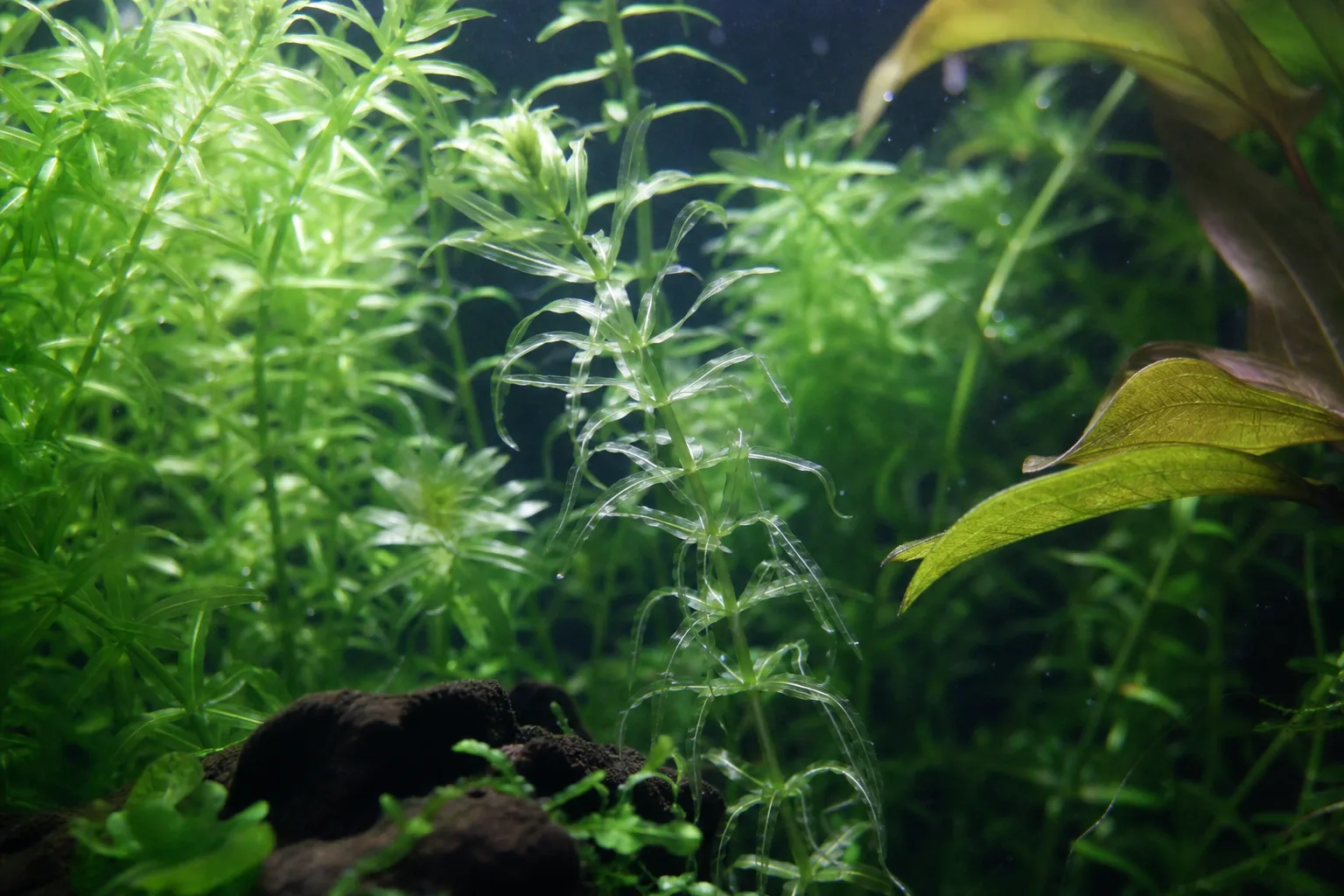
Transparent Leaves on Anacharis / Elodea: Causes, Checks & Fixes
This guide covers transparent leaves on Anacharis / Elodea. See also the general Transparent Leaves guide, watering, and light pages for this plant.
Transparent Leaves on Anacharis / Elodea: Causes, Checks & Fixes
Quick answer
Transparent leaves on Anacharis (Egeria densa) mean melt-whorls turning glassy, colorless, and mushy as cells break down. In aquariums this is almost never a houseplant watering problem; it is a submerged aquatic stress response.
The three most common triggers are emersed-to-submersed transition (farm-grown stems adapting to fully underwater life), temperature or parameter shock, and copper or liquid-carbon toxicity from fish medications and algae treatments.
First step: remove every transparent, mushy whorl and stem section with clean scissors, discard decay outside the tank, and keep only firm green tips in stable, medication-free water. Do not bury melting stems deeper hoping they recover-that accelerates rot up the column.
For cleanup technique, see how to prune Anacharis. For copper and glutaraldehyde damage patterns, see chemical damage. The Anacharis overview melt FAQ covers the same transition in broader care context.
Why Anacharis leaves turn transparent (melt mechanics)
Anacharis is a rooted submersed perennial with thin, lance-shaped leaves in whorls of four to six around the stem. Each leaf is only about two cell layers thick-which is why transparency shows up before the whole stem collapses. When cells lose turgor and chlorophyll, whorls look window-pane clear, then slimy and brown.
Why melt hits Anacharis harder than many aquarium plants:
- Emersed farm stock - Wholesale growers often produce Egeria densa emersed (in moist air, not fully submerged). Air-grown leaves are built for different gas exchange; your tank asks the plant to rebuild submerged tissue. Old whorls liquefy while new tips form.
- Column feeding - Anacharis pulls nutrients from the water column through leaves and stems. Parameter swings (temperature, pH, hardness) show on foliage within days, not slowly through soil like a pothos.
- Copper sensitivity - Anacharis is extremely sensitive to copper, an active ingredient in many ich medications. Even label-safe fish doses can turn whorls transparent within hours.
- Mechanical delicacy - Tight rubber bands, crushed lower whorls from shipping, and stems buried too deep in substrate all start localized melt that spreads upward if left in the tank.
“Melt” is the hobby term for this process. It is not a fungal leaf spot, not underwater “overwatering on Anacharis / Elodea,” and not fixed by checking soil moisture.
What transparent melt looks like on Anacharis
Recognize melt before you treat the wrong problem:
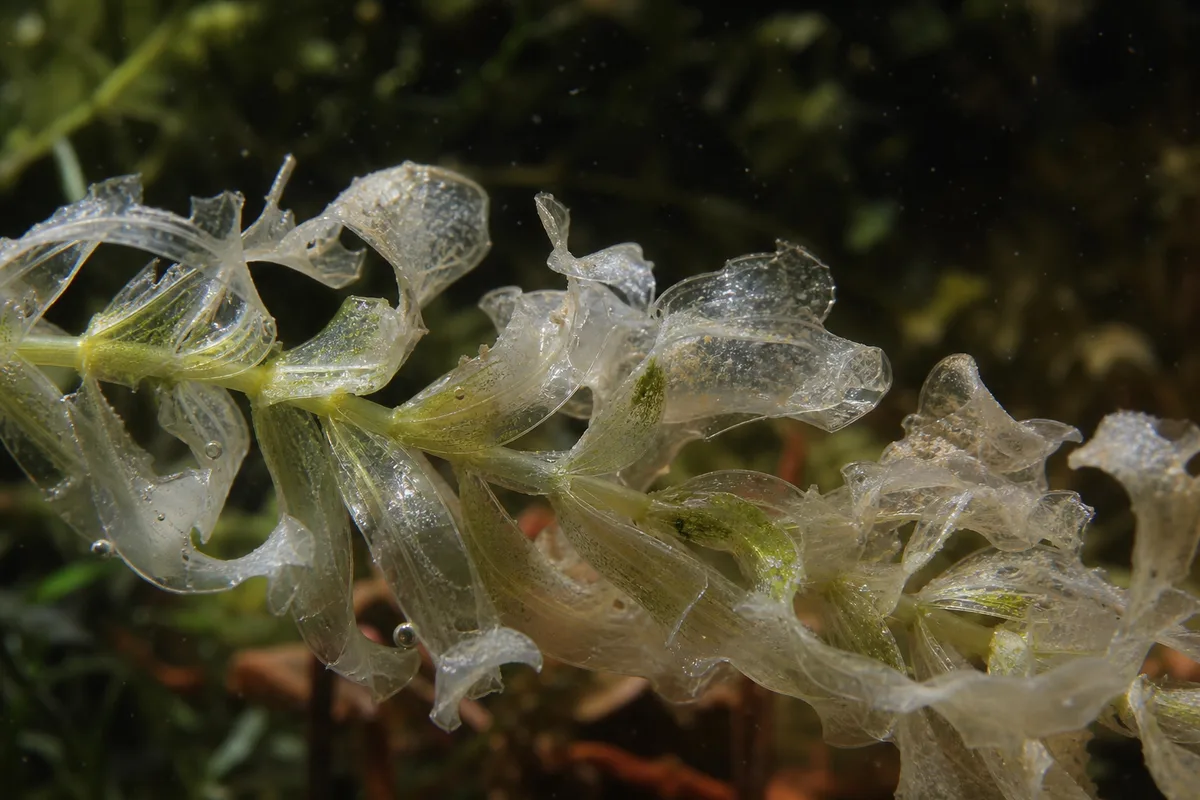
Transparent Leaves symptoms on Anacharis / Elodea - compare with healthy tissue on the same plant.
- Glassy whorls - Leaves lose green color and look see-through; edges stay attached briefly, then slough off.
- Mushy texture - Pinch a transparent whorl; it squishes between fingers instead of springing back.
- Bottom-up or middle-stem pattern - Often starts on lower whorls (shaded, buried, or oldest emersed tissue) while tips stay green-or spreads from a crushed band under a rubber band.
- No silver trails or round holes - Snail rasping and goldfish grazing leave mechanical tears; melt is uniform translucency across whole whorls.
- Foul smell if left in water - Decaying Anacharis raises ammonia and clouds water within a day or two.
Normal vs. alarming: A few transparent lower whorls on newly planted stems in the first 7–14 days, with firm green tips above, fits acclimation melt. All stems soft from base to tip within 48 hours after a medication dose or heat spike is urgent-likely chemical or temperature injury, not routine transition.
How to confirm melt vs. other causes
Work through this checklist in order. Change one variable at a time after the first fix so you can read the plant’s response.
Acclimation melt pattern (first 1–2 weeks)
| Signal | Points to transition melt | Points away from melt |
|---|---|---|
| Timing | 48 hours to 2 weeks after purchase or planting | Years-old stand suddenly melts mid-season |
| Stem pattern | Mushy lower whorls, firm green tips above | Entire stem soft; tips melt first |
| Tank history | New bag from store, emersed-grown bunch | Recent ich med, algaecide, or Excel overdose |
| Water tests | Ammonia/nitrite stable or slightly elevated from decay | Sharp nitrite spike unrelated to plant debris |
| Recovery | New submerged whorls in 7–14 days after trim | No new tips after 3 weeks in stable water |
Ask the seller or label whether stems were emersed-grown. Farm emersed stock typically melts faster than pond-harvested or long-submersed cuttings from another hobbyist tank.
Temperature and parameter shock
Anacharis tolerates roughly 50–82°F (10–28°C) but hates swings. Common shock scenarios:
- Moving from a cold shipping bag into a 78°F+ tropical tank without floating acclimation.
- Large water changes with colder tap water on a hot day-or the reverse.
- Unheated tank suddenly placed near a sunny window or heater vent.
Run temperature, ammonia, nitrite, and nitrate tests the day melt appears. Match bag water to tank within 2–3°F before planting by floating the closed bag 20–30 minutes, then adding small amounts of tank water every 10–15 minutes over 30 minutes to a few hours.
Liquid-carbon and copper medication check
Review everything dosed in the last 14 days:
- Copper-based ich treatments, copper algaecides, and some snail remedies - Check active ingredients. Copper kills Anacharis at concentrations often labeled safe for fish. See chemical damage on Anacharis.
- Liquid carbon (glutaraldehyde, sold as Excel and similar) - Overdose or daily full-tank dosing on already-stressed stems can accelerate melt. Pause or halve dose during the first acclimation week.
- Potassium permanganate, formalin, or random “plant dips” on melting tissue - Often makes transparency worse.
If medication coincides with melt onset, stop dosing, remove plants to a clean tub, and perform partial water changes per label guidance for fish safety-not plant recovery alone.
Lookalike symptoms
| Symptom | Likely cause | Key difference from melt |
|---|---|---|
| Transparent mushy whorls, new purchase | Transition melt | Timing + firm tips above |
| Pale yellow upper leaves, long internodes | Low light | Leaves thin but not glassy-mushy |
| Yellow from base up on established stand | Normal shading / old leaf shed | Trim lower whorls; stem firm |
| Black mushy tips after heat spike | Temperature injury | Follows heater failure or sun |
| Uniform melt 24h after ich dose | Copper toxicity | Medication label lists copper |
| Ragged holes, fish watching stems | Herbivore grazing | Mechanical tears, not translucency |
First fix: trim, float, stabilize
First action: remove all transparent mushy tissue immediately. Use clean sharp scissors. Cut back to firm green whorls where the stem still feels springy. Drop decaying pieces into a cup-not back into the tank. Decaying Anacharis fouls water quickly and can spike ammonia while you troubleshoot other causes.
After cleanup:
- Float firm cuttings on the surface 30 minutes to a few hours if they are newly purchased-or overnight if melt was severe. Floating gives direct light access and avoids burying stressed lower nodes.
- Match temperature - Bag float acclimation as above; avoid planting into water more than 3°F different from what the stems already sit in.
- Hold medications and liquid-carbon for 7 days unless fish require urgent treatment-in which case move Anacharis to a separate tub before dosing copper.
- Test ammonia and nitrite - Remove melt debris; small partial water change if readings climb from rotting tissue you missed.
- Plant only firm stems - Bare the bottom 1–2 inches of leaves, insert 1–2 inches into fine gravel or sand. Never bury transparent tissue.
Do not stack heavy pruning, large water changes, fertilizer boosts, and medication on the same day. One correction, then watch for 7 days.
Recovery timeline
| Phase | Timing | Good signs | Bad signs |
|---|---|---|---|
| Trim + stabilize | Days 1–3 | Melt stops spreading above cut line; water clears | Tips turn mushy; ammonia rises |
| New submerged growth | Days 7–14 | Fresh green whorls at tips; white root initials on nodes | All nodes soft; no new leaves |
| Stand refill | Weeks 2–6 | Pearling returns; lateral shoots below cuts | Repeated melt after stable week |
Transparent tissue never re-greens. Judge recovery by new firm whorls and pearling on healthy sections. Mild acclimation melt on a few stems often stabilizes within one to two weeks. Severe copper or heat damage may leave only short cuttings worth replanting-or require replacing the bunch entirely.
If melt continues past three weeks in stable, medication-free water with correct temperature, review water parameters and light-not houseplant humidity or soil drainage.
What not to do
- Do not leave transparent mush in the tank - It decays, spikes ammonia, and spreads bacterial load. Remove it the same session you notice it.
- Do not bury melting stems deeper - The buried portion is rotting; deeper planting accelerates total stem loss.
- Do not dose copper ich medication with Anacharis in the tank - Expect melt within hours. Remove stems first.
- Do not pour full-strength liquid carbon on melting whorls - Direct overdose burns delicate tissue.
- Do not fertilize heavily on a melting stand hoping to “save” it - Stabilize parameters first; nutrients matter after new growth appears.
- Do not confuse melt with underwater “overwatering” - Anacharis lives submerged. Soil moisture checks do not apply.
How to prevent transparent melt on your next purchase
- Quarantine and float new bunches two to three weeks in matched water before dense background planting.
- Ask about emersed vs. submersed growth - Emersed farm stock will melt more; plan extra trim time.
- Acclimate temperature - Float bags; add tank water slowly; avoid planting straight from a cold car into a hot tank.
- Read medication labels before fish treatment - Plan a plant-safe tub for Anacharis whenever copper is listed.
- Reduce liquid-carbon during the first acclimation week; ramp only after firm new whorls appear.
- Remove shipping bands promptly - Crush damage under rubber bands is a common melt starting point. See pruning cleanup cuts.
- Space stems so light reaches lower whorls-dense self-shading mimics melt on bottom leaves.
Never release melting trimmings into outdoor ponds or streams. Egeria densa spreads vegetatively in waterways when aquarium waste is dumped.
When to worry
Routine first-week melt on new stems with green tips above is manageable. Escalate when:
- Every stem is mushy within 48 hours of a medication dose - suspect copper; remove plants and change water per fish label.
- Ammonia or nitrite rises after melt was left in the tank - emergency water changes for livestock; remove all decay.
- No new submerged whorls after three weeks in stable, medication-free water - replace with healthy cuttings or tissue-culture stock.
- Melt returns repeatedly on established stands - Review heater stability, light intensity, and chronic liquid-carbon dosing before buying more stems.
Conclusion
Transparent leaves on Anacharis are melt: thin whorls losing cell contents under transition, temperature, or chemical stress-not a reason to check pot drainage. Trim mush immediately, float and acclimate new stock, keep copper and harsh glutaraldehyde away from stressed stems, and read recovery on new green tips, not old glassy whorls. When in doubt during the first two weeks after purchase, transition melt is the default diagnosis-patience and cleanup beat panic dosing.
When to use this page vs other Anacharis / Elodea guides
- Anacharis / Elodea watering guide - Use for routine moisture checks before assuming transparent leaves is the main issue.
- Anacharis / Elodea problems hub - Browse all 34 common issues on this species.