How to Prune Anacharis: When, Where & What to Cut
How to Prune Anacharis: When, Where & What to Cut
How to Prune Anacharis: When, Where & What to Cut
Quick answer
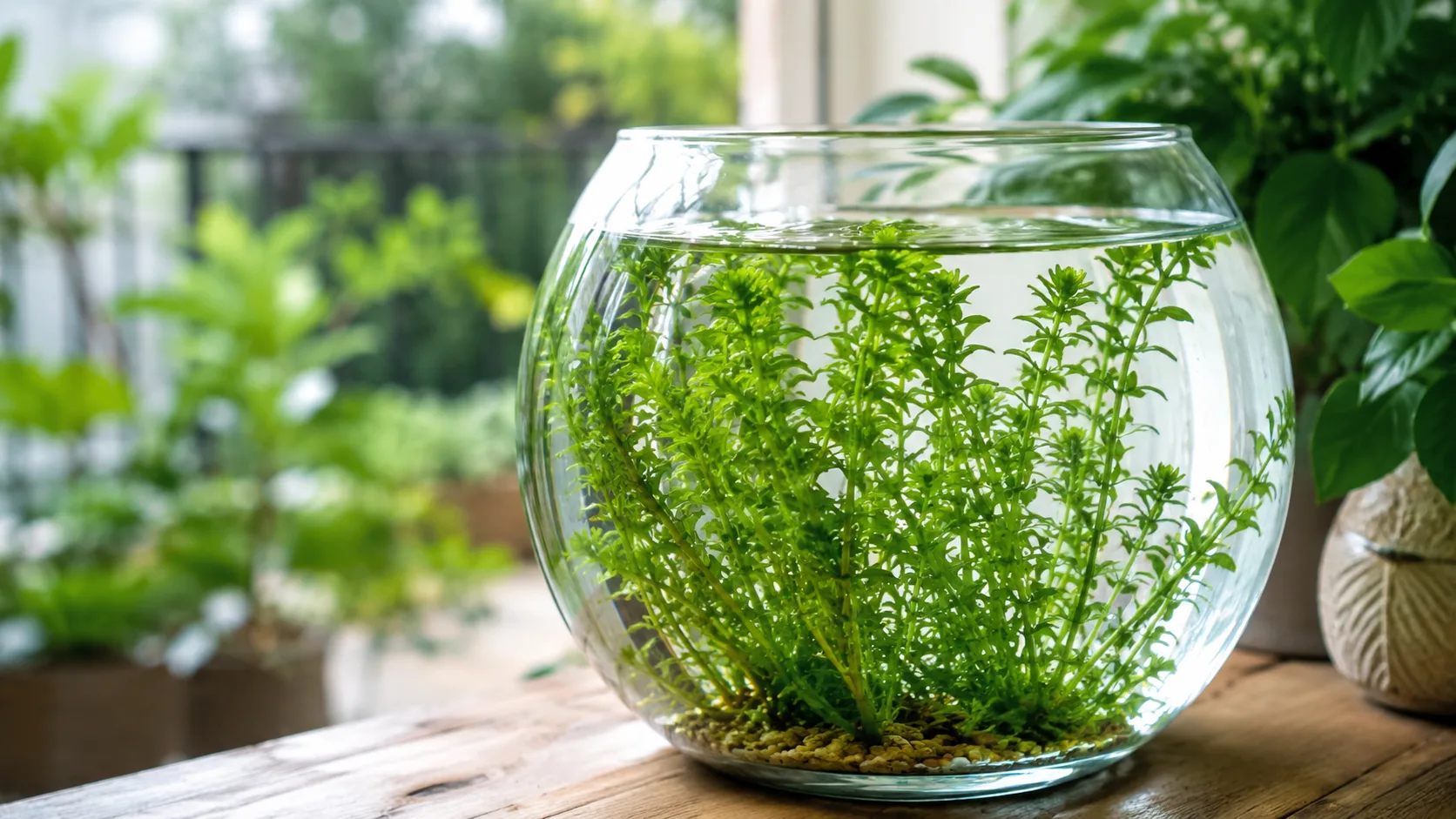
Anacharis / Elodea is a fast-growing submerged stem plant - often sold as Brazilian waterweed (Egeria densa) - that needs regular trimming in aquariums, turtle tanks, and ponds. First, remove any mushy, transparent, or clearly yellow lower tissue with clean sharp scissors and pull decaying pieces out of the water immediately. Once only firm green stems remain, shorten tall growth by cutting just above a leaf whorl (node) to release side shoots, then replant healthy tops with the bottom cut just below a node and lower leaves stripped before planting.
When to trim Anacharis
Timing is driven by growth state and tank impact, not a calendar season. Indoor aquariums stay in active growth whenever light and temperature are steady, so trim when stems are green, firm, and pushing new tips - not when the whole stand is melting from a recent move or medication exposure.
The most common trigger is height. Trim when stems are within 2–3 inches (5–8 cm) of the water surface or start bending along the top glass. Anacharis does not stop at the waterline; stems keep elongating and can form a light-blocking canopy that shades lower whorls and everything beneath them.
The second trigger is legginess - long bare gaps between whorls with fewer leaves. That pattern usually means the plant is reaching for light. A height cut resets the stand, but legginess returns unless light reaches the middle and base of the stems.
The third trigger is tank hygiene, especially in turtle setups. Thin excess growth before it fouls water, clogs filter intakes, or traps debris in root mats. LeafyPixels grower notes for Anacharis / Elodea overview flag pruning as required maintenance, not optional shaping.
Height and surface triggers
Once a week, scan stem height, leaf color from base to tip, and whether plant mass is interfering with flow. Stems packed against the surface often lose lower leaves within days because whorls shade each other. If you see green fuzz on your filter intake or a mat of stems riding the surface, you are past the easy trim window.
In small tanks under 20 gallons, that threshold arrives quickly because plant growth is large relative to water volume. In larger tanks you may stretch to every two to three weeks, but let plant height guide you more than the date.
Cleanup vs shaping trims
Cleanup cuts remove tissue that will not recover: transparent melt, mushy brown sections, air-dried floating fragments, or stems crushed by shipping bands. Do these any time you see them.
Shaping trims control height and encourage branching on healthy green stems. Save heavy shaping until the plant is adapted to submerged growth - usually after the first week or two in a stable tank.
What pruning does for Anacharis
Anacharis grows as vertical stems with leaves in whorls around the stem. Each whorl marks a node, the point where roots and side shoots can emerge. The growing tip at the top produces auxin that suppresses branching lower down - apical dominance. Remove that tip above a node and the plant typically pushes lateral shoots from nodes just below the cut within days to two weeks in a well-lit tank.
Regular trimming also:
- Keeps light and flow reaching the middle and base of the stand
- Prevents decaying lower stems from polluting turtle or community tank water
- Supplies stem cuttings for propagation or nutrient export
- Reduces filter clogs from broken stem fragments
Pruning cannot fix chronic low light, copper or liquid-carbon toxicity, or water quality failure. It redirects growth on healthy tissue; it does not revive dead internodes.
What to check before cutting
Before you shorten anything, inspect each stem from base to tip:
- Leaf color and firmness - bright green and springy is trimmable; transparent or slimy is discard-only
- Node health - cuts should align with whorls that still carry green leaves
- Planting depth - buried lower leaves rot and spread decay up the stem; note stems that need lifting or replanting after cleanup
- Shipping bands or weights - remove tight bands at the base; crushed tissue below a band should be cut off before shaping
- Tank conditions - recent large water changes, new medications, or heat spikes can cause melt unrelated to scissors
If more than half the stand is mushy after a new purchase, focus on cleanup only and wait for new submerged tips before bushy-growth topping.
The first cut to make
Remove dead, damaged, or melting growth first. Pinch or snip transparent and brown sections back to firm green tissue, or pull whole stems that are soft throughout. Drop those pieces into a cup - not back into the tank.
This single step prevents the most common post-trim problem in Anacharis: decaying plant debris raising ammonia and organics while you work on aesthetics. In turtle tanks, uneaten or rotting plant matter should leave the water the same session.
Only after mushy tissue is gone should you top healthy stems or thin dense stands.
Where to cut on Anacharis stems
The node rule is the whole game for Anacharis:
- Topping the parent stem: cut just above a healthy whorl, leaving the top node on the remaining stem in the tank
- Preparing a replanted cutting: cut the bottom just below a node so roots can emerge from nodal tissue
- Pinching a side shoot: remove only the top few millimeters of meristem above a whorl to nudge branching without discarding a long top section
Avoid cutting through long bare internodes - the naked stem between whorls - and expecting regrowth from that dead stub. Roots and shoots come from nodes, not from empty stem tissue. Egeria densa spreads vegetatively by stem fragments with nodes intact, which is why fragment length and node count matter for both propagation and invasive risk outdoors.
Each cutting you replant should carry at least three to four nodes and roughly 4–8 inches (10–20 cm) of length. Shorter snippets often stall before they build enough leaf area to sustain growth.
Above the node, below the node, and tip pinching
Above the node (parent stays planted or floating): shortens the stem, breaks apical dominance, and encourages one to three lateral shoots from upper nodes within about a week in moderate light.
Below the node (cutting base): gives the replanted section a clean nodal anchor for white root initials, usually visible within three to five days in healthy water.
Tip pinching: useful on side shoots that already have two or three whorls - a light nip above the top node branches without removing a long propagation piece.
How to prune Anacharis step by step
Work stem by stem instead of shearing the entire group to one height.
- Clean first - remove all mushy, yellow, or air-dried sections; discard them outside the tank
- Choose the tallest firm stems - hold the middle gently so you do not uproot anchored plants
- Mark your cut - about 8–12 cm (3–5 inches) below the surface, or 8–12 cm down from the tip on stems already at the top; locate the nearest healthy whorl
- Top above the whorl - one clean angled snip; set the green top in a cup
- Prep the cutting - strip leaves from the lowest 2–5 cm (1–2 inches); trim the base just below a node
- Replant or float - insert 2–4 cm into gravel or sand with the first whorl just above substrate, or float until roots show
- Space stems - leave 3–5 cm (1–2 inches) between plants so light penetrates
- Repeat on side shoots - when laterals reach 5–8 cm with several whorls, pinch tips above nodes for another branching level
- Siphon debris - remove floating leaf bits before they reach the filter
For maximum density in a short tank, alternate topping rooted stems with planting cuttings slightly forward or to the side of the original row. You build depth instead of a single line of telephone-pole stems.
How much you can safely remove
Anacharis tolerates frequent light trims better than one drastic session that removes most of the biomass.
For routine maintenance, removing 20–30% of the stand per session is a safe baseline in established tanks. In overgrown setups, thin toward your target density over one to two weeks rather than pulling out 70–80% in a single day. Large sudden biomass removal can shift nutrient and oxygen dynamics, especially in tanks under 20 gallons.
Cleanup of melting tissue is the exception - take out all mushy material immediately even if that exceeds 30%, because decay hurts water quality faster than a heavy but healthy trim stresses the plant.
If goldfish, turtles, or apple snails graze your stand, expect to replace tops often. Fast regrowth makes that sustainable when cuts stay on green nodal tissue and debris leaves the tank promptly.
Pruning floating vs substrate-planted stems
Floating Anacharis is trimmed at the same nodes, but each fragment behaves as its own unit - there is no rooted base to branch from after you remove a top. Bushiness comes from maintaining multiple floating stems and shortening them before they blanket the surface. Floaters often need attention every 10–14 days because stems curve and self-shade faster than upright planted stems.
Substrate-planted Anacharis rewards topping most. The anchored lower stem remains and produces lateral shoots below the cut. Over time, lower sections lose leaves from shading anyway; many aquarists cycle the plant by replanting green tops and discarding bare rooted stubs rather than waiting for the base to refill.
In high-flow tanks, freshly trimmed planted stems may loosen until new roots grip. Reinsert shallowly or use a temporary plant weight for 48 hours, then remove the weight so it does not crush the stem.
What to do with trimmings
Sort every piece before it drifts into the filter:
- Replant green sections at least 4 inches (10 cm) with multiple whorls
- Float extras as fry or turtle basking cover until roots form
- Share or compost on land - never release into ponds, rivers, or storm drains
Egeria densa is invasive in many temperate water bodies outside its native range. Aquarium fragments can establish outdoors. Trash mushy pieces; do not flush or dump them.
In turtle tanks, trimmed Anacharis is often edible for turtles and tortoises when clean and pesticide-free, but remove uneaten portions before they decay - feeding value does not cancel the need for prompt cleanup.
Aftercare and recovery
After trimming, keep light, temperature, and water parameters stable for one to two weeks. Avoid pairing a major thin with new CO₂ tuning, full-strength fertilizer spikes, or large unmatched water changes. Anacharis pulls most nutrients from the water column as a submerged aquatic plant; after a heavy trim, a normal water change clears organics more reliably than doubling fertilizer.
Maintain gentle flow through the stand so detritus does not coat bare stems. If new shoots appear at upper nodes and roots form on replanted cuttings within a week, the session worked.
Skip fertilizer boosts on pruning day unless the tank is lightly stocked, heavily planted, and already on a measured dosing routine. Recovery depends on leaf area rebuilding, not immediate feeding.
Recovery timeline and signs pruning worked
Expect lateral shoots within 3–14 days depending on light and temperature. Root initials on floated cuttings often show in 3–5 days. Full stand density from repeated top-and-replant cycles typically takes three to six weeks of regular maintenance, not one cut.
Signs pruning worked: new whorls at nodes below a top cut, white roots on replanted sections, firmer green lower stems after thinning opened light, and fewer filter clogs.
Signs timing or severity was off: tank-wide transparent melt, no new tips after two weeks on firm stems, or ammonia/nitrite spikes after leaving decay in the water. Those point to stress or debris - not necessarily a bad cut angle - and call for cleanup plus stable conditions before the next shaping trim.
Mistakes to avoid
- Leaving trimmings and melt in the water - fastest route to fouled turtle tanks and clogged filters
- Cutting bare internodes and waiting for the stub to sprout - nodal tissue only
- Over-thinning once instead of staged removal across sessions
- Heavy shaping during acclimation melt - trim only mushy tissue for the first 7–14 days after purchase or tank moves
- Planting with lower leaves buried - strip whorls before substrate insertion
- Ignoring legginess - repeated topping without more light produces the same sparse pattern on shorter stems
- Outdoor dumping of live fragments - legal and ecological risk with Egeria densa
When not to prune
Delay shaping trims when:
- The plant is in active acclimation melt after shipping or emersed-to-submersed transition
- The tank is treating with copper-based medications or liquid carbon overdoses - stabilize first, then trim only dead tissue
- Ammonia or nitrite is elevated - fix cycling before removing large healthy biomass
- Water temperature is unstable - heat above about 28°C (82°F) or cold shock can cause melt regardless of cut quality
Cleanup of clearly dead tissue is still appropriate during those periods.
Conclusion
Anacharis pruning is straightforward once you respect stem anatomy: clean out melt first, then cut above nodes to branch parent stems, cut below nodes on pieces you replant, and remove debris from the water every session. Trim before stems blanket the surface, thin dense stands gradually, and cycle green tops when lower stems go bare instead of hoping old stubs refoliate.
Repeat that assess → cut → replant → tip cycle with enough light and spacing between stems, and this fast grower becomes a manageable oxygenator and background plant - in community aquariums and turtle tanks alike - rather than a filter-clogging tangle reaching for the glass.
When to use this page vs other Anacharis / Elodea guides
- Anacharis / Elodea overview - Start here for whole-plant context before deep-diving this topic.
- Anacharis / Elodea problems hub - Jump to symptom-specific fix guides when this care topic does not resolve the issue.
- Leggy Growth on Anacharis / Elodea - Escalate here when pruning adjustments are not enough.
- Slow Growth on Anacharis / Elodea - Escalate here when pruning adjustments are not enough.
- Brown Tips on Anacharis / Elodea - Escalate here when pruning adjustments are not enough.