Slow Growth on Anacharis / Elodea: Causes, Checks & Fixes
Quick answer
Slow Anacharis growth usually means cool water below the active band, weak PAR at stem depth, or nutrient-poor water in a low-tech tank-not a disease. First step: confirm temperature is 68–77 °F (20–25 °C) and raise light to 30–50 PAR before adding fertilizer.
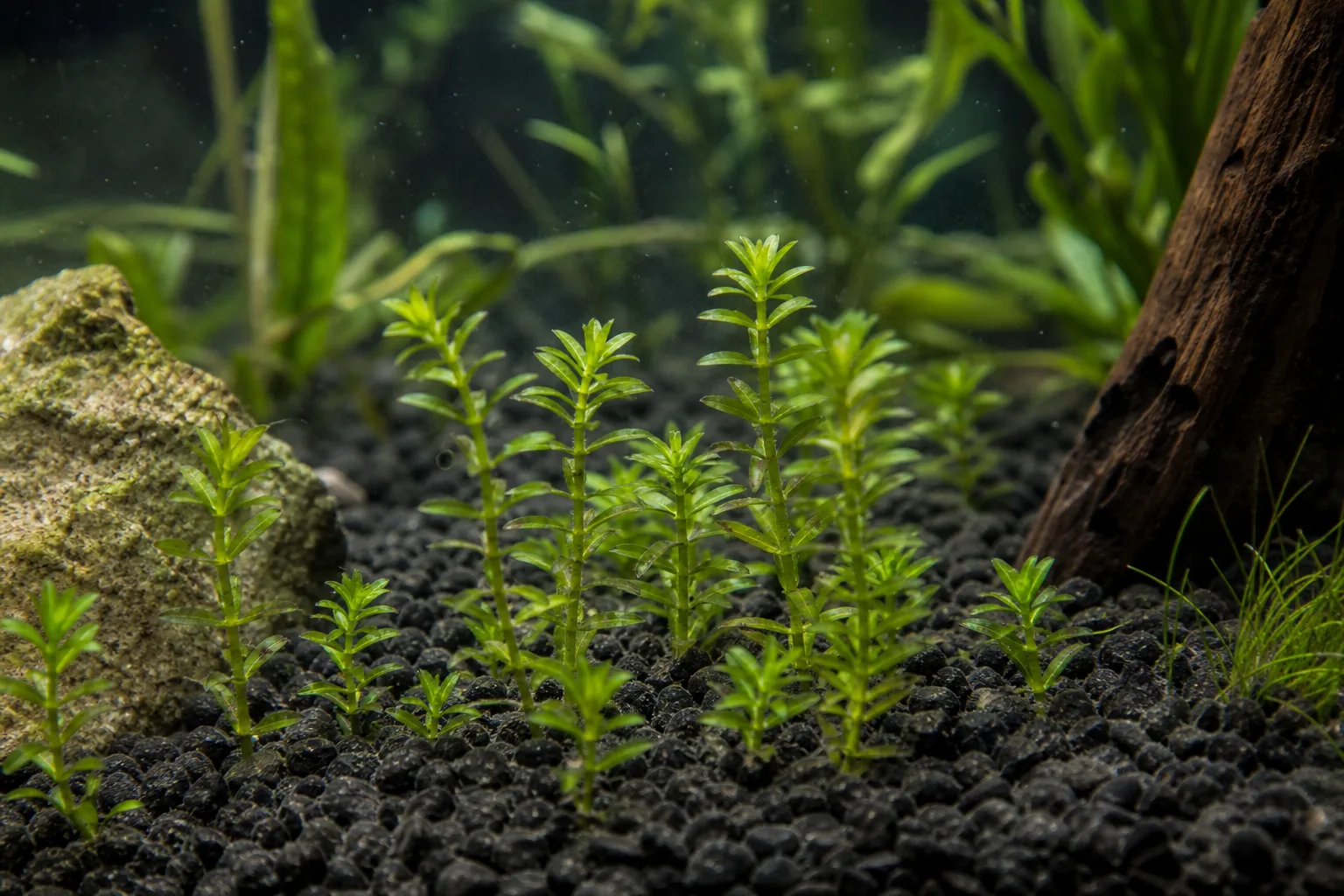
Slow Growth on Anacharis / Elodea: Causes, Checks & Fixes
This guide covers slow growth on Anacharis / Elodea. See also the general Slow Growth guide, watering, and light pages for this plant.
Slow Growth on Anacharis / Elodea: Causes, Checks & Fixes
Quick answer
Slow growth on Anacharis (Egeria densa) means short stems, sparse pale whorls, and little weekly elongation despite clean submerged culture-not the long bare internodes of leggy stretch. The usual drivers are cool water below the active growth band, weak PAR at stem depth, or nutrient-poor water in a low-tech tank without regular liquid fertilizer.
First fix: confirm water is roughly 68–77 °F (20–25 °C) and raise light toward 30–50 PAR at the substrate with an 8–10 hour photoperiod before dosing fertilizer. Make one correction, wait seven days, then reassess.
This guide is for submerged aquarium and turtle-tank culture-not terrestrial houseplant pots. For PAR maps, photoperiod ramps, and fixture depth math, see the Anacharis light guide. For liquid dosing after light is corrected, see the Anacharis fertilizer guide. For everyday parameters, see the Anacharis overview.
What slow growth looks like on Anacharis
Short, stalled stems: whorls stay relatively close together, but the stand adds less than about 1 cm per week in moderate setups-or barely visible length over two weeks. This is different from leggy stretch, where internodes lengthen to 2 cm or more as the plant reaches for light.
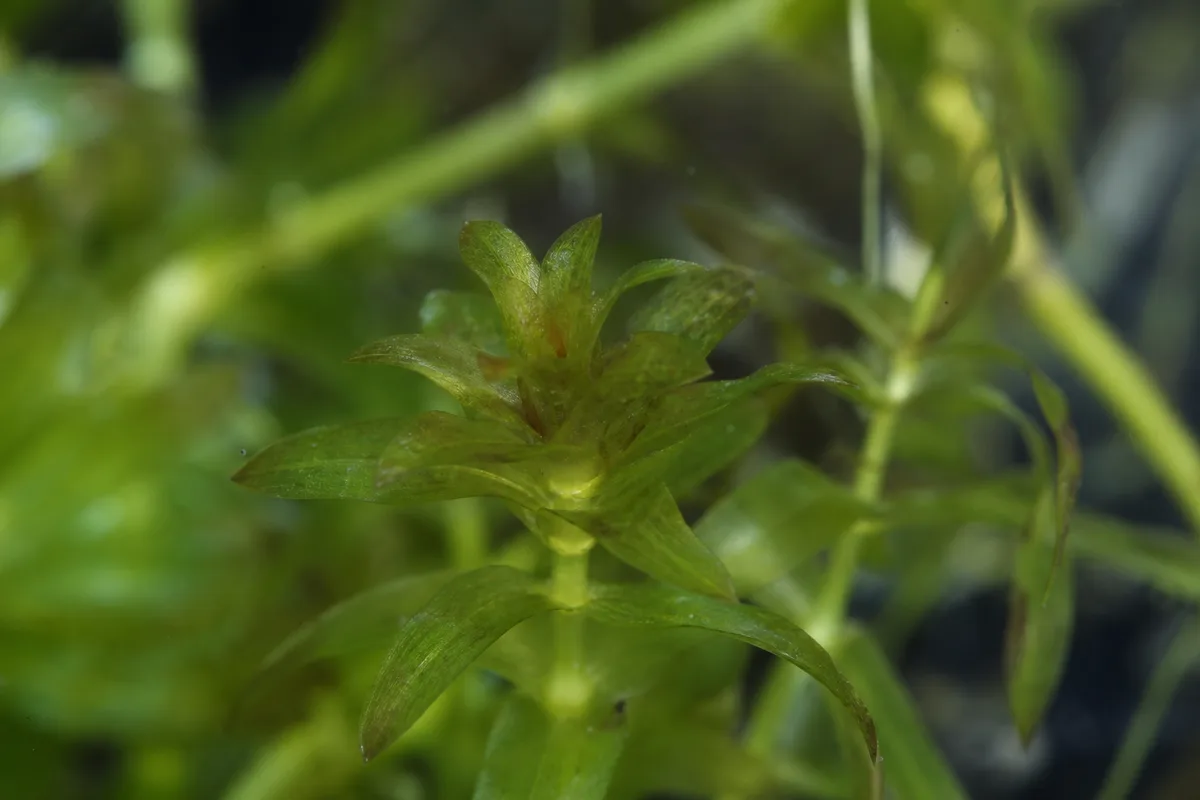
Slow Growth symptoms on Anacharis / Elodea - compare with healthy tissue on the same plant.
Sparse, pale whorls: leaves are smaller and lighter green than healthy bottle-brush growth, yet stems usually stay firm-not translucent mush. Compare the newest tip: a bright green firm tip means the plant can respond once conditions improve; a cloudy or soft tip points to melt or ammonia, not cosmetic slow growth.
Tank-wide stall vs. zone split: in the same aquarium, floating stems may grow bushy while planted lower sections stall-a light-at-depth gradient. In cool unheated tanks, the whole stand may stall evenly with green but compact whorls.
New purchase limpness: stems from the shop often pause for seven to fourteen days during emersed-to-submersed transition before submerged whorls appear. That acclimation stall is common; spreading translucence after day ten is not.
Healthy Anacharis in range shows steady tip elongation, bright green whorls, and upright firm stems. Judge your problem against that baseline, not against a fast-growing neighbor species.
Slow growth vs. leggy growth vs. not enough light
These three pages overlap in SERPs but answer different reader stages. Use this table before you pick a fix path:
| Focus | Slow growth (this page) | Leggy growth | Not enough light |
|---|---|---|---|
| Main symptom | Little weekly elongation; compact but pale sparse whorls | Long bare internodes; stems lean toward fixture | Pale whorls, bottom leaf drop before extreme stretch |
| Common cause | Cool water, borderline PAR, low nutrients, new-tank stall | Chronic low PAR at depth; short photoperiod | Weak fixture; photoperiod under 8 hours |
| First fix | Verify 68–77 °F; raise PAR to 30–50; then fertilizer | Float, trim above nodes, target 30–50 PAR | Upgrade fixture or photoperiod; float toward light |
If internodes are already stretched with bare gaps, read leggy growth for trim-and-replant technique. If the stand is pale but not yet stringy, start with not enough light and the light guide. Return here when growth rate-not stem shape-is the complaint.
Why Anacharis growth stalls
Anacharis feeds from the water column and grows as a fast vegetative stem plant when temperature, light, and dissolved nutrients align. Egeria densa is fully aquatic-triggers are almost always water quality, light, temperature, or brief emersed handling, not soil moisture schedules.
Cool water below the active band
Anacharis tolerates a wide temperature span but metabolizes fastest in moderate cool-to-temperate water. Research summaries place the optimum near 20–24 °C (68–75 °F), with noticeably slower elongation below about 18 °C (65 °F) even when stems stay green. Unheated room tanks, garage aquariums, and large turtle systems with partial water changes often sit in this stall band without obvious melt.
Above 26–28 °C (79–82 °F), respiration can outpace photosynthesis unless light is strong-some warm tanks show slow growth or thinning despite looking bright from above. Stable 68–77 °F (20–25 °C) is the practical target for steady submerged elongation in most home aquariums.
Weak PAR at stem depth
Anacharis survives very low light but does not build dense whorls quickly below roughly 30 PAR at the substrate in low-tech tanks-detailed in the Anacharis light guide. Deep tanks, stained water, turtle hoods, and plastic lids can leave mid-tank stems in dim water while the surface looks adequately lit.
The floating-vs-planted split is a high-yield confirmation: if floaters outpace buried stems in the same tank, PAR at depth-not fertilizer-is the bottleneck.
Nutrient-poor water in low-tech tanks
In shrimp-only or lightly stocked tanks, Anacharis may exhaust available nitrogen and micronutrients despite acceptable light. Pale new tips with green veins suggest iron shortage; older bottom leaves turning yellow inward with glassy texture suggests nitrogen limitation-patterns covered in the fertilizer guide. Do not dose into detectable ammonia on an uncycled tank-ammonia has direct toxic effects on aquatic life and risk shifts with pH and temperature (US EPA); see wilting on Anacharis when parameters fail.
New-tank cycle and acclimation melt
Freshly set up aquariums often show stalled growth while the nitrogen cycle establishes. Ammonia and nitrite stress slows or melts tissue even when light looks fine. Store-bought bunches also pause during emersed-to-submersed transition-distinct from chronic slow growth in a mature tank. For parameter swings after planting, compare transplant shock.
Copper medications and algaecides
Copper-based treatments used in aquatic plant management can injure Egeria densa in planted displays. Copper injury tends toward translucent melt within days, not months of compact pale growth-but slow decline after fish or turtle medication is worth checking labels against the fertilizer guide before adding anything else.
How to confirm the cause
Work in this order:
-
Newest tip growth - Firm bright green tips favor recovery after light or temperature correction. Translucent mush is urgent melt, not slow growth.
-
Water temperature - Log at stem depth with a tank thermometer. Below 65 °F (18 °C), treat cool stall as primary until you raise toward 72–75 °F (22–24 °C).
-
PAR at stem depth - Target 30–50 PAR and 8–10 hours daily per the light guide. Compare floating vs. planted sections in the same tank.
-
Water tests - On tanks under six weeks old, test ammonia and nitrite. Detectable ammonia overrides fertilizer plans.
-
Recent additives - Review medications, algaecides, and liquid carbon from the last seven days. Chemical injury timelines are days, not months.
-
Emersed tissue - Melt limited to older nursery leaves on a new bunch often resolves in seven to fourteen days; chronic stall in mature submerged culture points to temperature, light, or nutrients.
UF/IFAS describes Egeria densa as a rooted submersed perennial-keep diagnosis inside aquarium culture.
First fix: light and temperature before fertilizer
Raise usable light at stem depth and confirm temperature is in the 68–77 °F (20–25 °C) active band before adding aquarium fertilizer.
This sequencing prevents the common mistake of dosing a nutrient solution into cold or dim water and blaming the product when whorls stay pale.
PAR and photoperiod summary
From the validated Anacharis light guide:
- 30–50 PAR at the substrate for compact growth in low-tech tanks
- 8–10 hours on a consistent timer (not six-hour survival schedules)
- Float stalled stems directly under the fixture for seven days as a diagnostic lift before replanting deep
If PAR is already in range and temperature is stable, move to fertilizer-never stack both on day one.
When and how to add fertilizer
After one week with improved light and temperature:
- Dose a comprehensive liquid fertilizer at half label strength once weekly in lightly stocked tanks
- Increase only if new tips stay pale while light and temperature are confirmed in range
- Skip root tabs for Anacharis-only stands-the fertilizer guide explains column feeding
- Hold fertilizer entirely if ammonia is detectable or stems are actively melting from a new purchase
Wait seven days between each new variable so you can read the plant’s response.
Recovery timeline
- Cool-water stall after heater adjustment: visible tip elongation often appears in seven to fourteen days
- Light correction at depth: similar window once PAR and photoperiod match the light guide
- Nutrient-limited tank after proper sequencing: greener new whorls within one to two weeks of consistent half-strength liquid doses
- New purchase acclimation: allow seven to fourteen days before judging failure; hold full fertilizer until new submerged whorls form
Old pale whorls rarely darken to match new growth. Recovery means firmer stems, denser new whorls at tips, and measurable weekly elongation-not perfect lower leaves.
Lookalike symptoms
| Pattern | What you see | Likely driver | Next page |
|---|---|---|---|
| Slow growth (this page) | Compact stems; little weekly length; pale sparse whorls | Cool water, borderline PAR, low nutrients | Stay here |
| Leggy stretch | Long bare internodes; lean toward light | Chronic low PAR at depth | Leggy growth |
| Nitrogen deficiency | Firm stems; pinholes; pale canopy in high light | Low nitrates despite strong PAR | Nitrogen deficiency |
| Acclimation melt | Translucent sections on new stems | Emersed-to-submersed transition | Transplant shock |
| Active melt | Mush spreading into tips; odor | Ammonia, copper, parameter crash | Wilting |
What not to do
- Do not dose terrestrial pesticides or fungicides into aquarium water.
- Do not add heavy fertilizer to foul water or detectable ammonia.
- Do not plant in fertilizer-rich potting soil-use inert aquarium gravel or floating culture only.
- Do not leave melting tissue decaying in the tank.
- Do not release trimmings into local waterways-UC ANR documents Brazilian egeria as an established invasive when fragments escape.
How to prevent slow growth next time
- Keep stable 68–77 °F (20–25 °C) water in heated rooms; monitor unheated tanks seasonally.
- Run 30–50 PAR and 8–10 hour photoperiods per the light guide.
- Dose liquid fertilizer weekly only after light and temperature are confirmed-details in the fertilizer guide.
- Float new stems in tank water before planting deep; acclimate one week when possible.
- Check medication labels for copper before treating fish or turtles.
- Trim regularly so lower whorls are not permanently shaded by a dense canopy.
When to worry
High urgency: stems turn translucent, water clouds with odor, ammonia is detectable, or damage climbs into firm tissue within days. Those patterns point to wilting or chemical injury-not cosmetic slow growth.
Lower urgency: green firm tips with pale lower whorls in a cool or dim tank-correct temperature and PAR first, then reassess after fourteen days.
When lower stems fail broadly after correction, save firm tops using the Anacharis propagation guide.
Related Anacharis guides
- Anacharis light needs - PAR targets, photoperiod, and deep-tank shading
- Anacharis fertilizer - liquid dosing after light and temperature are in range
- Leggy growth on Anacharis - reshape already-stretched internodes
- Not enough light on Anacharis - pale whorls before stretch
- Anacharis overview - everyday submerged culture baselines