Transplant Shock on Anacharis / Elodea: Causes, Checks &
Quick answer
Transplant shock on Anacharis / Elodea is usually parameter and light shock when moving between store bags, quarantine tubs, and display tanks. First step: Float stems in tank water for 30 minutes to a few hours, slowly mix bag water with tank water, trim translucent melt, and wait for new tips on firm nodes.
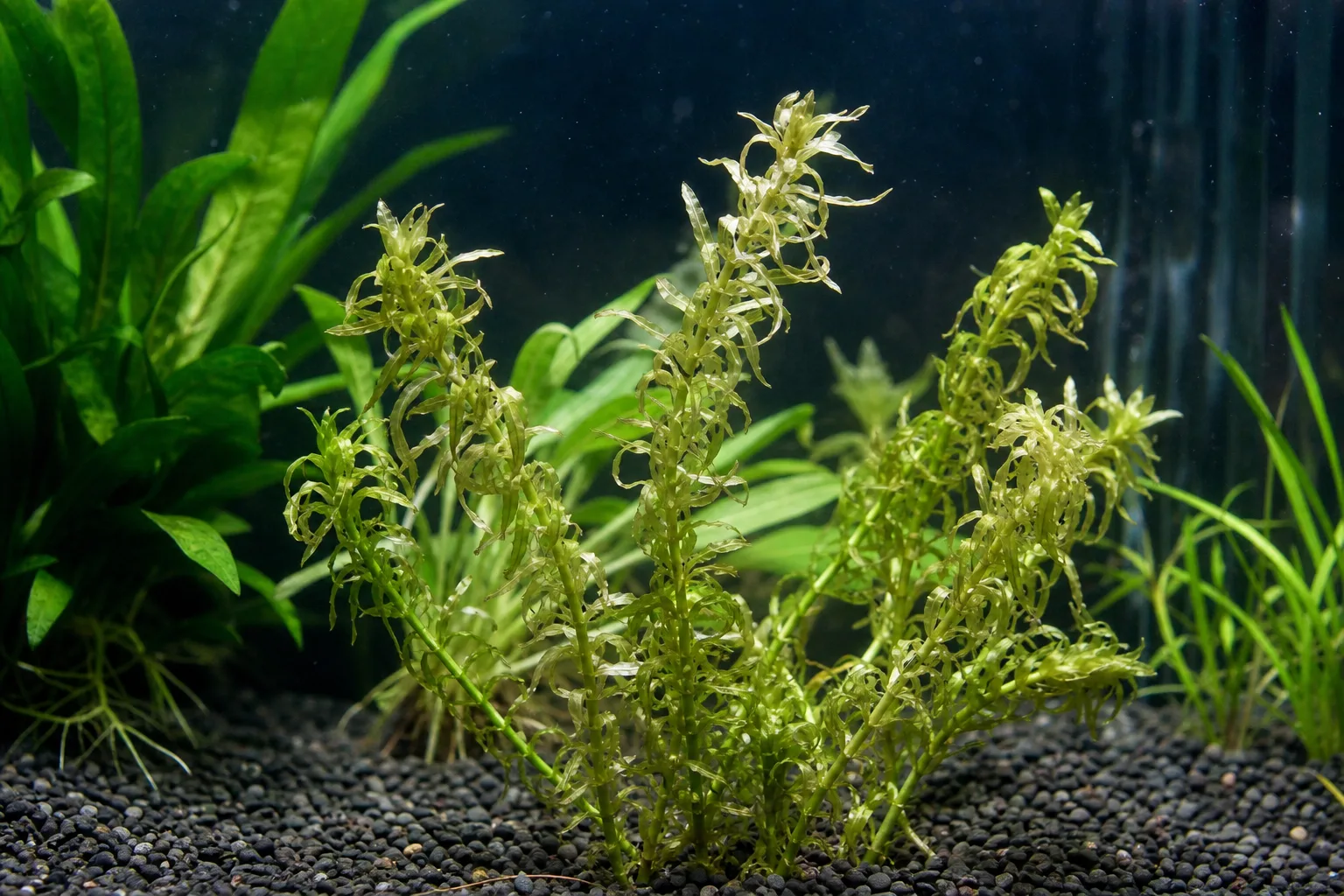
Transplant Shock on Anacharis / Elodea: Causes, Checks & Fixes
This guide covers transplant shock on Anacharis / Elodea. See also the general Transplant Shock guide, watering, and light pages for this plant.
Transplant Shock on Anacharis / Elodea: Causes, Checks & Fixes
Quick answer
Transplant shock on Anacharis (Egeria densa) is aquarium acclimation melt, not houseplant repot stress. When stems move between store bags, quarantine tubs, and display tanks, rapid shifts in temperature, pH, hardness, or light trigger lower whorls to turn pale, translucent, or detach.
First step: Float stems in tank water for 30 minutes to a few hours, slowly mix bag water with tank water, trim mushy tissue, and wait for new submerged tips on firm nodes.
This guide is for submerged aquarium, turtle-tub, and pond-tub culture only-not potted houseplant soil. Anacharis feeds from the water column, grows as a fast vegetative stem plant, and shows transplant stress through whorl melt, stem firmness, and new tip growth-not through soil moisture or pot drainage.
For full parameter ranges and long-term stability, see the Anacharis overview. For planting depth and stem prep, see Anacharis repotting. For melt after large water changes, see water stress.
Submerged aquarium culture - not houseplant pots
Anacharis is a fully submerged freshwater oxygenator. It has no use for watering schedules, well-drained potting mix, or bright indirect window light. Every diagnosis on this page happens in tank water: temperature, pH, GH/KH, light at stem depth, and recent chemical exposures.
The UF/IFAS plant directory describes Egeria densa as a submerged aquatic plant that spreads vegetatively in calm freshwater. Transplant shock is the same species failing to adjust when the water column changes faster than new submerged leaves can form.
Why Anacharis gets transplant shock after a tank move or store purchase
Emersed farm stock vs your submersed tank
Most store-bought Anacharis is emersed-grown at commercial farms-stems cultivated above water with roots in wet trays or hydroponic beds. Those leaves are built for air and high humidity. Your home tank is fully submersed with different temperature, pH, and hardness. The plant sheds emersed-built tissue and grows new leaves adapted to underwater life. That transition is normal melt, not a disease.
Lower whorls melt first because they are oldest, often shaded, and furthest from new growth at the tip. Leaves are only about two cell layers thick, so mechanical stress from rubber bands, repeated uprooting, or rough handling accelerates damage on thin tissue.
Parameter and light shock (temperature, pH, GH/KH, photoperiod)
Anacharis tolerates a wide survival envelope-field records show pH 6.4 to 9.2 and temperatures from near freezing to 32°C-but tolerance is not stability. A stem acclimated to pH 7.4 sheds leaves if dropped into pH 6.2 overnight, even though both numbers are “within range.”
Common shock triggers when moving stems:
| Parameter | Typical comfort band | Shock signal |
|---|---|---|
| Temperature | 60–77°F (15–25°C) ideal | Bag water >2°F different from tank |
| pH | 6.5–7.5 comfort | Store water vs tank differs >0.3 |
| Light | Moderate aquarium lighting | Moving from dim store tub to bright LED |
| Photoperiod | 7–10 hours | Sudden jump from short store lighting to 12+ hours |
Repeated uprooting within the first two weeks restarts shock. Each replant disturbs fragile roots and exposes nodes to parameter swings the stem has not finished adjusting to.
What transplant shock looks like on Anacharis whorls
Expect this pattern within three to seven days of purchase, tank transfer, or replanting:
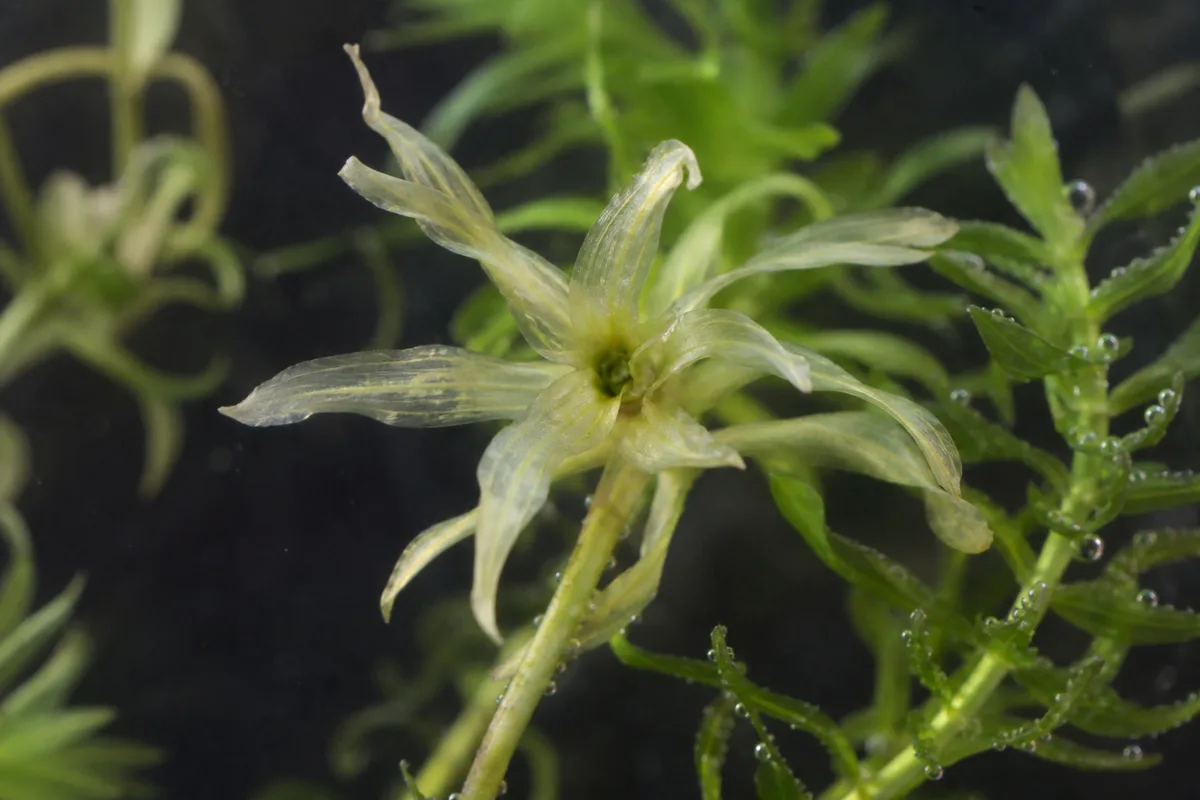
Transplant Shock symptoms on Anacharis / Elodea - compare with healthy tissue on the same plant.
- Lower whorls turn pale yellow, chartreuse, or translucent while stems stay firm
- Leaves detach cleanly or turn mushy at the base-not fuzzy black algae tufts
- Upper tips may stay green briefly, then pale if shock continues
- Fine white roots may stall or detach; new roots appear once parameters stabilize
Healthy recovery sign: a firm green node with a tiny new submerged whorl emerging within seven to fourteen days. Mushy, collapsing stem bases point past ordinary transplant shock-see lookalikes below.
How to confirm the cause
Check in this order: tip growth, stem firmness, water tests, light depth, recent changes
- Newest tip growth - Pale but firm tips that send out new whorls within a week suggest recovery. Tips that turn translucent and collapse suggest chemical or ammonia damage.
- Stem firmness - Pinch the stem between lower whorls. Firm green tissue = acclimation melt. Soft, slimy, or black base = stem rot, ammonia, or copper-not ordinary shock.
- Water tests - In new or lightly stocked tanks, test ammonia and nitrite. Cycling spikes produce melt that looks like transplant shock but needs biofilter management, not more floating time.
- Light at stem depth - Lower whorls shaded by a dense canopy or buried too deep melt faster. Check planting depth against the repotting guide.
- Recent changes - Log tank transfers, medication doses, fertilizer additions, and water-change volume in the past 72 hours. Stack only one intervention at a time.
Melt vs ammonia, copper, or nutrient problems
| Symptom pattern | Likely cause | Next read |
|---|---|---|
| Lower melt days 1–7 after purchase or move; firm stems | Normal transplant / emersed transition | This guide |
| Melt within 48 hours of large water change | Parameter shock in water column | Water stress |
| Sudden melt 24–72 hours after ich dose | Copper or algicide | Chemical damage |
| Uniform yellowing, firm stems, no recent move | Nutrient gap or self-shading | Yellow leaves |
| Lower leaves detach, upper stays green | Self-shading or age shed | Leaf drop |
First fix for Anacharis transplant shock
Float/bag acclimation before planting
Do this first-before trimming, fertilizing, or replanting:
- Float the entire bunch (or loose stems) in the display tank for 30 minutes to a few hours so bag and tank temperatures equalize within 2°F.
- Every 10–15 minutes, add a small cup of tank water to the bag. Over 30–45 minutes, the plant adjusts to your pH and hardness gradually-same principle as drip-acclimating fish.
- Remove rubber bands, lead weights, and foam anchors. Separate stems and inspect for mushy sections.
- Plant only after acclimation, or leave floating until white roots form if the substrate is unstable.
Do not skip acclimation because the plant “looked fine in the store.” Emersed stock often looks green above water and melts within days underwater.
Trim mushy tissue; leave firm nodes
After floating:
- Cut away translucent, brown, or mushy whorls with clean scissors so decay does not foul the water.
- Leave firm green nodes intact-even bare stems can sprout new submerged growth.
- Strip lower leaves from the bottom 1–2 inches before planting; buried leaves rot and spread upward.
- Bury only 1–2 inches of bare stem in fine gravel-deeper burial causes base rot mistaken for shock.
Make one care correction and wait seven days before stacking fertilizer, medication, and another replant.
Recovery timeline
| Situation | What to expect |
|---|---|
| Mild melt after matched acclimation | New submerged tips in 7–14 days |
| Skipped acclimation or large pH gap | 2–3 weeks; some stems may not recover |
| Melt plus ammonia during cycling | Recovery tied to biofilter maturity, not patience alone |
| Copper or medication exposure | May lose whole stems; save only firm cuttings |
Melted whorls do not re-green. Judge success by firm stems and clean new growth at tips-not by waiting for lower leaves to recover.
Signs improvement is working: new whorls at stem tips, white roots from nodes, pearling under moderate light after the second week.
Signs the problem is worsening: melt climbing past firm tissue after day five, black slimy stem bases, fish gasping, or ammonia above 0.25 ppm with livestock present.
What not to do
- Do not apply houseplant logic-no “water when soil dries,” no withholding water changes, no repotting into potting mix.
- Do not bury melting stems deeper to anchor them; buried rot spreads upward on thin tissue.
- Do not uproot and replant repeatedly during the first two weeks-each move restarts shock.
- Do not dose copper ich medication or heavy algicides while stems are melting. Anacharis is extremely sensitive to copper used in many fish treatments.
- Do not fertilize melting stems before ammonia and nitrite read 0 and new growth appears.
- Do not release trimmings into ponds, streams, or storm drains. Brazilian egeria reproduces from fragments and is an established invasive in many waterways. Bag, freeze, and trash cuttings per local guidance.
How to prevent transplant shock next time
- Acclimate every new bunch before planting-float, drip-mix bag water, then plant.
- Match parameters between quarantine tubs, store bags, and display tanks within 2°F and 0.3 pH when possible.
- Plant correctly the first time: strip lower leaves, bury 1–2 inches only, space stems so light reaches lower whorls. Details in the repotting guide.
- Stabilize the tank before adding stems-cycling tanks should expect partial melt until ammonia and nitrite clear.
- Check medication labels for copper before treating fish in planted tanks.
- Trim regularly once established so lower whorls do not self-shade and shed.
When to worry
Treat as urgent when:
- More than half the stand turns mush within five days
- Ammonia reads 0.25 ppm or higher with fish in the tank
- Melt started within 24–72 hours of ich medication or algicide dose
- Stem bases turn black and slimy despite stable tests
Lower urgency when a few lower whorls melt on firm stems after a new purchase with matched acclimation-trim, wait two weeks, and watch for new tips.
Consult a local aquarium shop or extension aquatic plant resource when melt persists in a parameter-matched quarantine tub with no fish load-that points to contamination or herbicide trace, not ordinary shock.
What to read next on Anacharis care
- Anacharis overview - melt FAQ, light, and water parameters
- Anacharis repotting - planting depth, stem prep, disposal
- Yellow leaves - nutrient and acclimation yellowing
- Water stress - melt after large water changes
- Chemical damage - copper and algicide melt
- Leaf drop - lower whorl shedding on established stems
Transplant shock on Anacharis is normal transition melt when emersed farm stock meets your submersed tank-or when parameters swing during a move. Float and drip-acclimate first, trim decay, plant shallowly, and wait seven to fourteen days for new tips on firm nodes. Lower melted whorls will not recover; judge success by new submerged growth, not by old leaves greening up again.
When to use this page vs other Anacharis / Elodea guides
- Anacharis / Elodea watering guide - Use for routine moisture checks before assuming transplant shock is the main issue.
- Anacharis / Elodea problems hub - Browse all 34 common issues on this species.
- Wilting on Anacharis / Elodea - Different entry point when symptoms overlap with transplant shock.
- Leaf Drop on Anacharis / Elodea - Different entry point when symptoms overlap with transplant shock.