Water Stress on Anacharis / Elodea: Causes, Checks & Fixes
Quick answer
Water stress on Anacharis means unstable tank chemistry-not dry soil. Large unmatched water changes, cycling ammonia or nitrite spikes, and inter-tank transfers with different temperature or pH are the usual triggers. First step: test ammonia and nitrite, then match your next change water to tank temperature within 2°F before adding anything else.
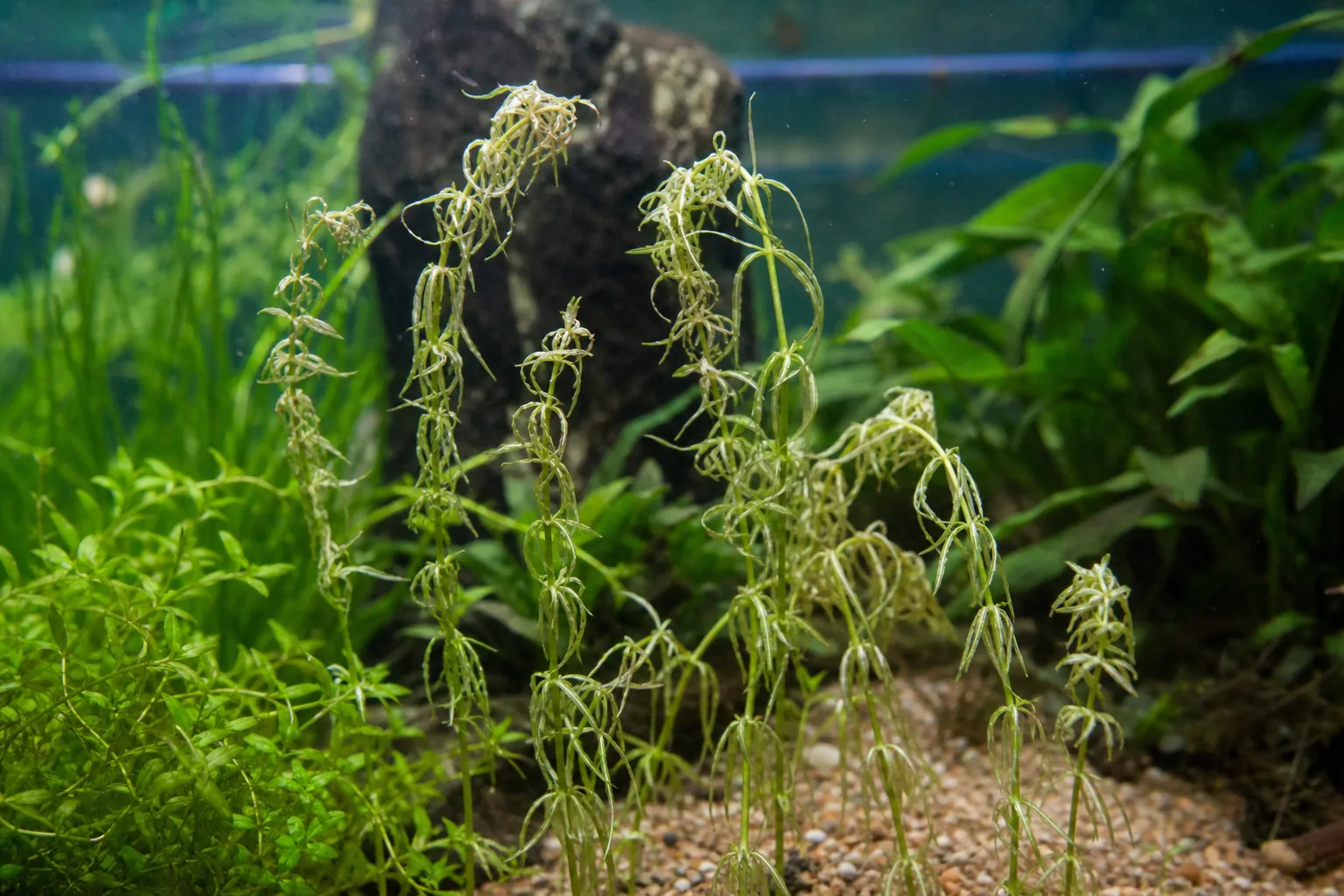
Water Stress on Anacharis / Elodea: Causes, Checks & Fixes
This guide covers water stress on Anacharis / Elodea. See also the general Water Stress guide, watering, and light pages for this plant.
Water Stress on Anacharis / Elodea: Causes, Checks & Fixes
Quick answer
Water stress on Anacharis (Egeria densa) is aquarium chemistry shock, not underwater drought or “underwatering.” This submerged oxygenator absorbs every mineral through leaves only two cell layers thick-when temperature, pH, hardness, or nitrogen compounds swing, lower whorls melt within days.
What melt looks like: bottom whorls turn translucent, pale yellow-green, or mushy and detach easily when pinched; stems above the damage may stay firm while the base goes glassy. The pattern usually climbs from the substrate upward within 48–72 hours of a large water change, cold tap dump, or tank transfer.
First step: test ammonia and nitrite, then match your next change water to tank temperature within 2°F before any other intervention. Trim mushy tissue so decay does not spike ammonia further.
Typical triggers: large unmatched water changes, new-tank cycling spikes, and moving stems between tanks with different parameters. This guide covers submerged aquarium, turtle tub, and outdoor tub culture only-not potted houseplant watering. For full parameter ranges and acclimation routines, see the Anacharis watering guide. For melt right after purchase without a recent change, see transplant shock.
What “water stress” means for submerged Anacharis
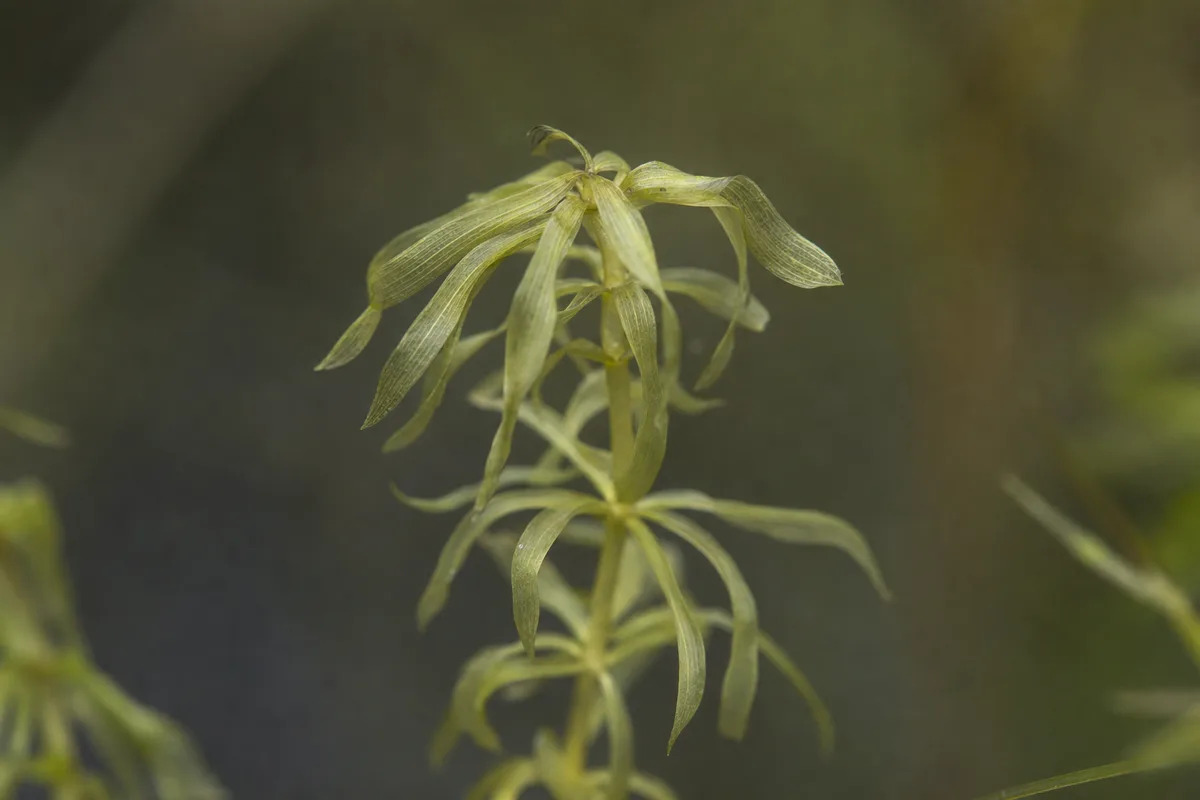
Water Stress symptoms on Anacharis / Elodea - compare with healthy tissue on the same plant.
On terrestrial houseplants, “water stress” usually means too little or too much soil moisture. Anacharis has no soil to dry out. It is a column feeder: roots anchor the stem, but calcium, magnesium, nitrogen, and trace elements enter through submerged leaf surfaces. The plant cannot retreat into dry substrate and wait out bad conditions-it responds immediately to whatever is dissolved in the water column.
That biology is why parameter instability-not change volume alone-defines water stress for Anacharis / Elodea overview:
| Aquarist phrase | What it actually means for Anacharis |
|---|---|
| ”Shocked after a water change” | Temperature or pH delta between new and tank water |
| ”New tank melt” | Ammonia or nitrite above 0 ppm during cycling |
| ”Store plant died in my tank” | Bag water differed in temp, pH, or GH from your aquarium |
| ”Overwatering” in forums | Often stale, nitrate-heavy water or organics from decaying melt-not too much H₂O |
If you are checking soil moisture, pot weight, or Anacharis / Elodea light guide in a living room, you are on the wrong diagnostic path for Egeria densa.
Why Anacharis melts fast when tank water chemistry swings
Anacharis tolerates a wide survival envelope-field records show pH 6.4 to 9.2 and temperatures from near freezing to 32°C-but tolerance is not stability. A stem acclimated to pH 7.4 sheds leaves if dropped into pH 6.2 overnight, even though both numbers are “within range.” The UF/IFAS plant directory notes the species spreads vegetatively in calm freshwater; aquarium melt is the same plant failing to adjust when the water column changes faster than new submerged leaves can form.
Why lower whorls melt first:
- Older leaves at the stem base are shaded, slower-growing, and the first to lose turgor when osmotic balance breaks.
- Thin cell walls cannot buffer a sudden temperature drop from cold tap water or a pH crash.
- Decaying tissue releases organics, which feeds ammonia-producing bacteria-a melt spiral in cycling or overcrowded tanks. Egeria densa prefers ammonium over nitrate and can briefly use ammonia as nitrogen, but nitrite is toxic to fish at levels as low as 0.10 mg/L and still damages plant tissue when the biofilter lags.
Why Anacharis cannot “wait out” shock like drought-tolerant roots: There is no stored moisture reserve in thick roots or succulent leaves. Stop the parameter swing or trim and isolate firm cuttings; the mush will not harden back into healthy whorls.
How to confirm water stress vs other melt causes
Work through this checklist in order. You are building a timeline: water stress ties to a change event within the last 72 hours.
Ammonia, nitrite, and nitrate test order
Use a liquid reagent kit (API, Salifert, or similar)-not strips alone-for resolution on ammonia and pH. Read results in natural daylight, not under blue aquarium LEDs, which can tint ammonia reagents green.
- Ammonia - Target 0 ppm in established tanks. UF/IFAS notes that any detectable ammonia indicates the system is out of balance and can stress fish and melt lower leaves on Anacharis. Cycling tanks may show ammonia for weeks while a new biofilter needs six to eight weeks to mature-a different recovery path than a one-time cold change.
- Nitrite - Any reading above 0 ppm in a cycled tank signals a filter crash or immature biofilter. Anacharis may initially use ammonia as nitrogen, but nitrite toxicity still damages tissue.
- Nitrate - Less acute. Very high nitrate (often above 40 ppm) suggests overdue water changes and stale water-not the same as acute shock, but overlaps with overwatering-style stale tank conditions.
Record results before your next change so you can compare after 48 hours.
Temperature and pH/GH/KH delta check
| Parameter | Stable-target band for Anacharis | Shock clue |
|---|---|---|
| Temperature | 60–77°F ideal; survives 3–35°C | Change water more than 2°F different from tank |
| pH | 6.5–7.5 comfort; survives 6.4–9.2; avoid swings over 0.3 units/day | Large tap vs tank delta after big change |
| GH | 3–8 dGH typical in aquarium culture | RO water without remineralization → brittle stems |
| KH | 3–8 dKH typical; low KH weakens nitrification | Low KH → slow pH drift and surprise melt |
Use a thermometer in the change bucket. Wrist tests miss cold winter tap that melts bottoms before fish show stress.
Symptom lookalike table
| Pattern | Likely cause | Differentiating check | Urgency |
|---|---|---|---|
| Lower whorls mushy 1–3 days after 40%+ change or cold tap | Water stress (parameter shock) | Temp/pH delta; ammonia 0; event matches timing | Same day - match next change water |
| Melt week one after store purchase, no huge change | Transplant shock - often emersed-farm stock | Bag acclimation skipped; no recent large change | This week - drip-acclimate, trim |
| Yellow upper leaves, thin pale stems, nitrate under 5 ppm | Nitrogen deficiency | No recent change event; fertilizer history | Low - dose per guide |
| Black tips, melt after ich dose | Chemical damage | Copper or algaecide on label | Same day - remove stems from tank |
| Yellow lower leaves only, green tips, stable tests | Normal shading / old leaf shed | Trim lower whorls; not an emergency | Routine trim |
| Gradual fade, high nitrate, fuzzy sludge on stems | Stale water / overwatering pattern | Infrequent changes; organics buildup | This week - matched partial change |
If two causes overlap-e.g., you fixed ammonia with a huge cold change-treat stabilizing parameters first, then reassess in 48 hours.
First fixes for Anacharis water stress
One clear first action: match change water to tank temperature within 2°F and verify ammonia and nitrite. Do not add fertilizer, move stems again, or rescape substrate on the same day.
Match change water to tank parameters
- Fill a bucket with intended change water; add dechlorinator per label.
- Thermometer-check bucket vs tank-target ±2°F. In winter, let tap sit to room temperature or pre-warm the bucket.
- If pH differs by more than 0.3, add tank water to the bucket in stages over 20–30 minutes (drip-acclimate the water, not just the plant).
- For RO or distilled source water, remineralize to at least 3 dGH and 3 dKH before use-bare RO shocks cell structure.
Limit change volume; trim decaying stems
- Cap single changes at 25–30% of tank volume unless ammonia is toxic to fish and an emergency dilution is required. UF/IFAS recommends 25–50% changes for acute ammonia in small tanks, but matched temperature matters more than volume for plant shock.
- Remove mushy leaves and soft stem sections immediately-decaying Egeria fouls water and raises ammonia. Use sharp scissors above the last firm whorl.
- Do not bury melting portions deeper “to save” the stem; buried rot spreads upward.
Cycling-tank ammonia response
In an uncycled or newly stocked tank, Anacharis may grow briefly on ammonia, then melt as nitrite appears.
- Test ammonia and nitrite daily; keep fish loads low or move fish to a cycled holding tank if readings stay high.
- Small daily changes (10–15%) with matched temperature beat one 80% dump that shocks plants and fish together.
- Trim melt continuously so organics do not feed the cycle backward.
- Expect partial melt until ammonia and nitrite read 0 ppm for several days-growth resumes from firm nodes after the biofilter catches up.
For turtle or goldfish tubs with heavy bioload, see the watering guide’s high-waste section; water stress there is often nitrate and ammonia combined, not a single cold change.
Recovery timeline
| Severity | What you see | Realistic timeline |
|---|---|---|
| Mild | Bottom one to two whorls translucent after matched 25% change | Stabilizes in 3–7 days; new tips at stem ends |
| Moderate | Melt through three to four whorls after cold change or transfer | 1–2 weeks for new submerged growth if tests stay stable |
| Severe | Stem soft mid-section; ammonia was high | May need cutting above last firm node; some stems lost |
| Cycling tank | Intermittent melt until nitrite clears | 2–6 weeks tied to biofilter maturity, not plant willpower |
Damaged whorls do not re-green. Success means firm nodes, new leaves at tips, and optional pearling under light-not restored lower leaves.
Signs the problem is worsening: melt climbing stem after day five with stable ammonia/nitrite; stem base turns black and slimy; fish gasp at surface. Retest, reduce feeding, increase matched partial changes, and consider moving surviving cuttings to a quarantine tub with known-stable water.
What not to do
- Do not treat melt as underwatering and add more water changes without matching temperature-stacked cold dumps accelerate shock.
- Do not fertilize melting stems before ammonia and nitrite are 0 and new growth appears. Nitrogen is rarely the first problem in shock melt; organics from decay are.
- Do not stack rescapes, medication, and large changes on the same day. One parameter correction at a time.
- Do not assume clear water means safe chemistry. Test, do not guess.
- Do not dose copper-based ich medication with Anacharis in the tank-copper kills or severely damages aquatic plants at fish-safe doses. Remove stems to a matched tub during treatment.
This is not a soil, Anacharis / Elodea repotting guide, or pesticide page. Ignore advice about pot drainage, soil surface drying, or bright indirect light for this submerged species.
How to prevent water stress next time
- Weekly 25–30% changes with temperature-matched, dechlorinated water in established tanks.
- Drip-acclimate new stems when moving between store bags, quarantine tubs, and display tanks-float for temperature, then mix tank water into the bag over 30–45 minutes.
- Test GH once if stems snap easily; remineralize soft tap or RO below 3 dGH.
- Cycle new tanks before heavy stocking, or grow Anacharis in a side tub until ammonia and nitrite stay 0.
- Avoid afternoon summer heat spikes near windows that push tank temperature 5°F above heater setting-heat shock counts as water stress too.
Full acclimation steps, turtle-tank notes, and copper warnings live in the Anacharis watering guide and overview. For yellow melt patterns without a recent change event, see yellow leaves on Anacharis.
When to worry
Escalate beyond DIY fixes when:
- Ammonia or nitrite stays elevated after matched partial changes and reduced feeding
- Every stem in the stand is mush despite stable tests-look for chemical damage or medication residue
- You are moving Egeria densa between outdoor ponds and indoor tanks with large climate deltas
Turtle-tub and outdoor-pond edge cases
Turtle tubs and goldfish stock tanks carry far higher ammonia and nitrate loads than community aquariums. Anacharis can melt from combined nitrogen stress, not a single cold change-test ammonia, nitrite, and nitrate together. Texas A&M AquaPlant notes that dense Egeria mats alter dissolved oxygen overnight as plants respire, which compounds stress when decaying melt adds organics. In high-waste tubs, run smaller matched changes (10–20%) twice weekly rather than one large dump, and trim melt before it fouls the water column.
Outdoor pond to indoor tank transfers cross large temperature and light deltas. USGS records survival from near freezing to 35°C, but abrupt moves shock acclimated tissue. Float stems in a shaded quarantine tub for three to five days, mixing indoor tank water into the tub in stages, before planting in the display tank. Never move pond trimmings directly into a heated aquarium on the same day.
Herbicide trace in quarantine tub: If melt persists in a parameter-matched tub with no fish load, suspect contamination from pond algaecide, copper plumbing, or residual medication. Consult a local aquarium shop or extension aquatic plant resource-ordinary shock protocols will not fix chemical residue.
Never dump aquarium water or trimmings into natural waterways; Egeria densa is invasive in much of North America.
Related Anacharis problems
- Transplant shock - melt after purchase without a large water change; emersed-farm transition
- Overwatering - stale, nitrate-heavy water and organics buildup, not too much H₂O
- Underwatering - rare in submerged culture; usually low flow or emersed drying
- Nitrogen deficiency - pale upper growth without a recent change event
- Chemical damage - copper, algaecide, or medication melt
- Yellow leaves - color loss patterns when tests are stable
- Anacharis watering guide - parameter targets and acclimation routines
- Anacharis overview - species hub
Conclusion - escalation ladder
Use this path instead of repeating the quick answer:
- When only the bottom one to two whorls are mush after a matched 25% change and ammonia/nitrite read 0 - trim decay, retest in 48 hours, and wait for new tips. No quarantine tub needed.
- When melt climbs past three whorls, ammonia is detectable, or change water was more than 2°F off - match the next change water, cap volume at 25–30%, trim daily, and move firm cuttings to a parameter-matched quarantine tub if display-tank melt continues after five days.
- When the stem is soft mid-section, every whorl is mush, or tests stay high after matched changes - cut above the last firm node or abandon the stem; focus on saving isolated firm cuttings. Check chemical damage if chemistry looks stable.
- When melt persists in a matched quarantine tub with no fish - suspect herbicide trace or copper residue, not ordinary parameter shock.
FAQs
How can I confirm water stress on Anacharis / Elodea?
Look for lower whorls turning translucent or detaching within 48–72 hours of a large water change, tank transfer, or filter crash-and ammonia or nitrite above 0 ppm, or change water that differed more than 2°F or 0.3 pH from the tank. Match timing to the event, not soil moisture. If melt started when you moved stems between tanks without acclimation, also read the transplant shock guide.
What should I check first for water stress on Anacharis / Elodea?
Run a liquid test kit for ammonia, nitrite, and nitrate before changing anything else. Compare tank temperature to your change bucket with a thermometer. Review the last 72 hours: Did you replace more than 30% volume, dump cold tap in winter, move stems from a store bag, or add fish to an uncycled tank? Those patterns point to parameter shock on this column-feeding species.
Will damaged Anacharis / Elodea leaves recover from water stress?
Melted whorls do not re-green. Judge recovery by firm stem nodes and new submerged tips one to two weeks after parameters stabilize. Lower sections may stay bare while the top regrows. If melt climbs past the bottom three whorls after day five with stable tests, trim above the last firm node and replant.
When is water stress urgent on Anacharis / Elodea?
Act the same day when ammonia reads 0.25 ppm or higher with fish in the tank, nitrite is detectable, or more than half the stand is mush and fouling the water. A few lower yellow leaves after a matched 25% change in a cycled tank is slower urgency-trim and retest in 48 hours. Never dose copper medication while stems are melting.
How do I prevent water stress on Anacharis / Elodea next time?
Match change water to tank temperature within 2°F, limit single changes to 25–30% of volume, drip-acclimate new stems between tanks, and keep ammonia and nitrite at 0 ppm before adding livestock. In cycling tanks, grow Anacharis in a matched quarantine tub until the cycle completes. Full parameter targets are in the Anacharis watering guide.
When to use this page vs other Anacharis / Elodea guides
- Anacharis / Elodea watering guide - Use for routine moisture checks before assuming water stress is the main issue.
- Anacharis / Elodea problems hub - Browse all 34 common issues on this species.