Brown Leaves on Anacharis (Aquarium Elodea): Causes, Checks
Quick answer
Brown leaves on Anacharis / Elodea usually trace to shaded lower whorls, diatom algae film, nutrient stress, post-shipping melt, or poor water quality. First step: Remove mushy brown tissue before testing water or adjusting light.
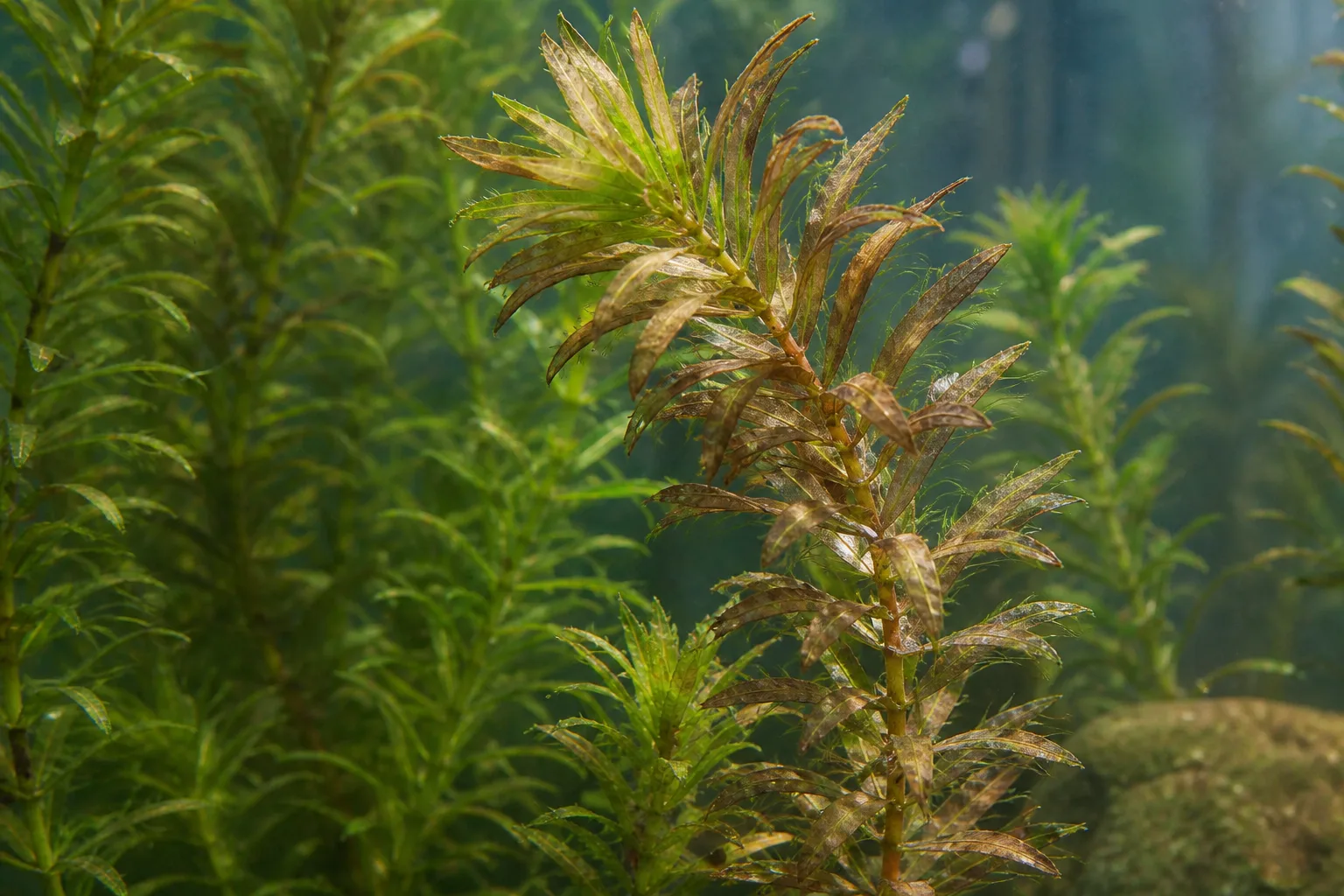
Brown Leaves on Anacharis / Elodea: Causes, Checks & Fixes
This guide covers brown leaves on Anacharis / Elodea. See also the general Brown Leaves guide, watering, and light pages for this plant.
Brown Leaves on Anacharis / Elodea: Causes, Checks & Fixes
Quick answer
Brown leaves on Anacharis (Egeria densa) usually trace to shaded lower whorls, diatom algae film, nutrient stress, post-shipping melt, or ammonia and medication shocks. First step: remove mushy brown tissue before running water tests or changing light-decaying leaves foul the tank and make every other symptom worse.
This guide is for submerged aquarium, turtle-tank, and pond-tub culture only-not terrestrial houseplant pots. Anacharis feeds from the water column, grows as a fast vegetative stem plant, and shows stress through whorl color, stem firmness, and new tip growth.
Why Anacharis turns brown (aquarium context)
Because Egeria densa is fully aquatic, brown whorls almost always reflect water quality, light at depth, algae coating, or transition melt-not soil moisture or pot drainage.
Lower-whorl shading and self-shading
Tall or densely planted stems block light to the bottom. Lower whorls starve first, turning brown and dropping while tips stay green. Floating mats shade stems below them the same way. This is normal aging on overgrown plants, not a disease-but it looks alarming when half the stem browns at once.
Brown diatom algae film
New and lightly stocked tanks often grow brown diatom algae-a dusty coating that wipes off with a finger. It clings to Anacharis whorls and can look like dead tissue until you rub a leaf between thumb and finger. Diatoms feed on silicates and excess nutrients; they fade as the tank matures and plant mass increases.
Nutrient stress in the water column
Anacharis pulls nitrogen, iron, and trace elements from the water. In shrimp-only or heavily planted tanks, older whorls brown or yellow while tips stay pale when nitrate runs low. UF/IFAS describes Brazilian waterweed as a rooted submersed perennial that competes aggressively when nutrients and light align-when they do not, lower leaves die back first.
Post-shipping and acclimation melt
Store-bought Anacharis is often grown emersed at farms. Submerged tank conditions trigger melt: whorls turn brown, soft, and translucent within the first one to two weeks. This is transition shock, not instant failure. Firm stem sections above the mush usually sprout new submerged leaves if decay is removed promptly.
Ammonia, medications, and water-quality shocks
Cycling tanks with detectable ammonia or nitrite brown and liquefy Anacharis faster than hardy stem plants recover. Copper-based fish medications and aquatic herbicides are documented phytotoxins for Brazilian waterweed-dosing ich cure or algaecide with Anacharis in the tank commonly triggers rapid brown melt. Large unmatched water changes and heat above roughly 82°F (28°C) produce similar collapse.
What brown leaves look like on Anacharis whorls
Use whorl position and texture to narrow the cause:
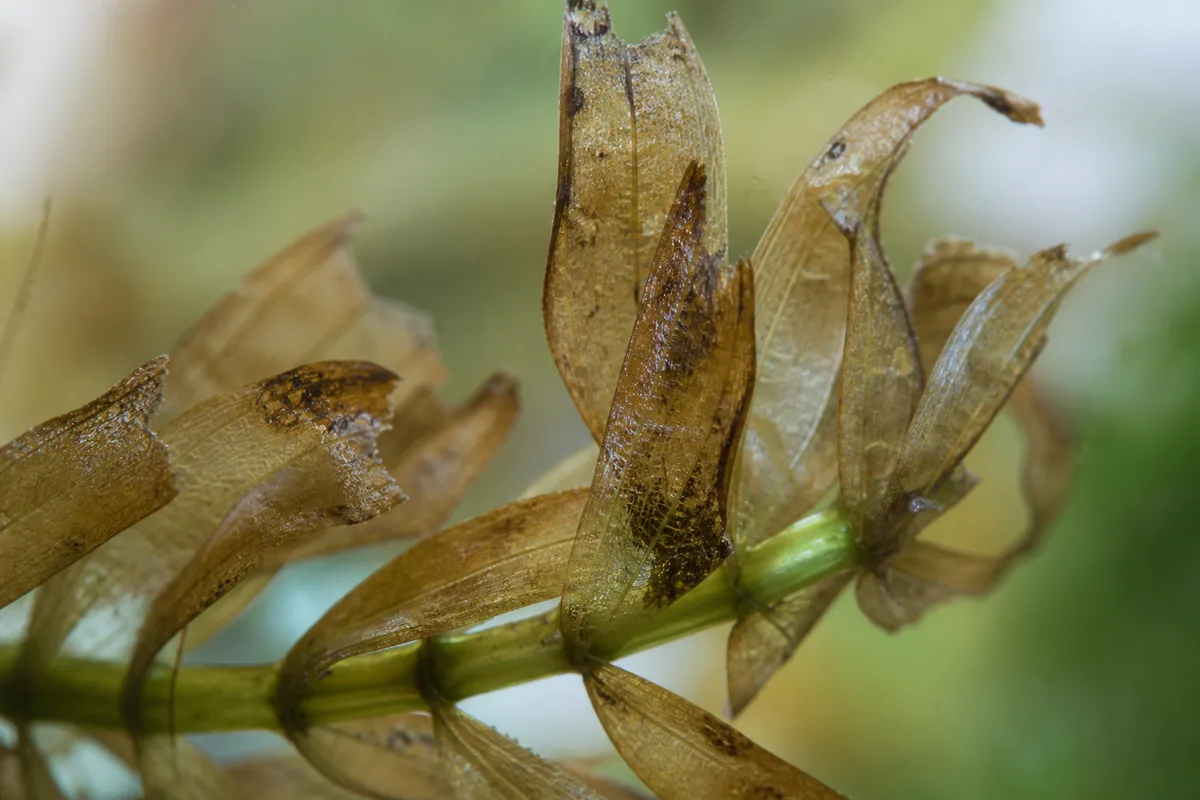
Brown Leaves symptoms on Anacharis / Elodea - compare with healthy tissue on the same plant.
| Pattern | Texture | Likely cause |
|---|---|---|
| Lower whorls only, stem firm | Dry brown, leaves detach cleanly | Self-shading or normal lower-leaf senescence |
| Dusty brown on all whorls | Rubs off; stem stays firm | Diatom algae film |
| Brown spreading up stem | Mushy, translucent, foul smell | Melt, ammonia, or copper damage |
| Brown edges on older whorls, pale tips | Firm tissue, slow spread | Nitrogen or general nutrient shortage |
| Brown after new purchase | Soft lower whorls, green tips forming | Acclimation melt |
Healthy recovery signal: bright green new growth at stem tips even when lower whorls look bad. No tip growth after two weeks on firm stems means the trigger is still active.
How to confirm the cause
Work in this order:
- Pinch test - Mushy brown tissue = remove immediately; dusty coating = diatoms.
- Newest tip growth - Green tips mean the plant is recovering; brown or absent tips mean ongoing stress.
- Stem firmness - Soft, collapsing stems = melt or rot; firm stems with brown lower leaves = shading, nutrients, or algae.
- Water tests - Ammonia and nitrite in new tanks; nitrate in established planted tanks (often want 10–20 ppm in moderate-light setups).
- Light at stem depth - Can you see moderate light on the lowest affected whorl, or is the stem buried under floaters and top growth?
- Recent changes - New shipment, medication dose, fertilizer increase, heater failure, or large water change in the last seven days.
For baseline culture context, see the Anacharis care overview. If yellowing dominates instead of brown, compare with yellow leaves on Anacharis.
First fix for Anacharis brown leaves
Remove mushy brown tissue first. Use sharp scissors or pinching fingers to cut out soft, brown, or translucent whorls. Leave every firm green node intact. Siphon fallen leaves during the same session so decay does not spike ammonia.
After cleanup, wait seven days before stacking other fixes. Then target the confirmed cause:
- Diatoms - Wipe stems gently during water changes; increase plant mass; avoid overfeeding. No copper algaecides with Anacharis present.
- Self-shading - Trim and replant tops, thin dense bunches, or float stems nearer the light. See Anacharis light needs.
- Nutrient stress - Dose a balanced liquid aquarium fertilizer after water is stable; confirm nitrate is not zero in lightly stocked tanks. Details in the Anacharis fertilizer guide.
- Melt after shipping - Leave firm stems in place; match tank temperature on acclimation; follow transplant shock recovery.
- Ammonia or medication - Stop copper-based meds, perform partial water changes, and fix water stress before replanting cuttings.
Recovery timeline by cause
| Cause | Typical recovery |
|---|---|
| Self-shading trim | New side shoots in 5–10 days once light reaches nodes |
| Diatom film | Visible clearing in 1–3 weeks as tank balances |
| Acclimation melt | New submerged whorls in 7–14 days on firm stems |
| Nutrient correction | Lower browning stops; new tips green in 1–2 weeks |
| Ammonia or copper damage | May save only top cuttings; full stem loss possible in 3–5 days if exposure continues |
Judge success by firm stems and clean tip growth, not by old whorls re-greening.
What not to do
Do not apply terrestrial houseplant logic-there is no soil to check, no pot drainage to fix, and no “water when the surface dries” schedule. Do not dose copper ich medication or copper algaecides while Anacharis remains in the tank. Do not leave melting tissue decaying in unfiltered bowls or turtle tubs. Do not stack fertilizer, replanting, and medication on the same day. Do not plant stems in fertilizer-rich potting soil; use inert aquarium gravel or floating culture only.
If brown melt followed a medication dose, review chemical damage on Anacharis before reintroducing stems.
How to prevent brown leaves next time
Maintain clean dechlorinated water with regular partial changes, moderate aquarium lighting on a stable seven-to-ten-hour photoperiod, and prompt removal of melt. Trim tall stems before lower whorls shade themselves. Acclimate new stems by floating in tank water before planting. Check medication labels for copper. In turtle and goldfish tanks, expect grazing and fouling-remove debris often and keep backup stems growing separately.
Never release trimmings into local waterways-UC ANR documents Brazilian egeria as an established invasive when fragments escape.
When to worry
Treat as urgent if multiple stems melt within days, water clouds with odor, ammonia is detectable, or brown damage climbs into firm upper whorls. Slow cosmetic browning on lower leaves with healthy tips is lower urgency-trim, improve light, and monitor.
Practical checks
Urgency check
High urgency with ammonia, copper exposure, or rapid mush. Moderate urgency for post-shipping melt on firm upper stems. Low urgency for diatom dust or lower-leaf shading on overgrown stems.
Best inspection order
Pinch test → newest growth → stem firmness → water tests → light depth → recent chemical or temperature changes.
Severity note
Brown leaves is marked medium severity for Anacharis in the symptom matrix-a triage clue, not a guarantee the plant is dying.
What to read next on Anacharis care
- Anacharis care overview - species ID, column feeding, legal notes
- Yellow leaves on Anacharis - when chlorosis, not brown necrosis, is the main pattern
- Anacharis fertilizer guide - dosing without algae spikes
- Anacharis light guide - PAR, photoperiod, deep-tank shading
- Water stress on Anacharis - parameter shocks and large changes
- Transplant shock on Anacharis - post-shipping melt timeline
When to use this page vs other Anacharis / Elodea guides
- Anacharis / Elodea watering guide - Use for routine moisture checks before assuming brown leaves is the main issue.
- Anacharis / Elodea problems hub - Browse all 34 common issues on this species.
- Brown Tips on Anacharis / Elodea - Different entry point when symptoms overlap with brown leaves.
- Yellow Leaves on Anacharis / Elodea - Different entry point when symptoms overlap with brown leaves.
- Overwatering on Anacharis / Elodea - Different entry point when symptoms overlap with brown leaves.
Related Anacharis / Elodea guides
- Anacharis / Elodea overview
- Anacharis / Elodea watering
- Anacharis / Elodea light
- Anacharis / Elodea soil
- Brown Tips on Anacharis / Elodea
- Yellow Leaves on Anacharis / Elodea
- Overwatering on Anacharis / Elodea
- Underwatering on Anacharis / Elodea
- Black Spots on Anacharis / Elodea
- Anacharis / Elodea problems