Anacharis Leaf Drop & Aquarium Melt: Causes & Fixes
Quick answer
Leaf drop on Anacharis / Elodea is usually normal acclimation melt after shipping or a tank move - old emersed leaves shed because they are not built for submerged growth. First step: Siphon fallen leaves during water changes and leave firm stems in place for new submerged whorls.
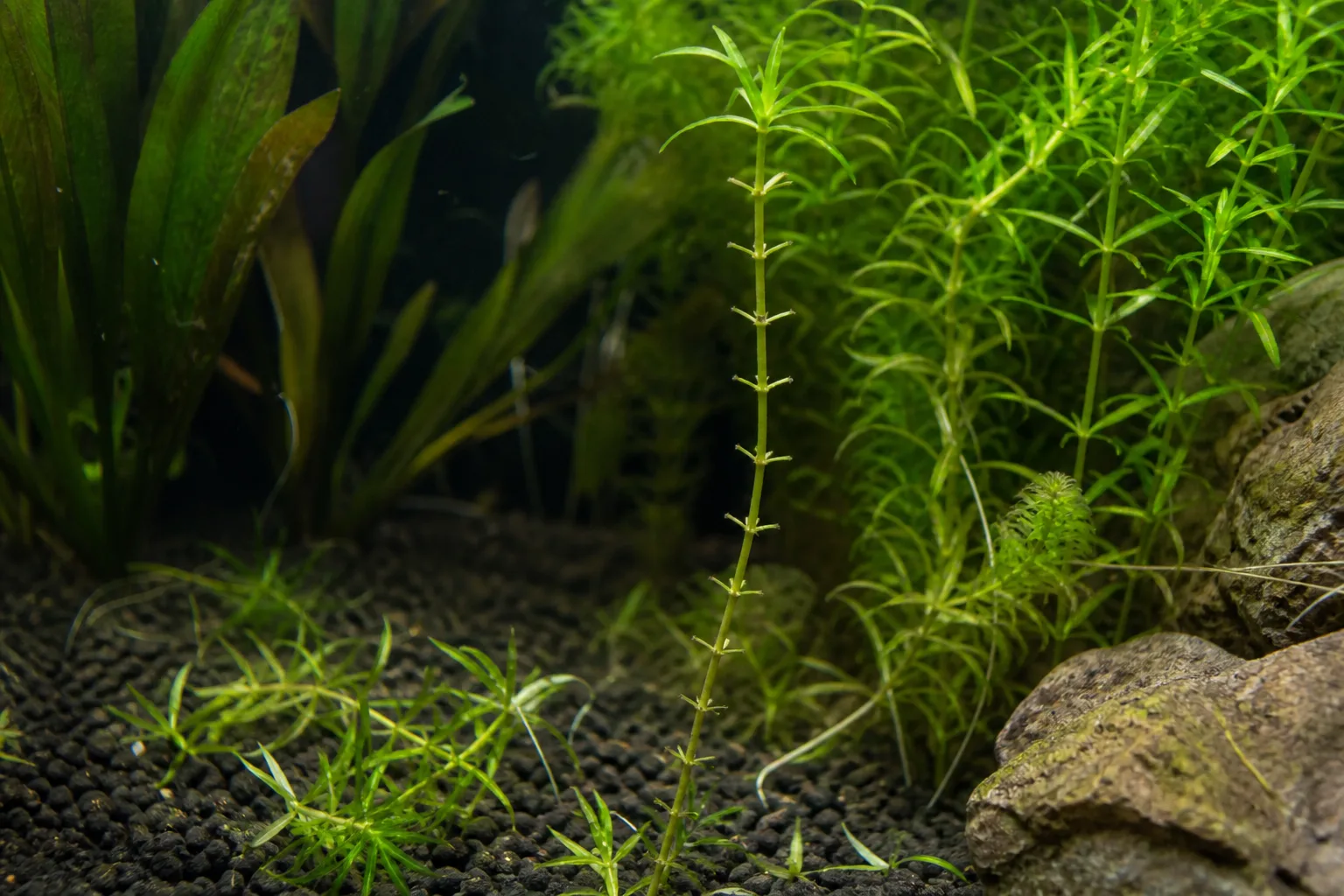
Leaf Drop on Anacharis / Elodea: Causes, Checks & Fixes
This guide covers leaf drop on Anacharis / Elodea. See also the general Leaf Drop guide, watering, and light pages for this plant.
Leaf Drop on Anacharis / Elodea: Causes, Checks & Fixes
Quick answer
Leaf drop on Anacharis (Egeria densa) is usually normal acclimation melt after shipping or moving tanks - old emersed leaves shed because they are not built for submerged growth. First step: Siphon fallen leaves during water changes and leave firm stems in place for new submerged whorls.
This guide covers submerged aquarium and turtle-tank culture only. Anacharis is a column-feeding stem plant with whorled leaves; leaf drop here means whorls loosening, turning translucent, and falling - not houseplant soil stress.
Why Anacharis drops leaves
Normal acclimation melt after shipping or tank moves
Most store-bought Anacharis is grown emersed at farms and then sold for submerged tanks. Emersed leaves are structurally different from submerged leaves. When stems enter your tank, the plant sheds air-grown tissue and rebuilds whorls adapted to water. That transition looks alarming but is expected on new purchases and after major tank moves.
During melt, the plant recycles nutrients from dying leaves into new tip growth. Firm stems with bare nodes but green tips are a classic recovery sign - the stem is alive even when lower whorls are gone.
Emersed-to-submersed leaf transition
Egeria densa is fully aquatic in culture, yet trade stock often arrives with emersed foliage. Submerged leaves are thinner and optimized for gas exchange underwater; emersed leaves cannot simply switch roles. Shedding is the plant’s adaptation, not random failure.
If only the oldest or outermost whorls drop while tips stay green, acclimation is the likeliest explanation. Whole-stem translucence within 48 hours after a medication dose points elsewhere.
Lower-whorl shading and self-shading
Dense stands shed lower whorls when upper growth blocks light - a normal housekeeping response, not disease. Tall background stems and floating tangles shade their own bases. Those dropped leaves are often intact but pale, not mushy.
Trimming tops or thinning stems lets light reach lower nodes and slows cosmetic shedding. This pattern differs from shipping melt, which hits multiple whorls soon after planting.
Temperature and parameter shock
Anacharis tolerates a wide temperature band but hates swings. Bag water much colder or warmer than the tank, or a sudden heater failure, can trigger rapid leaf loosening. UF/IFAS describes Egeria densa as a submerged aquatic that establishes in temperate fresh water - stability matters more than chasing a single perfect number.
New tanks with detectable ammonia also shed leaves quickly as stems stress. That is chemical stress, not acclimation, and needs a water-quality fix first.
Copper, liquid carbon, and medication melt
Anacharis is documented as sensitive to copper-based aquatic herbicides and many ich medications. Copper exposure often melts stems from the tips down within days. Liquid-carbon products at full dose can produce similar rapid tissue breakdown on delicate stems.
Always read medication and algaecide labels before dosing a planted tank. If melt followed a treatment, assume chemical damage until water tests and time prove otherwise.
What leaf drop looks like on Anacharis whorls
Expect leaves loosening from nodes, turning translucent or brown, and drifting free - sometimes several whorls at once on a new bunch. Healthy acclimation melt keeps the stem firm and often leaves green tips growing within a week.
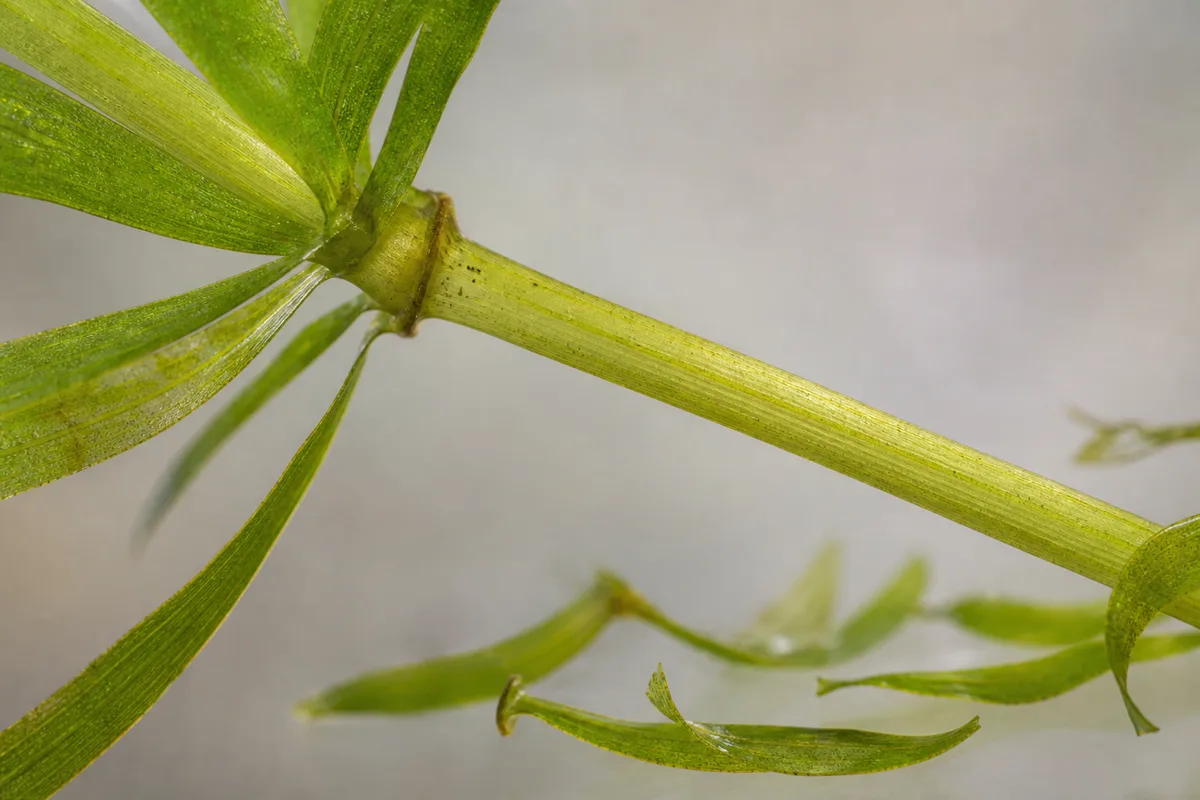
Leaf Drop symptoms on Anacharis / Elodea - compare with healthy tissue on the same plant.
| Pattern | Stem feel | Tip growth | Likely cause |
|---|---|---|---|
| Loose whorls after new purchase | Firm | New submerged whorls forming | Acclimation melt |
| Lower whorls only, upper stems green | Firm | Normal | Self-shading / age shed |
| Fast whole-stem mush | Soft, translucent | None or stunted | Copper, ammonia, severe shock |
| Leaves sucked into filter | Variable | Depends on stem health | Mechanical damage on melting tissue |
Mush that clouds the water and smells foul is decay, not normal shed. Siphon it promptly.
How to confirm the cause
Work in this order before changing fertilizer, replanting, or dosing chemicals:
- Newest tip growth - Green, active tips mean the stem can recover even with bare lower nodes.
- Stem firmness - Pinch the stem above the melt zone. Firm tissue is salvageable; jelly-like stems are not.
- Water tests - Ammonia in cycling tanks is a common non-acclimation trigger. Nitrate and clarity matter in stocked aquariums.
- Light at stem depth - Lower stems in deep or heavily planted tanks may shed from shade alone.
- Recent changes - Shipping date, heater adjustment, medication, liquid carbon, or a large water change with different temperature.
If tips are green, stems are firm, and the tank is established, treat as acclimation and follow the first fix below. If stems soften or tips stall after copper exposure, save only firm cuttings.
First fix for Anacharis leaf drop
Siphon fallen and translucent leaves during water changes and leave firm stems in place for new submerged growth.
That single step keeps decaying tissue from spiking ammonia while the plant reallocates energy to tips. After siphoning:
- Float new stems 30 minutes to a few hours in tank water before replanting if they just arrived.
- Trim only mushy sections - not the entire stem - with clean scissors.
- Make one other correction at a time (light adjustment, partial water change, or temperature match) and wait seven days before stacking treatments.
Do not uproot the whole plant during melt. Roots anchoring firm tissue help recovery.
Recovery timeline by cause
Normal acclimation melt after shipping or planting usually stabilizes in seven to fourteen days once temperature and light are steady. Look for new whorls at tips before judging failure.
Self-shading drop stops when you trim tops or thin stems; cosmetic recovery on lower nodes may take another one to two weeks.
Copper or ammonia damage may leave only short firm cuttings worth saving. Expect one to two weeks for new roots on replanted sections if water stays clean.
Temperature shock recovery depends on how fast parameters stabilize. Sudden cold can stall growth for several days even after warmth returns.
Damaged whorls rarely look perfect again. Success means firm stems, clean new growth, and no spreading mush.
What not to do
Do not apply terrestrial pesticides, fungicides, or “houseplant” treatments to aquarium water. Do not leave melting leaves decaying on the substrate or in the filter intake. Do not dose heavy fertilizer into cloudy or ammonia-positive water.
Do not bury melting stems deeper to “anchor” them - buried rot spreads up the stem. Do not pull the entire plant during acclimation; that resets rooting progress.
Do not use copper ich medications in planted tanks without checking labels. Do not release trimmings into ponds or streams - UC ANR documents Brazilian egeria as an established invasive where fragments escape.
How to prevent leaf drop next time
Match everyday care to submerged culture: regular partial water changes with dechlorinated water, moderate aquarium lighting on a stable seven-to-ten-hour photoperiod, and prompt removal of shed tissue.
Acclimate new stems by floating in tank water before planting. Keep bag and tank temperature within a few degrees during introduction. Trim dense tops so lower whorls receive light. Check medication labels for copper before treating fish.
In turtle tanks and high-bioload setups, expect heavier shedding when filtration lags - more frequent water changes and intake pre-filters reduce loose-leaf load. Use inert aquarium gravel or floating culture; never potting soil.
When to worry
Treat as urgent if multiple stems turn mush within days, water clouds with odor, ammonia is detectable in an established tank, or damage climbs into previously firm tissue. Slow leaf drop on new purchases with green tips is lower urgency.
Act quickly after any copper or algaecide dose if melt accelerates. Save firm cuttings early rather than waiting for whole bunches to dissolve.
What to read next on Anacharis care
- Anacharis care overview - light, water parameters, planting, and melt biology
- Yellow leaves on Anacharis - nutrient and shading yellowing vs melt
- Transparent leaves on Anacharis - translucent tissue patterns
- Water stress on Anacharis - parameter swings and dirty water
- Transplant shock on Anacharis - moving between tanks or substrates
When to use this page vs other Anacharis / Elodea guides
- Anacharis / Elodea watering guide - Use for routine moisture checks before assuming leaf drop is the main issue.
- Anacharis / Elodea problems hub - Browse all 34 common issues on this species.
- Yellow Leaves on Anacharis / Elodea - Different entry point when symptoms overlap with leaf drop.
- Drooping Leaves on Anacharis / Elodea - Different entry point when symptoms overlap with leaf drop.
- Root Rot on Anacharis / Elodea - Different entry point when symptoms overlap with leaf drop.
Related Anacharis / Elodea guides
- Anacharis / Elodea overview
- Anacharis / Elodea watering
- Anacharis / Elodea light
- Anacharis / Elodea soil
- Yellow Leaves on Anacharis / Elodea
- Drooping Leaves on Anacharis / Elodea
- Root Rot on Anacharis / Elodea
- Not Enough Light on Anacharis / Elodea
- Underwatering on Anacharis / Elodea
- Anacharis / Elodea problems