Holes in Leaves on Anacharis / Elodea: Causes, Checks &
Quick answer
Holes in Anacharis whorls almost always mean herbivorous tank mates-goldfish, turtles, apple snails, or plant-nipping cichlids-are grazing the soft leaves. First step: move firm cuttings to a grazer-free backup tub or float stems above fish reach, then watch whether new whorls grow before deciding to rehome livestock or accept sacrificial plants.
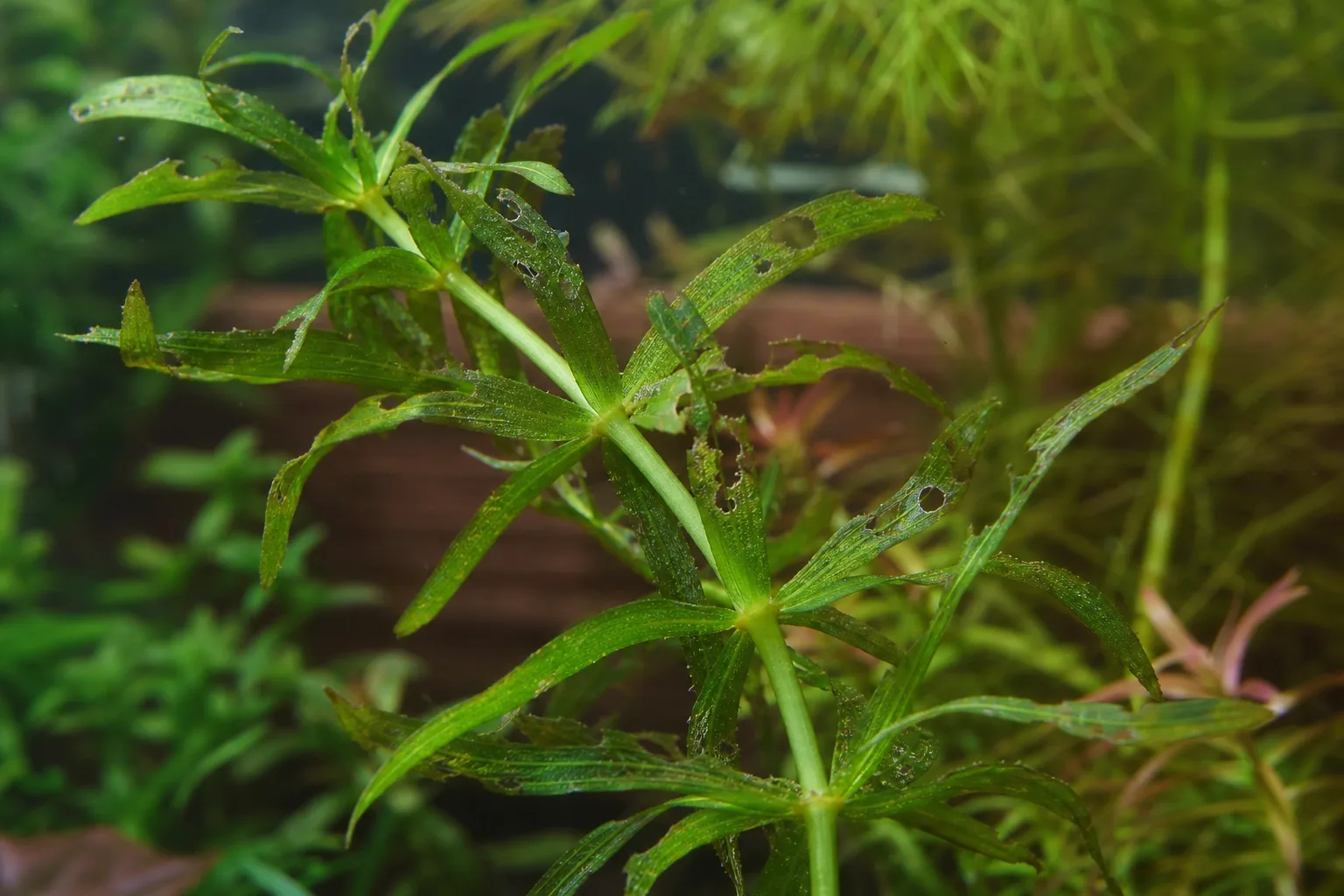
Holes in Leaves on Anacharis / Elodea: Causes, Checks & Fixes
This guide covers holes in leaves on Anacharis / Elodea. See also the general Holes in Leaves guide, watering, and light pages for this plant.
Holes in Leaves on Anacharis / Elodea: Causes, Checks & Fixes
Quick answer
Holes in Anacharis (Egeria densa) mean herbivorous tank mates are eating the whorls-not underwater “overwatering on Anacharis / Elodea,” soil dryness, or garden slugs. Goldfish, turtles, apple snails, loaches, and many cichlids treat this soft oxygenator as food.
First step: move firm cuttings to a grazer-free backup tub or float stems where fish cannot reach them. Watch for new whorls at stem tips for one to two weeks before stacking more changes-rehoming fish, adding predators, or ripping out the whole stand.
This guide covers submerged aquarium, turtle tub, and outdoor pond culture only. For snail hitchhikers on new bunches-not fish grazing-see pest snails on Anacharis. For copper medication damage during fish treatment, see chemical damage and the Anacharis overview.
What holes look like on Anacharis whorls
Anacharis leaves grow in whorls of four to six around a slender stem. Each leaf is only about two cell layers thick, with minutely serrated edges you need magnification to see. That anatomy makes holes look dramatic: a small bite removes a visible chunk, and the remaining tissue tears easily if fish bump the bunch.
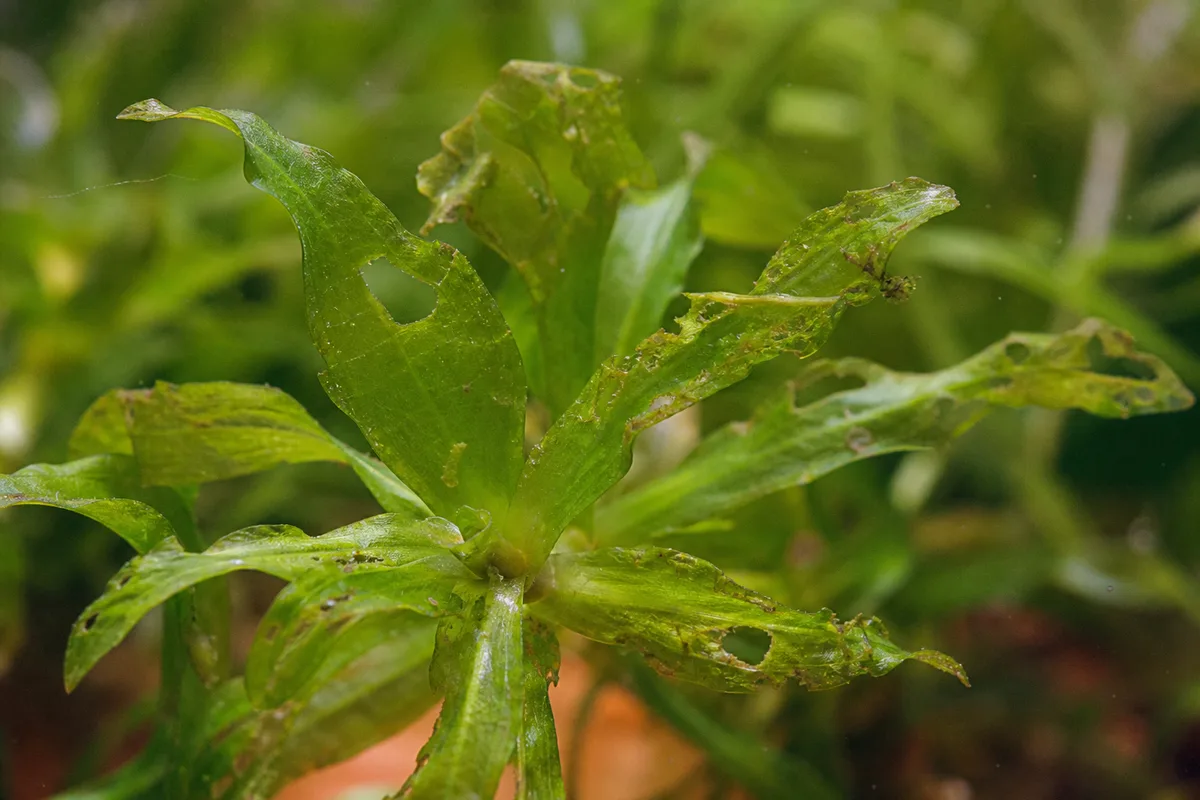
Holes in Leaves symptoms on Anacharis / Elodea - compare with healthy tissue on the same plant.
Snail and fish bite patterns
| Grazer | Typical damage on Anacharis | Timing / clue |
|---|---|---|
| Goldfish, koi | Stems stripped to bare nodes; whole whorls gone | Day and night; fish hangs at the bunch |
| Turtles (red-eared slider, etc.) | Ragged bites on floating stems; shredded tips | When basking lamp is on or during feed |
| Apple / mystery snail (large) | Crescent notches on outer leaves; slow rasping | Night; snail on stem when underfed |
| Cichlids, silver dollars, Buenos Aires tetras | Nipped tips; holes on soft new growth | After feeding; territorial fish at stems |
| Loaches, crayfish | Stem cuts, uprooted bunches | Bottom-dwellers pulling anchored stems |
| Small pest snails | Light edge notching, algae cleanup | After new plant purchase-see pest snails |
Goldfish and turtles are the most common “overnight defoliation” culprits in hobby tanks. Apple snails leave smaller, scalloped holes unless numbers are high or food is scarce.
Mechanical tears from handling
Not every hole is a grazer. Anacharis bruises when:
- Rubber bands stay tight on dry-shipped bunches too long
- Stems get crushed in a net during fish catching
- Weighted lead strips snap whorls when you push bundles into gravel
Mechanical damage shows clean tears on one side of a whorl, often right below a band or weight, without fish interest at the stems. Trim the torn section; firm nodes below usually sprout new tips.
Why tank mates cause holes on Anacharis
Anacharis is a soft, fast-growing column feeder sold as an oxygenator in the aquarium trade and often used as a sacrificial food plant in goldfish and turtle setups. Goldfish are voracious omnivores that graze plant material-and Egeria densa is among the most palatable stem plants in the trade because of its thin leaves and high water content.
Why Anacharis / Elodea overview gets eaten first:
- Texture - Softer than Anubias, Java fern, or hornwort; goldfish strip it before tougher plants.
- Placement - Anchored background bunches sit in the fish swimming lane; floating mats drift into feeding zones.
- Growth speed - Fast regrowth in cool water (often 65–74°F) can outpace light nibbling-hobbyists mistake that for “the plant is fine” until a heavy grazer clears the tank.
- Tank design - Turtle tubs and goldfish ponds rarely separate plants from herbivores; holes are expected, not a mystery disease.
This is not a houseplant pest page. Checking soil moisture, pot drainage, or bright indirect light in a living room will not explain submerged whorl damage.
How to confirm which grazer is responsible
Work through this checklist in order:
- Inventory tank mates - List every species that can reach the stems. Goldfish, turtles, and large apple snails top the list; add cichlids, loaches, and crayfish if present.
- Watch at feeding - Who swims to the Anacharis when flakes sink? Active interest during feed confirms grazing over random melt.
- Night inspection - Apple snails and some catfish rasp after lights out. Use a flashlight on glass and stems.
- Compare damage height - Floating stems above fish reach stay intact while submerged portions are holed; turtle damage often starts at the waterline on floating bunches.
- Rule out new snails - Clear jelly egg sacs on whorls within days of a plant purchase point to hitchhiker snails, not established goldfish.
- Rule out melt and chemicals - Uniform translucent mush after a medication dose is chemical damage; parameter shock looks like transparent leaves, not isolated bites.
- One change at a time - If you move stems to a backup tub, do not also rehome fish and change fertilizer the same day-you need to see whether grazing stops.
If damage continues in a grazer-free quarantine tub, look at light and temperature per the Anacharis light guide and water parameters-but that pattern is rare compared to hungry tank mates.
First fixes: protect, propagate, or rehome
First action: get firm stems out of the grazer zone today. Float cuttings at the surface behind a divider, move a backup bunch to a separate tub with matched temperature, or accept sacrificial plants in the display tank while protecting your propagation stock.
Floating refuge stems
Floating Anacharis often grows faster than anchored stems because leaves reach stronger light and surface gas exchange. In mixed tanks:
- Float a nursery cluster in a breeder box or behind a tank divider where goldfish cannot fit.
- Let background stems grow to the surface and trim only the submerged grazer zone, keeping tips floating.
- Turtle tubs - Suspend a small floating island of stems on the opposite end from the basking dock.
Trade-off: floating tangles look messy; function beats aesthetics in grazer-heavy setups.
Backup tub propagation
Every serious Anacharis keeper in a goldfish or turtle tank should run a grazer-free backup tub:
- Separate tote or small tank with matched temperature (±2°F of display water).
- Simple light and aeration; no substrate required-see Anacharis propagation.
- Trim firm 4–6 inch cuttings from the display tank weekly so one grazing event does not wipe your only stand.
When display stems are stripped, replant from the tub instead of buying new bunches every month.
Feeding and stocking adjustments
- Feed goldfish and turtles adequately - Underfed herbivores increase plant grazing. Vegetables and quality pellets reduce-but rarely eliminate-Anacharis damage.
- Add sacrificial duckweed or hornwort - Some keepers float fast snacks so fish nibble less on the main background stand.
- Rehome or separate relentless grazers - A single large goldfish in a 20-gallon tank will eat every soft stem; either upgrade plant volume, switch to plastic plants, or house fish and Anacharis separately.
- Do not add copper or random algicides to stop “plant pests” - Anacharis is extremely sensitive to copper; that path kills the plant, not the fish.
Recovery: what to expect after grazing stops
| Phase | Timing | Good signs | Bad signs |
|---|---|---|---|
| Remove from grazers | Days 1–3 | No new bites on floated or tub stems | Fresh holes appear nightly in quarantine-look for snails |
| New tip growth | Days 5–14 | Green whorls at nodes; pearling under moderate light | Bare nodes with no shoots; stems turning mushy |
| Stand refill | Weeks 2–4 | Side branches; density returning | All stems white and translucent |
Old holed leaves stay holed-judge recovery by new submerged growth, not repaired tissue. In cool water with 7–10 hours of moderate light, Anacharis commonly pushes new whorls within one to two weeks after grazing pressure drops.
When regrowth is slow, check photoperiod and temperature on the light and watering guides. Low light and cold water slow recovery enough that grazers win even at modest stocking.
What not to do
- Do not treat holes like a houseplant disease - No Anacharis / Elodea repotting guide, soil checks, or “bright indirect light” moves for a submerged oxygenator.
- Do not dose copper-based ich or algae medications while diagnosing grazing - copper liquefies Anacharis tissue. Remove plants to a medication-free tub before fish treatment.
- Do not stack fixes - Avoid rehoming fish, bleaching stems, and changing filters the same afternoon; you will not know what helped.
- Do not release heavily grazed trimmings into ponds or streams - Egeria densa spreads vegetatively in waterways and is regulated in multiple states; bag and trash trimmings per local rules.
- Do not confuse fish grazing with pest snails - Egg sacs on new stems mean quarantine per the snail guide; stripped stems overnight with goldfish present mean herbivory.
Prevention for next time
- Assume grazers will eat soft stems - Plan backup tubs before you add Anacharis to goldfish, turtle, or cichlid tanks.
- Float or partition - Keep propagation stock physically separated from plant-shredding fish species such as goldfish, silver dollars, and Buenos Aires tetras.
- Choose tougher companions - Anubias, Java fern, and some crypts survive nibbling better; use Anacharis where you accept sacrifice or have refuge space.
- Inspect weekly - Trim holed tops early and move cuttings to the backup tub before nodes strip completely.
- Match expectations to livestock - A thriving planted goldfish display with unlimited Anacharis is unrealistic without constant replanting from a nursery tub.
When to get help
Most holes are solved by moving stems and adjusting tank layout-not by exotic treatments. Consult an aquarium specialist or extension aquaculture resource when:
- Stems melt in a grazer-free tub (points to water quality or medication residue, not fish)
- You need species-specific turtle or goldfish stocking advice for a public education or rescue setup
- You are unsure whether local law restricts disposing of Egeria densa trimmings
Conclusion
Holes in Anacharis are an aquarium herbivore problem, not underwater fungus or terrestrial slug damage. Goldfish and turtles strip whorls; apple snails rasp crescents; cichlids nip tips-each leaves a pattern you can match with a short observation session. Float stems out of reach, keep a grazer-free backup tub, and judge recovery by new tips on firm nodes. When grazing is inevitable in your livestock list, treat Anacharis as renewable fodder and protect your propagation stock-not as a permanent untouched background plant.
When to use this page vs other Anacharis / Elodea guides
- Anacharis / Elodea watering guide - Use for routine moisture checks before assuming holes in leaves is the main issue.
- Anacharis / Elodea problems hub - Browse all 34 common issues on this species.