Pest Snails on Anacharis / Elodea: Causes, Checks & Fixes
Quick answer
Pest snails on Anacharis almost always arrive on store-bought stems-not from soil or garden slugs. First step: move new bunches to a quarantine tub, rinse whorls under tank water, and pick off every visible snail and jelly egg clutch before planting in your display tank.
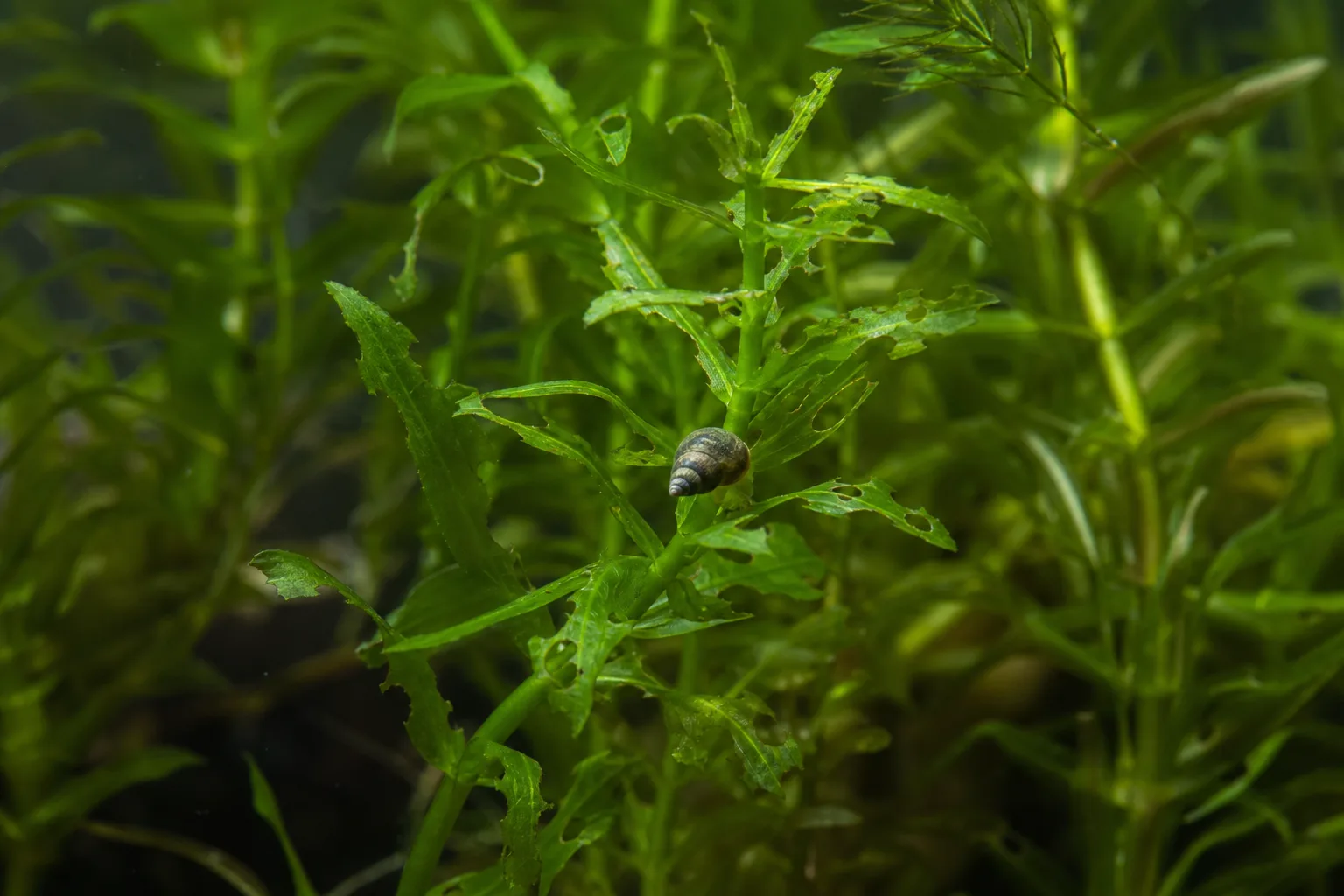
Pest Snails on Anacharis / Elodea: Causes, Checks & Fixes
This guide covers slugs and snails on Anacharis / Elodea. See also the general Slugs and Snails guide, watering, and light pages for this plant.
Pest Snails on Anacharis / Elodea: Causes, Checks & Fixes
Quick answer
Pest snails on Anacharis (Egeria densa) almost always mean hitchhikers on store-bought stems-bladder snails, ramshorn snails, and Malaysian trumpet snails riding in from plant farms and fish-store tanks. They are not garden slugs, and they did not come from soil moisture or a dry pot.
First step: quarantine new stems in a separate tub with matched temperature, rinse each whorl under dechlorinated water, and manually remove every snail and clear egg clutch you can see. Only plant in your display tank after two to three weeks of clean observation-or after a careful plant dip if you accept the risk to delicate tissue.
This guide covers submerged aquarium, turtle-tub, and indoor pond culture only. For copper sensitivity during fish medications, see chemical damage on Anacharis and the Anacharis overview. For goldfish chewing that looks like holes-not snail trails-see holes in leaves.
Why new Anacharis stems bring snails into your tank
Anacharis is sold in rubber-banded bunches grown emersed or submersed at wholesale farms, then shipped wet in plastic bags. Snails are among the most common aquatic plant hitchhikers: adults breathe air and survive the trip; eggs sit in clear jelly sacs on leaves and stems where they are easy to miss.
Why Anacharis is a frequent carrier:
- Soft, thin whorls - leaves are only two cell layers thick, with fine serrations on Egeria densa whorls of four to six leaves. Snails graze decaying or algae-coated tissue and hide in dense bundles.
- Farm and store tanks - shared plant tubs often already host snail populations; one egg clutch on a stem is enough to seed your aquarium.
- Fast regrowth masks the problem - Anacharis can grow inches per week in cool water, so hobbyists notice snails only after populations explode.
Snail blooms also track tank hygiene, not houseplant watering. Overfeeding leaves uneaten flakes and pellets; snails and their algae diet multiply. That is an aquarium feeding issue-checking soil surface dryness will not help.
Slugs vs aquarium snails - what actually affects submerged Anacharis
Terrestrial slugs and garden snails need damp land. They do not live on stems fully underwater in a closed aquarium. If your Anacharis never left the tank and you did not set pots on a patio, ignore slug bait, copper tape on pot rims, and “check leaf undersides at midnight” advice written for pothos.
What you are fighting in a typical fish tank:
| Hitchhiker | Look | On Anacharis |
|---|---|---|
| Bladder / pond snail | Tan, amber, or spotted shell; rapid breeder | On whorls, glass, filter intake |
| Ramshorn snail | Flat spiral shell, red or brown | Egg clutches on leaves |
| Malaysian trumpet snail (MTS) | Cone-shaped, burrows in substrate | Less stem damage; population in gravel |
| Apple / mystery snail (large) | Quarter-sized or bigger | Can graze soft whorls if underfed |
| Terrestrial slug | Slimy, no shell; on floors and pots | Not applicable to submerged culture |
Malaysian trumpet snails aerate substrate and eat detritus; many keepers tolerate a few. Bladder and ramshorn are the usual “pest” label when numbers spike after new plants.
What snail damage looks like on Anacharis whorls
Snail feeding on healthy Anacharis is often light compared to goldfish or turtle grazing. Expect:
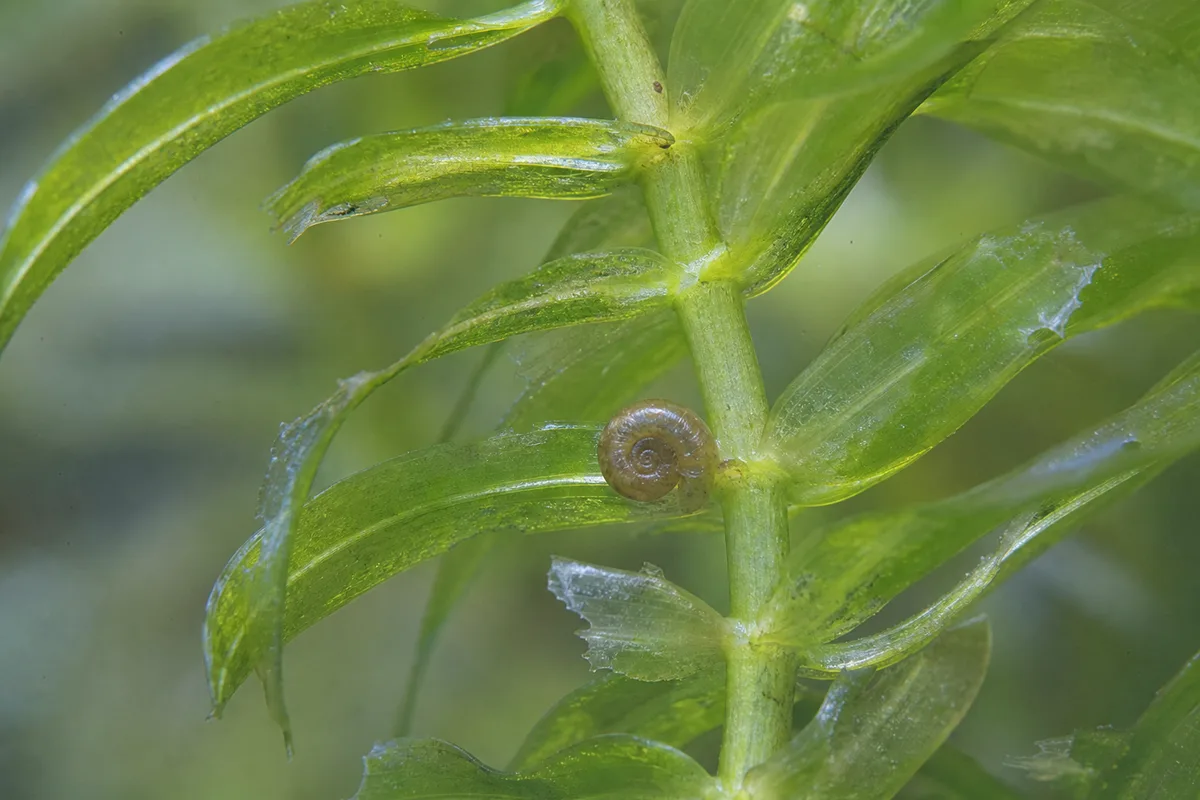
Slugs and Snails symptoms on Anacharis / Elodea - compare with healthy tissue on the same plant.
- Notched or thinned leaf edges on outer whorls, especially where algae or biofilm coats older leaves.
- Clear jelly egg sacs - pinhead dots in gel glued to stems, glass, or filter corners; the clearest sign you imported breeders.
- Snail trails on glass - not silver garden-slug mucus on a floor, but visible rasping paths and snail silhouettes at night.
- Algae cleanup, not total defoliation - most small pest snails target decaying tissue and film before punching holes in firm green whorls.
Does not match snails: whole whorls turning translucent and mushy (melt or heat stress); uniform yellowing from base up (nitrogen deficiency); large ragged tears overnight from fish.
How to confirm pest snails (not melt, algae, or fish grazing)
Work through this checklist in order:
- Timing - Did snails or egg sacs appear within one to three weeks of adding new Anacharis or moving plants from another tank? Strong hitchhiker signal.
- Live snails on stems - Pick up the bunch; shake gently over a white tray. Bladder and ramshorn fall off or crawl visibly.
- Egg clutch scan - Run a finger along each whorl under bright light. Remove gelatinous egg clusters with a fingernail or soft brush before they hatch.
- Night glass check - After lights out, scan tank walls with a flashlight; populations you missed by day become obvious.
- Feeding audit - Are flakes settling on plants uneaten? Excess food supports snail explosions without harming Anacharis directly.
- Rule out fish grazers - Goldfish, loaches, and turtles tear leaves mechanically; you will see fish interest at the stems, not only nocturnal glass snails.
- Rule out melt - Translucent tissue, foul odor, and parameter swings point to water stress or acclimation-not snails alone.
If you confirm eggs on new stems still in quarantine, you caught the problem before the display tank-stay in isolation until hatching stops.
First fix: quarantine, manual removal, and population control
First action: isolate new or infested stems in a quarantine tub. Do not add more fixes the same hour-no copper, no bleach dip, and no assassin-snail shipment stacked on top of a rushed plant dump.
Quarantine tub setup
- Separate container - Small tank, storage tote, or bucket with matched temperature per the Anacharis watering guide (±2°F of display water).
- Light and aeration - Simple desk lamp or window indirect light plus an air stone; Anacharis does not need substrate in quarantine.
- Duration - Minimum two weeks; three weeks is safer to catch late-hatching eggs.
- Daily routine - Rinse stems, pick snails, scrape egg sacs, siphon the tub floor. Trim decaying whorls so they do not foul the water.
Only after quarantine (or a successful dip-below) should stems enter the display tank. Float firm cuttings first if you want extra observation per the propagation guide.
Manual removal in the display tank
For an existing outbreak:
- Hand-pick at night when snails climb glass and stems.
- Trap methods - Blanch a lettuce leaf or zucchini slice, sink it overnight, remove covered in snails next morning.
- Reduce food - Feed fish only what they clear in two minutes; vacuum detritus around stem bases.
- Trim heavily grazed tops - Replant firm cuttings; discard mushy tissue.
Fish-safe biocontrol (match your livestock)
| Method | Works when | Caution on Anacharis tanks |
|---|---|---|
| Assassin snails (Clea helena) | Bladder/ramshorn outbreaks | Slow; need sand; not for snail-eating puffers |
| Loaches (yo-yo, clown, zebra) | Active snail hunters | Too aggressive for slow fish; need groups |
| Pufferfish / pea puffer | Snail elimination | Not community-safe; may nip soft stems |
| Goldfish | Eat small snails | Also graze Anacharis heavily |
Add predators only if compatible with your fish list-assassin snails in a shrimp breeding tank may eventually threaten young shrimp.
Plant dips (experienced keepers only)
Dips kill hitchhikers but stress Egeria densa if overdosed or left too long:
- Bleach dip - 1:19 unscented bleach to water, maximum about two minutes, then triple rinse in dechlorinator-heavy water until no bleach smell.
- Potassium permanganate - Dark pink bath ~10 minutes; oxidizer stains skin; never mix with formalin.
- Hydrogen peroxide - 2–3 ml per gallon of 3% H₂O₂, up to five minutes.
Anacharis is delicate. When in doubt, quarantine beats dipping. Never dip while stems are already melting from heat or parameter shock.
What never to use in an aquarium
- Terrestrial slug bait or metaldehyde - Fish poison; unrelated to submerged Anacharis culture.
- Salt dumps - May harm scaleless fish and plants; not a targeted snail fix.
- Copper-based ich or algae medications - Anacharis is extremely sensitive to copper; snail control is not worth killing the whole plant stand. Remove stems to a medication-free tub before treating fish-see chemical damage.
- Random garden pesticides or “snail rid” without label check - YMYL risk for livestock.
Recovery timeline for grazed stems
| Phase | Timing | Good signs | Bad signs |
|---|---|---|---|
| Remove + quarantine | Days 1–7 | Fewer snails on glass; no new egg sacs on stems | Clutches on every whorl nightly |
| Population drop | Weeks 2–4 | Stable green tips; pearling returns | Cloudy water from die-off and overfeeding |
| Regrowth | Weeks 3–6 | New whorls along trimmed stems | All nodes stripped with no tips |
Notched leaves stay notched-judge recovery by new submerged growth at stem tips. In 65–74°F goldfish water, Anacharis often outpaces light snail grazing once numbers fall. Chronic snail clouds with fouled water overlap overwatering (decaying biomass in stagnant tubs)-siphon debris and increase water changes.
How to prevent snails on Anacharis next time
- Quarantine every purchase two to three weeks-even “snail-free” store claims.
- Rinse and inspect before the tub: peel rubber bands, spread whorls, scrape gel egg sacs.
- Consider tissue-culture plants - lab-grown cups ship without snails or algae when you need a clean start.
- Feed deliberately - Snail explosions follow excess food, not underwater “overwatering” of soil.
- Avoid plant swaps from tanks with known infestations unless you re-quarantine.
- Never release trimmings or snails outdoors - Egeria densa spreads vegetatively in waterways when aquarium waste is dumped.
Anacharis tank cross-check
Snail problems sometimes hide next to parameter issues:
- Temperature - Cool 65–74°F supports fastest regrowth after grazing; see water parameters.
- Light - Moderate light keeps stems dense; leggy stems show damage longer. See Anacharis light needs.
- Medications - Plan fish treatments with plants removed; copper kills Anacharis / Elodea overview.
- Tank mates - Goldfish and turtles both eat snails and Anacharis; decide whether snails or grazers are the real issue.
When to worry
A few bladder snails on one new bunch after quarantine is normal aquarium life-not a crisis. Escalate when:
- Egg sacs return daily despite picking for two weeks.
- Water clouds with ammonia smell from snail die-offs plus rotting food.
- You are tempted to dose copper for snails-stop and remove plants first.
If manual control fails in a small tank, resetting with a plant-free quarantine period and tissue-culture restart may beat endless picking-especially in shrimp-only nano tanks where fish predators do not fit.
Conclusion
Snails on Anacharis are an aquarium introduction and feeding problem, not a houseplant slug issue. Clear jelly egg sacs on whorls and glass snails after a plant purchase tell you what happened; translucent melt and goldfish bites do not. Quarantine new stems, pick and trap relentlessly, cut overfeeding, and keep copper medications away from this soft oxygenator. Once populations fall, watch new tips on firm nodes-that is where recovery shows on Egeria densa.
When to use this page vs other Anacharis / Elodea guides
- Anacharis / Elodea watering guide - Use for routine moisture checks before assuming slugs and snails is the main issue.
- Anacharis / Elodea problems hub - Browse all 34 common issues on this species.