Cold Damage on Anacharis: Causes, Checks & Fixes
Quick answer
Cold damage on Anacharis (Egeria densa) follows pond surface ice, heater failure, or water held near freezing for days-stems turn translucent and mushy while growth stops. First step: measure water temperature, trim mush, and move firm cuttings to stable 18–24°C water or below the pond ice line.
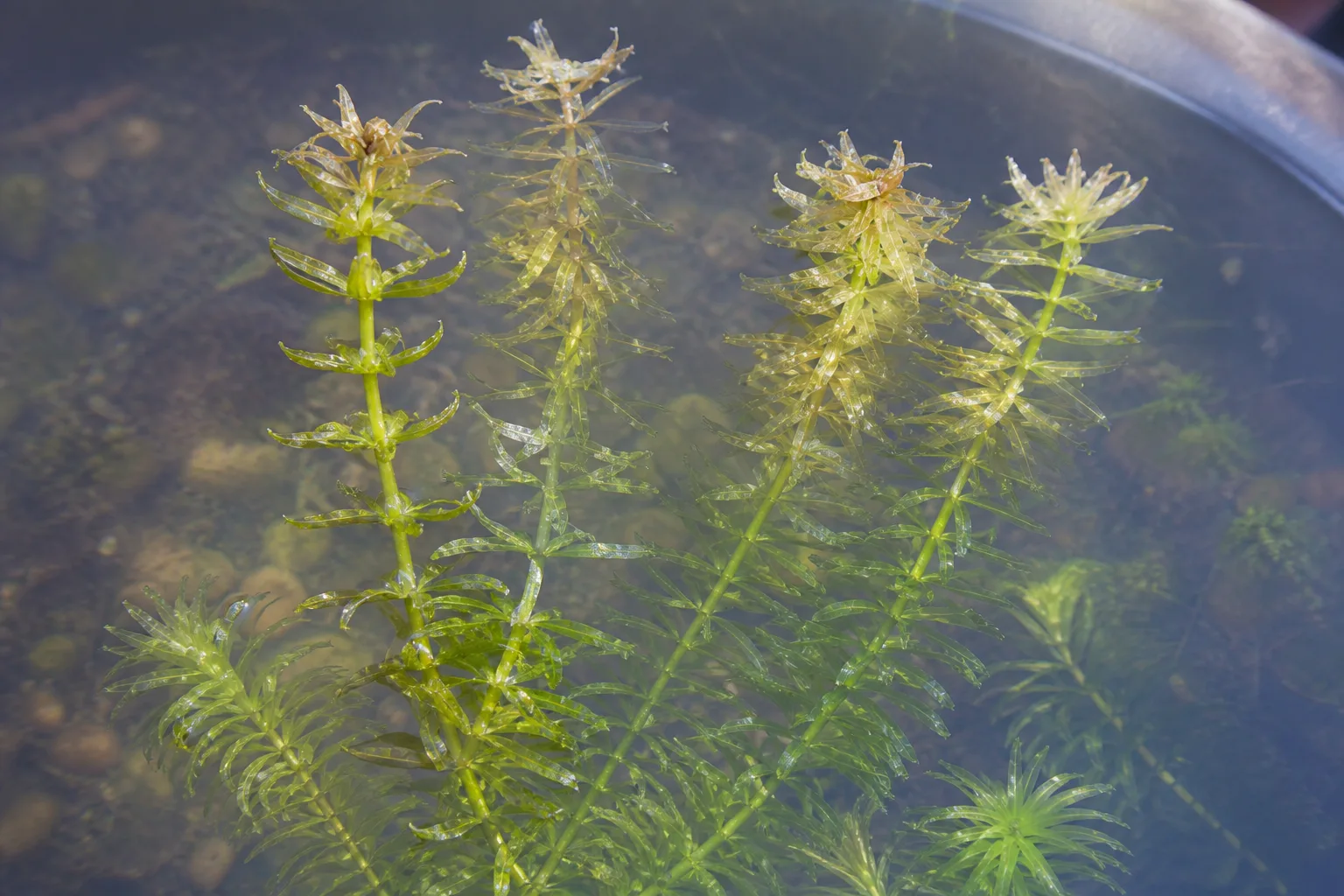
Cold Damage on Anacharis: Causes, Checks & Fixes
This guide covers cold damage on Anacharis / Elodea. See also the general Cold Damage guide, watering, and light pages for this plant.
Cold Damage on Anacharis: Causes, Checks & Fixes
Quick answer
Anacharis (Egeria densa) is a cool-tolerant submerged stem plant-not a tropical-but prolonged chill still injures it. Cold damage shows up after pond surface ice, heater failure, or water held near freezing for days: whorls turn translucent and mushy, growth halts, and floating stems may sink.
First step: measure water temperature at stem depth, trim mushy tissue, and move firm cuttings into stable 18–24°C aquarium water-or anchor surviving stems below the pond ice line where liquid water remains. In frozen ponds, add a de-icer to keep a gas-exchange hole for fish; plant recovery depends on unfrozen water below the surface.
This guide covers submerged aquarium and pond culture only. For ammonia or copper injury in warm water, see wilting on Anacharis. For general culture and overwintering cuttings, see the Anacharis overview and propagation guide.
What cold damage looks like on Anacharis
Translucent mush: whorls lose green color, feel soft, and break apart when squeezed-classic freeze or near-freeze injury on submerged stems.
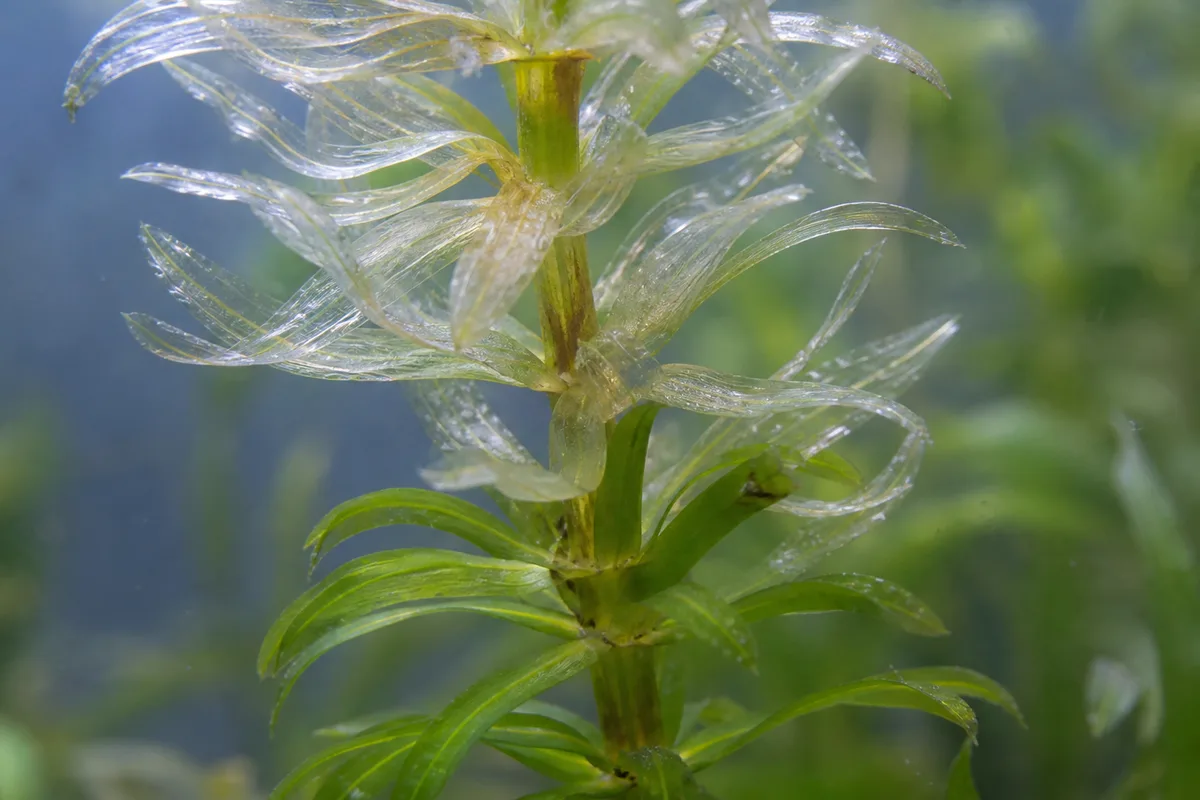
Cold Damage symptoms on Anacharis / Elodea - compare with healthy tissue on the same plant.
Growth halt: no new nodes for weeks despite adequate light, even though Egeria densa grows fast in optimal water.
Floating stems sinking: air-filled tissue collapses after cell damage; mushy sections release gas and sink.
Patchy dieback after surface freeze: stems at or above the ice line melt while deeper stems stay firm-a common pond pattern when only the top layer freezes.
Stunted pale tips: in aquariums held at 10–15°C, new whorls stay small and thin rather than the usual bottle-brush density.
Do not confuse normal emersed tips on open-top tanks with cold melt-cold injury affects submerged whorls after a temperature event.
Aquarium cold stress
Unheated tanks in cold rooms, garage tubs, or goldfish setups without heaters drift toward room temperature. Egeria densa initiates growth around 10°C but growth is limited below about 4°C (40°F) for extended periods. Weeks below 15°C slow metabolism; sustained chill produces mush similar to shipping melt.
Pond surface ice vs. frozen-solid water
Anacharis can survive under a cap of surface ice when deeper water stays liquid-stems on the lake bottom overwinter and resprout when water rises above about 15°C. Freezing of the entire water column is lethal. Stems trapped in frozen surface mats turn to mush; bottom shoots may survive if the pond does not freeze solid.
Why Anacharis gets cold damage
Heater failure or undersized heater. Aquarium power outages or unheated winter rooms drop water temperature overnight. Unlike true tropical aquatics, Anacharis tolerates brief cool periods-but days near freezing cause stem collapse.
Pond surface freeze. Cold nights form ice at the surface. Stems in the ice zone freeze; stems below the thermocline often survive on stored starch until spring warmth returns.
Large cold water changes. Pouring near-freezing replacement water into a 22°C tank shocks column-feeding stems. Repeated winter water changes without temperature matching cause mush on tips first.
Winter drawdown or shallow tubs. Plants are vulnerable when exposed to dry or freezing air during pond drawdowns. Shallow patio tubs freeze through faster than deep garden ponds.
Unheated outdoor goldfish tubs. Anacharis survives cooler water than Java Fern, but prolonged near-freezing temperatures still damage tissue-this is cold injury, not a nutrient deficiency.
Because Egeria densa feeds from the water column, the trigger is always water temperature history-not soil moisture, pot drainage, or window light.
How to confirm cold damage
Work in this order:
-
Water temperature history - Use a submersible thermometer at mid-stem depth. Review heater logs, pond ice events, and recent water changes. Optimal growth sits in the 15–25°C range, with maximum growth near 21°C.
-
Stem firmness test - Pinch a mid-stem whorl. Cold-melted tissue is translucent and collapses; firm green stems can recover once warmth stabilizes.
-
Freeze timeline - Damage appearing within 24–72 hours after a hard freeze or heater outage strongly points to cold-not chronic deficiency.
-
Rule out lookalikes - Warm water with ammonia spikes, copper medications, or glutaraldehyde exposure causes similar mush. See wilting on Anacharis when temperature reads above 18°C and fish were recently medicated.
First fix for Anacharis
Stabilize water temperature and remove mush in one focused step.
For aquariums: repair or install a correctly sized heater; target 18–24°C for recovery. Trim translucent stems back to firm green tissue with clean scissors. Float firm cuttings at the surface or replant in inert gravel-hold fertilizer until new whorls appear.
For ponds: move or anchor surviving stems below the ice line in liquid water. Install a pond de-icer or aerator to maintain a gas-exchange opening for fish-cold damage and fish stress often arrive together when ice seals the surface.
For severe surface freeze: trim 20 cm (8 inch) firm stems and overwinter them floating or submerged in a cool indoor tub or aquarium with moderate light, as described in the propagation guide.
Change only temperature-matched water during recovery-pre-mix replacements to within 2°C of tank water in winter.
Recovery timeline
Mild aquarium chill often stabilizes within one to two weeks once temperature holds at 18–24°C. Expect two to four weeks before dense new whorls appear at tips because the plant reallocates energy after injury.
Mushy tissue will not re-green-judge recovery by firm stems and fresh submerged growth, not by old whorls recovering color.
Pond plants under surface ice may show no visible growth until spring when water exceeds about 15°C and overwintering shoots elongate. Bottom survivors can look dormant for months-that is normal, not failure.
Avoid stacking fertilizer, replanting, and medication during the first seven days of recovery.
What not to do
Do not perform large cold water changes while stems are mushy-temperature shock worsens melt.
Do not discard firm green stems because upper whorls melted; Anacharis rebounds from cuttings once warmth returns.
Do not dose heavy fertilizer into cold or fouled water hoping to “wake up” the plant.
Do not confuse cold melt with copper-based fish treatments-check medication labels before re-treating.
Do not release surviving trimmings into local ponds or streams-Egeria densa is an established invasive when fragments escape outdoor culture.
Cold damage vs. wilting vs. nutrient deficiency vs. chemical injury
| Pattern | Water temp | Stem feel | Typical trigger |
|---|---|---|---|
| Cold damage | Recent drop, ice, or heater failure | Translucent mush after chill | Freeze, cold water change, unheated tank |
| Wilting | Often stable | Limp but may stay green initially | Ammonia spike, temperature shock, handling |
| Nutrient deficiency | Normal | Firm stems; pinholes or pale whorls | Low nitrates in high-light tank |
| Chemical injury | Normal | Rapid mush after treatment | Copper, algaecide, peroxide overdose |
Cold damage clusters after a temperature event. Chemical and ammonia injury can occur in warm water with no ice history.
How to prevent cold damage next winter
Aquariums: size heaters for tank volume and room temperature swing; use a backup thermometer. Pre-heat replacement water in winter. Avoid placing open-top tanks in unheated garages without monitoring.
Ponds: maintain depth so the bottom stays below ice; use a de-icer for fish gas exchange. Trim firm stems before hard freeze and overwinter indoors if your climate freezes ponds solid-see propagation.
General: acclimate new stems slowly; never dump aquarium contents into waterways. Match everyday submerged care-stable parameters, moderate light, regular trimming-per the Anacharis overview.
When to worry - discard vs. wait for spring
Wait if some stems stay firm, fish are healthy, and pond bottom water remains unfrozen-dormant shoots often return in spring.
Discard and restart from cuttings if every stem is mush, the pond froze solid, or odor and cloudy water suggest decay beyond cold injury alone.
Escalate for fish when ice seals the surface with no de-icer hole-plant damage is secondary to dissolved-oxygen risk for livestock.
When to use this page vs other Anacharis / Elodea guides
- Anacharis / Elodea watering guide - Use for routine moisture checks before assuming cold damage is the main issue.
- Anacharis / Elodea problems hub - Browse all 34 common issues on this species.
- Brown Leaves on Anacharis / Elodea - Different entry point when symptoms overlap with cold damage.
- Leaf Drop on Anacharis / Elodea - Different entry point when symptoms overlap with cold damage.
- Drooping Leaves on Anacharis / Elodea - Different entry point when symptoms overlap with cold damage.