Chemical Damage on Java Fern: Causes, Checks & Fixes
Quick answer
Java Fern chemical damage follows copper ich treatments, copper algicides, hydrogen-peroxide dips, or glutaraldehyde (Excel) overdoses-often with sudden melt, not gradual yellowing. Stop the chemical, change 50% water, run activated carbon, and trim melting fronds while the rhizome stays firm.
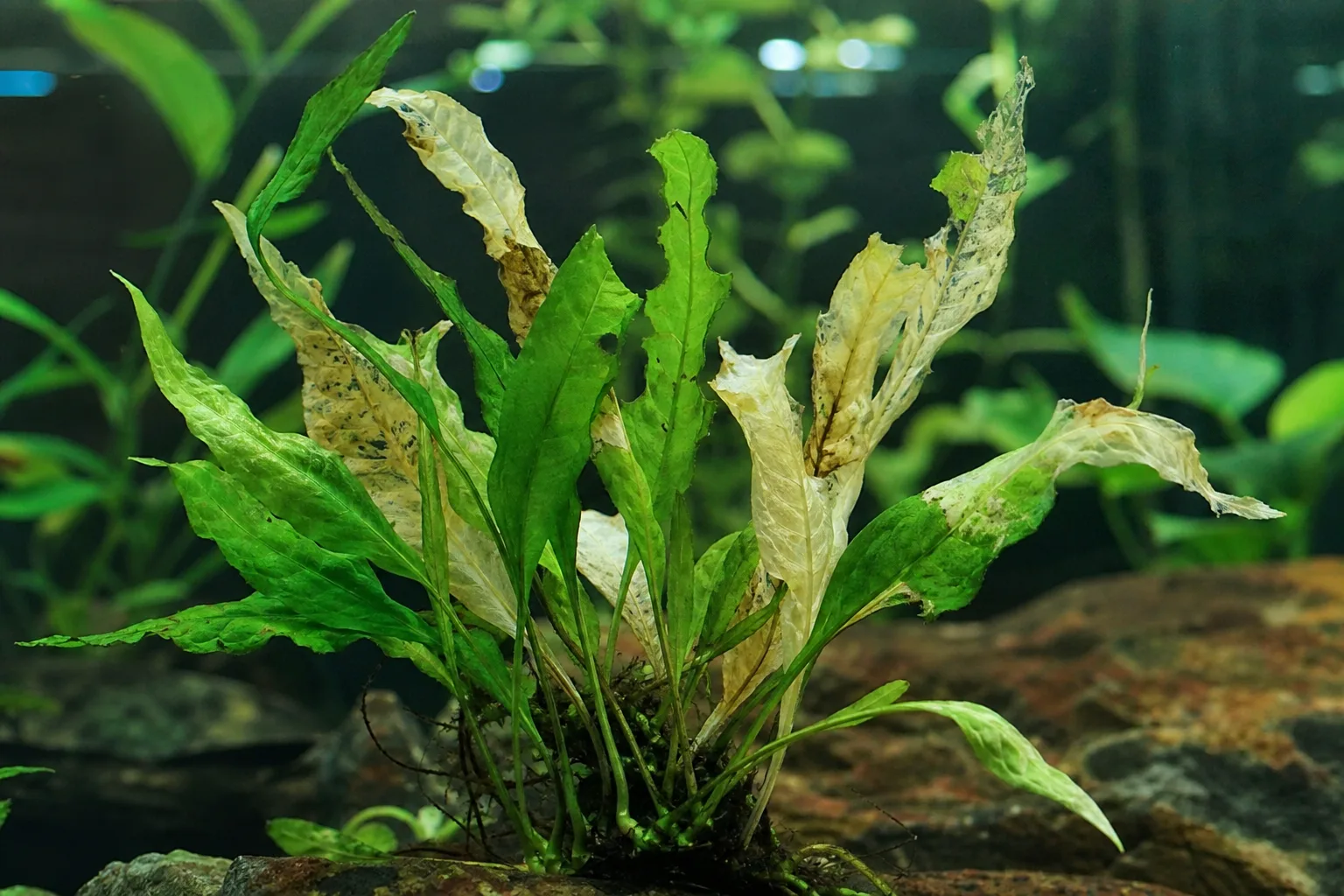
Chemical Damage on Java Fern: Causes, Checks & Fixes
This guide covers chemical damage on Java Fern. See also the general Chemical Damage guide, watering, and light pages for this plant.
Chemical Damage on Java Fern: Causes, Checks & Fixes
Quick answer
Java Fern (Microsorum pteropus) is sensitive to aquarium chemicals that safe fish dosing labels still allow-especially copper medications, copper algicides, hydrogen peroxide, and glutaraldehyde (Seachem Excel) overdoses. Microsorum pteropus is a slow-growing epiphyte with no soil buffer; chemical hits leaf tissue directly. Stop the product, change 40–50% of the water, run activated carbon for 48 hours, and trim melting fronds at the rhizome.
Why Java Fern gets chemical damage
Copper-based fish medications. Ich and parasite treatments with copper sulfate or chelated copper are toxic to submerged plants. Copper is registered for aquatic weed and algae control because it kills plant cells-Java Fern melts within days of therapeutic copper levels.
Algicides in the display tank. Copper algaecides act as contact cell toxicants on algae and damage higher plants they touch. Even conservative copper use in soft water can stress epiphytes mounted in the treatment zone.
Hydrogen peroxide (H₂O₂). Hobbyists spot-treat black beard algae with peroxide; direct application or overdosing collapses Java Fern cell membranes. Peroxide-type treatments break down quickly but are chemically reactive on surface tissue-lethal when poured on fronds or dosed tank-wide at high strength.
Glutaraldehyde overdose (Excel, aldehyde fixes). Liquid carbon products are algaecides at high concentration. Double dosing, daily full-tank pours on a low-nutrient epiphyte, or combining Excel with other algicides causes tip melt and translucent patches within 48 hours.
What chemical damage looks like on Java Fern
Sudden translucent melt at frond tips or margins-not slow yellowing over weeks. Black or brown patches that spread along the blade after a treatment day. Whole-frond collapse while the rhizome still feels firm (early stage). In severe copper exposure, all attached leaves melt but the rhizome may survive if removed promptly. Do not confuse normal sporangia on firm undersides with chemical scorch.
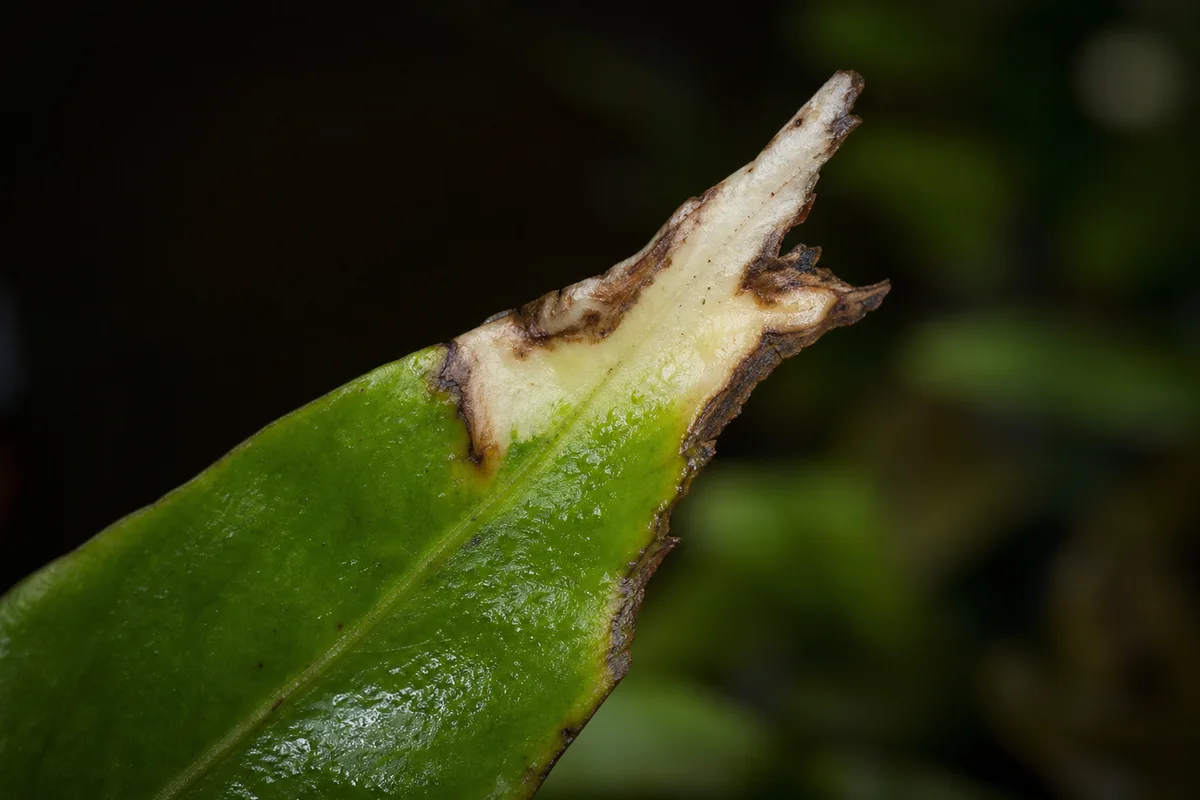
Chemical Damage symptoms on Java Fern - compare with healthy tissue on the same plant.
How to confirm the cause
Build a treatment timeline: did melt start within 72 hours of medicating, algicide, peroxide, or Excel? Note whether melt hit plants in the filter outflow path first (stronger chemical concentration). Feel the rhizome-firm and woody suggests chemical leaf kill with salvageable meristem; soft black base means burial rot, not chemicals alone. Check tankmates: shrimp and snails often die before plants when copper is present.
First fix for Java Fern
Stop all medications and algicides immediately. Perform a 40–50% water change with temperature-matched dechlorinated water. Run activated carbon in the filter for 48–72 hours to pull residual copper and organic aldehydes. Remove melting fronds with clean scissors at the rhizome. If copper treatment must continue for fish, move Java Fern to a separate container with matched temperature until the display tank is cleared and carbon-polished. Do not redose Excel or peroxide while new melt is active.
Recovery timeline
Leaf melt may continue one to two weeks after exposure ends-that is damaged tissue sloughing, not ongoing poisoning. Success is a firm rhizome and at least one new green frond without edge glassiness. Java Fern grows slowly; expect four to six weeks before the clump looks full. Maintain 22–28°C water/27914) and low-to-moderate light during recovery-do not compensate with high PAR or heavy fertilizer on a stressed plant.
What not to do
Do not double the next Excel dose to “burn algae” after melt starts. Do not treat a planted tank with copper ich medication while Java Fern remains attached. Do not pour full-strength peroxide directly on submerged fronds. Do not bury the rhizome hoping recovery fertilizer will help-epiphytes need the rhizome on wood or stone, not in substrate.
Lookalike symptoms
Acclimation melt after purchase lacks a chemical event on the timeline. Nutrient deficiency pinholes develop over weeks on older leaves, not overnight after dosing. Cold damage follows a heater failure, not ich treatment. Rhizome rot from burial softens the base first; chemical damage usually melts leaves while the rhizome still feels firm initially.
How to prevent chemical damage next time
Quarantine new fish with non-copper treatments when possible, or relocate Java Fern during copper therapy. Use mechanical removal and conservative partial algae treatment rather than tank-wide copper in planted displays. Dose liquid carbon at label strength every other day maximum on low-tech tanks. Log every chemical added-Java Fern forgives missed fertilizer better than it forgives copper.
When to use this page vs other Java Fern guides
- Java Fern watering guide - Use for routine moisture checks before assuming chemical damage is the main issue.
- Java Fern problems hub - Browse all 28 common issues on this species.