Black Spots on Java Fern: Causes, Checks & Fixes
Quick answer
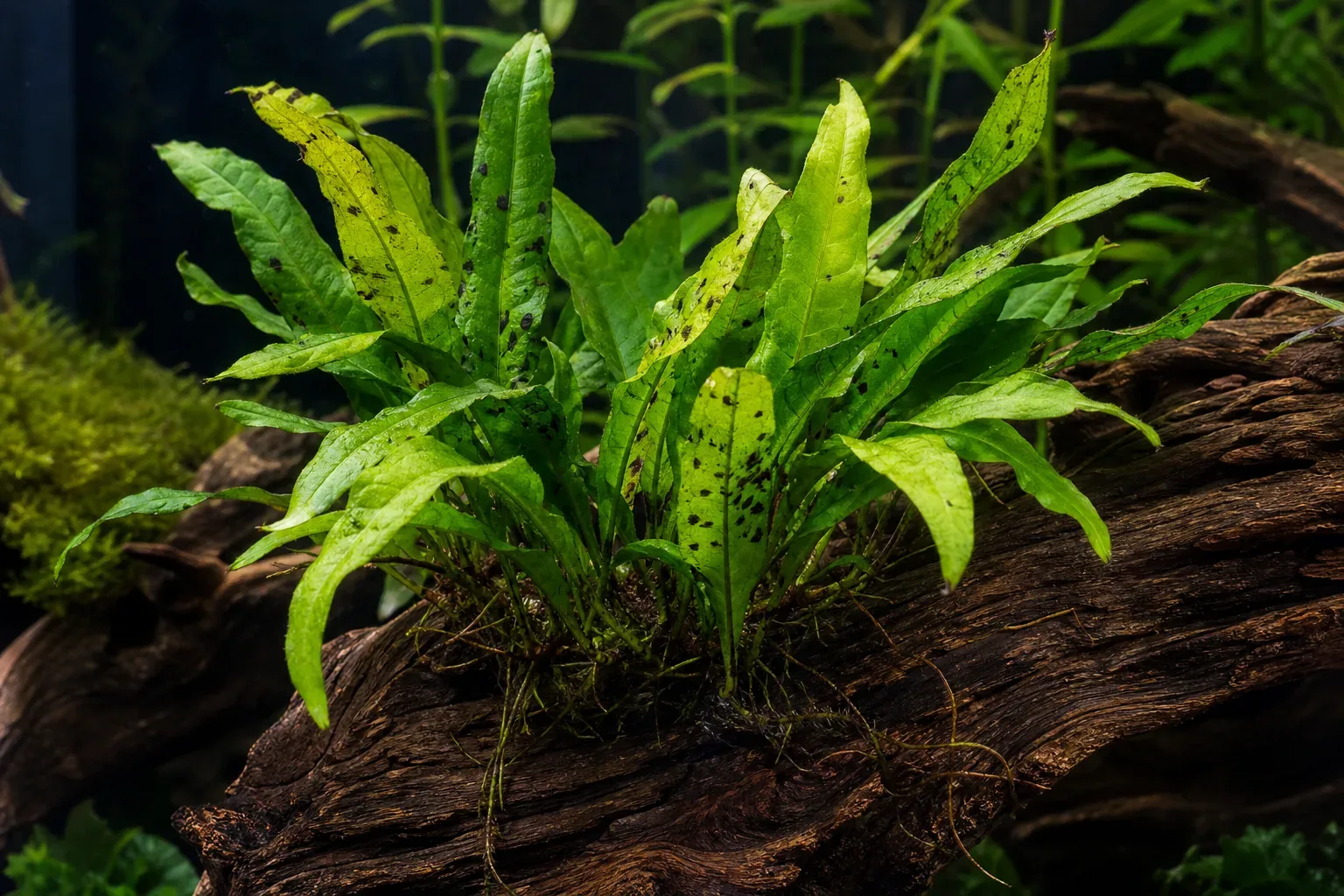
Black spots on Java Fern are usually normal sporangia on firm leaf undersides, potassium-deficiency pinholes on older fronds, or spreading melt from stress-not houseplant leaf spot disease. Flip the leaf, check whether tissue is firm, then treat only if pinholes or melt match the pattern.
Black Spots on Java Fern: Causes, Checks & Fixes
This guide covers black spots on Java Fern. See also the general Black Spots guide, watering, and light pages for this plant.
Black Spots on Java Fern: Causes, Checks & Fixes
Quick answer
Black spots on Java Fern (Microsorum pteropus) fall into three aquarium buckets: normal sporangia, potassium-deficiency pinholes, or melting tissue-not fungal leaf spot from houseplant guides. Tropica states the black spots under leaves are sporangia, reproductive organs on a slow-growing rhizome epiphyte. Flip the frond, feel whether the blade is firm, and only treat if you see irregular holes or spreading translucent melt.
Why Java Fern gets black spots
Sporangia (normal). Mature submerged fronds develop dark bumps on the underside in neat rows. These are spore cases, not infection. The leaf stays green and leathery; new plantlets may eventually sprout nearby.
Potassium deficiency. In planted tanks with heavy stem-plant uptake or zero potassium dosing, older Java Fern leaves can show pinholes and irregular black necrotic patches that break through the blade. Potassium-starved plants often show marginal necrosis on leaf edges in terrestrial species; in aquaria the same macronutrient shortage frequently appears as perforated older fronds while the rhizome stays firm.
Java Fern melt. Stress after a tank move, burial of the rhizome, or light shock causes translucent brown-to-black patches that spread along the leaf and dissolve tissue. This is not sporangia-it is active die-back. Covering the rhizome causes rot, which can produce black mushy spots at the base mistaken for leaf disease.
What black spots look like on Java Fern
| Pattern | Location | Leaf feel | Action |
|---|---|---|---|
| Sporangia | Underside dots, symmetrical | Firm, green | None |
| Potassium pinholes | Older blades, irregular holes | Firm except at holes | Dose K, trim worst leaves |
| Melt | Often from midrib or tip inward | Soft, translucent edges | Fix stress, trim melting fronds |
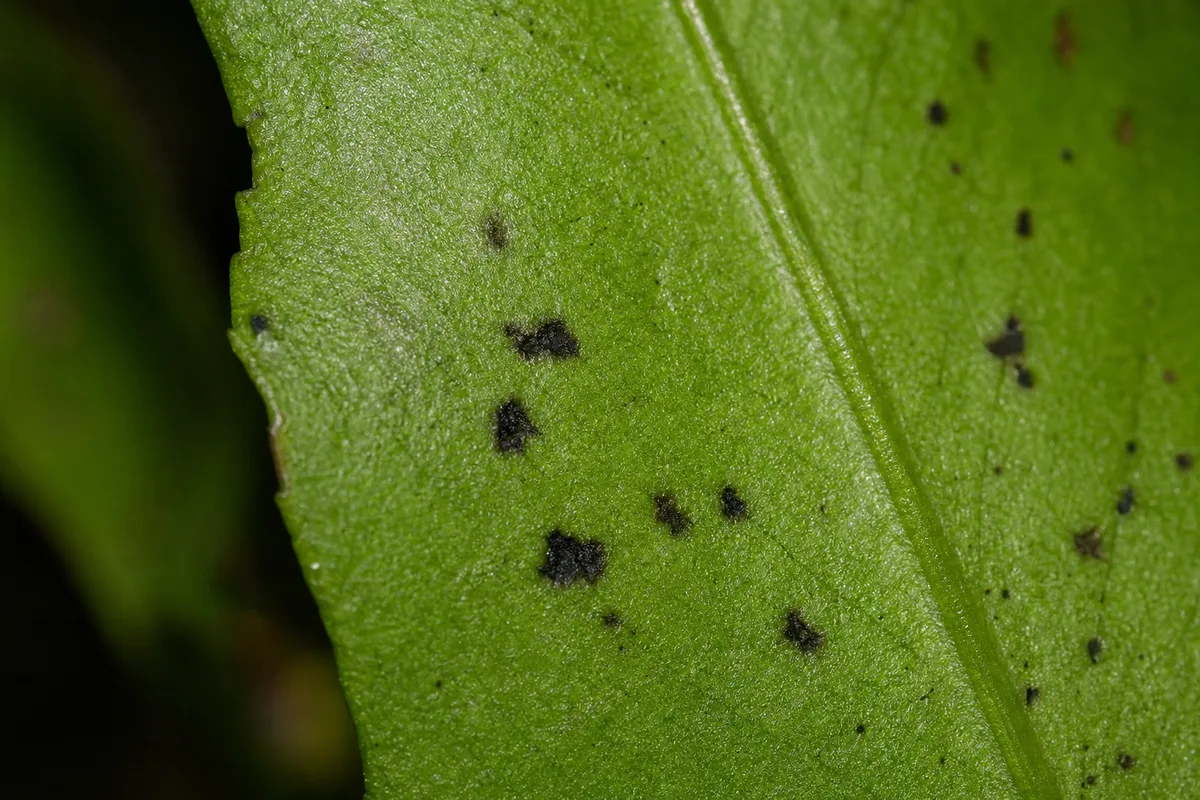
Black Spots symptoms on Java Fern - compare with healthy tissue on the same plant.
Do not confuse sporangia with melt: sporangia sit on intact green tissue; melt makes the surrounding leaf glassy before it collapses.
How to confirm the cause
Work in this order: (1) flip the leaf-underside-only dots on firm tissue point to sporangia; (2) check hole shape-clean round pinholes in older leaves suggest potassium shortage; (3) press the spot-mushy spreading black means melt or rot; (4) inspect the rhizome-it must stay above substrate, not buried. Review whether you recently moved tanks, changed lighting beyond Easy-plant levels, or stopped fertilizing a heavily planted aquarium.
First fix for Java Fern
If sporangia only: do nothing. If pinholes on firm older leaves: trim the worst fronds at the rhizome and add a liquid potassium supplement or complete aquarium fertilizer at label strength once weekly after a 25% water change. If melt: remove melting tissue immediately, confirm the rhizome is mounted on hardscape, and stabilize light at roughly 0.25–0.5 W/L for Easy plants with six to eight hours photoperiod before increasing further.
Recovery timeline
Sporangia persist as long as the leaf lives-that is expected. Pinhole damage on trimmed fronds will not heal; watch new fronds over three to six weeks for fresh holes. Melt may continue one to two weeks after fixing burial or lighting even when conditions are correct. Growth is slow by nature, so judge recovery by the rhizome and the next leaf, not overnight color change. Keep water near 22–28°C/27914) for steady regrowth.
What not to do
Do not scrape sporangia off healthy leaves. Do not treat with copper-based fish medications on the plant-copper is registered as an aquatic herbicide and damages submerged foliage. Do not bury the rhizome to “feed” potassium. Do not assume every black dot is disease and remove the whole plant while sporangia on firm leaves are normal.
Lookalike symptoms
Algae film on leaf tops wipes off; sporangia do not. Rhizome rot blackens the base and softens tissue-different from underside dots. New-plant melt after purchase can show black edges without pinholes; trim and wait if the rhizome is firm. Iron deficiency pales new growth rather than punching holes in older leaves.
How to prevent black spots next time
Mount Microsorum pteropus with rhizome exposed on porous rock or driftwood. In nutrient-hungry planted tanks, maintain modest liquid dosing so potassium does not deplete silently. Acclimate new plants with stable water changes and low initial light. Learn sporangia once and you will stop treating healthy reproductive spots as emergencies.
When to use this page vs other Java Fern guides
- Java Fern watering guide - Use for routine moisture checks before assuming black spots is the main issue.
- Java Fern problems hub - Browse all 28 common issues on this species.
- White Spots on Java Fern - Different entry point when symptoms overlap with black spots.