White Spots on Java Fern: Causes, Checks & Fixes
Quick answer
White spots on Java Fern are usually calcium crust from hard water or surface algae-not sporangia, which are dark bumps on leaf undersides. Wipe chalky deposits gently, improve flow, and leave healthy sporangia alone.
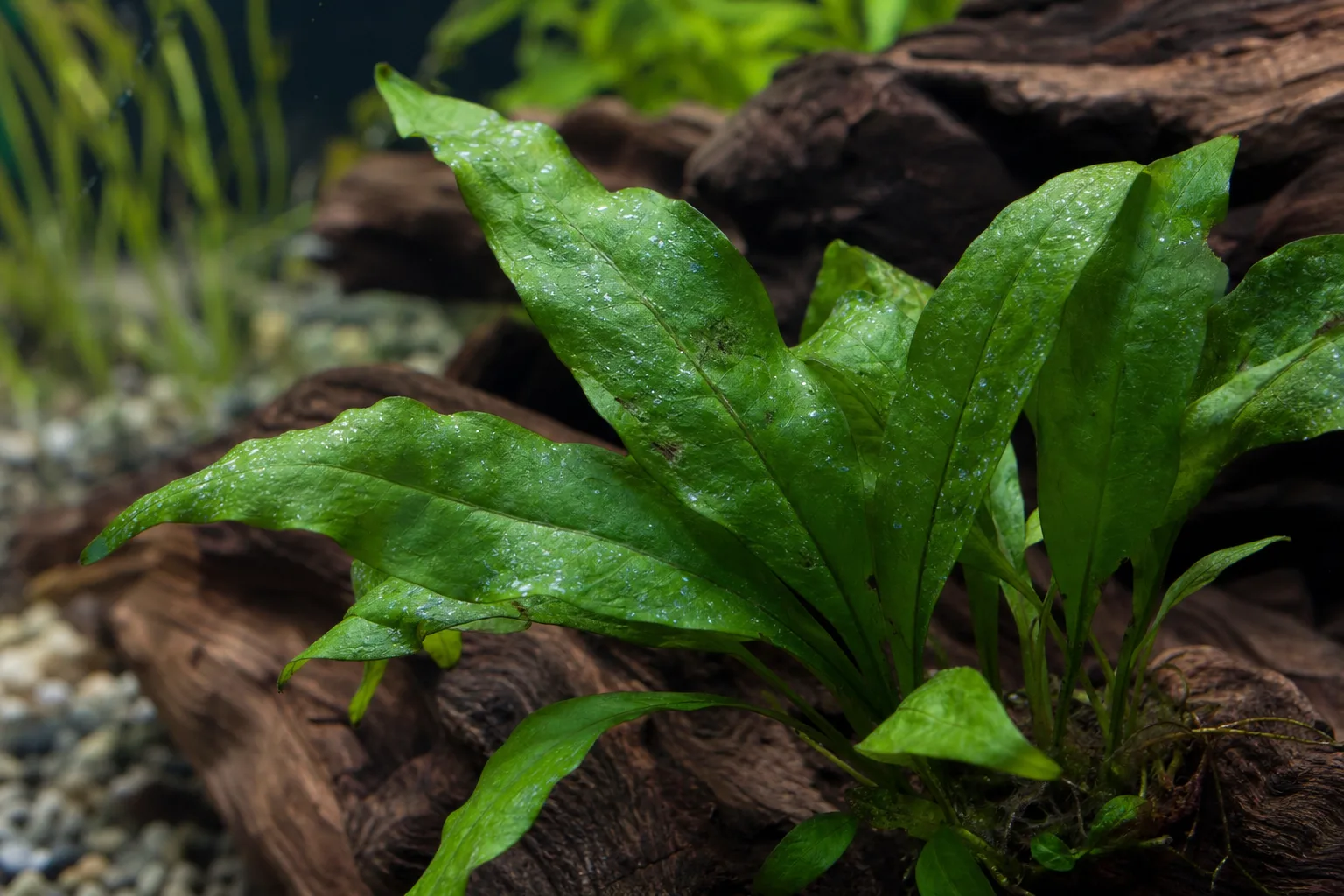
White Spots on Java Fern: Causes, Checks & Fixes
This guide covers white spots on Java Fern. See also the general White Spots guide, watering, and light pages for this plant.
White Spots on Java Fern: Causes, Checks & Fixes
Quick answer
White spots on Java Fern (Microsorum pteropus) usually fall into three buckets: calcium or mineral crust from hard water, surface algae or biofilm, or a misread of sporangia-which are actually dark bumps on leaf undersides, not white. This slow-growing epiphyte collects debris in low-flow zones. Identify texture and location before treating; healthy sporangia need no fix.
Why Java Fern gets white spots
Common aquarium causes:
- Calcium deposits-Very hard tap water leaves chalky white crust on frond edges, aquarium glass, and heater surfaces as water evaporates and minerals precipitate.
- Algae and biofilm-Green spot algae, diatoms, or bacterial film coat leaf surfaces when flow is weak, photoperiod is long, or nutrients run high relative to plant uptake.
- Confusion with sporangia-Microsorum pteropus develops dark reproductive structures on mature frond undersides; aquarists sometimes describe them loosely as “spots” but they are not white or fuzzy.
- Mineral spray-Dosing dry fertilizers or splashing hard tap onto emersed leaves during maintenance can leave pale residue.
Buried rhizome rot produces black mush, not white powder-rule that out if spots sit near a failing base.
What white spots look like on Java Fern
Use this comparison:
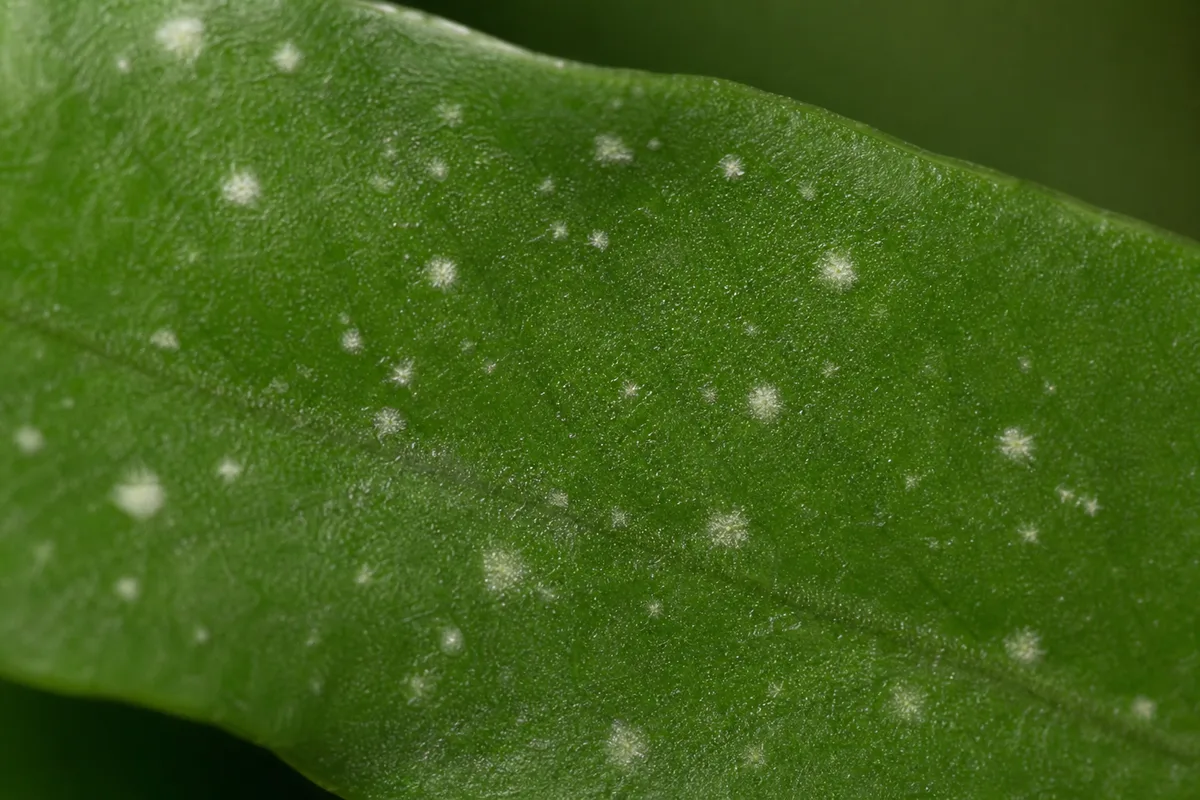
White Spots symptoms on Java Fern - compare with healthy tissue on the same plant.
| Pattern | Likely cause | What you see |
|---|---|---|
| Chalky, gritty, wipes to powder | Calcium / hard water | White crust on frond tips or glass |
| Fuzzy, slimy, spreads over weeks | Algae or biofilm | Patchy white-green film on leaf surface |
| Dark, round, firm, underside only | Sporangia (normal) | Brown-black bumps ~2 mm; not a disease |
| Fine dust after water change | Mineral residue | Temporary haze; clears with flow |
Healthy sporangia may eventually sprout plantlets-tiny leaves from bumps on older fronds. That is reproduction, not infection.
How to confirm the cause
- Touch test-Chalky crust feels gritty; algae smears under a finger.
- Location-Underside dark bumps = sporangia. Upper-surface white = minerals or algae.
- Water tests-High GH/KH supports calcium crust theory.
- Flow check-Stagnant pockets behind wood collect biofilm on epiphytes attached to hardscape.
- Light audit-Long photoperiod on a low-light species favors algae on slow leaves.
Leave sporangia alone unless you want to propagate plantlets deliberately.
First fix for Java Fern
Match the fix to the diagnosis:
- Calcium crust-Gently brush fronds with a soft toothbrush during water changes. Avoid tearing tissue. Stability matters more than softening water overnight.
- Algae or biofilm-Trim heavily coated fronds at the rhizome, shorten photoperiod to roughly six to eight hours, and aim gentle current across the plant-Tropica recommends moderate light duration for Easy plants.
- Sporangia-No treatment. Do not scrape undersides of healthy leaves.
Confirm the rhizome stays exposed on wood or stone so rot does not mimic spot disease.
Recovery timeline
Calcium dust clears within one to two maintenance cycles once wiping becomes routine. Algae-coated fronds may need two to four weeks of reduced light and better flow before new clean growth appears. Sporangia persist for the life of the frond- that is normal. Slow growth means new fronds arrive gradually; judge tank balance by the rhizome staying firm.
What not to do
Do not treat dark sporangia with algaecide or hydrogen peroxide dips. Do not scrape fronds aggressively-damaged tissue invites secondary algae. Do not assume every spot is disease. Do not bury the rhizome while chasing “cleaner” substrate. Avoid over-dosing fertilizer to outcompete algae on a low-light epiphyte-fix light and flow first.
How to prevent white spots next time
Mount Java Fern where flow passes across leaves, perform regular water changes, and keep lighting in the low-to-moderate range. In hard-water regions, expect occasional mineral haze-light brushing beats constant parameter chasing. Learn sporangia by sight so normal fern biology never triggers unnecessary treatment.
When to use this page vs other Java Fern guides
- Java Fern watering guide - Use for routine moisture checks before assuming white spots is the main issue.
- Java Fern problems hub - Browse all 28 common issues on this species.
- Mealybugs on Java Fern - Different entry point when symptoms overlap with white spots.
- Black Spots on Java Fern - Different entry point when symptoms overlap with white spots.