Mealybugs on Java Fern: Causes, Checks & Fixes
Quick answer
Mealybugs on Java Fern appear on emersed nursery growth, moist rockwool, or paludarium leaves above water-not healthy submerged fronds. First step: quarantine the plant, strip rockwool, rinse the rhizome, and trim infested emersed leaves before mounting on hardscape.
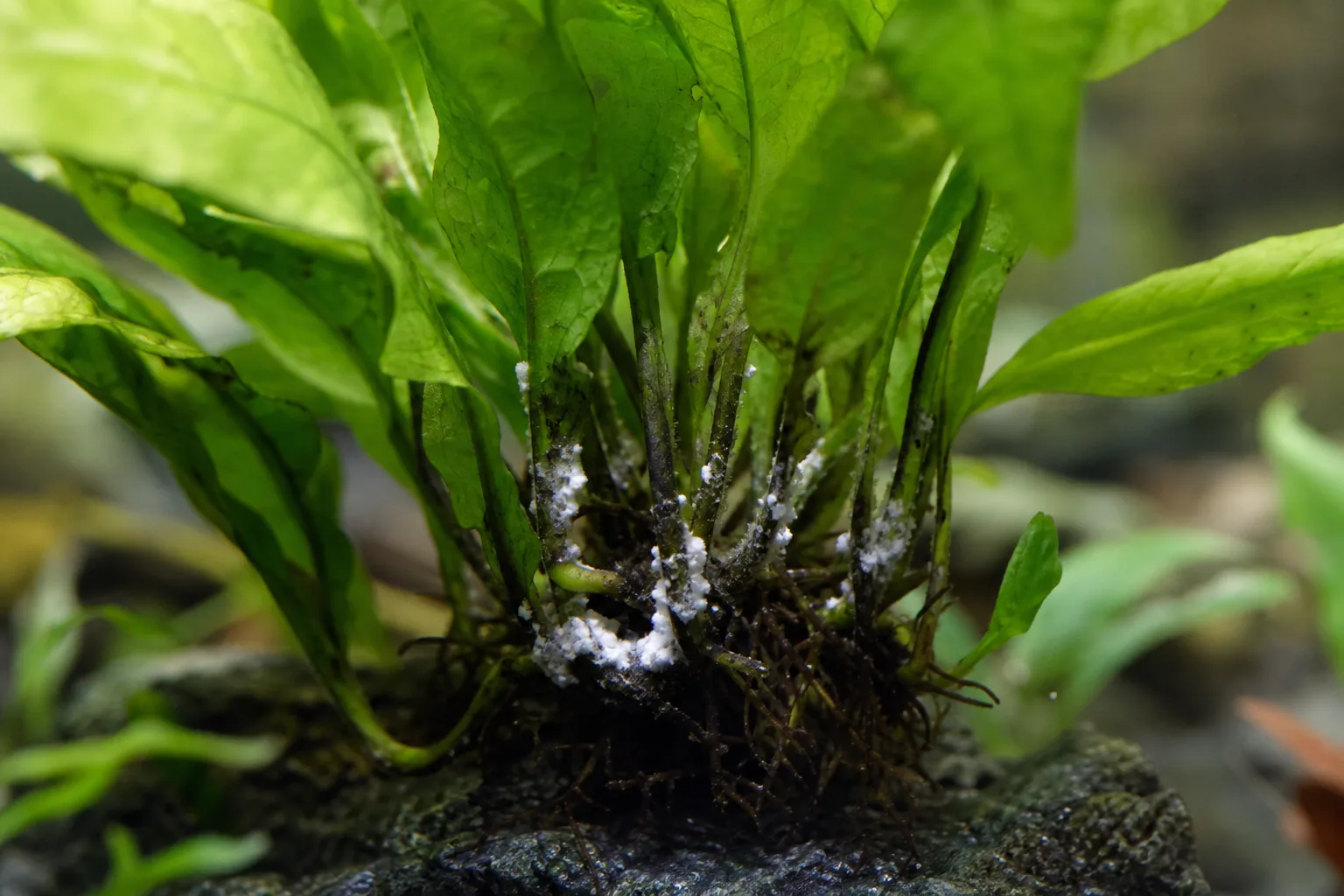
Mealybugs on Java Fern: Causes, Checks & Fixes
This guide covers mealybugs on Java Fern. See also the general Mealybugs guide, watering, and light pages for this plant.
Mealybugs on Java Fern: Causes, Checks & Fixes
Quick answer
Mealybugs on Java Fern (Microsorum pteropus) are a greenhouse and emersed-stock problem, not a typical submerged-aquarium pest. Mealybugs are soft, wax-covered insects that cluster in protected leaf joints and excrete sticky honeydew; they need accessible, air-exposed plant tissue. Healthy fronds growing fully underwater in a display tank should stay clear. When cottony white patches show up, they almost always trace to emersed nursery growth, rockwool in the pot, paludarium leaves above the waterline, or a plant quarantined beside infested houseplants.
First step: quarantine the plant, remove all rockwool, rinse the rhizome under lukewarm water, and trim infested emersed fronds before tying the exposed rhizome to driftwood or stone per the Java Fern overview mounting section. Do not dab alcohol or spray insecticides into a stocked aquarium.
This page covers emersed mealybug introductions on aquarium Java Fern. For white underwater material that is not cottony wax, see white-spots. For symmetrical dark reproductive dots on submerged fronds, see black-spots. For mushy rhizome tissue after rockwool burial, see root-rot.
Why Java Fern gets mealybugs
Java fern is a slow-growing rhizomatous epiphyte from Asian stream margins. In aquariums it attaches to hardscape; the rhizome must stay exposed and never buried. Most trade Java fern is grown emersed in humid greenhouses-exactly the environment mealybugs favor on indoor and greenhouse plants. Warm, still, humid air around soft emersed fronds lets colonies build in leaf axils and on moist rockwool long before the plant reaches your tank.
Submerged culture changes the equation. Underwater fronds lack the dry-ish stem joints mealybugs prefer, and constant immersion washes away honeydew. That is why a mature submerged clump rarely hosts active mealybugs while the same species in a humidity tray or open-top paludarium can look peppered with white wax.
The usual introduction routes:
- Potted emersed plants shipped in net pots with rockwool that hides pests at the rhizome
- Paludarium or riparium setups where emersed Java fern leaves sit above the waterline
- Quarantine trays shared with infested houseplants from the same greenhouse bench
- Ant-protected colonies-ants harvest honeydew and defend mealybugs on nearby pots
- Damp rockwool shipments that also attract fungus gnats-flying adults do not cause mealybugs, but shared wet organic pockets mean you should scout both pests in the same quarantine tub
Burying the rhizome in substrate does not cause mealybugs, but it causes rot-and stressed, melting emersed tissue can sit beside rockwool long enough for pests to persist through a careless planting. Open root-rot when the rhizome feels mushy rather than woody.
What mealybugs look like on Java Fern
On emersed or potted fronds, expect:
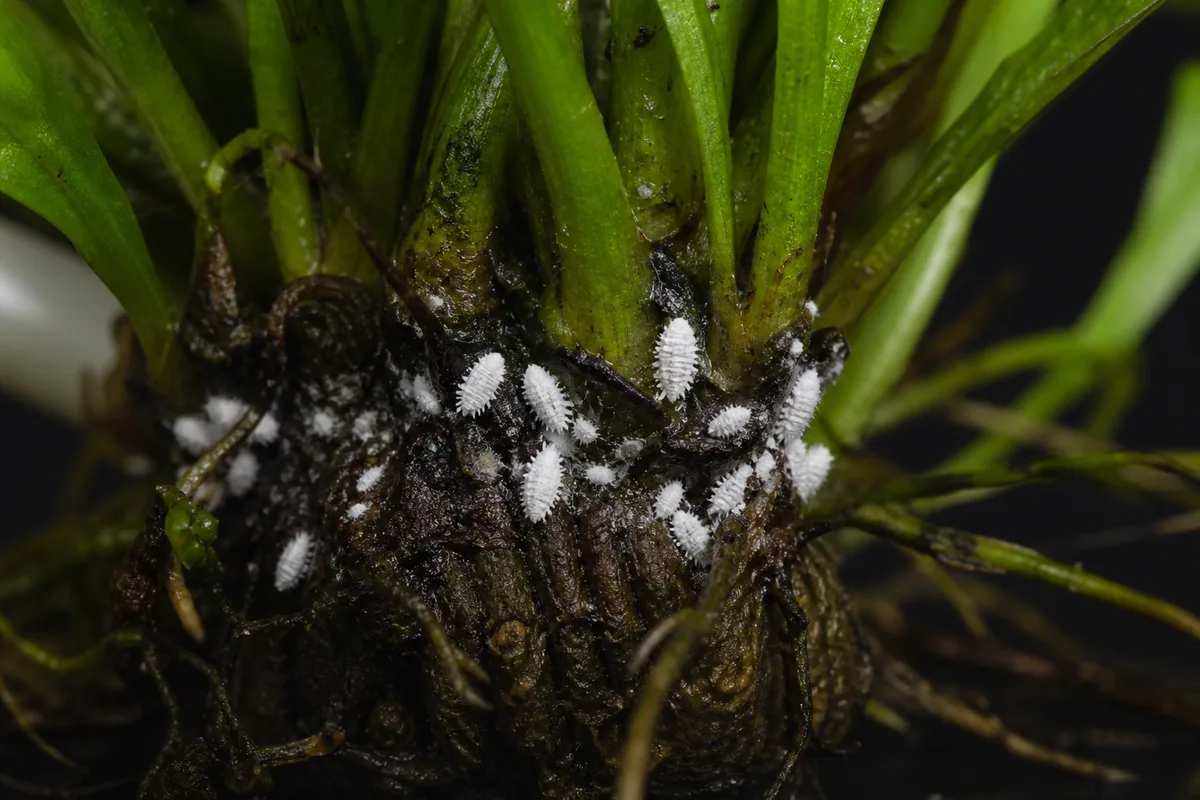
Mealybugs symptoms on Java Fern - compare with healthy tissue on the same plant.
- White, cottony clusters in leaf axils, along the rhizome, or tucked in rockwool fibers
- Sticky honeydew on leaf surfaces; nearby leaves or bench tops may feel tacky
- Black sooty mold growing on honeydew-not on the insect itself
- Pale or distorted new growth where sap feeding is heavy
- Ant trails on pot rims, humidity domes, or grow-out shelves
On fully submerged display fronds, mealybugs are uncommon. If you see white fluff underwater, rule out filter floss, decaying leaf tissue, or perlite from old potting debris before assuming insects-white-spots walks through mineral and debris lookalikes.
Do not confuse mealybugs with sporangia-the symmetrical dark reproductive dots on firm mature submerged leaves. Sporangia are part of normal fern biology; they do not feel cottony, produce honeydew, or crawl when disturbed. For photo-style ID boundaries, compare black-spots before pruning healthy reproductive fronds.
Rule out aphids (green or black pear-shaped clusters on emersed tips) and scale (hard brown shields)-see aphids when clusters are not waxy white.
How to confirm the cause
Work through these checks in order:
- Emersed vs submerged - Are the affected fronds above water, in a humid box, or still wrapped in rockwool? Submerged-only symptoms strongly suggest a lookalike, not mealybugs.
- Touch test - Cottony white wax that smears and reveals a soft body confirms mealybug. Sporangia stay fixed to firm green tissue.
- Honeydew check - Sticky residue on leaves or the bench below points to sap feeders. Sooty mold on that stickiness reinforces the diagnosis.
- Rockwool inspection - Pull the net pot apart. Mealybugs often hide where damp rockwool meets the rhizome-use the same bright-light peel technique described in the overview buying section.
- Rhizome firmness - A woody, green rhizome can recover after pest removal. Mushy rhizome tissue means rot from burial or decay-address that on
root-rotseparately. - Ant activity - Ants on the setup suggest an active honeydew source nearby; inspect all pots in the tray.
If submerged leaves are clean, the rhizome is firm, and white patches exist only on emersed tips or packing material, you have a confirmed emersed mealybug issue-not a tank-wide aquarium pest emergency.
First fix for Java Fern
Quarantine the plant in a separate container away from other houseplants and unquarantined aquarium stock.
That single step stops crawlers from walking to neighboring pots or hitchhiking on wet leaves into your main tank. In the quarantine tub:
- Remove the net pot and every rockwool fiber you can see; rinse the rhizome under lukewarm water.
- Trim emersed fronds with visible cottony clusters back to the rhizome with clean scissors.
- Mount or float the rhizome with all tissue exposed-attach to driftwood or stone, not buried substrate.
Hold the plant in quarantine two full weeks while you inspect for new wax. Only after that window passes with no fresh clusters should you tie the fern to hardscape in a display tank.
Step-by-step recovery
After quarantine isolation and rockwool removal:
- Physical removal - Wipe accessible clusters with a dry paper towel or soft brush on emersed leaves only.
- Alcohol dabs (emersed quarantine only) - Swabbing individual mealybugs with alcohol kills on contact; test one leaf first because alcohol can burn sensitive foliage. Never pour alcohol into an aquarium.
- Rinse cycle - A strong stream of water on emersed fronds dislodges crawlers the way extension guides recommend for other soft-bodied pests; let leaves dry in ventilated quarantine afterward.
- Trim and wait - Remove heavily coated emersed leaves; submerged melt after transition is normal and not mealybug damage.
- Reattach properly - Tie the exposed rhizome to driftwood or stone with thread or gel glue; keep it above gravel per Tropica planting guidance.
- Tank placement - Introduce only after quarantine passes. Submerged growth from a clean rhizome should stay pest-free.
For paludarium setups, treat emersed portions in place but keep alcohol and soaps away from open water where fish drink. Move shrimp and snails temporarily if you must treat above-water leaves heavily-even diluted soaps can stress sensitive invertebrates when they drip into the water column.
When two-week quarantine fails
If fresh cottony clusters return after rockwool removal, alcohol dabs, and daily rinsing through two full quarantine cycles, escalate outside the display tank only:
- Biological control in a humidity tray or greenhouse tub - Green lacewing larvae feed on mealybugs and other soft-bodied pests; repeated releases are often needed because crawlers hatch on a staggered schedule. Control ants on the bench first-they protect mealybugs and eat lacewing eggs off release cards.
- Insecticidal soap or horticultural oil on emersed leaves only - Apply in a bucket away from aquarium water, rinse thoroughly, and quarantine again before reintroducing. Never pour these products into occupied tanks.
- Discard heavily infested nursery stock - On a slow grower, replacing a small emersed pot is often faster than risking your main aquascape. Salvage only firm rhizome sections with clean growing tips.
Do not use imidacloprid drenches, systemic houseplant granules, or pyrethrin sprays over open paludarium water-even labels marketed as plant-safe can harm shrimp and snails.
Recovery timeline
Mealybug control on emersed Java fern is a weeks-long watch, not a one-day rinse. Crawlers hatch on a staggered schedule; missing one cottony cluster restarts the cycle. Expect:
- Week 1–2: Quarantine, rockwool removal, trimming; no new clusters = good sign
- Week 3–4: First clean submerged or emersed leaves from the rhizome; old scarred fronds remain until trimmed
- Month 2+: Slow Java Fern growth means full visual recovery takes patience; judge success by firm rhizome tissue and pest-free new fronds, not instant lushness
Keep quarantine water in the 22–28°C optimum range/27914) so post-treatment submerged regrowth is not slowed by cold water below 20°C.
Honeydew and sooty mold wash off once insects are gone; sooty mold itself does not infect plant tissue but blocks light if left thick-rinse emersed leaves after pest numbers drop.
Example quarantine arc
A common emersed tissue-culture pot path: week 1 rockwool strip and trim of coated emersed fronds; week 2 one alcohol dab on a remaining axil cluster plus daily rinse; week 3 first submerged leaf from a firm rhizome tied to stone in the quarantine tub; week 4 no new wax-safe to mount in the display tank. Individual tanks vary with temperature and light, but the checkpoint is always pest-free new growth, not re-greening old scarred emersed blades.
Lookalike symptoms
| What you see | Likely cause | Mealybug? | Safe to treat in stocked tank? |
|---|---|---|---|
| Symmetrical dark dots on firm submerged leaves | Sporangia - see black-spots | No | No treatment needed |
| White stringy material on filter intake | Filter floss or mulm | No | Clean hardware only |
| Translucent melting fronds after tank move | Acclimation melt | No | Hold steady; no pesticides |
| Cottony clusters in emersed axils with stickiness | Mealybugs | Yes | No - quarantine emersed tissue only |
| White crust on glass | Hard-water mineral scale - see white-spots | No | Wipe glass; no plant spray |
Mistakes to avoid
- Treating submerged aquarium Java fern with houseplant sprays - insecticidal soap and oils can harm fish and invertebrates.
- Planting rockwool-and-all into substrate - traps moisture, hides pests, and buried rhizomes rot.
- Assuming white underwater fluff is mealybug - confirm emersed origin or debris first on
white-spots. - Returning plants from quarantine after one alcohol dab - Repeat inspection through two weeks to catch crawlers.
- Pruning healthy submerged sporangia-bearing fronds - removes normal reproductive tissue, not pests.
- Sharing quarantine trays with infested houseplants - mealybugs walk faster than Java Fern grows; keep aquarium stock isolated.
How to prevent mealybugs next time
- Quarantine every new Java fern two weeks in a separate tub before tank placement
- Strip rockwool completely at purchase; rinse and inspect the rhizome under bright light using the overview rhizome checklist-firm green-to-brown tissue with growing tips, no cottony wax at crown joints
- Mount exposed rhizome on hardscape; never bury it in gravel
- Keep display plants fully submerged when possible; emersed leaves in paludariums need the same scouting you’d give houseplants
- Scout weekly in humid grow-out areas-mealybugs spread through greenhouses and interiorscapes faster than they colonize underwater fronds
- Control ants on benches; they protect mealybug colonies from natural enemies
- Check damp rockwool for fungus gnats at the same time-see
fungus-gnatsif adults hover over quarantine tubs
Buying submerged-grown stock reduces-but does not eliminate-introduction risk. The highest-leverage purchase habit is a bright-light rhizome peel before the plant touches any tank water.
When to worry
Escalate fast when honeydew coats most emersed fronds, ants farm colonies on the quarantine bench, or multiple net pots from the same shipment show wax-those patterns mean crawlers are still moving between plants.
Treat as urgent in paludariums when you cannot quarantine emersed leaves separately from open water and must choose between repeated physical removal or out-of-tank soap treatment. Move livestock temporarily rather than dripping pesticides into shrimp or snail water.
If dense colonies persist after two full quarantine cycles with rockwool fully removed, discard the most infested emersed fronds or replace small nursery stock rather than risking your entire aquascape. A firm rhizome with clean growing tips can be salvaged; a mushy crown belongs on root-rot, not another alcohol dab.
When to use this page vs other Java Fern guides
- Java Fern watering guide - Use for routine moisture checks before assuming mealybugs is the main issue.
- Java Fern problems hub - Browse all 28 common issues on this species.
- Yellow Leaves on Java Fern - Different entry point when symptoms overlap with mealybugs.
- Slow Growth on Java Fern - Different entry point when symptoms overlap with mealybugs.
- White Spots on Java Fern - Different entry point when symptoms overlap with mealybugs.
Related Java Fern guides
- Java Fern overview
- Java Fern watering
- Java Fern light
- Java Fern soil
- Yellow Leaves on Java Fern
- Slow Growth on Java Fern
- White Spots on Java Fern
- Java Fern problems
Conclusion
Mealybugs on Java Fern are an above-water problem on a below-water plant. Confirm them on emersed fronds, rockwool, and paludarium tips-not on healthy submerged tissue. Quarantine, strip rockwool, trim, then mount the exposed rhizome on hardscape. In fish and shrimp tanks, isolation and physical removal protect livestock better than houseplant sprays ever will. Slow regrowth means prevention and quarantine matter-inspect new emersed stock at purchase, route underwater white fluff and sporangia misreads to sibling guides, and judge success by the next clean frond, not yesterday’s scarred emersed blade.
Related tool
Use the Pest Identifier Tool to narrow causes for mealybugs on this plant before changing multiple variables at once.