Yellow Leaves on Java Fern: Causes, Checks & Fixes
Quick answer
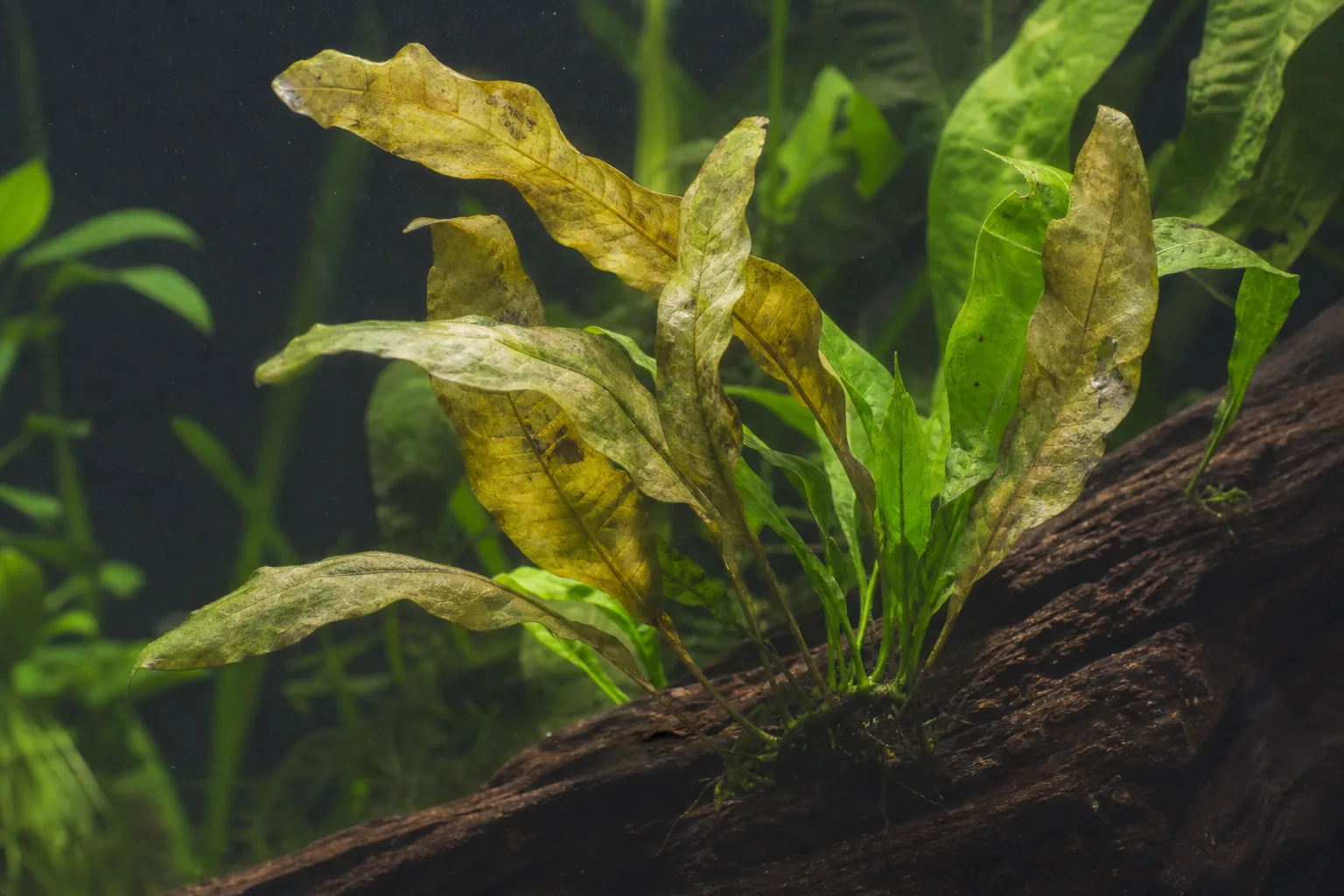
Yellow or glassy fronds on Java Fern usually mean melting after a tank move, nutrient-poor water, or light shock-not a houseplant humidity problem. Trim melting tissue at the rhizome, confirm the rhizome stays exposed on hardscape, and judge recovery by new green growth.
Yellow Leaves on Java Fern: Causes, Checks & Fixes
This guide covers yellow leaves on Java Fern. See also the general Yellow Leaves guide, watering, and light pages for this plant.
Yellow Leaves on Java Fern: Causes, Checks & Fixes
Quick answer
Yellow or glassy fronds on Java Fern (Microsorum pteropus) usually mean aquarium melt-not houseplant chlorosis and not a room-humidity problem. This slow-growing epiphyte sheds old tissue when stressed by tank moves, lighting changes, nutrient-poor water, or a buried rhizome.
First fix: trim melting fronds at the rhizome with clean scissors, confirm the rhizome is attached to hardscape-not buried, and keep water parameters stable for two weeks before adding fertilizer.
This page covers yellow and melt-first triage. For glassy transparency as the main symptom, see transparent-leaves. For nitrate testing, ppm targets, and dosing when older fronds pale gradually, see nitrogen-deficiency. For baseline PAR and mounting, start with the Java Fern overview.
What yellow leaves look like on Java Fern
Melting starts as translucent patches that turn yellow-brown, often on older fronds first. A healthy plant still pushes green tips from the rhizome while damaged tissue dissolves.
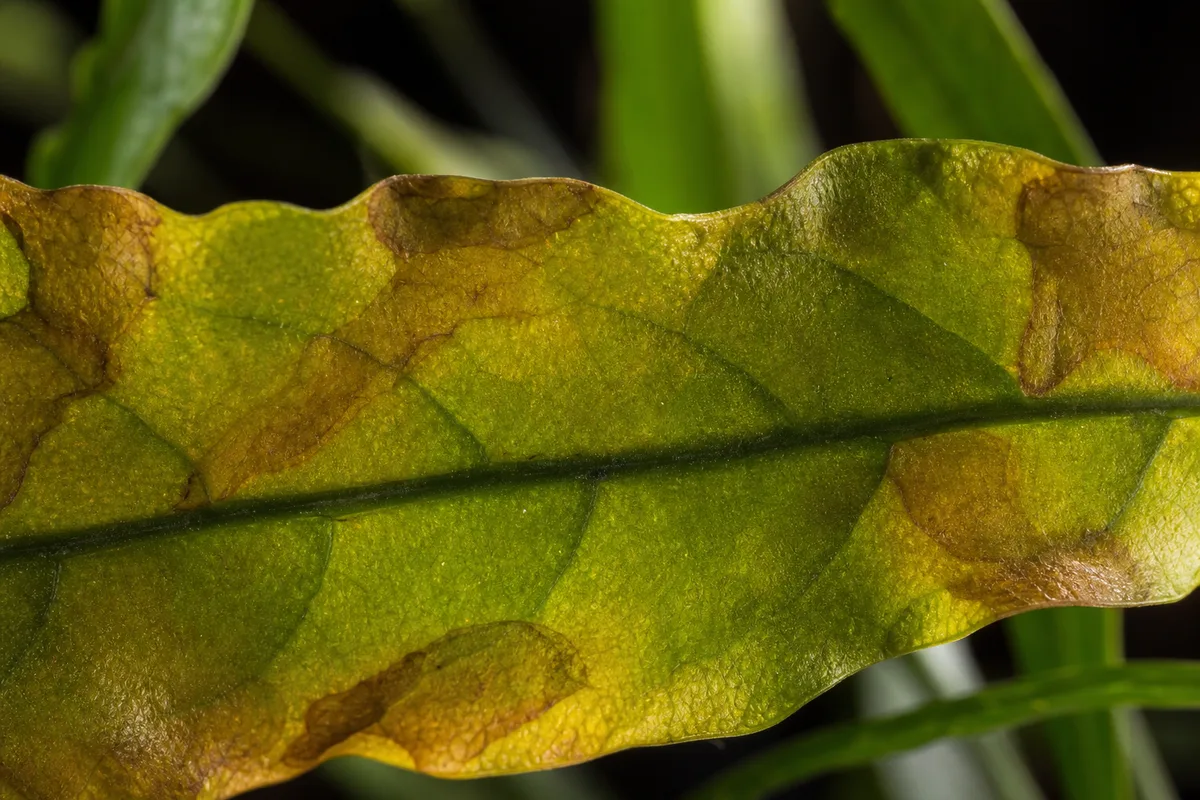
Yellow Leaves symptoms on Java Fern - compare with healthy tissue on the same plant.
Melt vs sporangia vs rhizome rot
- Acclimation melt: whole fronds turn yellow or glassy within days of purchase, shipping, or rescape; rhizome stays firm and woody
- Nutrient drift: gradual yellowing on established older fronds over weeks while nitrate reads zero to 5 ppm-see
nitrogen-deficiency - Light shock: yellowing or melt on tallest fronds under the brightest LED zone after a fixture upgrade or longer photoperiod-see
not-enough-lightfor the opposite problem - Rhizome rot: yellowing climbs from a black, mushy rhizome with foul smell-different workflow than melt; see
root-rot
Sporangia dots vs disease
Symmetrical dark bumps on the underside of firm green leaves are normal sporangia-reproductive structures, not disease. Yellow melt affects the upper surface and margins; sporangia sit on healthy tissue underneath and do not spread as necrotic patches.
Why Java Fern gets yellow leaves
Four causes cover most tanks. Each fits this species because Java Fern is a water-column feeder with no buried root uptake-stress shows in fronds before the rhizome fails.
Acclimation melt
Most nursery Java Fern is grown emersed or tissue-cultured before submersion. The transition triggers whole-frond melt even when water quality is fine. Tropica lists slow growth for this species, so acclimation can run two to four weeks. A firm rhizome with yellow old leaves and green new tips is normal adjustment-not death.
Nutrient-poor or stale water
Java Fern absorbs nitrogen and other nutrients from the water column through leaves and rhizome. In shrimp-only nano tanks, heavy weekly water changes, or plant-heavy setups where fast stem plants outcompete slow epiphytes, nitrates can read near zero while older fronds pale yellow before new growth stalls. Healthy culture typically targets 10 to 50 mg/l nitrate; planted community tanks often aim for 10–20 ppm as a practical band. When deficiency is the primary suspect, follow the full dosing workflow on nitrogen-deficiency-this page only flags the branch.
Light shock
Stock aquarium LEDs on default settings often exceed the 0.25–0.5 W/L range Tropica recommends for Easy-category plants. Sudden jumps in intensity or photoperiod above six to eight hours increase nutrient demand on a low-light epiphyte and can trigger melt when nitrates lag. Yellowing on tallest fronds under the fixture after a lighting change points here-not a humidity fix.
Cultivar note: Windelov and Trident forms have more divided fronds that may yellow sooner under the same PAR as standard Java Fern.
Rhizome stress from burial
The horizontal rhizome must stay exposed on wood or stone. Buried in gravel or aquasoil, it rots within days-yellowing spreads from a soft black base. This is the most common beginner mistake and the fastest path from yellow leaves to plant loss.
How to confirm the cause
Match timing to your last care change:
- Rhizome feel-Press the rhizome. Firm and woody means recovery is possible. Soft black tissue at the base means burial or rot-read
root-rot. - Purchase or rescape timeline-Whole-frond yellow melt within two weeks of arrival with adequate nitrates points to acclimation, not deficiency.
- Nitrate test-Zero to 5 ppm with gradual yellowing on established fronds over weeks suggests nutrient drift. Sudden melt after stable readings points elsewhere.
- Light history-Did you upgrade LEDs, extend photoperiod, or move the plant into direct fixture light? Check whether only top fronds yellowed.
- Sporangia check-Dark bumps only on firm leaf undersides are normal; do not trim healthy tissue.
| Pattern | Nitrate | Rhizome | Timing | Frond pattern |
|---|---|---|---|---|
| Acclimation melt | Often 10–20 ppm | Firm | Days 1–14 after purchase/rescape | Whole fronds yellow; new green tips at rhizome |
| Nutrient drift | Zero to 5 ppm | Firm | Weeks of gradual change | Older fronds pale yellow; see nitrogen-deficiency |
| Light shock | Variable | Firm | Days after LED/photoperiod change | Tallest fronds under brightest zone |
| Rhizome rot | Variable | Soft, black, foul | Days after burial | Yellowing from base upward; see root-rot |
Confirmed acclimation melt: firm rhizome, yellow whole fronds, recent tank move, green new growth emerging. Suspected but unconfirmed: test nitrate and review photoperiod before heavy dosing.
First fix for Java Fern
Trim melting fronds at the rhizome-one clear first action:
- Cut yellow or glassy fronds with sharp scissors at the rhizome, not mid-leaf. Removing partial tissue leaves decaying edges in flow.
- Confirm the rhizome sits on wood or rock, not buried in substrate.
- Keep lighting and water changes stable for two weeks-do not move tanks, upgrade lights, and dose fertilizer on the same day.
Secondary steps only after the trim and rhizome check:
- If nitrate reads zero in a planted tank, dose an aquarium all-in-one liquid fertilizer at half label strength once weekly-never a full pour on a melting plant. Full workflow:
nitrogen-deficiency. Check product labels for shrimp and invert sensitivity before dosing in nano tanks. - If yellowing followed a lighting change, shorten photoperiod by one to two hours or shade the plant-details in
not-enough-lightand the light guide. - Increase water-change volume to 25–50% weekly only if ammonia or nitrite are elevated-not as a blanket fix that strips nitrates in lightly stocked tanks.
Do not bury the rhizome hoping it will root deeper. Do not assume yellow leaves need more light.
Recovery timeline
Melting may continue for two to four weeks after a major change-that is normal if the rhizome stays firm. Dead yellow tissue will not re-green. Success is a firm rhizome and at least one new opaque green frond without continued melt.
- Days 1–7: Trim melted tissue; stop further stress from lighting or water swings.
- Weeks 2–4: First solid green new leaf may emerge at the rhizome.
- Weeks 4–6: Plant looks fuller as slow new growth replaces trimmed fronds.
Optimum temperatures around 22–28°C/27914) support steady leaf formation; cold water below 20°C slows recovery and can extend yellowing. Residual yellow on old fronds can persist until you trim them-that is old damage, not ongoing melt.
Example recovery path: A Java Fern mounted on driftwood in a low-tech 10-gallon community tank yellowed completely within ten days of shipping. The rhizome stayed firm. The keeper trimmed all yellow fronds at the base, kept photoperiod at seven hours, and avoided fertilizer for two weeks. An opaque green frond emerged at day eighteen-recovery confirmed.
Lookalike symptoms
| Pattern | Key clue | Read next |
|---|---|---|
| Glassy transparency first | See-through patches before yellow-brown | transparent-leaves |
| Gradual pale yellow over weeks, zero nitrate | Established fronds lose color slowly | nitrogen-deficiency |
| Vein yellowing on new fronds | Iron shortage pattern | iron-deficiency |
| Pinholes in older leaves | Potassium shortage | potassium-deficiency |
| Pale leggy growth, long gaps between fronds | Too little light | not-enough-light |
| Translucent melt 24–72 h after dose | Fertilizer overdose | fertilizer-burn |
| Black mush from rhizome base | Burial or decay | root-rot |
If nitrates sit at zero for weeks with widespread yellow melt, watch for blue-green cyanobacteria-that often appears in low-nitrate planted tanks and is covered on the nitrogen-deficiency page.
What not to do
Do not dose heavy fertilizers on a melting plant in one day-raise nutrients gradually once melt stabilizes. Do not pull the rhizome from wood unless it is clearly rotting; disturbing holdfast roots sets back recovery. Do not assume yellow leaves need more light; excess PAR can worsen melt on a low-light epiphyte. Do not raise room humidity or mist submerged fronds-irrelevant underwater. Do not confuse sporangia on firm leaf undersides with rot.
How to prevent yellow leaves next time
Mount the rhizome on rock or driftwood with thread or gel superglue, leaving it fully exposed. Quarantine new plants in stable water before a full rescape. Maintain gentle flow across the rhizome so debris does not accumulate. Acclimate lighting over two weeks when adding new fixtures.
Dose one aquarium fertilizer lightly in planted tanks rather than letting nitrate hit zero for months-see java-fern-fertilizer. Expect some melt after shipping; judge health by the rhizome, not every leaf.
When to worry
Cosmetic yellow melt on a firm rhizome after purchase is not urgent. Escalate if:
- Yellowing spreads to every new frond while the rhizome softens or smells-treat as rot on
root-rot - Nitrate stays at zero for six or more weeks with stalled growth-read
nitrogen-deficiencyand test for cyanobacteria - Every frond melts within days of a massive fertilizer pour-pause dosing and read
fertilizer-burn
When to use this page vs other Java Fern guides
- Java Fern watering guide - Use for routine moisture checks before assuming yellow leaves is the main issue.
- Java Fern problems hub - Browse all 28 common issues on this species.
Related Java Fern guides
- Java Fern overview
- Java Fern watering
- Java Fern light
- Java Fern soil
- Java Fern problems
- Black Spots on Java Fern
- Chemical Damage on Java Fern
- Cold Damage on Java Fern
Related tool
Use the Yellow Leaves Diagnosis Tool to narrow causes for yellow leaves on this plant before changing multiple variables at once.