Nitrogen Deficiency on Java Fern: Causes, Checks & Fixes
Quick answer
Pale or transparent Java Fern leaves in a lightly stocked tank usually mean low nitrates-not buried roots or humidity issues. Test NO₃, dose a light aquarium liquid fertilizer or rely on fish waste in stocked tanks, and judge recovery by new green fronds from the rhizome.
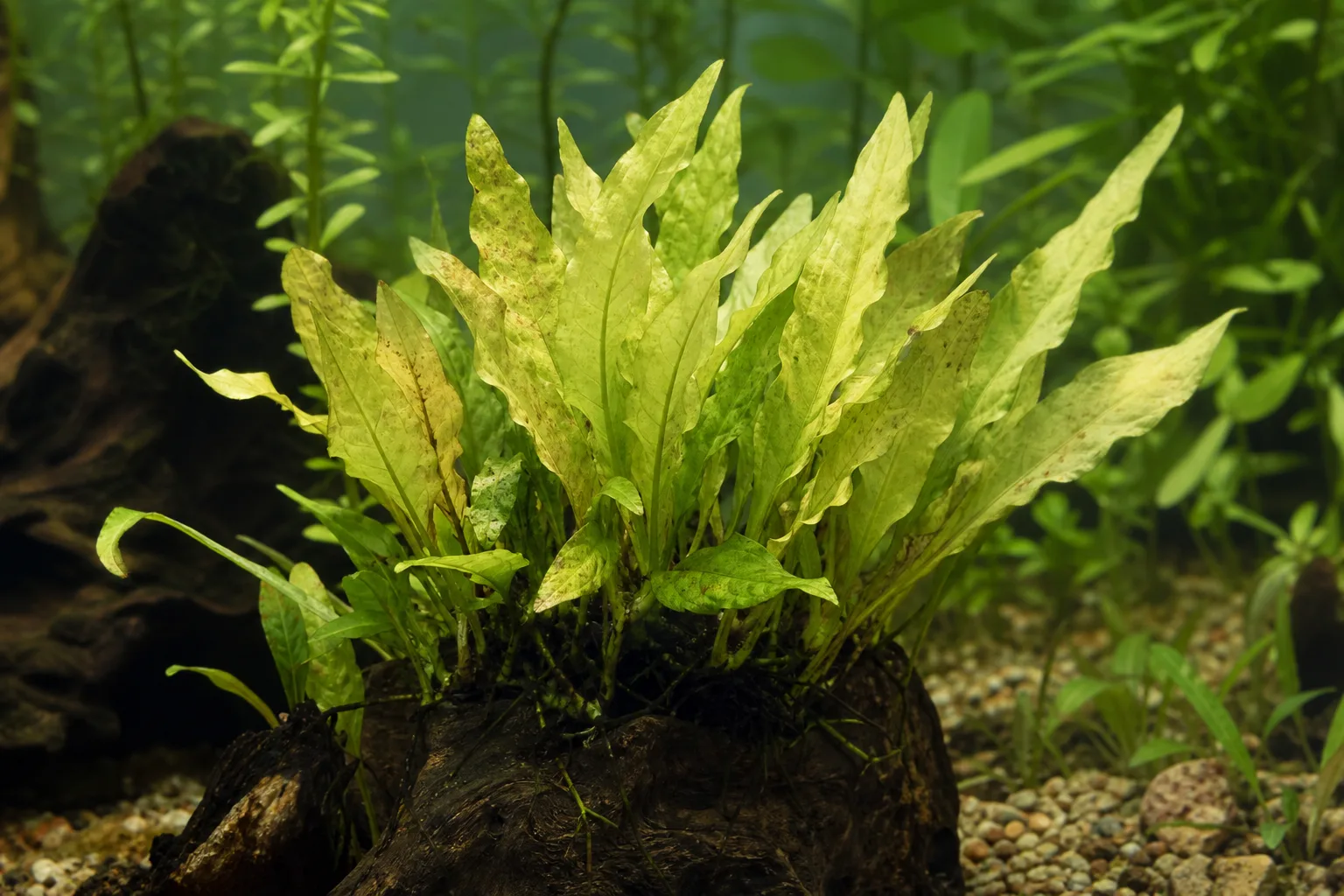
Nitrogen Deficiency on Java Fern: Causes, Checks & Fixes
This guide covers nitrogen deficiency on Java Fern. See also the general Nitrogen Deficiency guide, watering, and light pages for this plant.
Nitrogen Deficiency on Java Fern: Causes, Checks & Fixes
Quick answer
Pale, yellow-green, or transparent older leaves on Java Fern (Microsorum pteropus) in nutrient-poor water usually signal nitrogen deficiency-not a houseplant humidity problem. This slow-growing epiphyte pulls nitrogen from the water column through leaves and rhizome, so lightly stocked shrimp tanks and heavy weekly water changes can starve it even when the rhizome is healthy. Test nitrates, dose a light aquarium liquid fertilizer, and watch for greener new fronds.
Why Java Fern gets nitrogen deficiency
Java Fern does not feed from buried roots. It is a water-column feeder that depends on dissolved nitrogen-mainly nitrate (NO₃)-from fish waste, food breakdown, and fertilizer. Common setups that run low:
- Shrimp-only or nano tanks with few fish and no regular liquid dosing
- Fresh tap water and large water changes that dilute nitrates faster than fish produce them
- Plant-heavy tanks where fast stem plants outcompete the slow fern for available nitrogen
- Trace-only fertilizers (iron-focused products) without macronutrients
Because Java Fern grows slowly, deficiency shows on older fronds first while the rhizome stays firm-unlike rhizome rot from burial, which blackens the base.
What nitrogen deficiency looks like on Java Fern
Typical patterns:
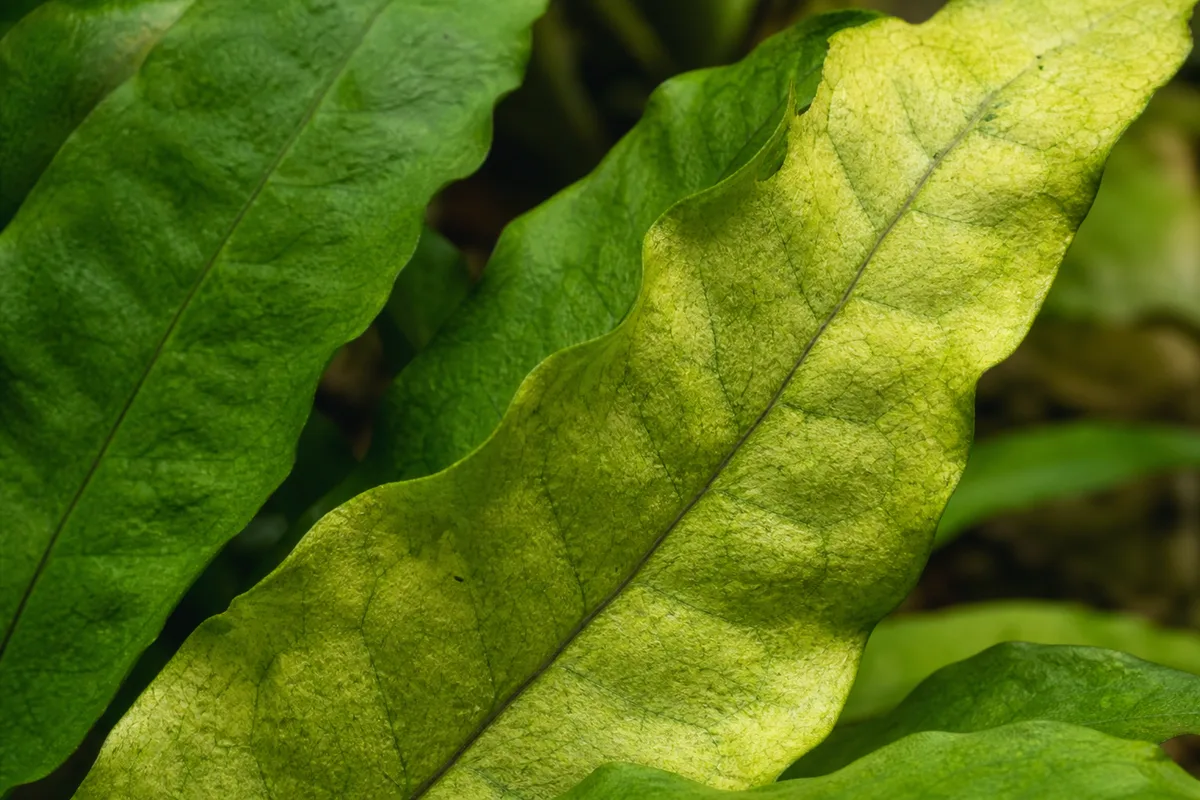
Nitrogen Deficiency symptoms on Java Fern - compare with healthy tissue on the same plant.
- Uniform pale green or yellow on mature fronds, sometimes spreading from tips toward the base
- Glassy, transparent patches on older leaves in advanced cases-not the normal pale tip on a newly unfurling frond
- Smaller or thin new leaves when starvation is chronic
- Slow or stalled growth despite stable water and moderate light
Do not confuse healthy new growth with deficiency. Young Java Fern tips often emerge light green or slightly translucent before they darken-that is normal. Deficiency shows when established fronds lose color while nitrate tests read near zero.
How to confirm the cause
- Nitrate test-Aim for roughly 10–20 ppm in most planted community tanks. Zero to 5 ppm with pale leaves strongly suggests nitrogen shortage.
- Rhizome check-Firm and attached above substrate rules out rot as the primary cause.
- Stocking review-Heavy fish load may supply enough nitrogen without added fertilizer; shrimp-only tanks rarely do.
- Dosing history-Did you stop fertilizing, switch to trace-only products, or increase water-change frequency?
- Rule out melt-Recent rescape or new plant purchase causes whole-frond melt regardless of nitrates.
If nitrates are adequate but leaves stay pale, look at iron deficiency (vein yellowing) or potassium deficiency (pinholes)-not nitrogen.
Nitrogen vs iron vs potassium on Java Fern
| Pattern | Nitrogen (this page) | Iron deficiency | Potassium deficiency |
|---|---|---|---|
| Frond age | Older fronds pale first | New growth yellow between veins | Pinholes on older fronds |
| Nitrate test | Near zero | May be adequate | May be adequate |
| Rhizome | Firm | Firm | Firm |
Scope: This page is for pale, transparent older fronds with low nitrate-not the normal pale tip on a newly unfurling frond.
First fix for Java Fern
Raise nitrates gradually-do not dump full-strength fertilizer on a starving tank in one day.
- Dose an aquarium-safe all-in-one liquid fertilizer at half label strength once weekly after a water change.
- In shrimp-only or nano tanks, use a shrimp-safe all-in-one liquid (no copper) at quarter to half strength-these setups rarely produce enough fish waste to sustain nitrates above zero.
- In stocked tanks reading 5–10 ppm nitrate, a small increase may come from slightly reduced water-change volume or an extra feeding day for fish-avoid overshooting into algae territory.
- Trim heavily transparent older fronds at the rhizome so the plant directs energy to new tissue.
Keep the rhizome exposed on wood or stone-burial causes rot that no fertilizer fixes.
Recovery timeline
New fronds should emerge deeper green within two to four weeks once nitrates stay stable. Damaged older leaves will not fully re-green-judge success by fresh growth from the rhizome. Tropica lists slow growth for this species, so allow at least three weeks before increasing dose again. Optimum temperatures around 22–28°C/27914) support steady nutrient uptake; cold water below 20°C slows recovery.
What not to do
Do not use houseplant fertilizer or lawn products in the aquarium. Do not bury the rhizome to “feed” the plant-Java Fern does not root-feed. Do not assume yellow leaves always need more light; excess PAR on a low-light epiphyte can worsen melt. Do not double fertilizer and extend photoperiod on the same day-fix nitrogen first, then adjust light if algae appears.
How to prevent nitrogen deficiency next time
Dose liquid fertilizer weekly in low-tech planted tanks, or maintain moderate fish stocking so nitrates naturally sit in the 10–20 ppm range. Pair feeding with regular water changes that refresh minerals without zeroing nitrates every time. In shrimp tanks, treat a quality all-in-one liquid as standard care-not optional. Retest monthly until you know your tank’s baseline.
Related Java Fern problems
- Java Fern fertilizer - full dosing plan for low-tech tanks
- Pale leaves - broader paleness without confirmed low nitrate
- Iron deficiency and potassium deficiency - lookalike nutrient patterns
When to use this page vs other Java Fern guides
- Java Fern watering guide - Use for routine moisture checks before assuming nitrogen deficiency is the main issue.
- Java Fern problems hub - Browse all 28 common issues on this species.
- Yellow Leaves on Java Fern - Different entry point when symptoms overlap with nitrogen deficiency.
- Slow Growth on Java Fern - Different entry point when symptoms overlap with nitrogen deficiency.