Cold Damage on Java Fern: Causes, Checks & Fixes
Quick answer
Cold damage on Java Fern shows up when water drops below about 20°C for extended periods-growth stalls, older fronds melt, and new leaves emerge slowly or not at all. Raise and stabilize temperature with a heater; trim melt while the rhizome stays firm.
Cold Damage on Java Fern: Causes, Checks & Fixes
This guide covers cold damage on Java Fern. See also the general Cold Damage guide, watering, and light pages for this plant.
Cold Damage on Java Fern: Causes, Checks & Fixes
Quick answer
Java Fern (Microsorum pteropus) is hardy but tropical-prolonged water below about 20°C (68°F) slows metabolism until growth effectively stops, and sustained chill below 15–18°C triggers melt on older submerged fronds. Dennerle lists optimum temperatures of 22–28°C/27914) for robust growth on this slow rhizome epiphyte. Install or repair the heater, stabilize temperature, and trim melting leaves while the rhizome stays firm.
Why Java Fern gets cold damage
Heater failure or undersized heater. Unheated rooms, garage tanks, or winter power outages drop water temperature overnight. Java Fern does not die instantly, but slow growth stalls and the plant reallocates energy away from old fronds.
Cold tap water during large water changes. Pouring 15°C replacement water into a 26°C tank shocks epiphytes mounted near the surface. Repeated cold swings cause melt similar to acclimation stress.
Unheated goldfish or native-fish tubs. Java Fern survives brief cool periods in hobby reports, but weeks below 20°C produce translucent melt-not a nutrient problem. Microsorum pteropus is a tropical Asian water fern, not a coldwater species.
Stagnant cold layers. In tall tanks with weak circulation, the bottom can run several degrees cooler; rhizomes on the substrate floor (even unburied) sit in the chill zone.
What cold damage looks like on Java Fern
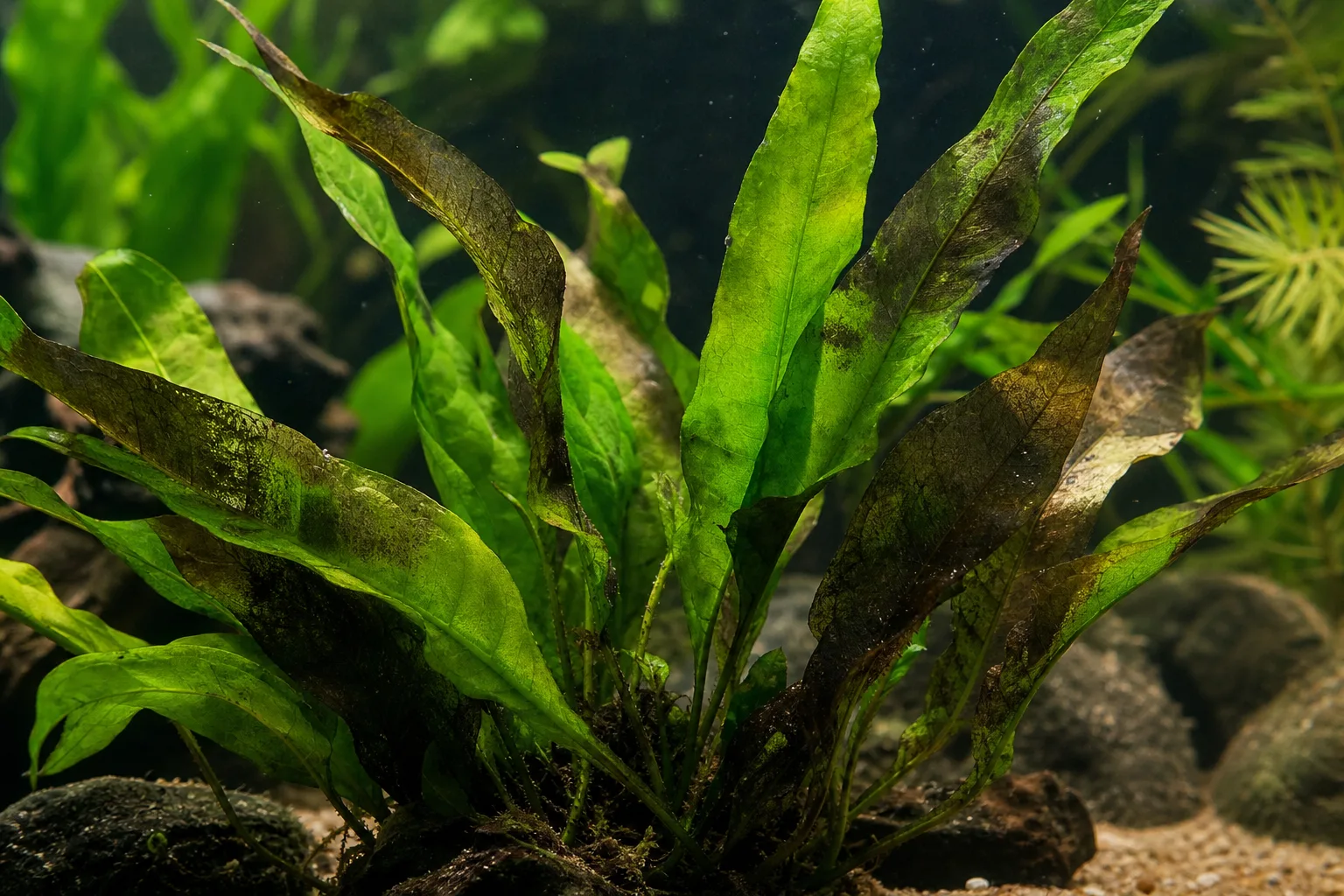
Growth halt: no new fronds for weeks despite stable light and nutrients. Older-frond melt: translucent patches turning brown-black on mature leaves while the rhizome remains firm. Darkening without pinholes: unlike potassium deficiency, cold melt is patchy and soft-edged, not clean holes. Stunted new tips: emerging leaves stay small and pale in water held at 18–20°C. Do not confuse normal sporangia on firm cold-stressed leaves with rot.
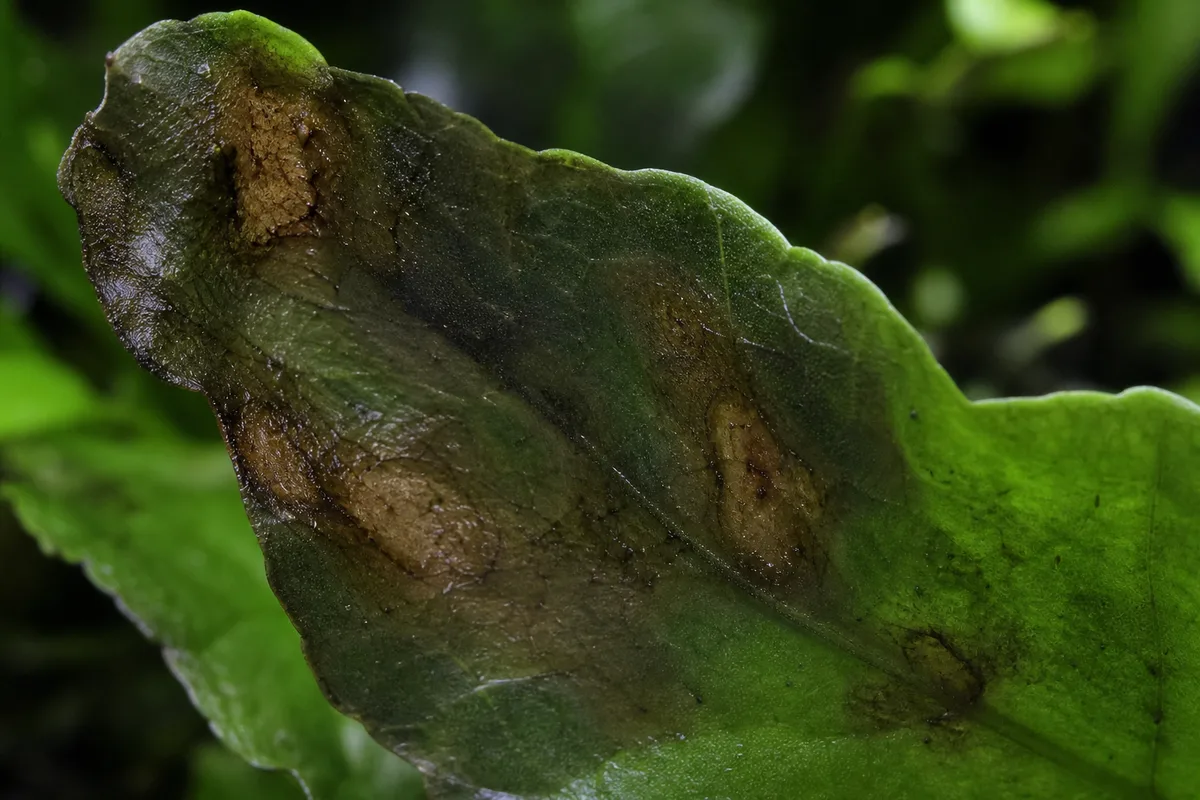
Cold Damage symptoms on Java Fern - compare with healthy tissue on the same plant.
How to confirm the cause
Measure temperature at the rhizome with a submersible thermometer-not the room thermostat. Review the last two weeks: heater outage, large cold water change, or tank moved to a basement? Confirm the rhizome is not buried-buried rhizomes in cold substrate rot and mimic cold melt. If temperature reads above 24°C and melt continues, look to nutrients or chemical exposure instead.
First fix for Java Fern
Raise and stabilize water temperature to 22–26°C using a correctly rated heater and thermometer. Change only temperature-matched water during recovery-pre-mix replacements to within 2°C of tank water. Trim fully melted fronds at the rhizome with clean scissors. Hold fertilizer at normal low-tech levels; do not double dose to “wake up” a cold-stressed plant. Keep lighting at Easy-plant intensity with six to eight hours until new growth appears.
Recovery timeline
Growth resumes slowly-expect two to four weeks before visible new fronds after stable warm water because Java Fern is a slow grower. Melted tissue will not re-green; success means the rhizome stays woody and fresh tips emerge without continued collapse. Full appearance may take six to eight weeks after a severe cold event. Avoid moving the plant between tanks during this window.
What not to do
Do not assume melt in a cold tank needs more light or CO₂ first-fix temperature. Do not perform massive cold water changes during recovery. Do not bury the rhizome in warm substrate hoping to insulate it; burial causes rot. Do not discard the plant while the rhizome is still firm-Java Fern often rebounds from leaf melt once warmth returns.
Lookalike symptoms
Acclimation melt after shipping occurs without a cold tank reading. Nutrient deficiency shows pinholes on older leaves in warm water. Chemical damage follows medication or peroxide, not heater failure. Rhizome rot softens the base first; pure cold damage usually leaves a firm rhizome with dying leaves attached.
How to prevent cold damage next time
Size the heater for tank volume and room temperature swing. Use two thermometers if the room is drafty. Pre-heat replacement water in winter. Mount Java Fern mid-tank on hardscape away from cold glass panes. For species tanks below 22°C long term, choose true coldwater plants instead of Microsorum pteropus.
When to use this page vs other Java Fern guides
- Java Fern watering guide - Use for routine moisture checks before assuming cold damage is the main issue.
- Java Fern problems hub - Browse all 28 common issues on this species.
- Drooping Leaves on Java Fern - Different entry point when symptoms overlap with cold damage.