Drooping Leaves on Java Fern: Causes, Checks & Fixes
Quick answer
Drooping Java Fern fronds usually mean melting tissue, a loose or rotting rhizome, or filter current pushing limp leaves-not underwater thirst. First step: feel the rhizome and confirm it is mounted above substrate, not buried.
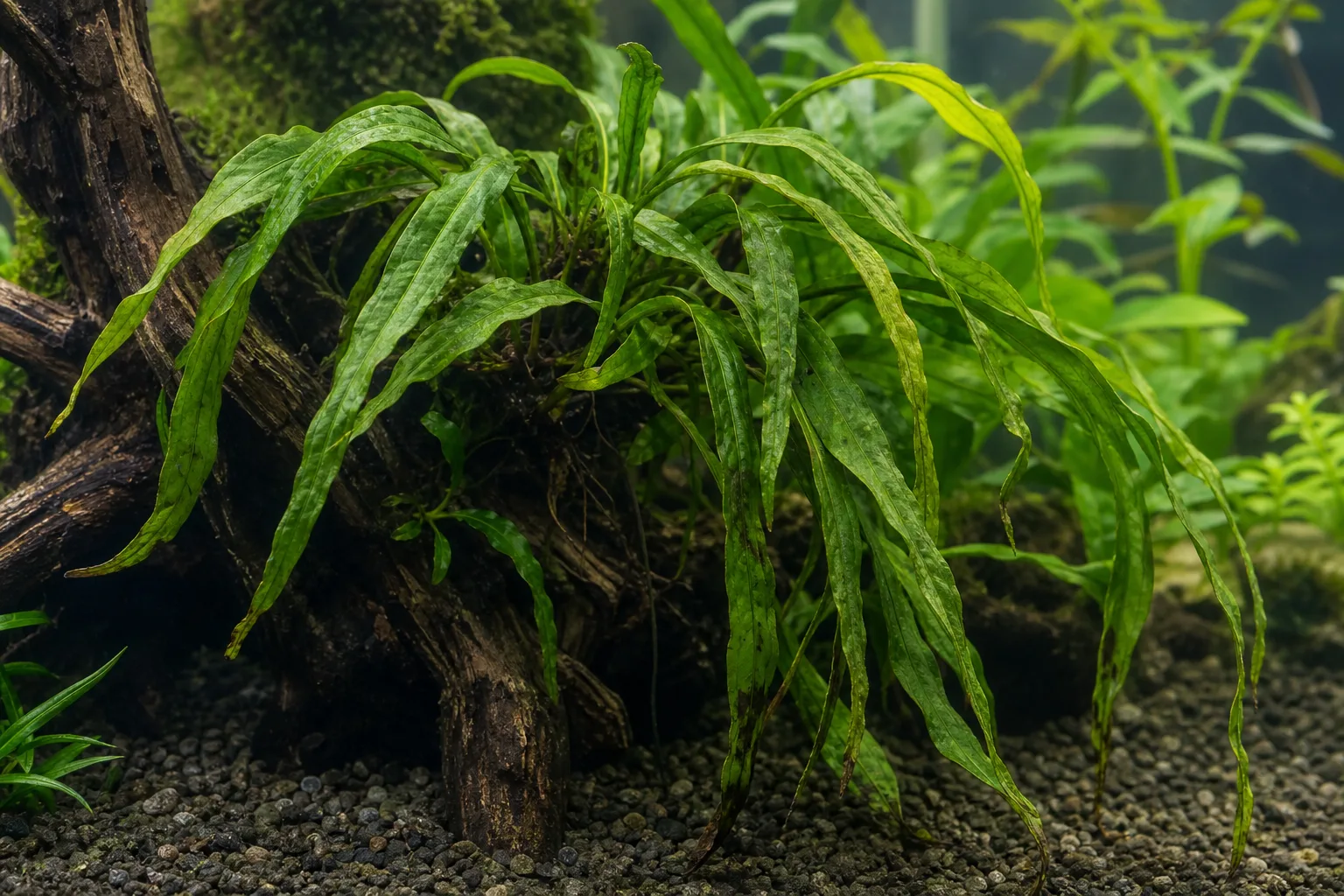
Drooping Leaves on Java Fern: Causes, Checks & Fixes
This guide covers drooping leaves on Java Fern. See also the general Drooping Leaves guide, watering, and light pages for this plant.
Drooping Leaves on Java Fern: Causes, Checks & Fixes
Quick answer
Drooping on Java Fern (Microsorum pteropus) rarely means the plant needs more water the way a wilted houseplant does. Fronds hang limp when tissue is melting, when the rhizome attachment fails after partial rot, or when filter current pushes soft leaves into a permanent lean.
First step: feel the rhizome with a clean finger. A firm, dark green rhizome mounted on hardscape points to melt or flow stress you can trim or redirect. A soft, brown, or buried rhizome means rot-and that needs cutting and remounting before anything else.
Scope for this page: Drooping = fronds sagging downward while the rhizome may still be firm (melt, flow, aging, loose mount). Wilting = limp translucent collapse, often from ammonia spikes or rapid melt in uncycled tanks. Plant leaning = the whole rhizome tilts off hardscape while individual fronds may stay stiff. For species culture and attachment basics, see the Java Fern overview.
Drooping vs. wilting vs. plant leaning
Aquarium forums mix these terms. Use this split before changing light or fertilizer:
| Symptom | What you see | Rhizome | Best page |
|---|---|---|---|
| Drooping (this page) | Fronds hang down; tissue may stay green and firm or soften gradually | Usually firm unless rot is advancing | Here |
| Wilting | Limp, glassy, or brown fronds collapsing across the clump | Firm = stress melt; soft = rot | Wilting guide |
| Plant leaning | Entire clump tilts; fronds may still be stiff | Firm; mount pivots or flow pushes the fan | Leaning guide |
| Rhizome rot | Fronds detach at black mushy bases | Soft, sour-smelling stem | Root-rot guide |
If drooping appeared suddenly in a new or uncycled tank with test readings showing ammonia or nitrite above zero, treat that as a water-quality collapse and read wilting first-ammonia melt can look like droop before fronds turn fully translucent.
What drooping leaves look like on Java Fern
Healthy Java Fern fronds stand at roughly 45 to 90 degrees from the rhizome, with stiff leathery tissue. Drooping shows up differently depending on cause:
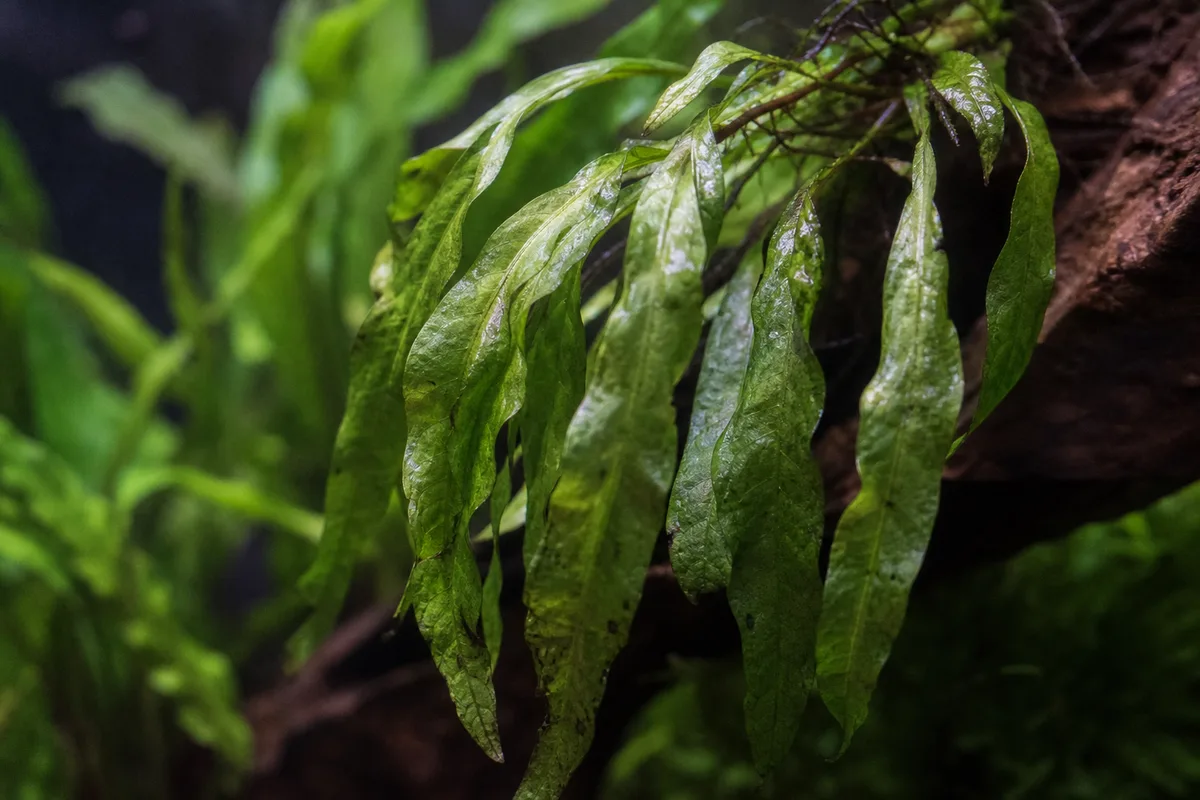
Drooping Leaves symptoms on Java Fern - compare with healthy tissue on the same plant.
Acclimation or nutrient melt:
- Older fronds turn translucent, brown at the edges, or jelly-soft before sagging
- The rhizome stays firm when pressed
- Drooping often starts one to two weeks after a new tank, major water change, or plant purchase
- New fronds may still emerge upright from the rhizome center
Rhizome rot or weak attachment:
- Fronds hang straight down or detach with a tug
- Black or mushy tissue at the frond base where it meets the rhizome
- Rhizome feels soft, dented, or smells sour when lifted from the tank
- Entire clumps slide off driftwood because holdfast roots never anchored
Filter flow stress:
- Fronds lean consistently toward or away from the outlet
- Tissue stays green and firm except at tips battered by current
- Windelov and other finely divided cultivars arch more than standard broad-leaf forms
- Moving the plant to a quieter zone lets fronds settle within days
Normal aging:
- Only the oldest, largest fronds droop while new growth at the rhizome tip stays upright
- No black base tissue and no rhizome softening
Unlike terrestrial ferns, submerged Java Fern leaves do not perk up after a water change. If fronds stay limp for more than a week with a firm rhizome, the damaged leaf tissue is spent-not temporarily thirsty.
Symptom lookalike table
Use this before trimming or dosing:
| Pattern | Frond tissue | Rhizome | Timing | First action |
|---|---|---|---|---|
| Acclimation melt | Soft, translucent, brown edges | Firm | 1–2 weeks after purchase or rescape | Trim at rhizome; stabilize water |
| Flow stress | Green, firm; lean one direction | Firm | Constant during filter cycle | Redirect outflow |
| Loose mount | Firm; clump pivots when nudged | Firm | Worsens as fronds lengthen | Re-tie on porous wood |
| Rhizome rot | Black mush at frond base | Soft, may smell sour | Worsens daily | Trim rot; remount exposed |
| Normal aging | Older fronds only; still green | Firm | Gradual over months | Trim spent leaves |
| Nutrient stress | Pale, holes, gradual weakening | Firm | Weeks in lean tanks | Test nitrates; see nitrogen deficiency |
| Low light weakness | Thin, pale; slow new growth | Firm | Months in dim corners | Move to brighter zone; see not enough light |
Why Java Fern fronds droop
Java Fern is a slow-growing rhizome epiphyte from tropical Asian stream margins. It absorbs nutrients through roots and rhizome tissue in flowing water-not from buried substrate. That growth habit explains most drooping cases.
Acclimation melt is the most common harmless cause. Tissue-culture or emersed-grown plants often shed older leaves while adjusting to submerged conditions. The old fronds lose internal structure, go limp, and hang until you trim them or they detach. The plant is redirecting energy to new submerged growth, not dying from drought.
Buried or partially buried rhizomes trigger rot that loosens frond attachment. Many beginners plant Java Fern like a stem plant, covering the horizontal rhizome in gravel. Tropica warns that covering the rhizome causes it to rot; without oxygenated water around the rhizome, tissue decays, fronds lose their anchor point, and entire sections droop or fall off. Full rescue steps live on the rhizome rot guide.
Loose mounting causes the same visual without full rot. Thread or glue that failed lets the rhizome shift; gravity pulls long fronds downward until roots re-grip hardscape. Turtle tanks and high-flow setups dislodge poorly secured plants faster than low-tech community tanks-compare mount troubleshooting on plant leaning.
Strong filter current does not melt tissue but bends long fronds permanently. Narrow-leaf and Windelov forms have less rigid blades and show this more than standard Java Fern. Constant battering also slows new growth at the rhizome tip.
Nutrient stress softens leaf tissue over weeks. Potassium and nitrogen shortages show as holes, transparency, or gradual weakening before fronds sag. This overlaps with melt but persists on new leaves if fertilization stays inadequate-cross-check potassium deficiency and transparent leaves if glassy tissue spreads on fresh growth.
Temperature shock from a large cold water change can trigger sudden melt and droop across multiple fronds at once. Java Fern tolerates a wide warm range/27914) but abrupt swings stress slow-growing tissue.
How to confirm the cause
Work through these checks in order:
- Rhizome firmness - Lift or reach into the tank and press the rhizome gently. Firm and dark green is healthy. Soft, squishy, or blackened tissue confirms rot.
- Mounting position - Is the rhizome fully above substrate, tied or glued to rock or wood? Any gravel piled on top of the rhizome counts as burial.
- Attachment test - Try sliding the plant sideways. A well-anchored fern resists; a loose one shifts or lifts off hardscape.
- Frond base inspection - Peel back one drooping frond at the rhizome. Clean green attachment means melt or flow. Black mush at the joint means rot spreading from the rhizome.
- Flow direction - Note where the filter outlet points. All fronds leaning the same way suggests current, not disease.
- Timing - Did drooping follow a new plant, tank move, or large water change? That pattern fits acclimation melt if the rhizome is firm.
- New growth check - Upright pin-sized fronds emerging from the rhizome mean the plant is recovering even while old leaves droop.
If the rhizome is firm, mounted correctly, and only old fronds sag after a recent purchase, acclimation melt is the likely diagnosis. Soft rhizome tissue overrides every other explanation until you cut decay away.
First fix for Java Fern
Inspect the rhizome and confirm it is not buried.
Unhook or lift the plant enough to see the full rhizome. If any part sits under gravel or sand, gently pull it free and remount on hardscape so the entire horizontal stem stays exposed in the water column. Do not fertilize, increase light, or reposition the filter until you know the rhizome is firm and properly attached.
If the rhizome feels soft, skip straight to the rot recovery steps below-remounting alone will not save decaying tissue.
Step-by-step recovery
For acclimation melt or flow stress
- Trim drooping fronds at the rhizome with sharp aquascaping scissors. Cut as close to the rhizome as possible without nicking healthy tissue. Remove jelly-soft leaves before they decay against the stem.
- Stabilize water - Hold off on large water changes, match replacement water temperature to the tank, and keep filtration steady for two weeks.
- Redirect flow - Angle the filter outlet upward or add a pre-filter sponge to diffuse current if fronds lean one direction.
- Re-secure loose plants - Tie the rhizome with cotton thread or aquarium-safe gel glue until holdfast roots grip rock or driftwood.
- Wait for new fronds - Do not dose heavy fertilizer on day one. If new leaves stay pale or weak after three weeks, consider a diluted comprehensive liquid fertilizer at label rates.
For rhizome rot
- Remove the plant from the tank and rinse debris off the rhizome.
- Cut all mushy tissue back to firm green or brown rhizome with sterile scissors. Sterilize blades between cuts if decay is extensive.
- Discard detached drooping fronds attached to rotten bases-they will not recover.
- Remount healthy sections on fresh hardscape with thread or glue. Keep every cut surface exposed to flowing water.
- Hold fertilizer and bright light until new upright fronds appear. Rot-stressed rhizomes need stable, moderate conditions-not a push to grow faster.
Detailed rot trimming and salvage thresholds are on the rhizome rot guide.
Recovery timeline
Java Fern replaces leaves slowly. Realistic expectations:
- Flow correction - Fronds stop shifting within two to seven days after redirecting the outlet or moving the plant.
- Acclimation melt - New stiff fronds often appear within two to four weeks once old tissue is trimmed and water stays stable.
- Rhizome rot recovery - Four to eight weeks before you can judge success, depending on how much healthy rhizome remains.
- Individual melted fronds - Never recover; only replacement growth counts.
Improvement signs include upright new fronds from the rhizome tip, firm rhizome tissue when pressed, and no spreading black at frond bases. Worsening signs include rhizome softening after you remounted, multiple fronds detaching daily, or sour smell from the plant base.
Lookalike symptoms
Yellow or brown leaves without droop often point to nutrient deficiency or too much light before tissue fully softens. Address fertilization and lighting if leaves discolor but stay stiff-see not enough light for pale stalled growth in dim tanks.
Black spots on green firm leaves are usually sporangia or potassium deficiency pinholes-not drooping causes. Sporangia appear as regular rows under mature leaves.
Plant leaning as a whole differs from frond droop. A loose mount makes the entire rhizome tilt off driftwood; individual fronds may still be stiff. Re-tie the rhizome on the plant leaning guide rather than trimming leaves.
Floating Java Fern with crisp dry edges is a dehydration issue for emersed growth or plants removed from water-not the same as submerged drooping.
Mistakes to avoid
- Adding fertilizer first when the rhizome is buried or rotting. Feeding cannot fix suffocated tissue.
- Burying deeper to “anchor” a drooping plant. That accelerates rhizome rot.
- Leaving melting fronds on the rhizome where they trap detritus and harbor bacteria against healthy stem tissue.
- Blasting the plant with maximum light to perk it up. Excess light worsens melt on an already stressed fern-Java Fern is classified as a low light demand aquarium plant.
- Assuming droop means underwatering and making repeated large water changes. Temperature swings from frequent changes can trigger more melt-if fronds turn glassy, switch to the wilting guide.
- Pulling off drooping fronds by hand halfway down the blade, leaving torn stubs that decay slowly.
How to prevent drooping next time
Mount new Java Fern with the rhizome horizontal on porous rock or driftwood; cotton thread or gel glue holds it until roots attach naturally. Keep the rhizome above substrate even if fine roots wander into gravel below-the Java Fern overview covers attachment and melt expectations after purchase.
Place the fern in moderate flow-not directly in front of a powerhead. Its native helophyte and lithophyte habit favors steady stream-margin conditions rather than hurricane-level blast. Turtle tanks and canister outlets often need a diffuser or repositioned spray bar; inspect ties monthly until holdfast roots visibly grip.
Quarantine and inspect new plants before adding them to established scapes. Trim emersed or tissue-culture leaves at purchase so melt happens on your schedule, not weeks later when the scape looks established.
Remove spent fronds at the rhizome during routine maintenance before they sag into substrate and trap mulm. Stable temperature, gentle lighting, and occasional comprehensive fertilizer in low-nutrient tanks keep new tissue stiff.
When to worry
Treat drooping as urgent when the rhizome feels soft, smells sour, or shows black spreading tissue. Multiple fronds detaching from the same rhizome section within a few days also warrants immediate trimming and remounting per the root-rot guide.
Drooping is not urgent when only one or two older leaves sag on a newly added plant with a firm rhizome-that is routine acclimation. Trim, stabilize, and watch for upright replacement fronds.
If the entire rhizome turns mushy with no firm tissue left after trimming, the clump may not be saveable. Take any firm side shoots or adventitious plantlets from healthy leaf tips before discarding the rest.
Related Java Fern problems
- Java Fern overview - species culture, melt, and attachment
- Wilting - limp translucent collapse and ammonia stress
- Plant leaning - whole-clump tilt from failed mount or flow
- Rhizome rot - soft black stem tissue
- Not enough light - pale thin fronds in dim tanks
- Transparent leaves - glassy melt overlap
Conclusion
Drooping Java Fern fronds look alarming but usually trace to a short list of aquarium-specific causes: melting old leaves, a buried or rotting rhizome, loose attachment, or filter flow-not dry air or thirsty roots. Feel the rhizome first, confirm mounting, then trim melt or cut rot before chasing fertilizer or lighting changes. New upright fronds from a firm rhizome are the sign that matters; limp old leaves will not stand back up on their own.
When to use this page vs other Java Fern guides
- Java Fern watering guide - Use for routine moisture checks before assuming drooping leaves is the main issue.
- Java Fern problems hub - Browse all 28 common issues on this species.
- Wilting on Java Fern - Different entry point when symptoms overlap with drooping leaves.