Plant Leaning on Java Fern: Causes, Checks & Fixes
Quick answer
A leaning Java Fern in a submerged tank almost always lost its grip on wood or rock, sits in direct filter blast, or was glued with the rhizome angled wrong-not weak stems like a houseplant. Re-secure the rhizome with thread or aquarium gel, move it off the outflow, and leave the horizontal stem fully exposed.
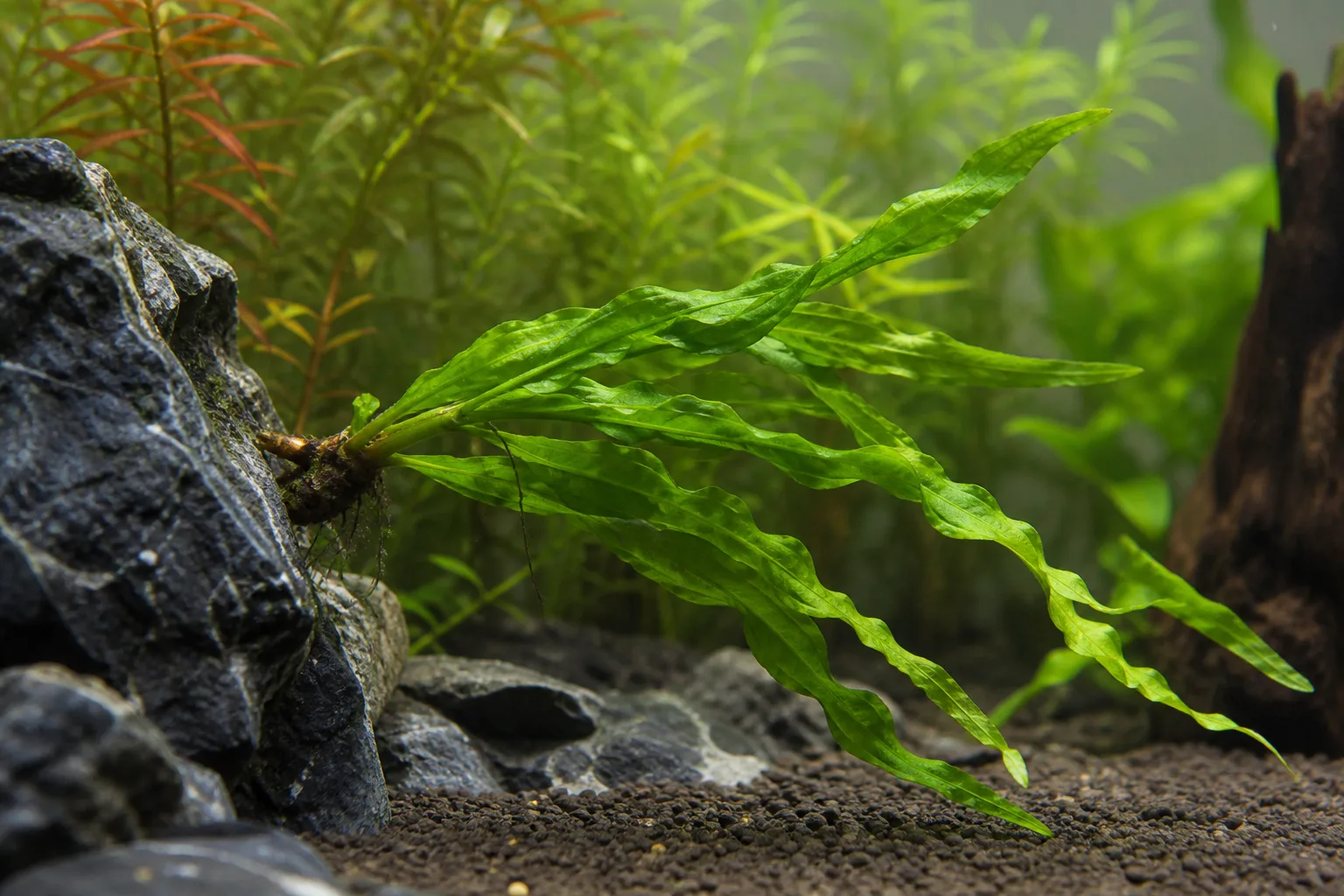
Plant Leaning on Java Fern: Causes, Checks & Fixes
This guide covers plant leaning on Java Fern. See also the general Plant Leaning guide, watering, and light pages for this plant.
Plant Leaning on Java Fern: Causes, Checks & Fixes
Quick answer
A leaning or tipping Java Fern in a submerged aquarium almost always means failed attachment, strong filter flow, or poor rhizome placement-not weak stems in the houseplant sense. Microsorum pteropus anchors through brown holdfast roots on porous hardscape; it must be grown on wood or stone, not buried. Re-secure the rhizome with thread or aquarium-safe gel, relocate it out of direct outflow, and keep the horizontal stem fully exposed to gentle current.
First fix: lift the rhizome, confirm it is firm, and re-attach with gel dots or cotton thread on porous driftwood or lava rock before trimming fronds or dosing fertilizer.
This page covers mount failure, flow lean, and weight droop. For full species culture and attachment methods, see the Java Fern overview. For soft black mushy rhizome tissue, see rhizome rot-that is a different rescue path.
Why Java Fern leans
Poor attachment is the top cause. Java fern grips porous surfaces like driftwood and lava rock; smooth plastic ornaments or bare glass give nothing for holdfast roots to penetrate. Thread that snapped, glue dots that failed on slick décor, or a rhizome wedged loosely in a crevice lets the plant pivot as fronds grow heavier. In a low-tech 10-gallon with a small stone mount, a newly purchased clump often leans for weeks until holdfasts cement-that is growth weight on an unsecured base, not disease.
Excessive water flow pushes large fronds downstream-gentle current helps nutrient uptake, but direct filter blast bends leaves and loosens weak ties. Hang-on-back (HOB) filters often blast horizontally across mid-tank wood; canister spray bars pointed through the frond fan create the same sail effect. Windelov and Trident cultivars split frond tips into extra surface area, so they lean sooner in strong current than standard broad-leaf forms.
Wrong rhizome angle at planting makes the plant grow off-balance toward light; leaves orient toward the fixture, exaggerating a tilt. Rhizome burial softens the base and causes collapse-distinct from simple lean and covered on the root rot guide.
What leaning looks like on Java Fern
The rhizome tilts away from hardscape, fronds trail in one direction, or the whole clump pivots when nudged. Flow-driven lean shows fronds streaming toward the filter outlet during each cycle but a firm rhizome that does not rotate on the wood. Failed-attachment lean worsens as new heavy leaves grow from an unsecured base-the clump spins on glue or thread when you press lightly. Rot-related collapse includes black mushy rhizome tissue-not just angle. A firmly attached plant with only older fronds drooping may simply need a trim, not re-mounting.
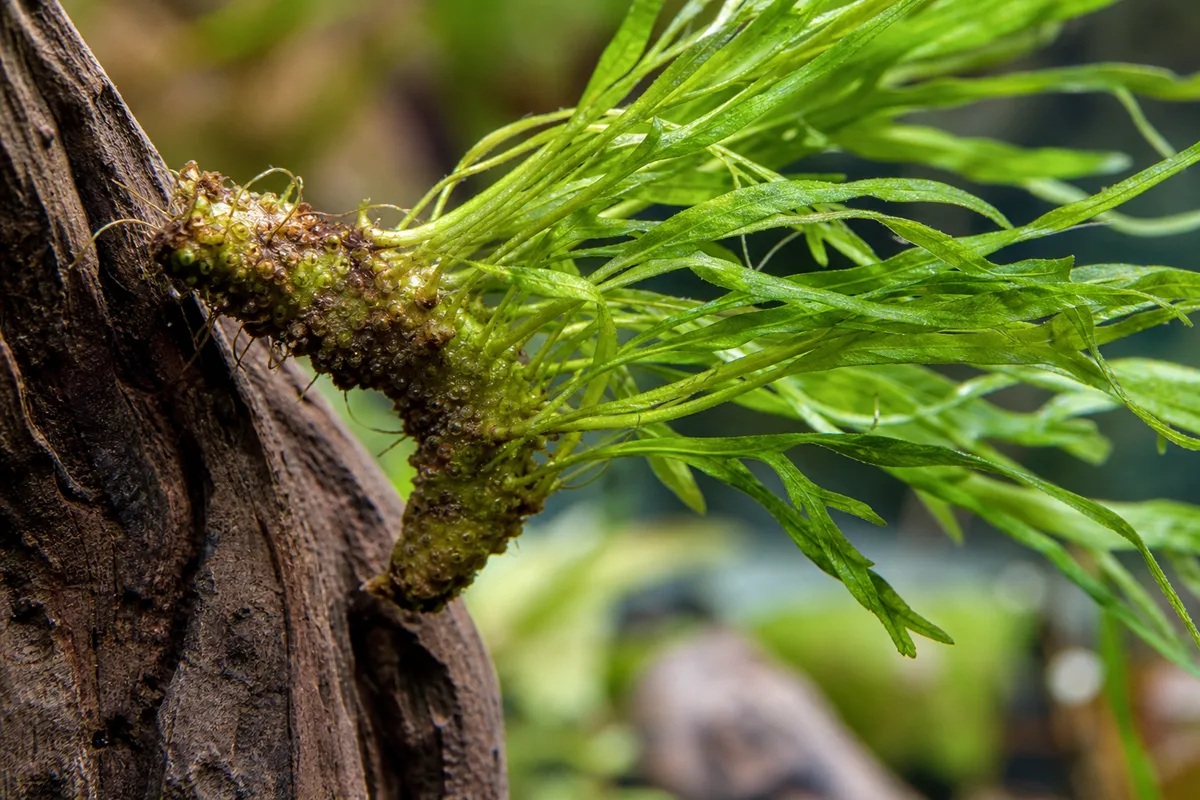
Plant Leaning symptoms on Java Fern - compare with healthy tissue on the same plant.
Attachment failure vs flow lean vs rot collapse
| Pattern | Rhizome feel | When lean appears | Frond bases | Surface |
|---|---|---|---|---|
| Failed attachment | Firm; pivots on mount | Worsens over weeks as fronds lengthen | Healthy green | Smooth plastic, failed glue, loose thread |
| Flow lean | Firm; grip stable | Mainly during filter cycle | Healthy | Any mount; outflow hits frond fan |
| Weight droop | Firm; no pivot | Gradual on old heavy fronds | Healthy | Secure porous wood or lava rock |
| Rot collapse | Soft, black, may smell | Worsens daily; fronds detach at base | Darkening, mushy | Buried segment, mulm at stem |
Use this table before re-gluing: flow lean needs outflow redirect; failed attachment needs new ties or gel on porous hardscape; rot needs the rhizome rot workflow.
How to confirm the cause
Gently test rhizome grip: secure plants resist light pressure; loose ones rotate on glue or thread. Observe flow during a filter cycle-does the plant bend only when the pump runs? Check attachment surface texture: porous wood and stone hold roots; slick surfaces do not. Feel the rhizome for firmness along its full length. Only the rhizome should stay exposed-if gravel covers any segment, burial may be weakening the base.
Work through these checks in order:
- Filter-cycle test - Watch one full pump cycle. Fronds stream downstream only while flow runs, then relax? Redirect outflow first.
- Pivot test - With flow off, press the rhizome sideways. Rotation on the mount means re-attach; no rotation means flow or weight.
- Surface texture - Malaysian driftwood, spider wood, and lava rock grip holdfasts; bare resin ornaments and glass do not.
- Rhizome firmness - Firm and woody supports mechanical lean fixes. Soft black tissue means stop here and read root rot.
- Cultivar sail check - Lace-edged Windelov or forked Trident fronds lean faster in the same flow standard Java fern tolerates.
Confirmed mechanical lean: firm rhizome, clear attachment or flow cause, no sour smell at the stem.
First fix for Java Fern
Re-secure the rhizome on porous hardscape before trimming or moving anything else.
Lift the rhizome, apply small dots of aquarium-safe cyanoacrylate gel to the underside, and press against porous driftwood or lava rock for 30 seconds-or wrap loose cotton thread or fishing line in spirals every inch along the rhizome. Use gel labeled for aquascaping; cured cyanoacrylate is inert in water, but household super glue with mold inhibitors or accelerators is not safe for shrimp and sensitive invertebrates . Move the plant so filter outflow passes above or beside it, not through the frond fan. Do not remove old ties until brown roots visibly grip the surface, typically three to six weeks.
For attachment technique detail-gel placement, thread spacing, and when to remove ties-see the Java Fern overview attachment FAQ.
Step-by-step reattachment
- Turn off or redirect filter flow while working.
- Remove failed thread or peel away non-gripping glue gently.
- Pat the rhizome and hardscape contact point dry with paper towel if using gel.
- Position the rhizome horizontally with fronds facing the light source; never cover the growing tip with glue.
- Secure with gel dots or thread-never cover the scaly rhizome surface with substrate.
- Restore gentle-not blasting-current across the mount point.
- Wait three to six weeks, then snip tie-downs if holdfast roots are cemented.
Filter outflow placement (HOB vs canister)
| Setup | Common mistake | Fix |
|---|---|---|
| Hang-on-back filter | Horizontal outflow hits mid-tank wood | Aim deflector up so water passes above the mount |
| Canister spray bar | Jets through frond fan | Rotate bar or move fern to downstream side of wood |
| Powerhead | Direct blast at freshly glued rhizome | Baffle or relocate; new glue bonds fail under hammering flow |
Redirecting outflow above the mount reduces both lean and debris settling at the rhizome-a common secondary cause of stem stress.
Recovery timeline
New upright fronds should emerge within two to four weeks after stable attachment. Holdfast development is slow on a slow-growing species. Bent mature leaves stay bent-trim only if they block light to new growth or collect debris in the lean.
| Severity | Signs | Expected recovery |
|---|---|---|
| Mild flow lean | Firm rhizome; bend only during cycle | Fronds settle within days after outflow redirect |
| Loose mount | Pivot on thread or glue | First secure new frond in 2–4 weeks after re-tie |
| Post-tumble in gravel | Firm rhizome lifted within days | Remount and watch for new growth; rot risk if buried weeks |
Example recovery path: A standard Java fern on Malaysian driftwood in a 20-gallon HOB-filtered community tank leaned downstream within ten days of purchase. The rhizome pivoted on two failed gel dots against smooth resin décor. The keeper moved the clump to porous spider wood, re-tied with cotton thread, aimed the HOB deflector upward, and saw the first upright new frond at day eighteen-old bent leaves were trimmed at week four.
What not to do
Do not wedge the rhizome under gravel to prop it up-buried rhizomes rot. Do not glue entire rhizome surfaces; roots need contact points and water flow. Do not point powerheads directly at a freshly glued plant. Do not assume leaning means fertilizer deficiency-check mechanical causes first. Do not use non-aquarium super glue in shrimp tanks.
How to prevent leaning next time
Choose porous Malaysian driftwood, spider wood, or lava rock for mounting per the overview attachment guidance. Attach horizontally with the growing tip oriented toward open water. Place the plant in low to moderate light zones away from direct outflow. Inspect ties monthly until roots establish.
Windelov and Trident cultivars act as larger sails-trim the heaviest downstream fronds or reduce flow rather than repeatedly re-gluing. On slick ornaments, plan thread plus gel on porous wood instead of glue alone.
When to open the rhizome rot guide
Mechanical lean fixes apply when the rhizome stays firm and woody. Open the rhizome rot guide when:
- Rhizome tissue is soft, black, or foul-smelling
- Fronds detach at the base with a gentle tug while the stem mushifies
- Lean followed burial in gravel for more than a few days
- Black decay spreads along the rhizome weekly-not just bent angle on firm tissue
Rot collapse can look like extreme lean, but the touch test and smell separate it from mount failure in seconds.
Related Java Fern guides
- Java Fern overview - species baseline, mounting FAQ, and PAR
- Rhizome rot - soft black stem rescue and trim workflow
- Leggy growth - long gaps and reach toward glass, not mount pivot
- Yellow leaves - acclimation melt after purchase or rescape
- Not enough light - pale thin fronds in dim zones