Wilting on Java Fern: Causes, Checks & Fixes
Quick answer
Java Fern does not wilt from dry soil-limp, translucent fronds mean melt from acclimation stress, rhizome rot, ammonia spikes, or temperature swings. First step: touch the rhizome; firm tissue with limp leaves is stress, soft black tissue is rot.
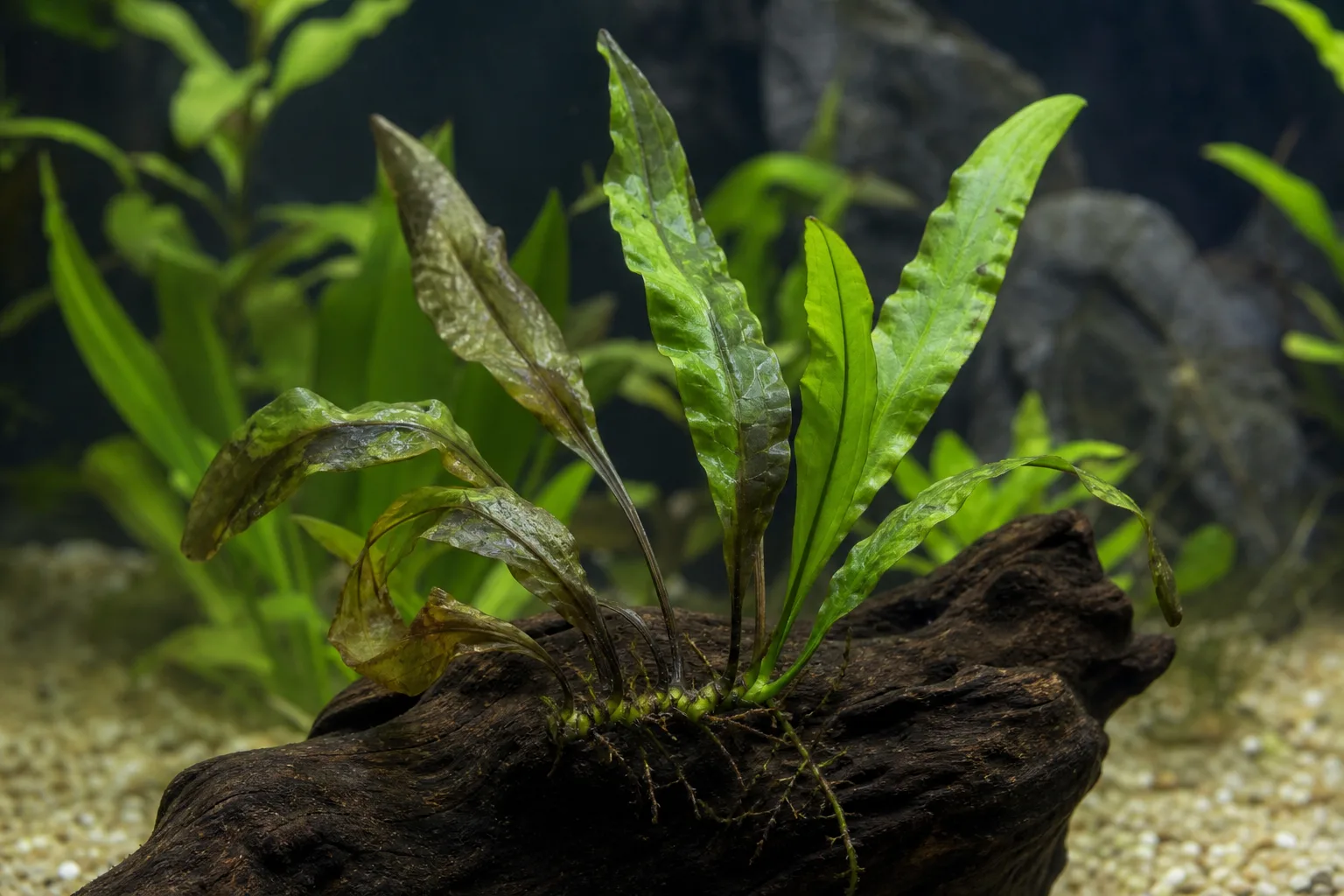
Wilting on Java Fern: Causes, Checks & Fixes
This guide covers wilting on Java Fern. See also the general Wilting guide, watering, and light pages for this plant.
Wilting on Java Fern: Causes, Checks & Fixes
Quick answer
Wilting on Java Fern (Microsorum pteropus) rarely means the plant needs water the way a houseplant does. In aquariums, limp, collapsing fronds that turn translucent or brown are what hobbyists call melt-a failure of leaf tissue, not a simple thirst signal. The rhizome, the thick horizontal stem where leaves attach, tells you whether the plant is stressed or dying.
First step: gently touch the rhizome with clean fingers. Firm, green-brown tissue with limp old leaves usually means acclimation melt or a water-quality swing you can fix. Soft, black, foul-smelling rhizome tissue means rot-often from a buried rhizome-and needs trimming and remounting before anything else.
What wilting looks like on Java Fern
Java Fern grows as an epiphyte in nature, anchored to rocks and wood in flowing water across Southeast Asia/27914). Its leathery fronds should stand somewhat upright from the rhizome. When something goes wrong, the change is visible within days:
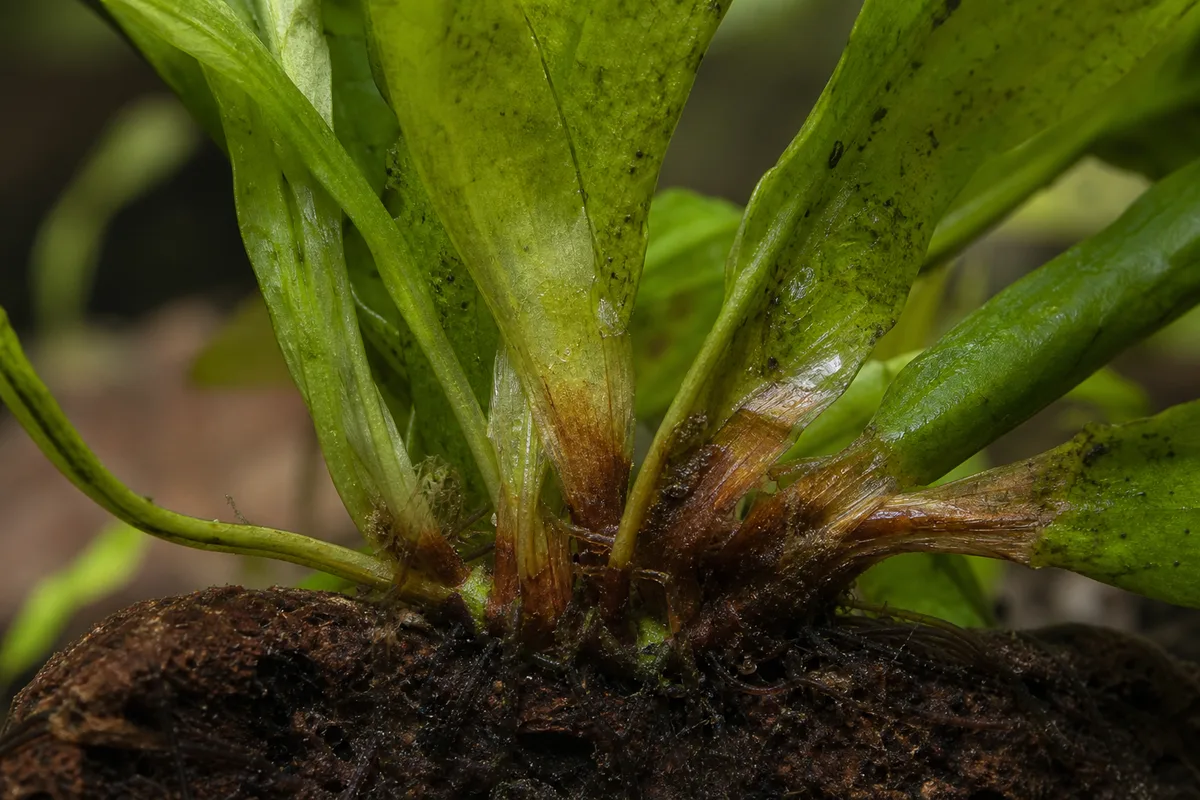
Wilting symptoms on Java Fern - compare with healthy tissue on the same plant.
- Translucent or glassy fronds that lose stiffness and fold over
- Brown or black tissue starting at the leaf base and spreading outward
- Whole fronds detaching cleanly at the rhizome with a mushy attachment point
- Yellowing before collapse, especially on older leaves after a tank change
- No recovery after a water change-unlike terrestrial wilt, extra water does not help
Healthy Java Fern roots are dark brown and fuzzy; they mainly anchor the plant. The rhizome does most of the nutrient uptake. Brown roots alone are normal. Black, soft rhizome tissue is not.
Important distinction: A few older leaves melting after you buy the plant is common acclimation behavior. Every frond collapsing at once with a soft rhizome is a different, urgent problem.
Why Java Fern gets wilting
Terrestrial wilting happens when roots cannot supply water to leaves. Java Fern is always submerged-so melt comes from tissue stress or rhizome failure, not dry potting mix.
Acclimation and transplant melt
Most traded Java Fern is grown emersed in humid greenhouses, then submerged in your tank. Old leaves adapted to air often die back so the plant can grow new submerged foliage. This shows up days to two weeks after purchase, rescapes, or major water-parameter shifts. It looks alarming but is survivable when the rhizome stays firm.
Rhizome rot from burial
The number-one structural mistake is planting the rhizome in gravel or soil. Java Fern must have its rhizome exposed to oxygenated tank water-do not cover the rhizome because it will rot. Buried rhizomes suffocate, anaerobic bacteria attack the tissue, and leaves blacken from the base upward. Rot spreads along the rhizome until fronds detach.
Ammonia and immature tank chemistry
New tanks cycling without established biofilter bacteria can spike ammonia, which is directly toxic to delicate leaves. Java Fern is often recommended during cycling because it tolerates rough conditions better than many plants-but sustained ammonia still triggers melt, especially on tissue-culture specimens with thin leaves.
Temperature shock
Java Fern prefers stable warm water/27914). A large water change with water 10–15 °C colder than the tank can trigger sudden melt as the plant sheds damaged tissue to protect the rhizome. Heater failure or cold-room drafts on open-top tanks cause similar stress.
Light and nutrient stress
Java Fern thrives in low to moderate light and absorbs nutrients from the water column. Excessive lighting can scorch leaves and encourage algae that smothers slow-growing fronds. Potassium or nitrogen deficiency can also produce transparent, hole-ridden, or collapsing leaves in lightly stocked, highly filtered tanks with no fertilizer.
Physical damage
Strong filter outflow can whip fronds for weeks, leaving bent or torn leaves that look wilted. Large fish, turtles, or careless rescapes can knock plants loose before roots reattach.
How to confirm the cause
Work through these checks in order before changing multiple variables at once:
- Rhizome touch test - Pinch the rhizome gently. Firm and slightly spongy but not mushy suggests stress melt. Soft, black, or foul-smelling tissue confirms rot.
- Burial check - Trace the rhizome to the substrate. Any gravel, sand, or soil covering the horizontal stem points to burial rot.
- Timing - Melt starting 3–14 days after purchase or rescape with a firm rhizome fits acclimation. Sudden collapse after a filter outage or large cold water change fits water-quality or temperature shock.
- Water tests - Read ammonia, nitrite, nitrate, and pH. Ammonia above 0 ppm or nitrite above 0 ppm in a stocked tank warrants immediate water-quality correction.
- Light audit - Note hours and intensity. New high-output LEDs plus simultaneous leaf melt and algae on fronds suggest light stress.
- Flow check - Fronds bent one direction toward a filter outlet may be physical damage, not disease.
- New growth scan - Tiny stiff leaves emerging from the rhizome mean the plant is recovering even while old fronds melt.
If the rhizome is firm, roots are attached, and small new fronds appear, you likely have reversible melt-not a dead plant.
First fix for Java Fern
Inspect the rhizome and unbury or remount it if any part is covered in substrate.
This single step addresses the most common fatal cause. Use aquascaping tweezers to lift a buried rhizome, trim any black mushy sections with sterile scissors, and attach the healthy portion to rock or driftwood with thread or aquarium-safe glue. Leave the rhizome fully exposed to the water column.
Do not start with fertilizer, CO₂, or light changes until the rhizome is exposed and firm. Covering a rotting rhizome deeper will accelerate decline.
Step-by-step recovery
After the rhizome is exposed and trimmed:
- Remove melting fronds - Cut yellow, translucent, or brown leaves at the rhizome. They will not recover, and decaying tissue fouls water.
- Stabilize water quality - If ammonia or nitrite is elevated, perform partial water changes with dechlorinated water matched to tank temperature. Ensure filtration is running.
- Hold light steady - Keep moderate aquarium lighting for six to eight hours daily. Do not blast a stressed fern with high PAR to “help” it.
- Add fertilizer only if needed - In lightly stocked tanks, dose a comprehensive liquid aquarium fertilizer at label rates after water is stable-not during an ammonia spike.
- Reduce flow if fronds whip - Redirect the filter outlet or place the fern in a quieter zone while new leaves establish.
- Wait for new growth - Judge success by stiff new fronds from the rhizome, not by old leaves greening up again.
If rot consumed more than half the rhizome, salvage the firmest section only. A thumb-sized firm rhizome piece can regenerate an entire plant.
Recovery timeline
| Situation | What to expect |
|---|---|
| Acclimation melt, firm rhizome | Old leaves die over 1–2 weeks; new submerged fronds appear in 10–21 days |
| Burial rot caught early | After trim and remount, first new leaf in 2–3 weeks |
| Ammonia spike corrected | Melt stops within days once ammonia hits 0 ppm; new growth in 2–4 weeks |
| Temperature shock | Shedding may finish within a week; recovery similar to acclimation melt |
| Advanced rhizome rot | Limited firm tissue may sprout in 3–4 weeks; total loss if rhizome goes fully mushy |
Melting fronds never regain turgor. New stiff growth from a firm rhizome is the only reliable recovery sign.
Lookalike symptoms
Normal black bumps on leaves - Small dark spots on the underside are sporangia (spore cases), not disease. They do not cause limp tissue.
Old leaf senescence - One or two outer leaves yellowing slowly on an otherwise firm plant with active new tips is normal aging, not systemic melt.
Algae-coated fronds - Thick beard or fuzz algae weighs leaves down. The frond underneath may still be firm green when algae is scraped away.
Potassium deficiency pinholes - Holes with yellow halos in otherwise firm leaves suggest nutrient gap, not classic melt. Transparent whole-frond collapse is more typical of acclimation or water-quality stress.
Mistakes to avoid
- Watering or flooding the tank - More water does not fix submerged melt.
- Burying the rhizome deeper to “anchor” a loose plant - accelerates rot.
- Heavy fertilizer during ammonia spikes - stresses damaged tissue further.
- Cranking light or CO₂ on a melting fern - increases stress and algae.
- Moving the plant between tanks repeatedly during acclimation - resets melt each time.
- Assuming brown roots mean rot - fuzzy brown anchor roots are normal on Java Fern.
How to prevent wilting next time
Attach new Java Fern to hardscape before placing it in the tank. Use porous rock or driftwood so roots can grip. Keep the rhizome in open water flow without burial.
Acclimate purchases by floating or attaching in a stable, cycled tank with zero ammonia. Avoid introducing tissue-culture cups directly into bright high-tech setups on day one.
Match water-change temperature to the tank within a few degrees. Check heaters seasonally on open aquariums.
Maintain regular partial water changes and adequate filtration so ammonia never accumulates. Java Fern is hardy, but clean chemistry prevents most non-acclimation melt.
For nutrient-poor setups, dose a balanced liquid fertilizer weekly at low-tech rates rather than waiting for transparent leaves.
When to worry
Treat as urgent when:
- The rhizome feels soft and smells bad
- Fronds detach with black mush at the base
- Ammonia or nitrite is readable in a stocked tank
- The entire plant turns translucent within a few days and no new tips appear
You can watch and wait when:
- Only older leaves melt after a new purchase
- The rhizome is firm and roots hold to hardscape
- Small new fronds are visible within two weeks
Java Fern stores energy in its rhizome. Even a plant that loses every leaf can recover from a firm, earthy-smelling rhizome. Once the rhizome goes fully mushy, discard it and replace the plant.
When to use this page vs other Java Fern guides
- Java Fern watering guide - Use for routine moisture checks before assuming wilting is the main issue.
- Java Fern problems hub - Browse all 28 common issues on this species.
- Drooping Leaves on Java Fern - Different entry point when symptoms overlap with wilting.
- Yellow Leaves on Java Fern - Different entry point when symptoms overlap with wilting.