Curling Leaves on Java Fern: Causes, Checks & Fixes
Quick answer
Curling Java Fern fronds usually mean direct filter blast, light shock after a sudden PAR jump, or nutrient stress in lean water-not low room humidity. Redirect flow, soften lighting, and dose liquid fertilizer gradually if new leaves stay twisted.
Curling Leaves on Java Fern: Causes, Checks & Fixes
This guide covers curling leaves on Java Fern. See also the general Curling Leaves guide, watering, and light pages for this plant.
Curling Leaves on Java Fern: Causes, Checks & Fixes
Quick answer
Scope: This page covers environmental curl-twisted or cupped fronds from flow, light shock, or lean water. For melt, holes, or asymmetric warping without a jet or PAR trigger, see distorted leaves instead.
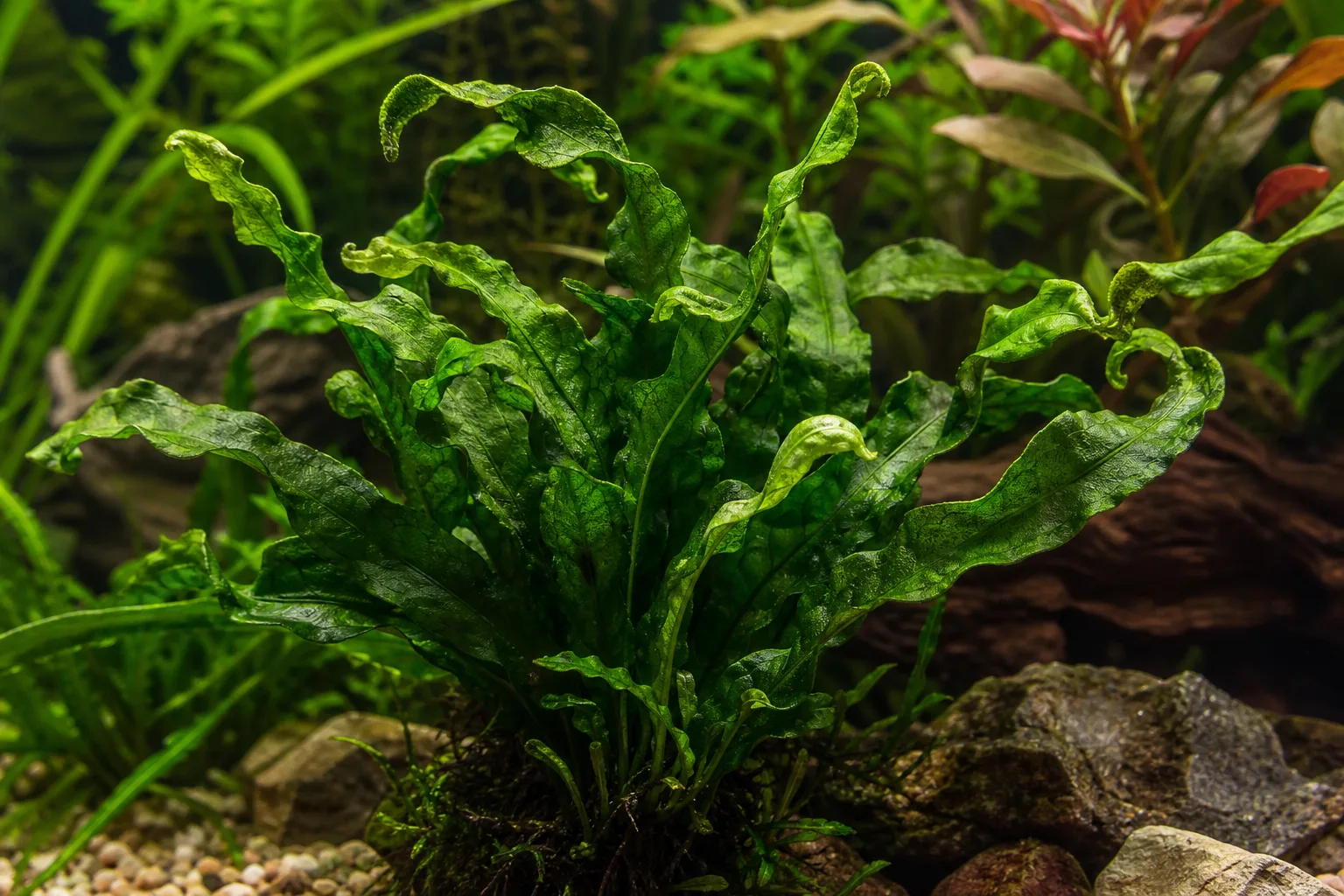
Curled Java Fern leaves twist, cup inward, or ripple along the blade-unlike the flat strap shape in reference photos. In submerged tanks the main triggers are excessive filter flow on exposed fronds, light stress after a sudden intensity jump, and nutrient-poor water in heavily planted setups. Microsorum pteropus is a low-light epiphyte that absorbs nutrients from the water column. Redirect the outflow, reduce PAR to Easy-plant levels, and add diluted liquid fertilizer only after flow and light are stable.
Why Java Fern gets curling leaves
Excessive flow. Fronds anchored directly in HOB or canister outflow flex continuously. Long-term mechanical stress curls tips downward or twists the blade-especially on narrow-leaf cultivars. Gentle circulation helps gas exchange; a jet pinned on the rhizome does not.
Light stress. Java Fern tolerates shade but reacts to sudden high PAR-new LEDs, removed floating plants, or extended photoperiod beyond six to eight initial hours. New fronds emerge narrow and curled while older shaded leaves stay flat.
Nutrient stress. In zero-nitrate, heavily planted tanks, new growth can twist and stay small. The plant draws nutrients from tank water, not buried substrate; lean water starves new tissue while old leaves look normal briefly.
Combined stress after rescape. Moving the rhizome plus brighter light plus stronger flow produces compound curl that mimics disease-fix environment before assuming infection.
What curling leaves look like on Java Fern
Flow curl: tips bent in one direction, fronds leaning downstream, worst on leaves in the direct plume. Light curl: new fronds narrow, wavy, or crinkled under bright lamps; older deep-shade leaves unchanged. Nutrient curl: small twisted new leaves, sometimes pale, on an otherwise dark old frond. Firm rhizome and no melt separates curl from rot. Normal sporangia on flat mature leaves are unrelated to curl.
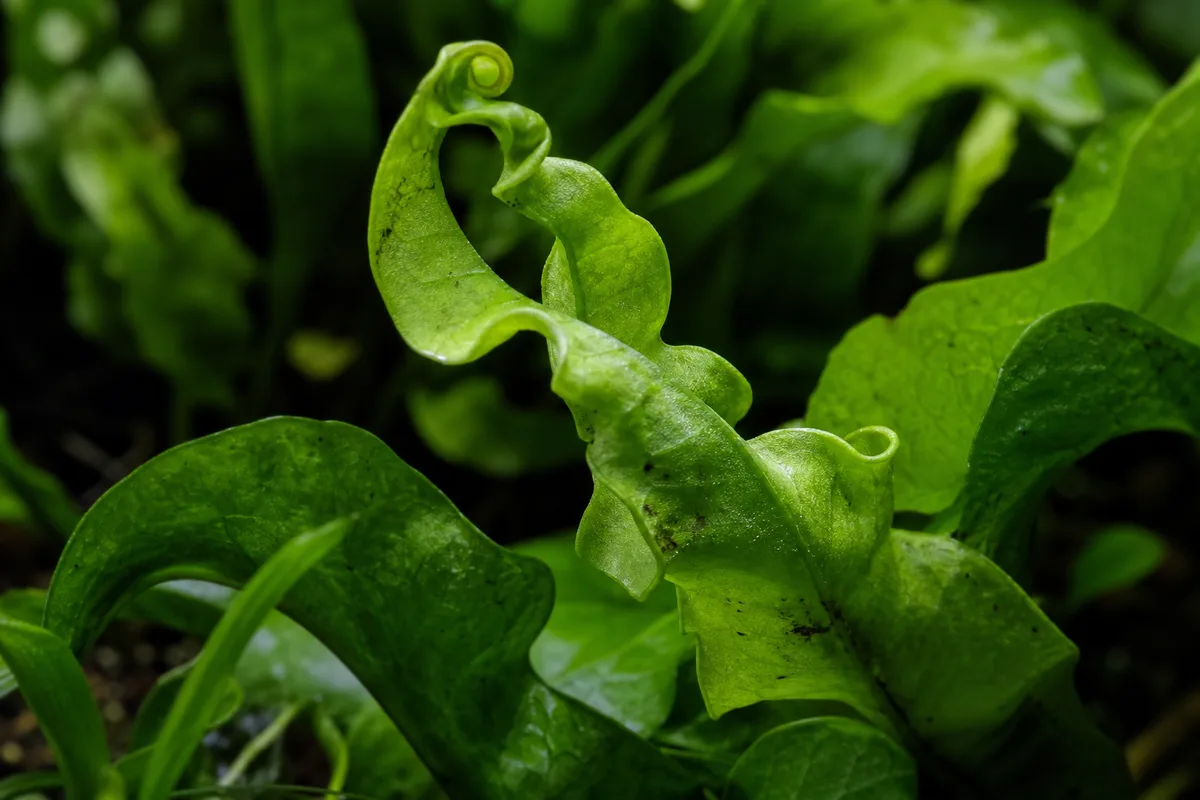
Curling Leaves symptoms on Java Fern - compare with healthy tissue on the same plant.
How to confirm the cause
Observe during a filter cycle-is the curled frond vibrating? Check when curl started against lighting or rescape dates. Test nitrate: sustained zero in a stocked planted tank supports nutrient stress. Verify the rhizome is attached to wood or stone, not buried-buried plants curl and melt from rot, not flow alone. If only one cultivar curls while others in shade stay flat, light or flow placement is the likely answer.
Curl vs distorted leaves vs nutrient stress
| Pattern | Curling leaves (this page) | Distorted leaves | Nitrogen deficiency |
|---|---|---|---|
| Trigger | Filter jet, PAR jump, lean water | Melt, injury, severe stress | Zero nitrate, pale older fronds |
| Frond age | Often new growth under stress | Any age with melt | Older fronds pale first |
| Rhizome | Firm | May soften if rot | Firm |
| First fix | Redirect flow / soften light | Trim melt, fix placement | Dose all-in-one fertilizer |
First fix for Java Fern
Redirect filter outflow with a spray bar, foam baffle, or reposition the rhizome 30–40 cm from the jet. Reduce light stress: drop photoperiod to six to eight hours and target 0.25–0.5 W/L for Easy plants before raising intensity. Nutrients last: after flow and light stabilize for one week, dose a complete liquid aquarium fertilizer at half label strength weekly if new fronds stay twisted and pale. Trim only fully melted tissue-not every curled leaf.
Recovery timeline
Existing curled blades may stay wavy permanently. Watch the next two to three fronds-flattening new growth confirms the fix. Slow growth means visible improvement often takes three to six weeks. Keep water at 22–28°C/27914) so metabolism is not limited by cold while recovering from light or nutrient stress.
What not to do
Do not crank CO₂ and light together to “uncurl” the plant-that worsens light stress. Do not mist room air for submerged curl-it does not reach underwater tissue. Do not bury the rhizome for stability in heavy flow; mount higher on wood with thread or glue. Do not remove the entire clump if only outflow leaves curl-relocate instead.
Lookalike symptoms
Healthy narrow-leaf cultivars (Windelov, needle leaf) naturally look frilly-not the same as stress curl from jets. Emerging new fronds sometimes roll before unfurling; wait until full expansion before diagnosing. Melt turns tissue translucent; curl alone with firm green tissue is environmental. Potassium pinholes punch holes; they do not primarily twist whole blades.
How to prevent curling leaves next time
Mount Java Fern in moderate circulation zones, not the primary outflow. Ramp new lighting over two to three weeks per Tropica start-up guidance. Maintain weekly water changes in planted aquaria. Match fertilizer to bioload-low-demand epiphytes need consistency, not stem-plant mega-dosing.
Related Java Fern problems
- Java Fern overview and light guide - baseline PAR and photoperiod
- Not enough light - when curl follows dim placement without a jet
- Nitrogen deficiency - pale, twisted new growth with zero nitrate
- Distorted leaves - melt and warping without flow/light trigger
When to use this page vs other Java Fern guides
- Java Fern watering guide - Use for routine moisture checks before assuming curling leaves is the main issue.
- Java Fern problems hub - Browse all 28 common issues on this species.
- Low Humidity on Java Fern - Different entry point when symptoms overlap with curling leaves.