Damaged Roots on Anacharis / Elodea: Causes, Checks & Fixes
Quick answer
Damaged roots on Anacharis usually trace to shipping bands left on stems, planting too deep with buried leaves, or crushed nodes during handling. First step: Remove bands and weights, trim mush, float firm cuttings until white roots form, then replant shallowly with the bottom 1–2 inches of leaves stripped.
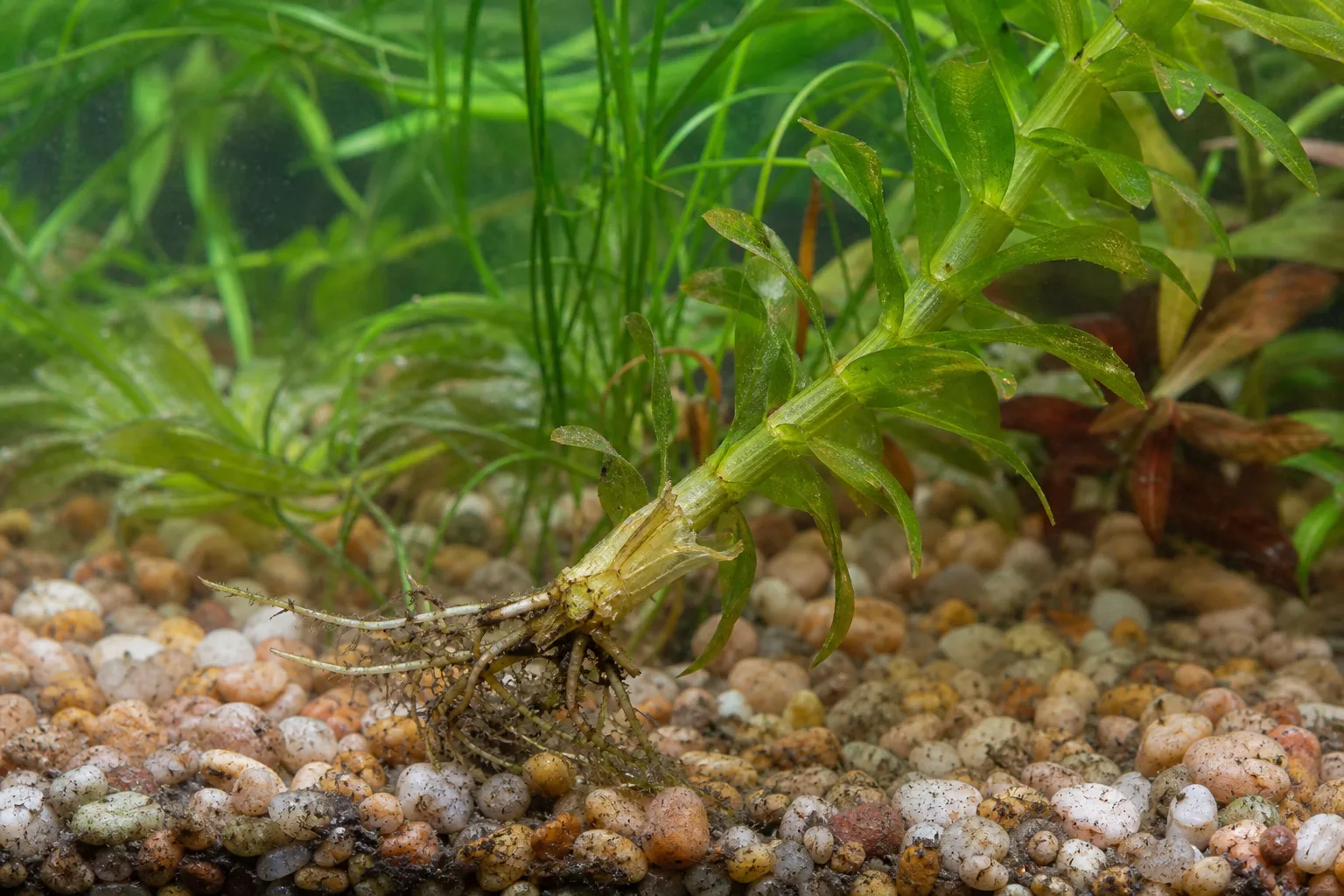
Damaged Roots on Anacharis / Elodea: Causes, Checks & Fixes
This guide covers damaged roots on Anacharis / Elodea. See also the general Damaged Roots guide, watering, and light pages for this plant.
Damaged Roots on Anacharis / Elodea: Causes, Checks & Fixes
Quick answer
Damaged roots on Anacharis (Egeria densa) almost always mean mechanical or planting stress-not soil moisture, pot drainage, or houseplant overwatering on Anacharis / Elodea. Rubber bands left on shipped bunches, stems planted too deep with buried leaves, and crushed nodes from rough gravel or tight weights are the usual causes.
First step: remove bands and weights, trim any mush, and float firm cuttings until white adventitious roots form. Replant shallowly with the bottom 1–2 inches of leaves stripped. Most recoverable stems show new roots within five to ten days and firm new tips within one to two weeks.
This guide is for submerged aquarium, turtle tub, and pond culture only. For full planting and float-recovery technique, see Anacharis propagation. For mush that climbs the stem, see root rot and stem rot. For yellowing after a tank move, see yellow leaves and transplant shock.
What damaged roots look like on Anacharis
Healthy Anacharis roots are fine, white, and unbranched, emerging from nodes along the lower stem. They act mainly as anchors-the plant pulls most nutrients from the water column through its leaves and stems, not through a thick root system like a terrestrial houseplant.
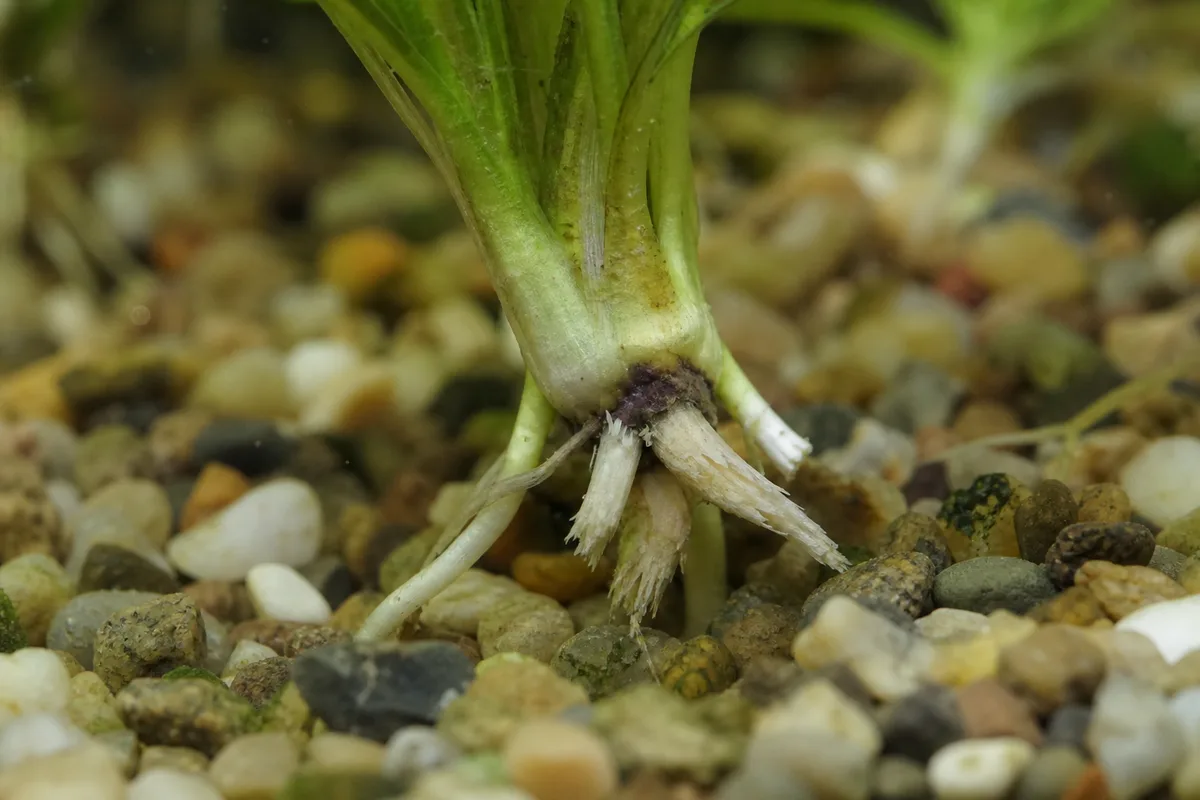
Damaged Roots symptoms on Anacharis / Elodea - compare with healthy tissue on the same plant.
Healthy vs. damaged patterns
| What you see | Likely meaning | Next check |
|---|---|---|
| White roots at nodes; firm green stem | Healthy or recovering | Optional shallow replant |
| Brown, slimy roots only at base | Buried-leaf rot or deep planting | Pull up, trim mush, float |
| No roots on new cutting; firm stem | Normal for fresh cuttings; roots pending | Float 5–10 days |
| Pale crushed ring on stem | Mechanical damage at node | Trim below crush if mushy |
| Dark band under rubber band | Shipping constriction damage | Remove band; trim affected section |
| Translucent mush climbing stem | Stem rot or melt-not just “damaged roots” | See root rot / stem rot guides |
Adventitious roots and lateral branches grow primarily from double nodes-specialized regions spaced roughly every six to twelve whorls along the stem. A short cutting with no double node may look fine at first and then fail to root; four-to-six-inch sections almost always contain at least one.
Why Anacharis roots get damaged
Shipping bands and weights left on stems
Store-bought Anacharis arrives in tight bunches held with rubber bands or lead weights. If the band stays on after planting, it constricts the stem, traps decaying tissue, and blocks water flow through the delicate stem. Tropica recommends removing the anchor, splitting the bunch into individual stems, and stripping damaged leaves before planting-exactly because bunched stems trap gas and rot.
Stems planted too deep with buried leaves
Anacharis leaves are only about two cell layers thick. Any leaf buried in gravel decomposes, and rot travels up the stem from the lowest whorls. Plant only the bare bottom 1–2 inches (roughly 5 cm) after stripping lower leaves. Going deeper buries whorls, encourages anaerobic decay, and kills adventitious roots before they form.
Crushed nodes during planting or handling
Coarse or sharp gravel, forceful tweezers, and crushing the stem in a net can bruise nodes where roots should emerge. The Montana Field Guide notes that only fragments with intact meristematic tissue at double nodes develop reliable new plants-crushed nodes lose that capacity.
Physical damage from fish, turtles, or uprooting
Goldfish, turtles, and large cichlids uproot soft stems and strip whorls, leaving bare nodes with torn roots. Loaches and crayfish pull anchored bunches from gravel. This is mechanical damage, not disease-firm tissue above the uproot zone can regrow roots after floating. See holes in leaves when grazing is the main symptom.
When this is melt or stem rot-not mechanical damage
Uniform translucent mush after a new purchase, copper medication, or ammonia spike is not the same as torn roots from planting. Parameter shock and chemical burn follow different recovery paths-see transparent leaves, chemical damage, and root rot when rot spreads above the anchor zone.
How to confirm the cause
Work through this order before changing tank chemistry:
- Remove bands and weights - Inspect for a dark constriction ring or flattened stem section.
- Check planting depth - Pull one stem gently; if lower whorls were under gravel, buried-leaf rot is likely.
- Feel nodes - Firm green nodes above damage mean the cutting is saveable; mushy nodes mean trim lower or discard.
- Look at root color - White and fine is healthy forming; brown slime at the base only suggests localized rot from burial or crush.
- Review recent handling - New purchase, replanting day, fish catching with net, or turtle tub rearrangement?
- Test water if tank is new - Ammonia in an uncycled setup can melt stems and mimic “failed rooting”; see water parameters.
- One change at a time - Float first; do not also replant, dose fertilizer, and medicate fish on the same day.
UF/IFAS describes Egeria densa as a fully submerged aquatic plant-keep every diagnostic step inside aquarium culture, not houseplant soil checks.
First fix for Anacharis damaged roots
First action: unbundle, trim mush, and float firm cuttings.
- Remove rubber bands, lead weights, and any decaying lower leaves.
- Trim stem ends back to firm green tissue if the base is mushy.
- Strip leaves from the bottom 1–2 inches of each cutting (even for floating).
- Float cuttings in tank water with moderate light-or hold in a quarantine cup in the display tank.
- Wait for white roots at nodes (typically five to ten days in 22–26 °C water with stable parameters).
- Replant shallowly: bury only the bare lower section in fine gravel or sand, 1–3 inches between stems.
Do not use terrestrial rooting hormone in aquarium water-cuttings root readily from nodes without it. Do not plant melting stems deeper “to anchor them”; that accelerates rot.
Recovery timeline by cause
| Cause | What to expect | Success signal |
|---|---|---|
| Fresh cutting, no roots yet | White roots in 5–10 days | New roots at nodes; firm tips |
| Shipping band damage | Stabilizes 3–7 days after band removal | Green tissue above band mark |
| Buried-leaf / deep planting | 7–14 days after float + trim | No new mush; roots on floated section |
| Crushed node | Variable; may need trim below damage | Side shoots or roots from node above crush |
| Uprooting by fish | 5–10 days if floated out of grazer reach | Re-anchoring without repeat uproot |
| Ammonia / copper melt | Days to weeks; may lose whole stems | Only firm cuttings recover-see other guides |
Mild mechanical damage often stabilizes within one to two weeks once stems are floated and water is stable. Badly affected whorls rarely look perfect again-judge recovery by new submerged tips and white roots, not by old damaged tissue.
What not to do
- Do not check soil moisture, pot weight, or “Anacharis / Elodea light guide” in a living room-these do not apply to submerged Egeria densa.
- Do not leave decaying buried leaves in gravel hoping roots will catch up.
- Do not plant deeper to stop a stem from floating-bury only the stripped base.
- Do not dose terrestrial pesticides, fungicides, or rooting hormone into tank water.
- Do not stack replanting, heavy fertilizer, and fish medication on the same day as a root-damage fix.
- Do not use sharp coarse substrate that crushes tender stems on re-planting.
How to prevent damaged roots next time
- Unbundle immediately after purchase; remove bands and inspect each stem for crush marks.
- Strip lower leaves before every planting-non-negotiable per extension planting guidance.
- Plant shallow in fine gravel or sand; float uncertain cuttings first per the propagation guide.
- Space stems 1–3 inches apart so lower whorls get light and flow.
- Acclimate new stems by floating in tank water before anchoring-reduces transplant shock root loss.
- Protect from uprooting in goldfish and turtle setups, or grow backup stems in a separate tub.
- Never release trimmings into local waterways-Egeria densa spreads by fragmentation and is invasive in many regions.
What to read next on Anacharis care
- Anacharis propagation - node anatomy, float vs. plant, rooting timeline
- Transplant shock - limp stems after tank moves without obvious crush damage
- Root rot - when mush travels up the stem
- Stem rot - basal decay vs. mechanical root loss
- Anacharis overview - full care context for Egeria densa
When to use this page vs other Anacharis / Elodea guides
- Anacharis / Elodea watering guide - Use for routine moisture checks before assuming damaged roots is the main issue.
- Anacharis / Elodea problems hub - Browse all 34 common issues on this species.