Stem Rot on Anacharis / Elodea: Causes, Checks & Fixes
Quick answer
Stem rot on Anacharis usually traces to deep planting with buried leaves, leftover rubber bands, or thick bunches shading lower internodes. First step: Cut back to firm green tissue, strip lower leaves, float until white roots appear, and replant stems shallowly and spaced apart.
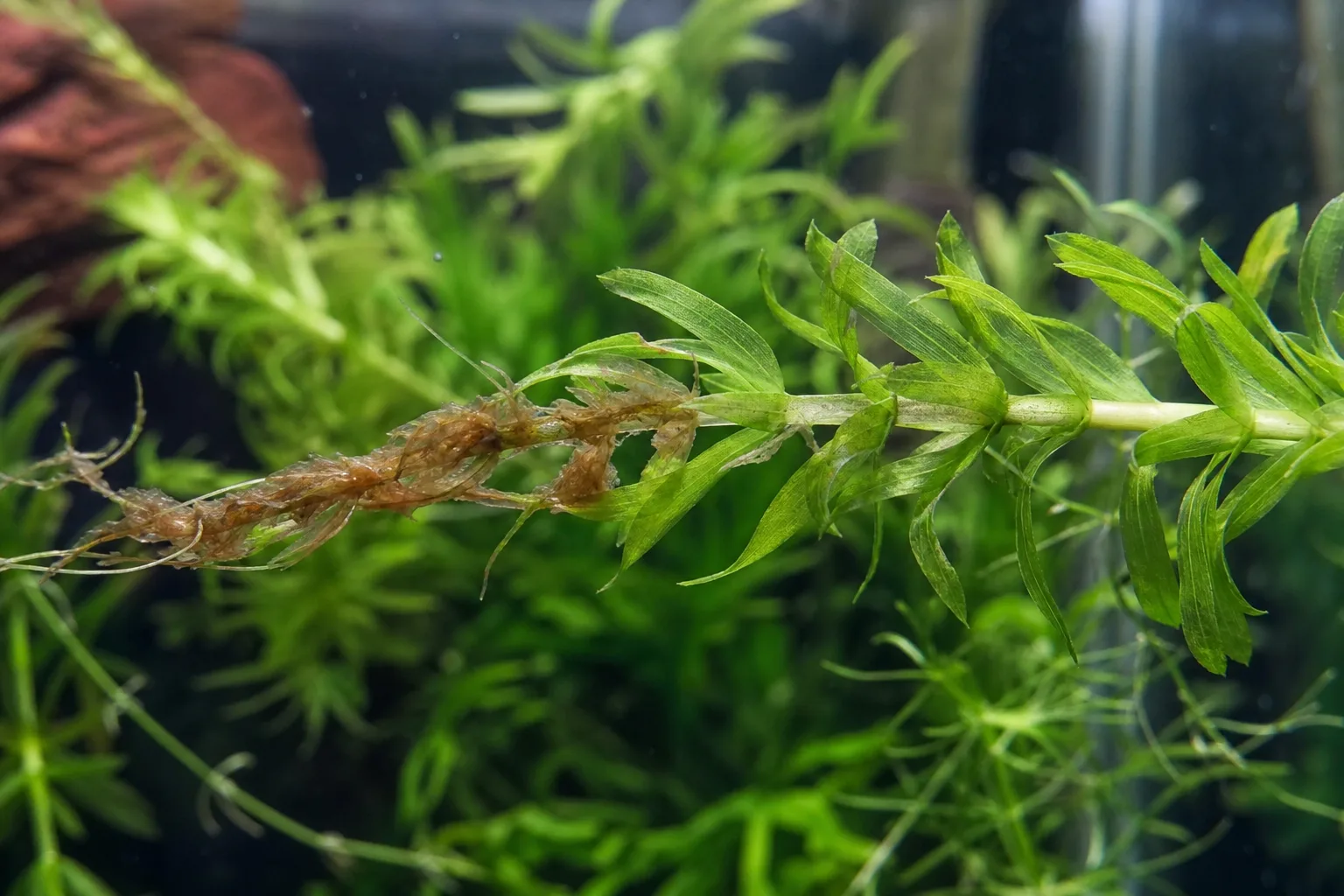
Stem Rot on Anacharis / Elodea: Causes, Checks & Fixes
This guide covers stem rot on Anacharis / Elodea. See also the general Stem Rot guide, watering, and light pages for this plant.
Stem Rot on Anacharis / Elodea: Causes, Checks & Fixes
Quick answer
Stem rot on Anacharis (Egeria densa) almost always means decay along buried, shaded, or constricted internodes-not soil moisture, pot drainage, or houseplant overwatering. Look for black or translucent mush on lower internodes, a dark flattened ring where a store rubber band sat, or slimy buried whorls when you pull stems from gravel-while tips above the damage stay firm and green.
First step: cut back to firm green tissue, strip lower leaves, float until white roots appear, and replant stems shallowly and spaced apart. Most saveable cuttings show new roots within five to ten days and firm new tips within one to two weeks.
This guide is for submerged aquarium, turtle tub, and pond culture only. For anchor-point decay at the substrate line, see root rot. For planting depth, bunch splitting, and substrate refresh, see Anacharis repotting. For clean cuts and float-to-root technique, see Anacharis propagation. For organics-heavy water that melts multiple stems, see overwatering.
Scope: aquarium and turtle-tank culture
Anacharis is a fully submerged aquatic stem plant that absorbs nutrients primarily from the water column through its leaves and stems. It grows as a fast vegetative spreader with whorled leaves along hollow stems. Stress shows up as whorl color, stem firmness, and whether new tips stay green-not as dry soil or wilted terrestrial foliage.
In turtle tanks and heavily fed community aquariums, also review filtration strength, detritus buildup, and whether copper-based medications were used recently. Brazilian waterweed is documented as sensitive to copper herbicides used in aquatic plant control.
Why Anacharis gets stem rot
Deep planting with buried leaves
Anacharis leaves are only two cell layers thick and decompose quickly when buried in gravel. Rot starts at the lowest submerged whorls and travels up the stem while tips may still look green. Plant only the bare bottom 1–2 inches after stripping lower leaves-going deeper buries whorls, creates anaerobic pockets, and kills adventitious roots before they anchor.
Leftover rubber bands and lead weights
Store-bought bunches arrive tight with rubber bands or weights. If the band stays on after planting, it constricts the hollow stem, traps decaying tissue, and blocks flow through delicate internodes. On terrestrial succulents, a band might only scar bark; on Anacharis the stem is a thin-walled column with no corky protection-constriction quickly crushes the vascular tissue and leaves a dark flattened ring that rot climbs from. Remove bands and split bunches before planting-see propagation for unbundling steps.
Thick bunches shading lower internodes
When six or more stems are planted in one pocket, upper whorls shade the lower stems, slow photosynthesis, and let debris collect against internodes. Lower sections go soft even when tips stay bright. Thin to individual stems spaced 1–3 inches apart and replant only firm tops-matching the bunch-splitting guidance in repotting.
Poor flow and detritus at the stem base
Compacted fine sand, mulm piled against stems, and dead zones behind hardscape let organic debris sit on internodes. Minnesota DNR guidance for Brazilian elodea emphasizes clean gravel and good circulation around planted stems. Lightly stir the top substrate layer during water changes if multiple stems rot at once-do not deep-vacuum and release trapped gas in one pass.
Turtle-tank and high-bioload triggers
Turtles uproot soft stems, crush whorls, and add waste that fuels bacterial decay on damaged tissue. High feeding without adequate filtration raises organics and ammonia, which can melt stems and mimic planting rot. See overwatering when cloudy water and foul odor accompany mushy stems tank-wide.
What stem rot looks like on Anacharis
Healthy Anacharis stems feel firm and springy between whorls, with bright green leaves in tight spirals. Stem rot shows a different pattern:
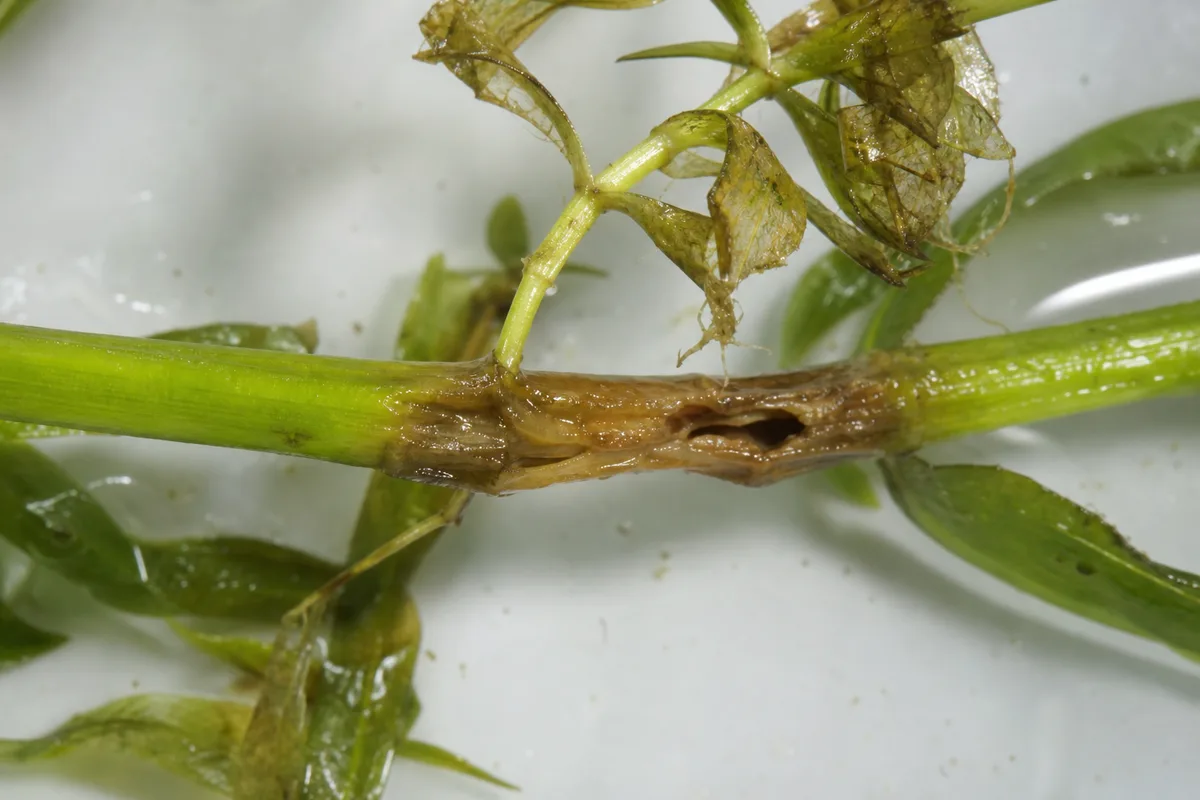
Stem Rot symptoms on Anacharis / Elodea - compare with healthy tissue on the same plant.
- Black, brown, or translucent mush on lower internodes while tips stay green
- Hollow or pinched stem when you gently squeeze between whorls
- Dark constriction ring where a rubber band or weight sat
- Buried whorls that turn slimy when you pull the stem from gravel
- Soft stem detaching from a firm section above-rot traveling upward
Compare newest tip growth first. Firm green tips with mush only below the lowest healthy node mean the cutting is saveable after trim-and-float. Mush climbing into firm tissue within days is urgent.
Stem rot vs. root rot vs. melt vs. ammonia damage
| What you see | Likely cause | Urgency | First move |
|---|---|---|---|
| Mush on lower internodes; firm tips; band mark or buried leaves | Stem rot from planting or bunching | Routine - trim within 24–48 hours | Trim, strip, float, shallow replant |
| Black mush at gravel line; sour substrate odor; stem detaches at base | Root rot at anchor point | Routine - trim and float this week | Trim base, float, replant in clean gravel |
| Uniform translucent melt 3–7 days after purchase; stable water | Acclimation melt-not progressive rot | Low - monitor 7–14 days | Remove decay; float tops; wait |
| Rapid mush on many stems; fish gasping; new tank | Ammonia or uncycled setup | Emergency - same day | Large water change; test parameters |
| Bleached tips after copper medication | Chemical burn | High - stop exposure today | Water changes; save unexposed cuttings |
| Yellowing with firm stems | Nutrient issue-not stem rot | Low - adjust over days | See nitrogen deficiency |
Progressive stem mush that spreads above the lowest firm node within a week is stem rot or parameter shock-not normal post-shipping limpness. See transplant shock when only emersed tissue looks bad after a move.
How to confirm the cause
Work through this order before changing tank chemistry:
- Tip growth color - Green firm tips mean saveable tissue above the rot zone.
- Rubber band or weight - Remove and inspect for constriction marks.
- Planting depth - Pull one stem; count buried whorls below gravel line.
- Bunch density - Are multiple stems stacked in one pocket shading each other?
- Flow around stems - Detritus or mulm sitting on lower internodes?
- Water quality - Test ammonia and nitrite if the tank is new or heavily fed (EPA ammonia criteria rise with temperature and pH).
- Recent changes - Medication, temperature swing, substrate stir, or turtle rearrangement?
Emersed melt vs. progressive internode rot
Store Anacharis is often grown emersed in nurseries and transitions to fully submerged culture in your tank. Emersed-to-submerged melt hits many stems at once within the first week: lower whorls go uniformly limp and translucent while water parameters stay stable and tips often green up again within seven to fourteen days. Progressive stem rot starts at a specific injury point-a band mark, buried whorl, or shaded internode-and mush climbs upward over days even when only one or two stems in a bunch are affected. If every stem in a new purchase looks equally limp on day three with zero band marks, float and wait before assuming planting rot. If one stem shows a dark ring and mush below firm tips while neighbors stay healthy, treat as stem rot immediately.
UF/IFAS describes Egeria densa as a submerged aquatic plant-keep every diagnostic step inside aquarium culture, not houseplant soil checks.
First fix for Anacharis stem rot
First action: trim to firm tissue, strip lower leaves, and float.
- Remove affected stems from substrate; discard mush that cannot be trimmed away.
- Cut back to firm green tissue at least one node above the rot line.
- Strip leaves from the bottom 1–2 inches of each cutting-even when floating, because submerged leaves below the waterline on a float can still decay and invite bacteria.
- Float cuttings in tank water with moderate light.
- Wait for white roots at nodes (typically five to ten days at 22–26 °C; adventitious roots form more readily on floated fragments than on stems buried in substrate).
- Replant shallowly: bury only the bare lower section in fine gravel or sand, 1–3 inches between stems.
Make one targeted correction and wait seven days before stacking fertilizer, replanting, and fish medication. Do not plant melting stems deeper to anchor them-that accelerates rot.
Recovery timeline
Mild stem rot on one or two bunched stems often stabilizes within one to two weeks after trim-and-float once water and light are stable. Acclimation melt from new purchases commonly needs seven to fourteen days for new submerged whorls-cosmetic lower damage may not reverse, but firm new tips mean success.
Mush that spreads into previously firm internodes within days, or stems that stay translucent after two weeks of floating, may require discarding and starting from a single healthy top. Judge recovery by new root emergence and firm tip growth, not by lower whorls returning to their original appearance.
Recovery vignette: A six-stem store bunch planted tight in a 20-gallon turtle tub showed dark band marks and mushy lower internodes by day five while tips stayed green. After removing the rubber band, trimming to firm tissue, and floating cuttings at 24 °C, white roots appeared at lower nodes by day eight and shallow replanting in spaced gravel held firm through week three-lower whorls never recovered cosmetically, but new tips and roots confirmed salvage.
What not to do
Do not dose terrestrial pesticides or fungicides into aquarium water. Do not leave rotting tissue decaying in the tank-remove mush promptly. Do not add heavy fertilizer to foul water. Do not plant in fertilizer-rich potting soil; use inert aquarium gravel or floating culture only. Do not stack replanting, fertilizer, and medication on the same day.
How to prevent stem rot next time
Remove rubber bands and split bunches immediately after purchase. Strip lower leaves before planting. Bury only the bare bottom 1–2 inches in fine gravel, spacing stems 1–3 inches apart. Thin dense background walls before lower internodes go soft. Maintain clean dechlorinated water with regular partial changes and prompt removal of melt. Acclimate new stems by floating in tank water before planting. Check medication labels for copper.
In pond culture, stems need enough depth and current that lower internodes are not buried in mulm or stagnant silt-plant in moving water or thin regularly so surface mats do not shade submerged bases. In aquariums, prioritize flow around the gravel line over deep planting; a stem that floats until roots anchor often avoids the buried-whorl rot cycle entirely.
Never release trimmings into local waterways-Egeria densa fragments with double nodes can establish new populations. UC ANR documents Brazilian egeria as an established invasive when fragments escape cultivation.
Safe disposal of rotted stems
Bag all trimmings in a sealed plastic bag, freeze 24–72 hours to kill plant material, then place the unopened bag in household trash. Never flush rotted stems or dispose of them in storm drains, garden ponds, or natural waterways. The same rule applies to tank water removed during a cleanup-dechlorinate or dispose on dry land. Full disposal steps are in the repotting guide.
When to worry
Treat as urgent if mush climbs into firm tissue within days, multiple stems rot simultaneously with foul water odor, or ammonia is detectable in a new setup. Slow cosmetic decline on lower whorls with healthy green tips is lower urgency-float and monitor.
Stem-rot triage checks
When to act today vs. wait and float
Act today: ammonia spike, copper exposure, or mush climbing into previously firm internodes within 48 hours. Trim this week: post-shipping band constriction with mush below firm tips. Monitor 7–14 days: isolated lower whorl yellowing or uniform new-tank melt with stable parameters and green tips.
Inspection order for mushy Anacharis stems
Newest growth → band or burial damage → internode firmness → bunch density → flow and detritus → water tests → recent chemical exposures.
How stem rot ranks in the symptom matrix
Stem rot is marked medium severity for Anacharis in the symptom matrix-a triage clue, not a guarantee. Cross-check damaged roots when the issue is mechanical crush or failed rooting rather than progressive internode decay.
Related Anacharis problems
- Anacharis overview - baseline light, water, planting, and propagation context
- Root rot - anchor-point mush, sour substrate odor, detachment at gravel line
- Overwatering - organics-heavy water, tank-wide melt, cloudy foul water
- Transplant shock - emersed tissue decline after a move
- Damaged roots - mechanical crush or failed rooting, not progressive internode mush
- Nitrogen deficiency - yellowing with firm stems
- Anacharis repotting · Anacharis propagation - planting depth, bunch splitting, float-to-root technique
FAQs
How can I confirm stem rot on Anacharis / Elodea?
Match the pattern: black or mushy lower internodes with firm green tips above, often with a constriction mark under an old rubber band or buried whorls in gravel. Check tip growth, planting depth, bunch density, and water flow before treating. If mush is only at the anchor point with sour substrate odor, see the root rot guide instead.
Is my Anacharis melting or rotting?
Melt is uniform translucence on many stems three to seven days after purchase with stable water-lower whorls go limp together and tips often recover within one to two weeks. Rot is progressive mush climbing from buried or constricted internodes over days to weeks, leaving a dark ring under an old band or slimy buried whorls while tips stay green. Melt needs patience and float; rot needs trim, strip, and shallow replant.
Is stem rot the same as root rot on Anacharis?
No. Stem rot affects internodes along the buried or shaded portion of the stem-often mid-stem mush with healthy tips. Root rot concentrates at the anchor point where the stem meets substrate, with black mush, detachment, or sour odor from gravel. Both can happen on the same plant; trim above all mush and float firm cuttings regardless of which pattern you see.
How long should I float a trimmed Anacharis stem before replanting?
Most firm cuttings develop visible white roots at nodes within five to ten days in 22–26 °C water with moderate light. Float until roots form and you have stripped the bottom 1–2 inches of leaves-replanting mushy or band-constricted stems deep in gravel often makes rot worse. See the propagation guide for clean-cut technique.
Can I plant Anacharis in soil?
No. Anacharis is a fully submerged aquatic stem plant that absorbs nutrients from the water column-not potting soil, garden dirt, or houseplant mix. Plant only in inert aquarium gravel or sand with the bare bottom 1–2 inches buried, or float stems until roots anchor naturally. Terrestrial soil traps leaves, creates anaerobic pockets, and causes the buried-whorl rot this guide addresses.
When to use this page vs other Anacharis / Elodea guides
- Anacharis / Elodea watering guide - Use for routine moisture checks before assuming stem rot is the main issue.
- Anacharis / Elodea problems hub - Browse all 34 common issues on this species.