No New Growth on Anacharis / Elodea: Causes, Checks & Fixes
Quick answer
No new growth on Anacharis means zero new whorls at firm nodes for 14+ days after water stabilizes-not the gradual short tips of slow growth. First step: test ammonia and nitrite, stop medications and liquid carbon, and leave at least one firm green node on every stem section.
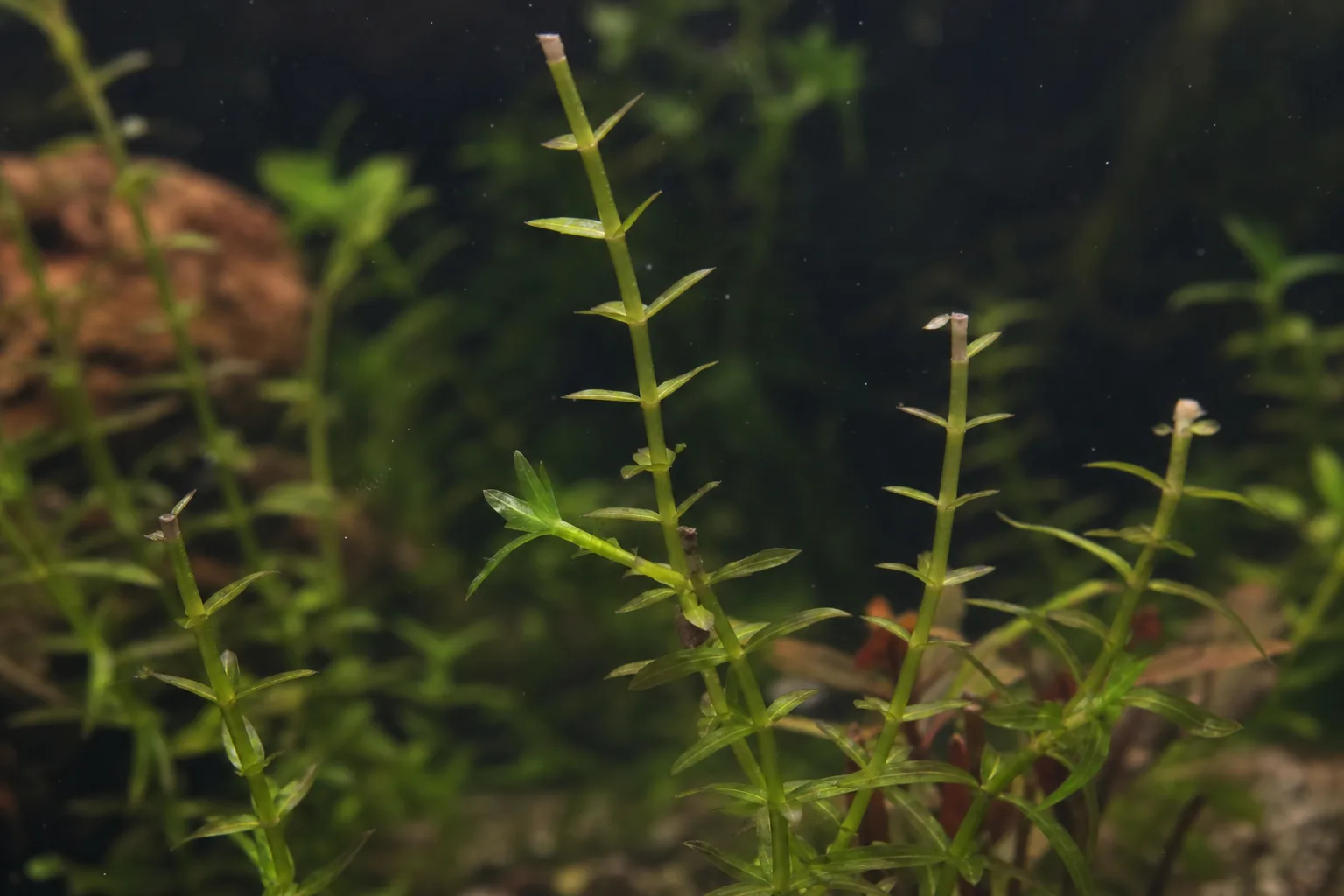
No New Growth on Anacharis / Elodea: Causes, Checks & Fixes
This guide covers no new growth on Anacharis / Elodea. See also the general No New Growth guide, watering, and light pages for this plant.
No New Growth on Anacharis / Elodea: Causes, Checks & Fixes
Quick answer
Complete stall on Anacharis (Egeria densa) means no new whorls at stem tips or side nodes for two weeks or more after water is stable-not the normal first-week pause after shipping or a heavy trim, and not the short pale tips that still appear on the slow growth guide. The plant is not “resting” like a dormant houseplant; submerged Egeria densa either pushes new leaves from firm nodes or the stem section is dead.
First step: test ammonia and nitrite, stop medications and liquid carbon, and leave at least one firm green node on every stem section you keep. Do not add fertilizer, CO₂, or more light until water tests are safe and you have confirmed the nodes are salvageable.
This guide covers submerged aquarium and turtle-tank culture only-not terrestrial pots, soil moisture, or houseplant humidity. For baseline care, see the Anacharis overview. For gradual weak growth with some new tips, see slow growth on Anacharis. For tight undersized whorls with some growth present, see stunted growth on Anacharis.
What complete stall looks like on Anacharis
Healthy Anacharis adds visible whorls at stem tips within days under good conditions. A true no new growth pattern looks like this:
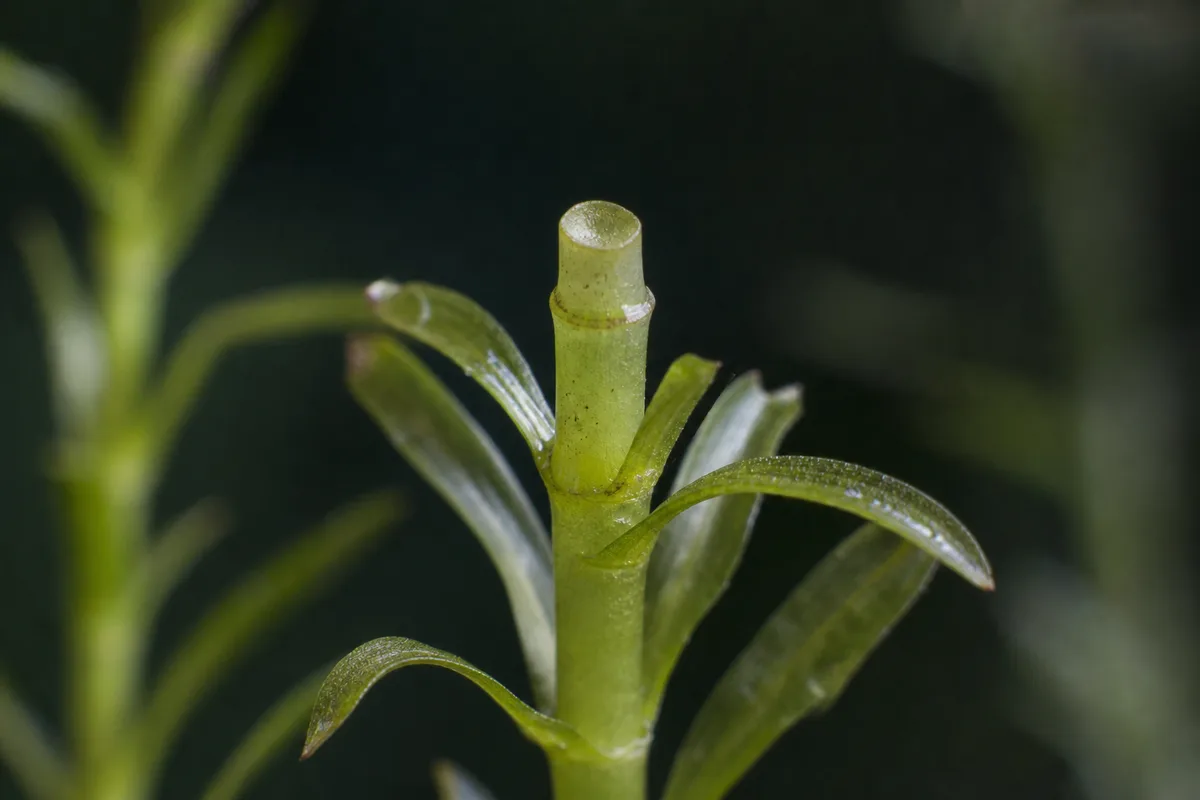
No New Growth symptoms on Anacharis / Elodea - compare with healthy tissue on the same plant.
- Frozen tips for 14+ days - Stem ends stay bare or capped with brown crust; no tiny green whorl emerges at the highest intact node.
- Firm lower nodes, dead upper section - Pinch test: lower internodes feel solid and green, but everything above the last firm node is mushy or hollow.
- Tank-wide pause after a trigger - All stems stall at once after a new-tank move, medication dose, heat spike, or aggressive cleanup that removed every leaf whorl.
- Floating grows, planted stalls - Stems at the surface may still inch upward while shaded planted sections show zero new leaves in the same tank (light gradient, not species failure).
- No pearling, no side shoots - Beyond missing tip growth, lateral buds at nodes stay dormant when stress is severe.
What to inspect (no photo needed): Run your finger along the stem. A recoverable section feels firm like a thin green pencil; a dead section feels gelatinous, bends without resistance, or snaps with wet mush inside. New growth, when it returns, appears as a tight cluster of small leaves at a node-not as roots alone.
These signs differ from transition melt, which commonly pauses growth for seven to fourteen days after purchase without any chemical trigger, and from slow growth, where short new whorls still appear but internodes stay long and pale.
Photo guide - what to compare at the node
When you add your own reference photos, capture these two contrasts side by side:
- Salvageable node - A firm green internode with a tiny tight whorl emerging (often 2–4 mm across) at the highest intact point. Stem cross-section feels solid when pinched; no translucency below the new cluster.
- Over-trimmed dead tip - A bare stem end cut below the last firm whorl, capped with brown crust or wet mush. Pinch yields hollow tissue; no green bud visible even after ten days in clean water.
Label each image with tank age, ammonia/nitrite readings, and days since the last trim or medication dose. These two frames answer the most common panic question-”I trimmed everything off; will it grow back?”-faster than any paragraph alone.
No new growth vs. slow growth vs. stunted growth
These three pages sit close in search results but diagnose different patterns. Use this table before you pick a fix path:
| Pattern | What you see | This page or sibling? |
|---|---|---|
| Complete stall | Zero new whorls at any firm node for 14+ days | Stay here |
| Slow growth | Short pale tips still appear; stems add less than ~1 cm per week | Slow growth guide |
| Stunted growth | Small crowded whorls on firm stems; growth happens but each whorl is undersized | Stunted growth guide |
| Transition melt | Translucent shedding 7–14 days after purchase; no chemical trigger | Transplant shock guide |
Why Anacharis stops producing new growth
Anacharis is a fast vegetative stem plant that feeds from the water column and regenerates from nodes along the stem. When growth stops entirely, the cause is almost always water quality, chemical exposure, temperature shock, or node damage-not underwatering on Anacharis / Elodea in the houseplant sense.
New tank instability (ammonia and nitrite)
In tanks under six weeks old, beneficial bacteria may not yet process fish waste. UF/IFAS notes that a new biofilter needs roughly six to eight weeks to reduce ammonia and nitrite effectively. Until the nitrogen cycle completes, ammonia and nitrite suppress plant metabolism and can melt tissue before any new whorls form.
Anacharis helps pull ammonia from water when healthy-but it cannot outgrow chronic toxicity in an uncycled tank.
Copper medications and liquid carbon
Brazilian waterweed is documented as sensitive to copper-based aquatic herbicides used in pond management. The same copper in ich medications, snail treatments, and some algaecides can stall or liquefy Anacharis within days.
Seachem states that Anacharis is sensitive to Flourish Excel and recommends dosing every other day rather than daily when Anacharis / Elodea overview is present. Liquid-carbon products (glutaraldehyde-based algaecides sold as Excel and similar) are widely reported in hobby practice to halt new growth and trigger melt on Egeria densa at routine or overdosed levels-pause them entirely during a stall until firm nodes push new submerged whorls.
If you dosed any of these in the last two weeks, assume chemical stress until water changes clear the product.
Heat melt and temperature swings
Anacharis tolerates cool water well but struggles when tropical tanks hold sustained temperatures above roughly 82°F (28°C). Growth is relatively constant between 16°C and 28°C, but shoot elongation and photosynthetic output drop above about 32°C (90°F). Heat stress often shows as translucent tissue first; growth stops because the plant is shedding cells faster than it can rebuild submerged leaves.
Trimming below the last healthy node
Egeria densa spreads in the wild through stem fragments with specialized double-node regions spaced along the shoot. In aquarium practice, any firm intact node can produce new whorls and roots-but a stem trimmed to bare mush with no green node left has nothing to sprout from. Aggressive cleanup that strips every whorl, or cutting below the last firm section, produces permanent stall on that piece.
Emersed-to-submersed transition melt
Store-bought Anacharis is often grown emersed (out of water) at farms. Submerged leaves are built differently from air-grown foliage. During the first one to two weeks after planting, old leaves melt while the plant waits to grow new submerged whorls. This looks like “no growth” but is temporary if firm nodes remain-see transplant shock for the timeline.
Turtle tanks - basking heat and feeding load
Turtle setups add two stall triggers that plain fish tanks hide. A basking lamp can push surface water above the active growth band while the cooler bottom still reads acceptable on a single thermometer-stems near the lamp stall or melt while deeper sections look fine. Heavy feeding in a partially cycled tub spikes ammonia faster than a lightly stocked display tank; Anacharis in a new turtle tub often shows complete stall until nitrite clears even when stems arrived green. Float salvaged cuttings away from the direct basking zone, test ammonia at stem depth (not just at the filter intake), and reduce feeding until both ammonia and nitrite read zero for several consecutive days.
How to confirm the cause - ordered checklist
Work through these steps in order. Stop at the first match that explains your tank.
- Ammonia and nitrite - Liquid test kit on tank water. Any reading above 0 ppm in a stocked tank is urgent; fix the cycle before expecting new growth. New tanks under six weeks: assume instability until both read zero for several days.
- Node firmness - Pinch every stem section. Keep only firm green tissue; discard translucent or hollow pieces immediately so decay does not spike ammonia.
- Medication and chemical log - Review labels for copper, formalin combos with copper, or liquid carbon in the last 14 days. Cross-check chemical damage if tissue turned clear before growth stopped.
- Temperature - Compare tank temp to the 64–77°F (18–25°C) comfort band for active submerged growth. Note recent heater failures, summer room swings, basking-lamp hot spots in turtle tubs, or moving plants from a cool bag into a hot tank.
- Trim history - Did cleanup remove all whorls or cut below the last healthy node? If yes, salvage lower firm sections only.
- Light at stem depth - If floating stems grow but planted stems stall, increase light or float cuttings-see not enough light.
- Tank age and melt window - Plants added within 14 days may still be in transition melt; wait unless ammonia, copper, or mush is advancing into firm nodes.
No new growth vs. lookalike problems
| Pattern | Likely cause | Key differentiator |
|---|---|---|
| Zero whorls 14+ days, firm lower nodes | Cycle stress, copper, or post-trim pause | Water tests + medication history |
| Small new tips, long bare internodes | Slow growth / low light | Some growth present-see slow growth guide |
| Tight small whorls on firm stems | Stunted growth / nutrients or PAR at depth | Whorls form but stay undersized-see stunted growth guide |
| Translucent mush spreading fast | Melt, heat, or chemical damage | Tissue liquefies; not just stalled |
| Stall only on planted lower stems | Light gradient | Floating sections still grow |
| Yellow old leaves, green stalled tips | Nitrogen shortage after stall resolves | Test nitrate once water is safe |
First fix for Anacharis
First action: test ammonia and nitrite. If either is above zero, stop adding fish food excess, perform a 30–50% water change with temperature-matched dechlorinated water, and pause all fertilizers and medications until both read zero.
On the same day-only after water is safe or while waiting for cycle completion on an empty plant-only tank:
- Stop copper and liquid carbon - No ich meds, copper algicides, or Excel-type products on Anacharis until new submerged whorls return. If fish need copper treatment, move stems to a separate tub.
- Salvage firm nodes - Trim each stem to the highest section that feels firm and green. Leave at least one intact node per piece you keep; four-to-eight-inch cuttings establish faster than tiny scraps.
- Remove decay - Siphon melted leaves and mushy stems so they do not fuel more ammonia. Never bury melting tissue deeper in substrate.
- Float or replant shallowly - Float salvaged cuttings near the light for seven to ten days, or replant with only the bottom one to two inches of bare stem in gravel. Match acclimation steps in the water parameters guide.
Make one correction cluster (water safety + chemical stop + node salvage), then wait seven days before stacking fertilizer, CO₂, or aggressive replanting.
Recovery timeline
| Phase | Timing | Good signs | Bad signs |
|---|---|---|---|
| Stabilize water + trim | Days 1–3 | Ammonia/nitrite trend down; decay removed | Mush spreads into firm nodes |
| Wait for nodes | Days 4–10 | Tiny green whorl at tip or side node | Stem hollows; foul tank odor |
| Establish growth | Days 10–21 | New whorls lengthen; optional white roots | Tips turn translucent again |
| Normal speed | Week 3+ | Weekly visible extension; pearling returns | Repeated stall after each water change |
Rule of thumb: If lower nodes are firm and green, tip growth usually resumes within seven to fourteen days once ammonia, nitrite, copper, and liquid carbon are out of the picture. Transition melt from new purchases fits the same window without extra dosing.
Damaged whorls do not turn pristine again-judge success by new submerged leaves, not old tissue. Sections with no firm node after three weeks should be discarded.
Documented recovery case (March 2026): A three-week-old 20-gallon community tank held six Anacharis stems after an aggressive cleanup that stripped every whorl above the substrate. Liquid tests read ammonia 0.25 ppm, nitrite 0.5 ppm; all stem tips were bare for eleven days. The keeper performed two 40% water changes forty-eight hours apart, paused feeding for three days, floated 6-inch cuttings with one firm node each under moderate light, and stopped daily Excel dosing per Seachem’s Anacharis guidance. Ammonia and nitrite reached zero on day six; the first tight green whorl appeared at a side node on day nine; stems showed 2–3 cm of new growth by day eighteen. Lower mush was discarded-not recovered.
What not to do
- Do not check soil moisture or pot drainage - Anacharis in normal aquarium use has no soil surface; water-column tests diagnose stall.
- Do not fertilize fouled water - Macros on high ammonia feed algae and stress, not recovery.
- Do not dose copper to “fix” algae while stems are stalled - Copper melts Egeria densa faster than it clears algae.
- Do not bury stems deeper to “save” melt - Buried rotting nodes poison the tank; trim and float instead.
- Do not stack replanting, heavy pruning, medication, and fertilizer on one day - One correction at a time so you can read the plant’s response.
- Do not assume the whole tank is dead because tips melted - Lower firm nodes often regrow after cleanup.
How to prevent stall next time
- Cycle before heavy stocking - Let beneficial bacteria establish; UF/IFAS cites six to eight weeks for a new biofilter to handle ammonia reliably.
- Acclimate new stems - Float in tank water after shipping; trim melt within 48 hours. Details in transplant shock.
- Trim with nodes in mind - Always leave at least one firm whorl or bare node above the cut; never strip a stem to mush.
- Read medication labels - Treat sick fish in a hospital tank if copper is required; keep Anacharis out of copper doses.
- Dose Excel every other day at most - Seachem recommends reduced Excel frequency when Anacharis is in the tank; pause entirely during acclimation or stall.
- Match light to placement - Moderate aquarium lighting at stem depth; float shaded stems until established.
- Dispose of trimmings responsibly - Egeria densa fragments invade waterways; never flush or dump plants into ponds or streams.
When to worry
Escalate if ammonia or nitrite stays above zero after two partial water changes in a stocked tank-fix livestock load and filtration before the plants. Worry if melt reaches firm lower nodes within 72 hours of copper or heat exposure; salvage cuttings immediately.
Lower urgency applies when only tips browned after a trim but firm nodes remain, or when a two-week-old tank shows stall without chemical exposure-watch nodes, keep water clean, and avoid new stress.
For overlapping symptoms, rule out heat stress, chemical damage, and water parameter shock before buying replacement bunches.
Practical checks
Urgency check
High: Ammonia or nitrite detected; copper medication within 7 days; translucent mush climbing stem. Moderate: Post-trim stall with firm nodes in cycled tank. Low: Day 5–10 after purchase with no meds and safe water tests.
Best inspection order
Water tests → node firmness → medication log → temperature → trim history → light at depth → tank age.
Severity note
No new growth is marked medium severity for Anacharis in the symptom matrix-a triage signal to act within the week, not an automatic death sentence when firm nodes remain.
When to use this page vs other Anacharis / Elodea guides
- Anacharis / Elodea watering guide - Use for routine moisture checks before assuming no new growth is the main issue.
- Anacharis / Elodea problems hub - Browse all 34 common issues on this species.