Stunted Growth on Anacharis / Elodea: Causes, Checks & Fixes
Quick answer
Stunted growth on Anacharis / Elodea shows as tight whorls, short internodes, and small new leaves despite firm stems - usually from light attenuation at depth, nutrient-poor water, or recent parameter swings. First step: Stabilize water quality, then increase moderate light reaching the affected stems before dosing half-strength aquarium fertilizer.
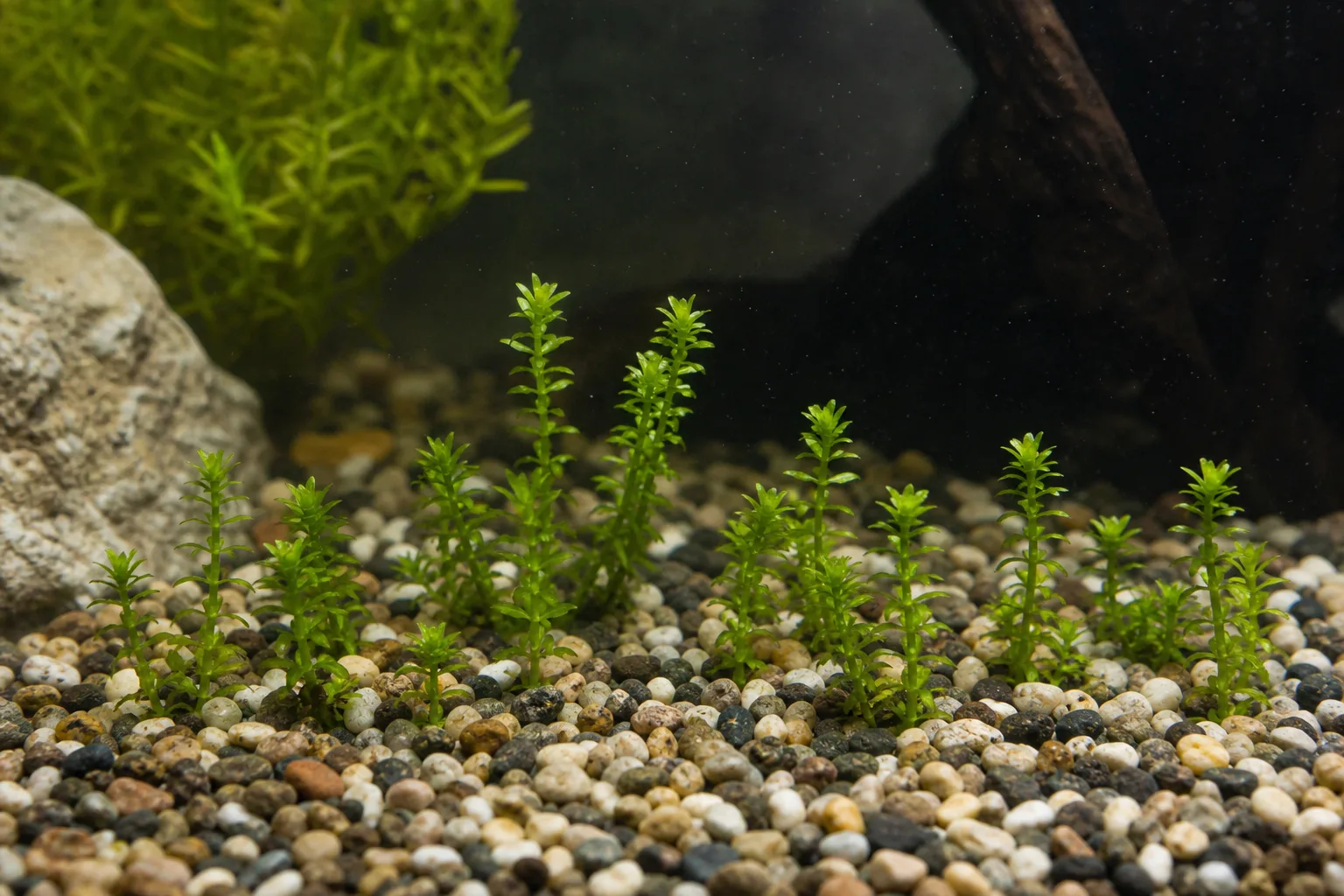
Stunted Growth on Anacharis / Elodea: Causes, Checks & Fixes
This guide covers stunted growth on Anacharis / Elodea. See also the general Stunted Growth guide, watering, and light pages for this plant.
Stunted Growth on Anacharis / Elodea: Causes, Checks & Fixes
Quick answer
Stunted growth on Anacharis (Egeria densa) shows as tight whorls, short internodes, and small new leaves on otherwise firm submerged stems - not the weekly elongation slowdown covered in the slow growth guide. First step: Stabilize water quality, then increase moderate light reaching the affected stems before starting half-strength aquarium fertilizer.
This guide is for submerged aquarium and turtle-tank culture only. Anacharis feeds from the water column, grows as a fast vegetative stem plant, and shows stunting through whorl size, internode length, and tip color - not soil moisture or pot drainage.
Stunted vs. slow growth on Anacharis
These symptoms overlap but answer different questions.
| Pattern | What you see | Likely meaning |
|---|---|---|
| Stunted | Firm stems; new whorls small, crowded, or pale; internodes stay short; floating tips may look fine while planted bottoms look cramped | Light attenuation at depth, chronic nutrient shortage, or parameter swings stalling whorl development |
| Slow | Stems add little length each week; sparse whorls along the whole stem; often cool water or dim tank-wide light | Low weekly growth rate - see slow growth on Anacharis |
If the plant stretches toward the surface with long bare gaps between whorls, that is leggy growth from low light, not classic stunting. Stunted Anacharis often tries to grow but each new whorl comes out undersized.
Why Anacharis stops producing full whorls
Because Egeria densa is fully aquatic and column-feeding, stunting almost always traces to water-column conditions, not substrate or pots.
Light attenuation at depth is the most common pattern in display tanks. Floating stems sit under the strongest PAR; bottom-planted sections in deep or heavily stocked tanks receive far less light. The plant keeps producing whorls, but each whorl stays small and pale - firm stems with cramped tips, not mush.
Nutrient-poor water limits whorl size even when light is adequate. Heavily planted shrimp tanks, new setups with little fish waste, and tanks after large water changes can run low on nitrate and trace elements. Nitrogen deficiency yellows older leaves; iron shortage often shows as pale new tips while older whorls stay greener.
Parameter swings after large unmatched water changes, temperature jumps, or new-tank ammonia spikes can stall new whorl formation for seven to fourteen days even when older tissue looks fine. Anacharis hates unstable chemistry more than a single “wrong” number.
Copper medications and algaecides can shrink or stop new growth without immediate full melt. Brazilian waterweed is documented as sensitive to copper-based aquatic herbicides - check fish treatment labels if whorls stalled after dosing.
In turtle tanks with dim hood fixtures, stunting at the substrate while floating portions look normal confirms a light-at-depth problem, not a disease.
What stunted growth looks like in a submerged tank
Expect this pattern on Egeria densa:
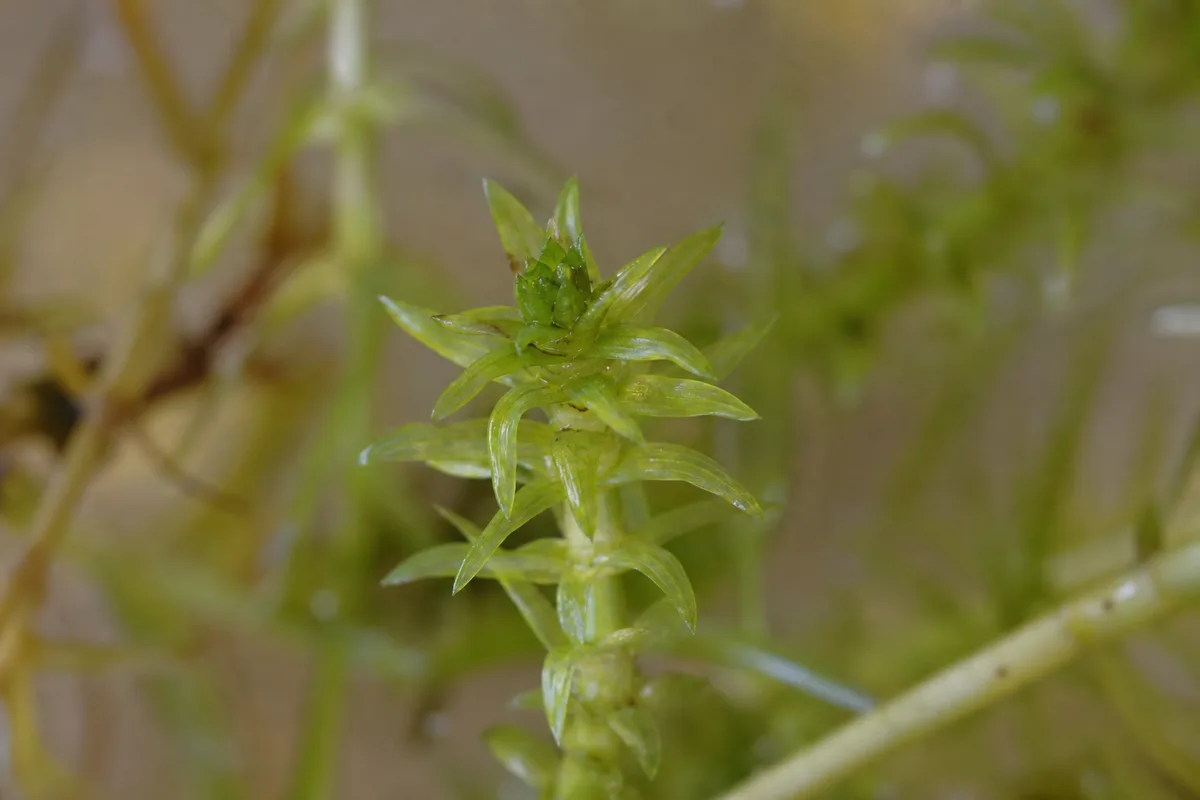
Stunted Growth symptoms on Anacharis / Elodea - compare with healthy tissue on the same plant.
- New whorls at stem tips are noticeably smaller than whorls two to three nodes down
- Internodes stay short but leaves look thin, pale, or fewer per whorl than healthy stock photos
- Lower stems may look fine while tips stall - or floating sections outgrow shaded planted sections in the same tank
- Stems remain firm and green, not translucent or gelatinous (that is melt - see transparent leaves)
- Growth continues, but each cycle produces less biomass than expected for Anacharis under moderate light
Healthy Anacharis under good conditions often adds two to four inches of stem per week with bushy whorls. Stunted plants may still add length, but whorls look compressed - like the plant is growing in miniature.
How to confirm the cause
Work in this order. Stop when one check clearly matches.
Newest tip growth and whorl spacing
Examine the top one to two inches of each affected stem. Count leaves per whorl (healthy stock often shows four to six) and measure the gap to the next whorl. Small, pale whorls on firm stems point to light or nutrients. No new whorls at all for more than two weeks after acclimation suggests no new growth from ammonia, copper, or severe melt.
Water tests and recent parameter swings
In tanks under three months old, test ammonia and nitrite before any fertilizer. In established tanks, test nitrate - chronically low nitrate in a heavily planted tank supports nutrient-limited stunting. Note any large water change (over 40%) or temperature shift in the last seven to fourteen days; whorl stall after that often resolves once parameters stabilize. UF/IFAS describes Egeria densa as a submerged aquatic plant - keep all diagnosis inside aquarium water chemistry, not potting mix.
Light at stem depth vs. floating stems
Compare one stem floated directly under the fixture to a planted stem at the same tank depth. If the floated cutting produces larger whorls within seven to ten days, light attenuation is confirmed. Target roughly 30–50 PAR at the depth where stems are planted and a seven- to ten-hour photoperiod - see Anacharis light needs for fixture guidance. Self-shading from dense surface mats blocks PAR to lower stems the same way a deep tank does.
Medications, copper, and algae treatments
Review fish medications, ich treatments, and algaecides used in the last two weeks. Copper and some liquid-carbon overdoses stall or distort new whorls before older tissue melts. If dosing coincides with stunting, stop the product, change thirty to fifty percent of the water, and save only firm cuttings.
Lookalikes to rule out
| Symptom | More likely problem | Differentiating check |
|---|---|---|
| Translucent, mushy tissue | Transplant shock or chemical damage | Tissue liquefies; stunted stems stay firm |
| Yellow old leaves, green tips | Nitrogen deficiency | Deficiency pattern on lower whorls, not uniform mini-whorls |
| Long bare stem, sparse top whorls | Not enough light | Etiolation - plant stretches, does not stay compact |
| Stems add almost no length for weeks | Slow growth | Rate problem, not whorl size |
First fix for stunted Anacharis
First action: Confirm ammonia and nitrite are safe in new tanks, then increase moderate light on the affected stems - float cramped sections directly under the fixture or raise intensity at planted depth.
Wait seven days and watch tip whorl size. If whorls stay small but stems are firm and water is stable, add half-strength comprehensive aquarium fertilizer once weekly following the Anacharis fertilizer guide. Make one change at a time so you can read the plant’s response.
Do not dose heavy fertilizer into foul or ammonia-positive water. Do not use houseplant fertilizer, terrestrial pesticides, or potting soil - Anacharis must stay fully submerged in dechlorinated tank water with inert aquarium gravel or floating culture only.
Recovery timeline
Mild stunting from dim light at depth often shows larger new whorls within seven to fourteen days after floating stems or improving PAR. Nutrient-limited stunting may need two to three weekly half-doses before tip color and whorl count normalize.
Parameter-swing stall commonly needs seven to fourteen days of stable water before new whorls resume - damaged whorls rarely re-expand; judge success by new tip growth, not old cramped leaves.
Copper or ammonia damage that only stalls tips may recover from firm cuttings in three to four weeks. Mushy translucence requires trimming to green tissue - old stunted whorls will not “fill out” retroactively.
What not to do
Do not check soil moisture, pot drainage, or bright indirect window light - those apply to houseplants, not submerged Egeria densa.
Do not stack replanting, full-strength fertilizer, and medication on the same day. Do not leave melting or stunted decaying tissue in the tank to foul water. Do not dose terrestrial fungicides or insecticides into aquarium water.
Do not assume fertilizer is the first fix without confirming light at stem depth and water quality - over-dosing in low light causes overfertilization and algae without fixing cramped whorls.
How to prevent stunted growth next time
Maintain stable dechlorinated water with regular partial changes matched to tank temperature. Keep moderate aquarium lighting on a consistent seven- to ten-hour photoperiod. Trim surface mats so lower stems receive PAR. Dose balanced liquid fertilizer at half strength in low-tech tanks once submerged leaves are established.
Acclimate new stems by floating in tank water before planting. Check medication labels for copper before treating fish. Never release trimmings into local waterways - UC ANR documents Brazilian egeria as an established invasive when fragments escape.
For baseline care context, see the Anacharis care overview.
When to worry
Treat as urgent if whorl production stops entirely, ammonia or nitrite reads above zero in a cycled tank, stems turn translucent after medication, or damage spreads into firm tissue within days.
Lower urgency: Firm stems with small but green new whorls after a recent water change - stabilize parameters and re-check in one week. Persistent stunting with healthy floating tips but cramped planted bottoms - fix light at depth before escalating to multiple products.
Stunted Growth is marked medium severity for Anacharis in the symptom matrix - a triage clue, not a guarantee.
When to use this page vs other Anacharis / Elodea guides
- Anacharis / Elodea watering guide - Use for routine moisture checks before assuming stunted growth is the main issue.
- Anacharis / Elodea problems hub - Browse all 34 common issues on this species.