Sunburn & Scorched Leaves on Anacharis / Elodea: Causes
Quick answer
Sunburn on Anacharis / Elodea usually follows harsh pond sun, a sudden jump from low to high PAR, or a photoperiod that outruns CO₂ and nutrients. First step: Shorten photoperiod to 6–8 hours and shade or float stems so no whorls sit at the waterline under intense light.
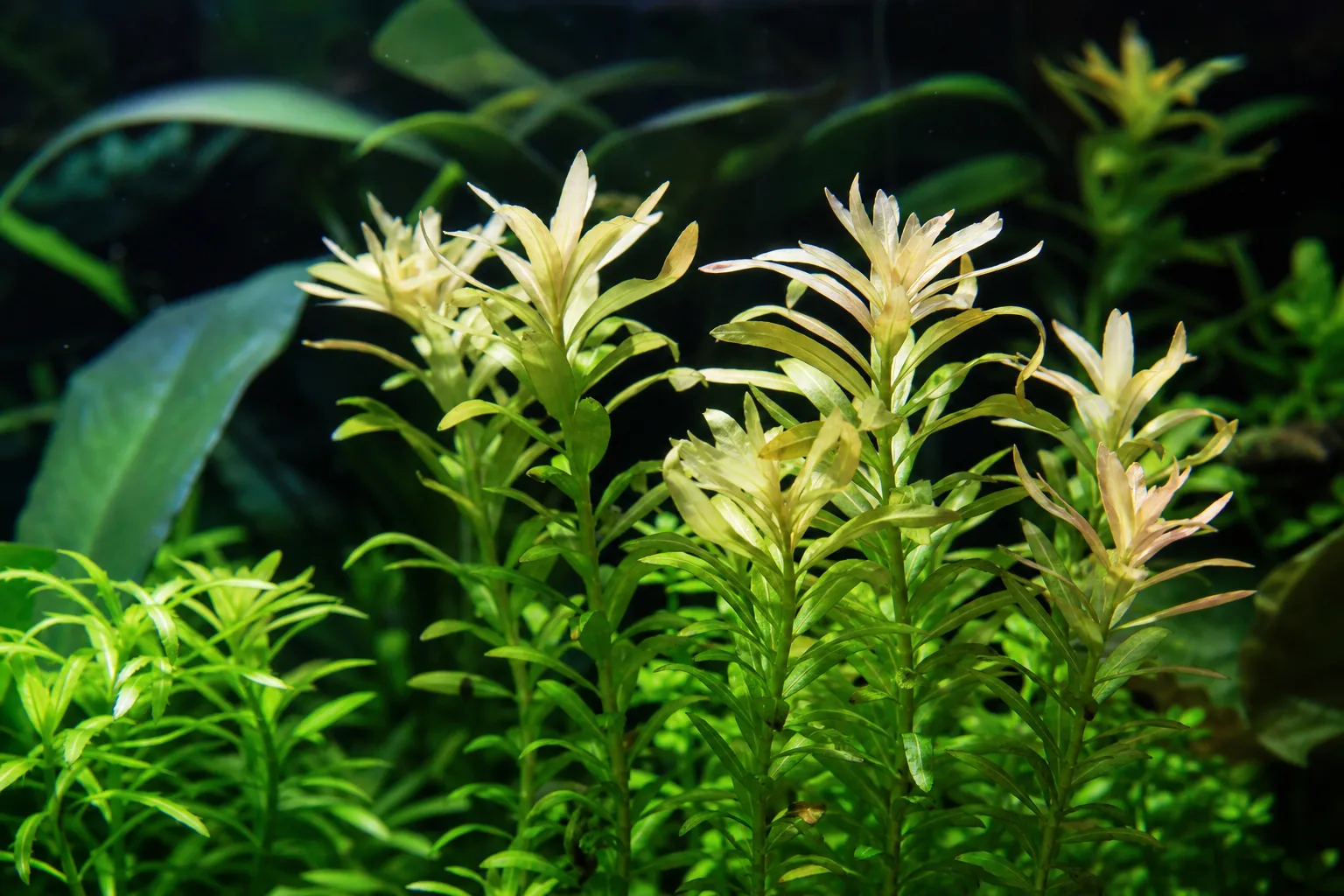
Sunburn & Scorched Leaves on Anacharis / Elodea: Causes, Checks & Fixes
This guide covers sunburn / scorched leaves on Anacharis / Elodea. See also the general Sunburn / Scorched Leaves guide, watering, and light pages for this plant.
Sunburn & Scorched Leaves on Anacharis / Elodea: Causes, Checks & Fixes
Quick answer
Sunburn and scorched leaves on Anacharis (Egeria densa) usually follow harsh pond sun, a sudden jump from low to high PAR, or a photoperiod that outruns available CO₂ and nutrients. First step: Shorten photoperiod to 6–8 hours and shade or float stems so no whorls sit at the waterline under intense light.
This guide is for submerged aquarium and pond culture - not terrestrial houseplant pots. Anacharis feeds from the water column, grows as a fast vegetative stem plant, and shows light stress through whorl color, stem firmness, and new tip growth. For PAR targets and photoperiod schedules, see the Anacharis light guide. For species basics, see the Anacharis overview.
What scorched Anacharis looks like
Expect this pattern: bleached, pale yellow-green, or whitish whorls on stems closest to the strongest light - often at the waterline, tank surface, or pond margin - while lower submerged sections may still look green.
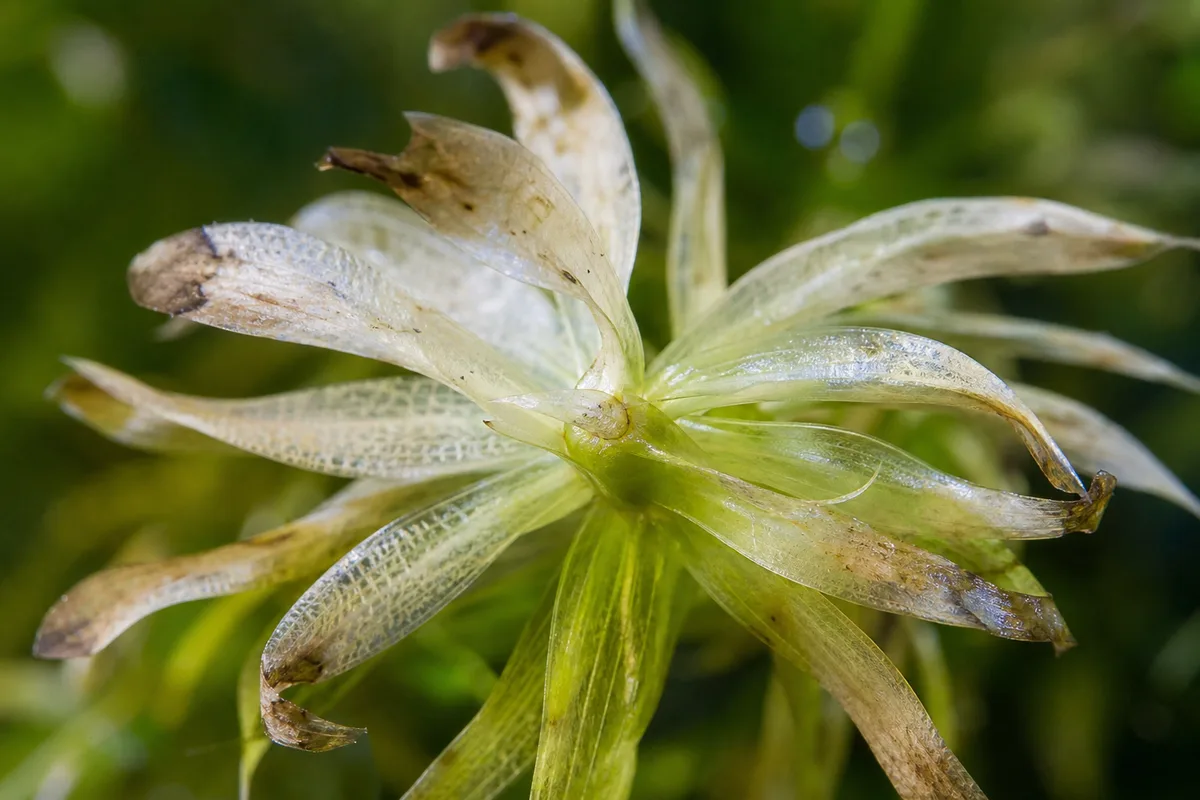
Sunburn / Scorched Leaves symptoms on Anacharis / Elodea - compare with healthy tissue on the same plant.
Typical sunburn cues:
- Surface-first bleaching - upper whorls lose green pigment before lower stems; floating tips bleach while rooted bases stay darker
- Crisp or papery leaf edges on exposed whorls, without the mushy melt of ammonia or copper injury
- Algae arriving on bleached tissue when photoperiod stays long after damage begins - leftover light energy fuels spores on slow-growing, stressed leaves
- Rapid onset within days of moving stems to outdoor sun, upgrading LEDs, or raising a fixture without acclimation
Healthy recovery signal: firm green stems with new submerged whorls at tips within one to two weeks after you reduce light. Scorched tissue itself rarely re-greens.
Why Anacharis gets sunburned or bleached
Anacharis tolerates a wide PAR range thanks to a low light compensation point around 7.5–16 µmol m⁻² s⁻¹, which helps it grow in turbid or deep water. That flexibility does not mean sudden intensity jumps are safe - the compensation point describes minimum light for net growth, not a ceiling for shock-free exposure.
Common triggers on this species:
- Outdoor pond or tub relocation - unfiltered midday sun delivers far more PAR than indoor LEDs; high light intensities can cause senescence in warm, bright conditions
- Fixture upgrade without ramp - jumping from low-tech (~30 PAR) to high-output LED (~80+ PAR) without shortening photoperiod or raising the fixture
- Stems floating at the waterline - whorls at the air–water interface under strong tank lighting receive peak intensity while lower stems stay shaded
- Photoperiod too long for the tank balance - running 10–12 hours at moderate-to-high PAR without matching CO₂ and nutrients leaves excess energy for algae on stressed tissue; see too much light symptoms in the light guide
- Window sunlight on aquarium glass - afternoon sun through south-facing glass can exceed any indoor fixture within hours
Because Egeria densa is fully submerged in culture, the trigger is almost always light intensity, photoperiod, or placement - not soil moisture, pot drainage, or terrestrial watering schedules.
Why bleaching hits the waterline first
Anacharis grows toward the brightest zone in the tank. Whorls at the air–water interface receive the highest PAR from overhead LEDs and unfiltered pond sun, while lower submerged sections sit in attenuated light. A wide compensation point lets the species survive in dim water - it does not protect surface tissue from a sudden PAR jump at the exact depth where the plant concentrates its growth effort.
CO₂-injected tanks: higher PAR without scorch
Low-tech tanks without CO₂ injection often scorch above 50 PAR at the substrate because the plant cannot use excess photons fast enough. Injected CO₂ tanks with matching daily fertilization can run 50–80 PAR at the substrate without bleaching - the limiting factor shifts from light alone to nutrient and carbon balance. If you run CO₂ and still see surface bleaching, check photoperiod length and floating stem placement before blaming fixture wattage. Full PAR band tables for injected setups live in the Anacharis light guide.
How to confirm the cause
Work through these five checks in order. One photoperiod correction beats stacking fertilizer while light stays excessive.
- Photoperiod hours - Note timer setting. More than 8–10 hours at medium-to-high PAR is a common scorch driver in low-tech tanks. New setups should start at 6 hours and ramp per the light guide.
- PAR at affected depth - Measure at the height of bleached whorls, not just at substrate. Use a PAR meter or the Photone app calibrated against a neutral white reference - smartphone estimates are accurate enough for planted-tank triage when you measure at the same depth as the damaged whorls. Low-tech tanks without CO₂ often scorch above 50 PAR; pond midday sun can exceed 200 PAR at the surface.
- Recent changes - Fixture swap, pond move, window exposure, or removing a floating cover within the last 7 days strongly supports light scorch when bleaching matches the timeline.
- Stem position - Are tips floating at the waterline or bunched under the glass lid? Surface whorls bleach first when intensity is too high for that zone.
- Algae vs bleaching - Green hair or black beard on stems suggests excess light relative to CO₂ and nutrients. Uniform pale wash without filamentous algae still fits pure photoinhibition; rule out faded leaves if color loss is gradual and tank-wide.
UF/IFAS describes Egeria densa as a submerged aquatic plant - keep diagnosis inside that context. Do not inspect soil moisture or pot drainage on submerged culture.
PAR-at-depth decision table
| What you measure | Tank type | Likely problem | First fix | Urgency |
|---|---|---|---|---|
| >50 PAR at bleached whorls, no CO₂ | Low-tech aquarium | Intensity too high for carbon balance | Drop photoperiod to 6 h; raise fixture 5–10 cm | Same day if bleaching spreads |
| >80 PAR at substrate, CO₂ running | High-tech aquarium | Photoperiod or float placement | Shorten hours first; sink floating tips 10–15 cm | Within 48 h if algae coats bleached tissue |
| >10 h photoperiod, PAR 30–50 | Any aquarium | Duration outruns uptake | Trim timer to 8 h; wait 7 days before other changes | This week - moderate |
| >200 PAR at pond surface | Outdoor tub | Unfiltered midday sun | 50% shade cloth; morning sun only | Same day after outdoor move |
| PAR fine, uniform pale wash | Any | Nutrient fade, not scorch | Test nitrate; see faded leaves | Low if stems firm |
| Bleaching only at waterline float | Aquarium | Surface intensity spike | Float stems deeper or trim surface canopy | Moderate - shade first |
Sunburn vs fade vs melt decision table
| Pattern | Location | Stem texture | Onset | First fix | Guide |
|---|---|---|---|---|---|
| Bleached/pale surface whorls | Top of stem, waterline | Firm | Days after light jump | Shorten hours, shade, acclimate | This page |
| Uniform pale wash tank-wide | All whorls | Firm | Gradual over weeks | Test nitrate, dose per guide | Faded leaves |
| Mushy transparent melt | Whole stem sections | Soft, pinches away | 24–72 h post-shock | Stabilize water, trim melt | Transplant shock |
| Crispy brown margins on lower whorls | Lower stem, shaded zone | Firm | 1–2 weeks | Trim, open canopy | Brown tips |
| Wilting limp stems in warm water | Surface zone | Softening | After heat spike | Cool water, increase flow | Heat stress |
| Week-one shed after purchase | Upper emersed leaves | Firm submerged tips | 7–14 days | Wait; match temperature | Transplant shock |
First fix for Anacharis
Shorten photoperiod to 6–8 hours and shade or reposition stems so bleached whorls are no longer at peak intensity. This single change is safer than trimming, fertilizing, and moving the fixture on the same day.
How to apply it:
- Aquarium: Drop timer to 6 hours for one week, raise the fixture 5–10 cm, or float a cut stem section deeper in the column while firm rooted stems stay planted
- Pond or outdoor tub: Add 50% shade cloth above the water, move containers to morning sun only, or sink floating mats so tips sit 10–15 cm below the surface
- After LED upgrade: Run reduced photoperiod for 7 days, then add 30–60 minutes per week until you reach 8–10 hours - mirror the acclimation schedule in the Anacharis light guide
Once light is reduced and stems stay firm, trim persistently bleached whorls so decaying tissue does not pollute the water column. Make one targeted correction and wait seven days before stacking fertilizer, replanting, or chemical treatments.
Recovery timeline
Mild bleaching often stabilizes within one to two weeks once photoperiod and placement are corrected. New green submerged whorls at stem tips are the success signal - not re-greening of old scorched leaves.
Rough expectations:
- Days 1–3: Bleaching stops spreading; stems remain firm
- Days 7–14: New tips emerge with normal green color if light balance is restored
- Weeks 3+: Trim old bleached sections as fresh growth replaces them; cosmetic recovery is slow on lower stems
Field example (June 2026): A low-tech 20-gallon tank showed surface-float bleaching after a photoperiod increase from 8 h to 11 h without a fixture change. Dropping back to 7 hours produced firm green submerged tips on three of four stems within 10 days - the fourth stem needed a trim of persistently bleached whorls before new growth appeared.
Acclimation melt from new purchases can overlap sunburn symptoms for 7–14 days - see transplant shock if bleaching began immediately after unboxing emersed farm tissue. Mushy translucence after copper or ammonia is not sunburn; see brown tips and chemical damage.
Lookalike symptoms to rule out
| Symptom pattern | Location | Trigger | First fix | Guide |
|---|---|---|---|---|
| Bleached/pale surface whorls, firm stem | Top of stem, waterline | PAR jump, pond sun, long photoperiod | Shorten hours, shade, acclimate | This page |
| Crispy brown margins on lower whorls | Lower stem, shaded zone | Self-shading, heat, copper | Trim, open canopy, check meds | Brown tips |
| Mushy transparent melt | Whole stem sections | Parameter shock, emersed transition | Stabilize water, trim melt | Transplant shock |
| Uniform pale wash tank-wide | All whorls | Low nutrients, iron | Test nitrate, dose per guide | Faded leaves |
| Wilting limp stems in warm water | Surface zone | High temperature | Cool water, increase flow | Heat stress |
| Hair/beard algae on stems | Slow-growing zones | Light > CO₂ + nutrients | Shorten photoperiod, balance ferts | Light guide |
What not to do
- Do not check soil moisture or pot drainage - Anacharis grows submerged; terrestrial houseplant diagnostics do not apply
- Do not increase fertilizer while photoperiod and PAR stay high - excess nutrients on bleached tissue fuel algae before the plant recovers
- Do not stack repotting, heavy pruning, algicide, and photoperiod changes on the same day - make one light correction, wait seven days, then reassess
- Do not leave melting or bleached tissue decaying in the tank - trim and remove so ammonia does not spike
- Do not release trimmings into local waterways - Brazilian waterweed spreads vegetatively and is invasive in many regions; bag and discard per local guidance
How to prevent light scorch next time
- Timer discipline: Run 8–10 hours on a consistent schedule; start new tanks at 6 hours and ramp weekly per the Anacharis light guide
- PAR ceiling for low-tech: Keep roughly 30–50 PAR at the substrate without CO₂ injection; avoid pushing past 50 PAR unless CO₂ and daily nutrients match
- Acclimate every intensity jump: Fixture upgrades, pond moves, and window exposure need gradual photoperiod ramps - never same-day full sun after indoor culture
- Manage canopy density: Trim dense top growth so lower whorls receive light without forcing every stem to race to the surface
- Pond shade: Suspend 50% shade cloth over outdoor tubs in peak summer; morning sun with afternoon shade beats full midday exposure after indoor acclimation
- Never release fragments outdoors - dispose of trimmings in household waste, not storm drains
When to worry
High urgency - act today: Bleaching spreads rapidly down multiple stems within 48 hours, tissue turns translucent or mushy, water clouds with odor, or algae coats damaged whorls while photoperiod stays above 10 hours.
Moderate urgency - shade this week: Post-upgrade bleaching on surface floats with firm green lower stems; window-sun exposure after a recent tank move; photoperiod above 10 h at moderate PAR.
Lower urgency - monitor after one fix: Minor tip wash on one floating stem after a single sunny afternoon; bleaching limited to the top whorl with firm submerged growth below.
If stems stay firm but no new green tips appear after three weeks of corrected light, review not enough light for the opposite problem or faded leaves for nutrient wash-out - do not assume more light is the answer.
Escalate to your local cooperative extension office or aquarium society if bleaching returns after two full photoperiod-and-shade correction cycles - repeated scorch may signal hidden window exposure, an undersized timer, or a CO₂/nutrient imbalance masquerading as light stress.
Related Anacharis guides
- Anacharis overview - species basics and tank culture
- Anacharis light - PAR bands, photoperiod, and CO₂ tank thresholds
- Faded leaves - nutrient wash-out vs bleaching
- Brown tips - self-shading and chemical margins
- Heat stress - temperature compounding surface scorch
- Transplant shock - emersed farm tissue acclimation
- Chemical damage - copper and liquid carbon melt
- Not enough light - opposite problem after over-correction
FAQs
How can I confirm sunburn on Anacharis / Elodea?
Look for bleached or pale yellow-green whorls on stems closest to the surface or brightest light, while lower submerged sections stay greener. Match that pattern to a recent fixture upgrade, pond move, or photoperiod longer than 8–10 hours. Check PAR at the affected depth with a meter or Photone app before changing fertilizer.
What should I check first for scorched Anacharis leaves?
Start with photoperiod hours and whether stems float at the waterline under strong LEDs or midday pond sun. Anacharis is a submerged column feeder - check light intensity and placement, not soil moisture or pot drainage. Review recent tank moves, outdoor tub relocations, and whether algae is coating bleached tissue.
Is my LED too strong, or is my photoperiod too long?
Measure PAR at the bleached whorl depth first. If PAR exceeds 50 µmol m⁻² s⁻¹ in a low-tech tank without CO₂, intensity is the primary driver - shorten photoperiod and raise the fixture before buying a dimmer. If PAR sits in the 30–50 range but photoperiod runs above 10 hours, duration is likely the culprit - trim the timer to 8 hours and reassess in seven days. Both can stack: a moderate fixture on a 12-hour timer bleaches surface floats the same way a high-PAR fixture on 8 hours does.
Can bleached Anacharis leaves turn green again?
Scorched whorls rarely re-green. Judge recovery by firm stems and new healthy submerged tips within 7–14 days after you reduce light. Trim persistently bleached or translucent tissue so it does not decay in the water column.
How do I acclimate Anacharis moved from an indoor tank to an outdoor pond?
Week one: 50% shade cloth over the tub, 6–8 hours of morning sun only, tips 10–15 cm below the surface. Week two: remove shade cloth for one hour midday if stems stay firm and green. Week three: extend sun exposure to 8–10 hours with afternoon shade in peak summer. Never move indoor-cultured stems to unfiltered midday pond sun on the same day - bleaching often appears within 48 hours.
How do I prevent sunburn on Anacharis next time?
Run 8–10 hours on a timer, ramp photoperiod 30–60 minutes per week after upgrades, and acclimate pond moves with shade cloth. Keep low-tech tanks near 30–50 PAR at the substrate without exceeding 50 PAR without CO₂. Trim dense canopy so lower whorls are not shaded while tops bleach in surface light.