Anacharis Drying Above Water: Emersion Stress, Checks &
Quick answer
Low humidity on Anacharis usually means stems or whorls dried above the waterline-not low room air. Open tanks, turtle basking ramps, filter splash zones, and shipping bags are common triggers. First step: re-submerge all tissue or keep it fully wet, then trim crisp air-dried whorls before they rot.
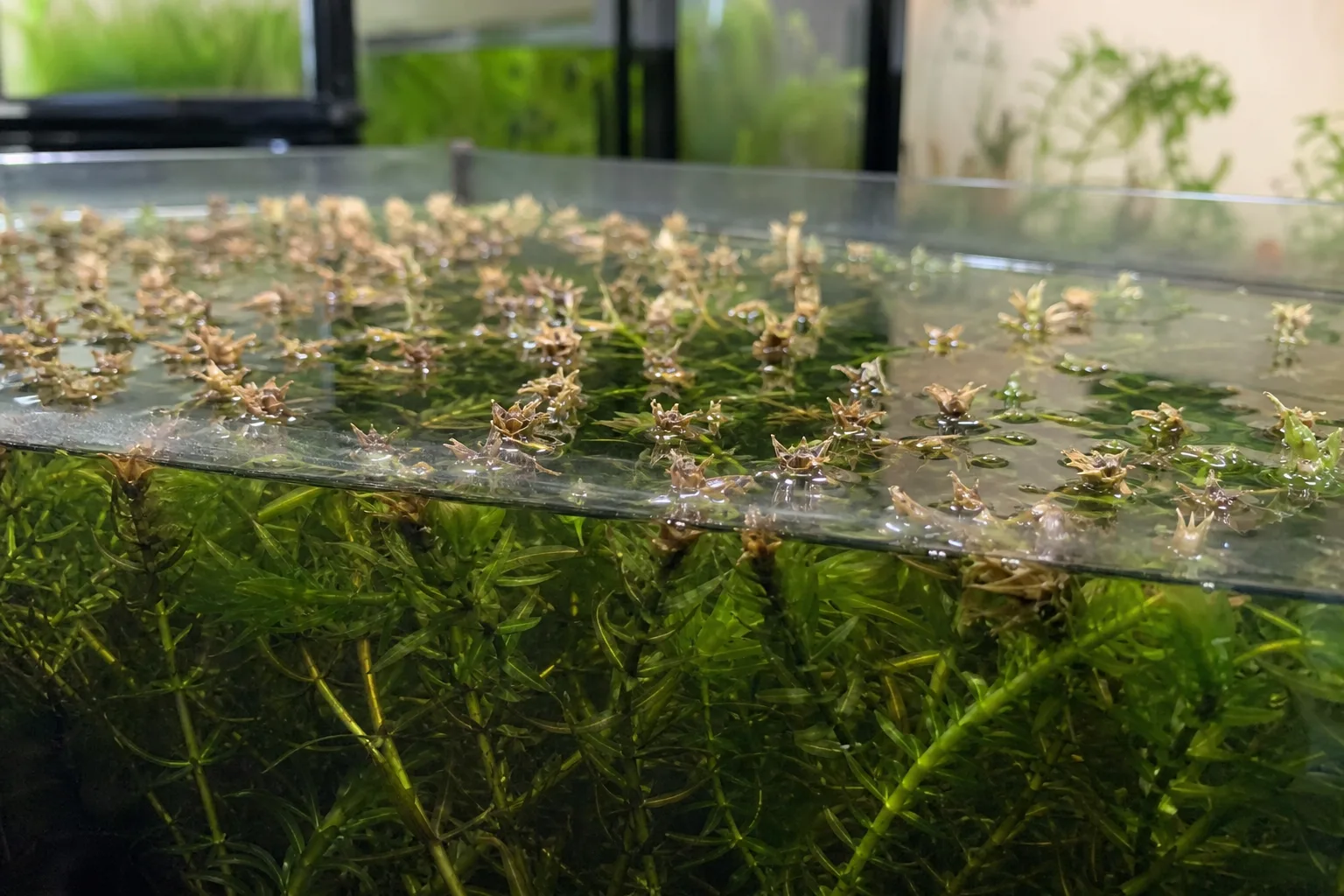
Anacharis Drying Above Water: Emersion Stress, Checks & Fixes
This guide covers low humidity on Anacharis / Elodea. See also the general Low Humidity guide, watering, and light pages for this plant.
Anacharis Drying Above Water: Emersion Stress, Checks & Fixes
Quick answer
Low humidity on Anacharis (Egeria densa) in aquarium search usually means emersion stress-stems or whorls dried in air-not a dry living room. Open-top tanks, turtle basking ramps, filter splash that leaves tips exposed, and shipping bags with air gaps are the usual triggers.
First step: Re-submerge all tissue or keep every whorl fully wet, then trim crisp air-dried sections before they decay in the water column.
This guide is for submerged aquarium and turtle-tank culture-not houseplant pots, humidity trays, or soil moisture schedules. Anacharis is a submersed aquatic plant that grows completely underwater and cannot survive out of water. Ambient room relative humidity rarely matters when the entire stem stays below the surface. For general culture, see the Anacharis overview.
Scope: emersion, not ambient humidity
Searchers often land here after noticing crispy tips on floating stems or wilted bundles from a pet store. That pattern is desiccation of emersed tissue, not vapor pressure deficit in your home.
| Context | Does “low humidity” apply? | What to check instead |
|---|---|---|
| Fully submerged stems in a filled tank | No - room RH is irrelevant | Heat stress, ammonia, copper |
| Floating stems with tips breaking the surface | Yes - air exposure dries whorls | Waterline height, trim emersed tips |
| Turtle tank with basking ramp | Yes - stems draped on dry land | Ramp placement, re-submerge draped stems |
| New plant from shipping bag | Often - emersed retail tissue + transit | Acclimate submerged; trim dry sections |
| Plant potted in soil on a windowsill | Wrong culture entirely | Return to submerged aquarium culture |
What emersion damage looks like on Anacharis
Expect this pattern on Egeria densa: whorls above the waterline turn crisp, curled, or papery brown, while submerged portions may still look bright green. Stems left draped over a turtle ramp or tank rim often show a sharp dry line exactly at the water surface.
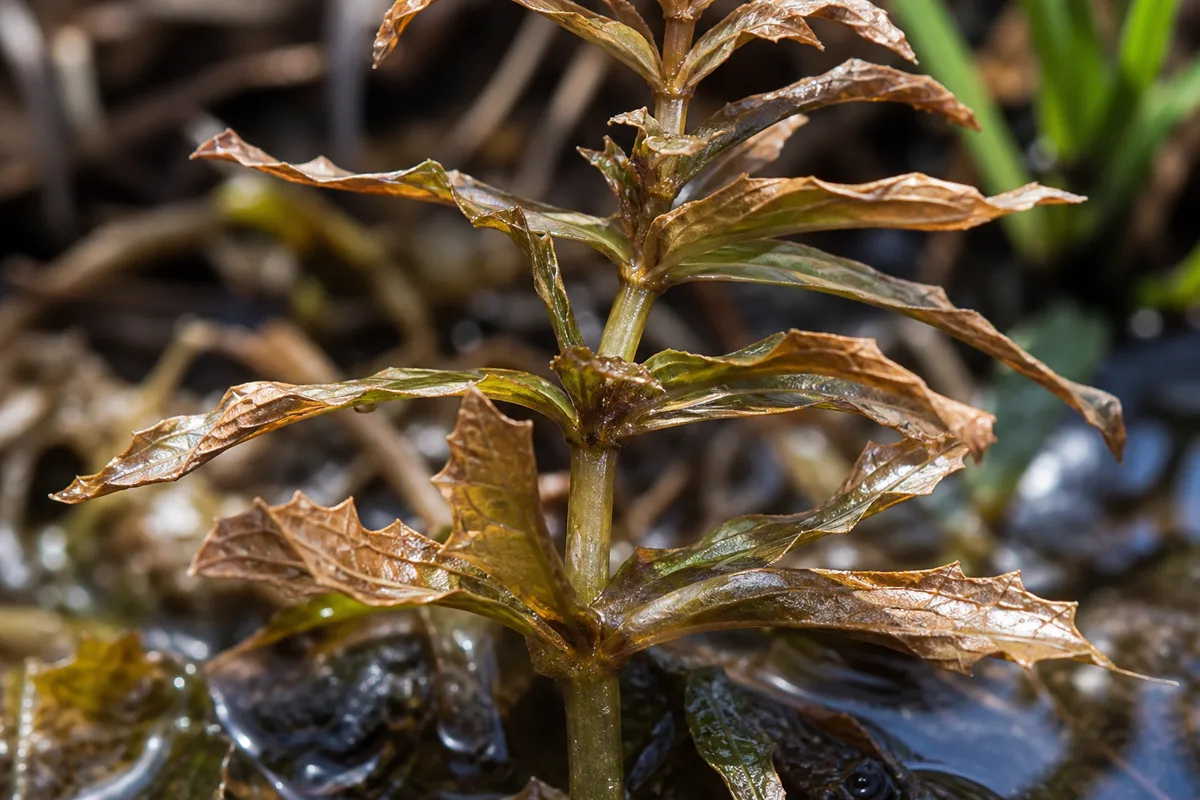
Low Humidity symptoms on Anacharis / Elodea - compare with healthy tissue on the same plant.
Unlike underwater melt from heat or ammonia, emersion damage is localized to air-exposed tissue. Lower submerged whorls stay firm. New damage may appear within hours on thin, whorled leaves-Anacharis foliage is only a few cell layers thick , so it loses water fast in dry air.
Retail stems grown emersed at nurseries may arrive with waxy aerial leaves that look fine in the bag but crisp once mishandled above water. That is still emersion stress, not a humidity meter problem.
Why Anacharis dries out (emersion, not room air)
Because Brazilian waterweed is a rooted submersed perennial adapted to life under water, leaves exposed to air lose turgor quickly. Common triggers:
- Floating culture with stems riding high until tips clear the surface
- Open-top aquariums where evaporation or filter outflow splashes stems partially out
- Turtle basking areas that leave stems draped on dry ramp or dock
- Shipping and store display with stems bundled emersed in bags with air gaps
- Shallow planting where substrate anchors only the base and upper whorls reach air
Room humidifiers and pebble trays do not fix tissue already drying above the waterline. Re-submersion does.
How to confirm the cause
Work through this five-step inspection before changing fertilizer, light, or medications:
- Mark the waterline on the glass and note which whorls sit above it.
- Check floating stem height - do any tip whorls break the surface?
- Review filter outflow - does splash leave a stem section emersed?
- Inspect turtle ramps, docks, and décor - are stems draped on dry surfaces?
- Recall recent shipping or store handling - was the bundle emersed in air for hours?
If damage tracks the air–water boundary and submerged tissue stays green, emersion stress is confirmed. If the whole stem melts underwater with translucence, pivot to brown tips, heat stress, or cold damage instead.
First fix for Anacharis
Re-submerge all tissue or keep every whorl fully wet, then trim air-dried whorls.
Push floating stems deeper, anchor stems so no whorl breaks the surface, or drape turtle-damaged sections back underwater. Remove crisp or papery whorls with sharp scissors so decay does not foul the tank. Make one tank correction-depth, ramp position, or trim-and wait seven days before stacking fertilizer, replanting, or medication.
Do not mist the room. Do not plant in potting soil. Do not assume a humidity tray will rehydrate dead aerial tissue.
Recovery timeline
Air-dried whorls will not turn green again-judge recovery by new submerged growth at nodes below the trim line.
| Severity | What you may see | Typical timeline |
|---|---|---|
| Mild - only top whorls crisp, stem firm | New submerged whorls at tips | 7–14 days |
| Moderate - several inches dried, base still green | Fresh growth from lower nodes after trim | 2–3 weeks |
| Severe - mushy translucence underwater | May be rot or chemical injury, not emersion alone | Reassess water quality |
Acclimation from emersed retail stock commonly needs one to two weeks for submerged-adapted foliage even after correct submersion.
Lookalike symptoms to rule out
| Symptom pattern | More likely cause | Where to read next |
|---|---|---|
| Only tissue above waterline is crisp | Emersion desiccation | This guide |
| Brown margins on submerged lower whorls | Self-shading, copper, light stress | Brown tips |
| Translucent mush after heat wave or warm transfer | Heat stress | Heat stress |
| Mush after freeze, heater outage, or ice | Cold damage | Cold damage |
| Whole-plant melt on new purchase, water stable | Acclimation / transplant shock | Overview acclimation section |
What not to do
- Do not check soil moisture, pot drainage, or “water when the surface dries”-Anacharis does not grow in houseplant mix.
- Do not run a room humidifier as the primary fix while stems remain above water.
- Do not leave crisp emersed whorls decaying in the tank-trim them.
- Do not dose terrestrial pesticides or fungicides into aquarium water.
- Do not release trimmings into ponds or streams-Egeria densa spreads vegetatively and is invasive in many regions.
How to prevent emersion damage next time
- Keep every whorl submerged or fully wet when floating; anchor stems in inert aquarium gravel if planting.
- Route turtle ramps and docks so stems cannot drape on dry basking surfaces.
- Reduce filter splash zones that leave stem sections emersed, or trim tall stems before they reach the surface.
- Acclimate shipped plants by floating the sealed bag in tank water, then planting fully submerged.
- Cover open tanks lightly during transit so stems do not ride dry in bags.
- Trim regularly so dense top growth does not break the surface in high-light tanks.
When to worry
Treat as urgent if mush spreads into firm submerged tissue within 48 hours, water clouds with odor, or fish gasp-that pattern suggests decay, ammonia, or heat-not cosmetic emersion alone.
Lower urgency: crisp tips only on emersed sections while submerged whorls and nodes stay firm and green.
Practical checks
Urgency check
High urgency - underwater translucence, foul odor, rapid spread below the waterline. Moderate urgency - large emersed sections on multiple stems after shipping. Low urgency - isolated crisp tips on floating stems with firm submerged bases.
Best inspection order
Waterline position → floating height → turtle ramp contact → filter splash → shipping/acclimation history → firmness of submerged nodes.
Severity note
Emersion desiccation is medium severity for Anacharis when caught early-re-submersion and trim usually save firm stems. Delayed trimming of air-dried tissue can invite secondary rot in the water column.
When to use this page vs other Anacharis / Elodea guides
- Anacharis / Elodea watering guide - Use for routine moisture checks before assuming low humidity is the main issue.
- Anacharis / Elodea problems hub - Browse all 34 common issues on this species.
- Brown Tips on Anacharis / Elodea - Different entry point when symptoms overlap with low humidity.
- Leaf Drop on Anacharis / Elodea - Different entry point when symptoms overlap with low humidity.