Mint Plant Care Guide: Light, Water & Containers
Mentha spicata
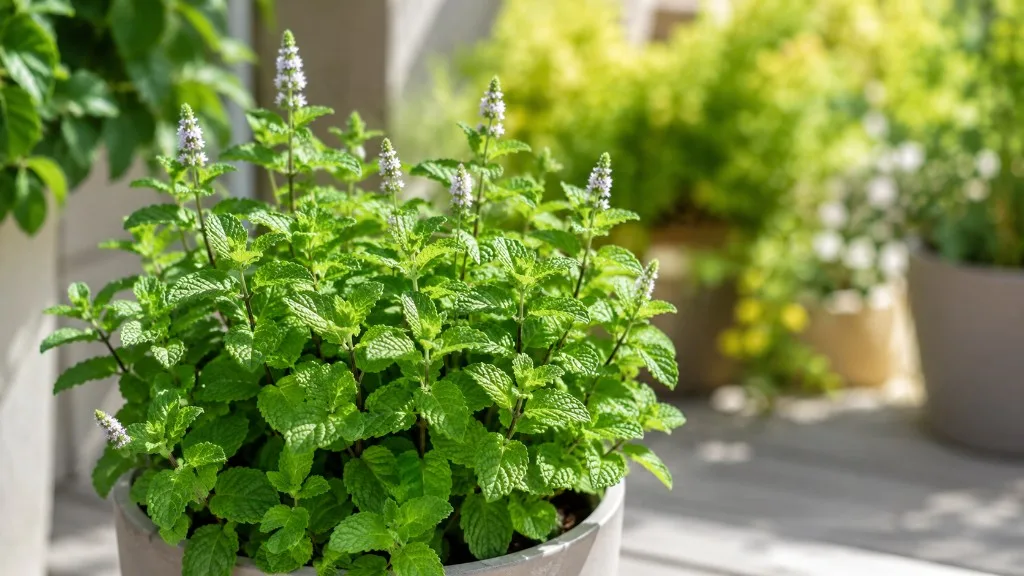
Mint needs consistently moist soil, 4–6 hours of sun, and regular harvesting to prevent flowering. Container growing prevents it from taking over.
Mint Plant Care Guide: Light, Water & Containers
Start with wateringThe most common care mistake for MintWatering guide →Mint care essentials
Light
full sun to partial shade (4–6 hours)
Water
Every 1–3 days in hot weather - keep soil consistently moist. Check the top 2 cm: water when dry. Do not allow the root ball to dry out.
Soil
Rich potting mix with 10 % compost and 15 % perlite. Moisture-retaining and well-draining. pH 6.0–7.0.
Humidity
Moderate humidity (50–70%); tolerates Indian outdoor humidity well
Temperature
15°C to 30°C (59–86°F)
Fertilizer
High-nitrogen granular fertilizers - cause lush but tasteless leaves.
About Mint
Mint is native to Mediterranean and Middle East, typically reaches 30–90 cm tall; spreads vigorously indoors, with fast growth. Mint has a herbaceous growth habit and part of the Lamiaceae family. It is also known as Spearmint, Garden Mint, and Pudina.
| Detail | Information |
|---|---|
| Also known as | Spearmint, Garden Mint, Pudina |
| Native region | Mediterranean and Middle East |
| Mature size | 30–90 cm tall; spreads vigorously |
| Growth rate | Fast |
| Growth habit | Herbaceous |
| Scientific name | Mentha spicata |
| Family | Lamiaceae |
Mint Plant Care Guide: Light, Water & Containers
Buy a small mint seedling, ignore it for one summer, and you may discover it has quietly taken over a garden bed, rooted through a drainage hole, and colonized the neighbor’s side of the fence. Mint is one of the easiest culinary herbs to keep alive and one of the hardest to keep contained. That combination defines the entire care conversation. This guide is written for people who want fresh spearmint for chutney, mojitos, tea, or everyday cooking - usually from a pot on a balcony, patio, or sunny windowsill - without turning the yard into a mint monoculture.
The goal is practical: by the end you should know which Mentha you likely have, how to grow it in a container so rhizomes do not escape, how to set light and water for steady leaf production, how to harvest for flavor, how to propagate and refresh tired plants, and what to do about pet toxicity if cats or dogs share your home.
What “Mint” Actually Means in the Garden
Mint is not one plant. It is a genus - Mentha - in the Lamiaceae family with roughly 25 species and countless hybrids, most sharing fast growth, square stems, opposite leaves, and aromatic essential oils that give the leaves their characteristic smell and taste. The North Carolina Extension Gardener Plant Toolbox entry for Mentha spicata describes spearmint as an upright perennial that grows quickly to 1–2 feet tall and wide, tolerates partial shade and a wide range of soils, and spreads by rhizomes plus stems that root wherever they touch soil.
That growth habit is the reason mint care differs from basil or cilantro. Basil is an annual you replant. Mint is a hardy herbaceous perennial - USDA zones 4a through 9b for spearmint, per NC State - that dies back in cold winters and resprouts from underground roots in spring, or stays evergreen in mild climates. In Indian plains conditions it often grows year-round with a slowdown in extreme northern cool spells. Treat it as a harvest crop, not a permanent sculpture: flavor, fresh shoots, and quick regrowth matter more than preserving old woody stems forever.
The square stem is a useful ID clue. Roll a stem between your fingers and you will feel four distinct sides - a Lamiaceae signature shared with basil, rosemary, and oregano. Crush a leaf and the volatile oils release immediately; the youngest leaves and stem tips carry the highest concentration, which matters when you decide when and how to harvest.
One more botanical note saves future frustration: mint grown from seed often does not come true to type because species hybridize freely. Utah State University Extension warns that seed-grown plants may not match the parent cultivar. For predictable flavor, buy a named plant, take cuttings, or divide an established clump - do not rely on random seed packets unless you are experimenting.
Spearmint, Peppermint, and the Mints You Will Actually Buy
Garden centers and grocery stores lump many plants under “mint.” The two you will encounter most often are spearmint and peppermint. They look similar at a glance but differ in chemistry, flavor, and sometimes in care nuance.
Mentha spicata (Spearmint / Garden Mint / Pudina)
Spearmint (Mentha spicata) is the classic garden mint, also sold as lamb mint and, in South Asian contexts, pudina. Leaves are bright green, slightly crinkled, and pointed, with a sweet, mild aroma - less sharp than peppermint because spearmint is dominated by carvone rather than menthol. University of Maryland Extension notes spearmint’s pointed, lighter-green leaves and characteristic sweet smell.
Spearmint is the default choice for Indian chutneys, raita, tea, and everyday cooking, for mint sauce with lamb, and for mojitos where you want herb flavor without intense cooling. It grows best in moist soil and Mint light guide to part shade, propagates easily by cuttings or division, and responds to frequent harvesting with bushy, full growth. Mature size in a pot is typically 30–60 cm (1–2 feet) tall with vigorous horizontal spread if not contained.
Mentha x piperita and Other Common Mentha Species
Peppermint (Mentha × piperita) is a hybrid - usually M. aquatica × M. spicata - with higher menthol content, darker leaves, and a sharper, cooling flavor. It is the mint behind many candies, teas marketed as “peppermint,” and digestive remedies. Care requirements mirror spearmint: sun to partial shade, consistent moisture, container confinement. Peppermint is equally aggressive about spreading.
Other mints appear in specialty nurseries: apple mint (M. suaveolens), orange mint, chocolate mint, pineapple mint (variegated - may scorch in harsh full sun, per USU Extension), and corn mint (M. arvensis). Pennyroyal (M. pulegium) is in the same genus but is not a culinary substitute - it contains pulegone, a compound linked to liver damage in humans and pets at sufficient dose. Do not confuse it with spearmint, and do not grow it where pets or children might ingest it.
For most home cooks, spearmint is the right starting plant. If a tag just says “mint” with no species, assume spearmint unless the leaves are noticeably darker and more menthol-sharp.
Container Growing and Containing Invasive Roots
If you remember one rule from this entire guide, make it this: grow mint in a container unless you deliberately want a ground cover in a controlled area. Illinois Extension states plainly that mints “will become invasive in the garden” and recommends growing them in containers above ground. The RHS agrees: mint is “best grown in pots to keep them contained” because underground stems (rhizomes) spread into surrounding soil.
Mint spreads three ways simultaneously. Rhizomes travel horizontally under the soil surface. Stolons - horizontal stems above ground - root at every node that touches soil, a process sometimes called layering. And any stem fragment with a node can restart if buried. UC ANR’s Fresno Gardening Green blog describes mint as vigorous enough that it “really, really wants to spread.”
Pot Size, Drainage Holes, and the Escape Problem
A mint pot should be at least 12–16 inches (30–40 cm) in diameter, per Maryland Extension - large enough to hold moisture through a hot day but not so small that you are watering three times daily. Depth matters as much as width: mint roots run shallow but rhizomes need vertical room; at least 6–8 inches of soil depth is a practical minimum, and deeper is better.
Drainage holes are non-negotiable, but here is the mint-specific twist: rhizomes will exit through drainage holes and root into soil below the pot if the container sits directly on earth, pavers with cracks, or a porous saucer on soil. Maryland Extension advises cutting runners that creep from the pot. UC ANR recommends placing a saucer, paver, or solid barrier between the pot and the ground so roots cannot penetrate downward.
Elevate the pot on feet or a trivet for airflow and escape prevention. Check monthly for white rhizomes poking from holes; trim them before they anchor. If a stem trails over the rim and touches soil in a neighboring pot, it can root there - harvest or trim trailing stems before they layer.
An alternative for in-ground gardeners is the sunk-container method: remove the bottom of a sturdy plastic pot (a 5-gallon bucket with drainage holes only in the lower sides, or a bottomless cylinder), bury it so 1–2 inches of rim stay above soil level, and plant mint inside. Runners that climb over the lip are visible and cuttable before they establish outside. Illinois Extension notes this technique does not always succeed long term - mint can still escape - so periodic monitoring remains necessary. NC State mentions soil barriers for border plantings; commercial root barriers help but only if installed deeply enough to intercept rhizomes.
For balcony and indoor growers, a sealed saucer plus elevation is usually sufficient. For outdoor patio growers, avoid placing the pot on lawn or open beds without a barrier.
Light: Full Sun to Partial Shade (4–6 Hours)
Mint wants full sun to partial shade - at least 4–6 hours of direct sunlight daily for compact growth and good oil production. NC State lists full sun (6+ hours) and partial shade (2–6 hours) as acceptable. UC IPM recommends 4–6 hours minimum. Utah State University Extension specifies mint grows best in full sun or partial shade, with a note that variegated types such as pineapple mint may scorch in harsh full sun.
Outdoors, the best placement is a morning-sun or east-facing spot in hot climates (Indian summer afternoons, desert southwest, Mediterranean summer) and full open sun in milder or cooler regions. On a balcony, the rail that gets morning light often outperforms a shaded corner that looks convenient. Indoors, a south- or west-facing window within a foot of the glass is the minimum for active growth; a north window produces leggy, pale, weakly flavored mint unless you supplement with a grow light.
Light quality directly affects flavor. Gardener’s Path and multiple extension sources note that volatile oil concentration peaks during long summer days when plants receive 14+ hours of daylight. That does not mean you must grow mint outdoors - it means a dim windowsill mint will grow but taste flat.
Diagnostic signs: long internodes, small pale leaves, and leaning mean more light. Brown scorched patches on sun-exposed leaves mean too much hot direct afternoon sun - shift to morning sun or add light shade. Acclimate any plant moved from shade to sun over 7–10 days to prevent shock.
Watering: Consistently Moist Without root rot on Mint
Mint is a moisture-loving herb but not a swamp plant. USU Extension recommends 1–2 inches of water per week during the growing season, adjusted for temperature and exposure, and warns that excess water promotes root and leaf diseases. UC IPM advises keeping the root zone moist while avoiding soil that stays soggy. The practical home translation: never let the root ball fully dry out, but never leave the pot sitting in runoff either.
In container culture, especially in hot weather, that usually means watering when the top 2 cm (about 1 inch) of soil feels dry - roughly every 1–2 days in summer and every 3–4 days in cooler months for a medium pot in active growth, though your pot, mix, and microclimate override any calendar. Mint wilts dramatically when dry; it often recovers quickly after a thorough soak because it stores resources in rhizomes. Do not treat every wilt as an emergency, but repeated wilting stresses flavor and invites pests.
Water at the base, preferably in the morning, until water runs from drainage holes. Empty the saucer within 30 minutes. Drip irrigation or saucer watering beats overhead sprinkling, which wets foliage and encourages rust and mildew - USU Extension specifically recommends drip for mint to keep leaves dry.
Reading Moisture in a Fast-Draining Pot
The finger test remains the most reliable tool. Push your index finger 2 cm deep; if the soil feels barely moist or dry, water thoroughly. If it still feels cool and damp, wait. Lift the pot occasionally to learn its weight - a dry mint pot is noticeably lighter.
In Indian outdoor humidity, pots may dry slower on cloudy monsoon weeks and faster on dry May afternoons. On a heated indoor windowsill in winter, growth slows and the interval lengthens even though the soil surface looks dry quickly - check deeper before watering. Reduce watering in winter when new growth is minimal; resume the summer rhythm when spring flush begins.
overwatering on Mint signs: yellow lower leaves, mushy stems at the base, mold on the soil surface, sour-smelling mix. underwatering on Mint signs: wilting in cool weather, dry crumbly soil, loss of fragrance in crushed leaves. Fix the drainage and rhythm before reaching for fertilizer.
Soil Mix, pH, and Fertilizer for Flavor
Mint prefers rich, moist, slightly acidic to neutral soil. USU Extension specifies rich, moist, slightly acidic conditions. NC State gives pH 6.0–8.0 (neutral range) with good drainage and moist availability. A workable target is pH 6.0–7.0 - typical of quality potting mixes without amendment.
A Practical Container Mix Recipe
For pots, aim for a mix that holds moisture for a day or two but drains within hours, not days. A recipe aligned with real-world mint performance:
- 60% quality potting soil
- 20% cocopeat or peat-free coir (moisture retention)
- 20% compost or vermicompost (nutrition and biology)
- 10–15% perlite (added to the above if the base mix is heavy)
Alternatively: rich potting mix with 10% compost and 15% perlite, as used in field trials for container herbs. Good drainage is essential - holes in the pot, never a sealed decorative outer pot without drainage.
Fertilizer should support leaf growth without pushing lush, tasteless foliage. Feed every 3–4 weeks from spring through autumn (March through October in India; April through September in temperate zones) with diluted liquid seaweed or balanced NPK (10-10-10) at half strength. USU Extension warns that over-fertilizing promotes rust and diminishes mint oil production. One slow-release application in early spring is enough for many container plants. Stop feeding in winter dormancy, after Mint repotting guide, or while the plant is stressed. Never fertilize dry soil - water first, then feed.
High-nitrogen granular feeds produce big soft leaves with muted flavor - fine for garnish volume, wrong for intense chutney or tea.
Temperature, Humidity, and Seasonal Rhythms
Mint’s comfort zone aligns with everyday human comfort: roughly 15°C to 30°C (59–86°F) for best growth. It tolerates mild frost - USU lists hardiness to about -20°F (-29°C) for established in-ground spearmint in dormant state - but container mint on a balcony is more exposed; frost can kill top growth and damage roots in thin plastic pots. Move containers indoors or to a sheltered wall when frost is forecast.
Mint handles moderate humidity (50–70%) well and tolerates Indian outdoor humidity better than many Mediterranean herbs like rosemary. Very dry indoor air below 30% in winter can encourage spider mites on stressed plants - grouping herbs or a humidity tray helps, though mint is less fussy about humidity than it is about light and consistent moisture.
Seasonal rhythm: spring flush after winter dieback or trimming; peak harvest season through summer; flowering in mid to late summer (pinch spikes for best leaf flavor); slower growth in cool short days. In extreme North Indian cool winters, mint may go semi-dormant - reduce water and stop feeding until new shoots appear.
Avoid changing water, pot size, and placement all at once when troubleshooting. Adjust one variable, wait two weeks, observe.
Harvesting Mint for Cooking and Tea
Mint is grown to be cut. Regular harvesting is not optional maintenance - it is the care program. Illinois Extension states that the more frequently stems are cut, the more new growth is produced, and that new growth has the most flavorful leaves. USU Extension recommends harvesting once plants reach 3–4 inches tall, using sharp scissors, taking young leaves and stems, and cutting stems to within 1 inch of the soil up to three times per season just before bloom for major harvests.
Pinching, Cutting, and Preventing Bitter Flowering Leaves
For daily kitchen use, pinch or cut stems just above a leaf node (where leaves attach to the stem). Two new shoots typically emerge from the node below the cut, creating a bushier plant. Harvest late morning on a dry sunny day after dew has dried - USU Extension notes oil quality is best then.
Remove flower spikes as they appear unless you are saving seed or feeding pollinators elsewhere. Flowering shifts the plant’s energy away from foliage; leaves produced after heavy blooming are often smaller and less aromatic. Illinois Extension advises removing flower spikes to maintain leaf flavor. If the plant blooms anyway, cut it back hard within an inch of the soil - mint is very difficult to over-prune, per USU Extension.
For drying, harvest just as flowering begins; hang bunches upside down in shade or dry on a screen. Store dried leaves airtight up to one year. For fresh use, stems in a glass of water last 3–7 days in the refrigerator; loosely wrapped dry leaves keep about a week.
Culinary direction by type: spearmint for pudina chutney, raita, peas, new potatoes, lamb, and mild tea; peppermint for stronger tea, desserts, and confections. Match the species to the dish - substituting peppermint in a delicate raita overwhelms the yogurt.
When a plant becomes woody, sparse, and weakly flavored despite good care, replace or restart from a fresh cutting rather than nursing exhausted growth indefinitely. Mint is cheap to regenerate; your time is not.
Repotting, Dividing, and Keeping Plants Vigorous
Container mint outgrows its pot on a predictable schedule - roughly every 6–12 months for fast summer growth, or when you see roots escaping drainage holes, water running straight through without soaking, or growth slowing despite feeding. Spring (February–March in India; early spring in temperate zones) is the best repotting window, before the main flush.
Go up one pot size at a time. A too-large pot holds excess wet soil the root system cannot use, inviting rot. When repotting, divide overcrowded clumps: lift the plant, cut the root mass into sections with at least one stem cluster each, replant in fresh mix. Illinois Extension suggests dividing every 3–4 years to keep plants vigorous; fast-growing container mint often needs it sooner.
After repotting, water lightly for the first week while cut roots heal. Hold fertilizer until new growth is visible. Trim any damaged stems once the plant stabilizes.
Propagation: Stem Cuttings and Root Division
Mint is among the easiest herbs to propagate - which is exactly why it invades gardens.
Stem cuttings in water are the fastest home method. Snip a 4–6 inch healthy stem, remove lower leaves, place in a jar of water in bright indirect light, and refresh water every few days. Roots typically appear in 1–2 weeks. Plant into moist mix and acclimate gradually to full sun.
Division works best in spring or early fall: lift the plant, split the rhizome mass with a clean knife, replant sections immediately. Each division needs roots and green shoots.
Seed is possible but unreliable for specific cultivars due to hybridization - use only if you are not picky about flavor profile.
Do not propagate from pest-infested, diseased, or severely rotted plants. Fix or discard the parent first.
Toxicity to Pets and Safe Kitchen Placement
Mint is a culinary herb for humans and a problem plant for many pets. The ASPCA lists Mentha species - garden mint included - as toxic to cats, dogs, and horses. The toxic principles are essential oils; clinical signs with large ingestions include vomiting and diarrhea.
Context matters for risk assessment. A cat sniffing a leaf differs from a dog stripping an entire pot. Concentrated mint essential oil products - diffusers, topical oils, breath mints with xylitol - carry separate and often higher risks than fresh leaf, especially for cats and small dogs. Pennyroyal (M. pulegium) is especially dangerous and should not be grown in pet-accessible spaces at all.
Practical placement: elevated shelves, hanging baskets, or closed kitchen windows out of pet reach. If you have chewers, choose ASPCA-listed safe herbs such as basil for low shelves. If ingestion is suspected, call ASPCA Animal Poison Control at (888) 426-4435 and your veterinarian.
Mint is commonly fed to rabbits in modest amounts when clean and pesticide-free - a different risk profile from cats and dogs. Birds and reptiles should be treated cautiously; when mammalian toxicity is documented, assume enclosure plants are unsafe unless a species-specific vet source says otherwise.
Wear gloves if sap irritates your skin during heavy pruning. Wash hands before handling pets after pruning.
Common Problems: Yellow Leaves, Mildew, and Leggy Growth
Most mint problems trace to water, light, or containment failure, not mysterious disease.
Yellow lower leaves with wet soil and mushy stems point to overwatering or poor drainage - unpot, trim black roots, repot in fresh mix, reduce frequency. Yellowing with dry soil and wilt means underwatering. Uniform pale yellow with long stems means insufficient light. Orange-brown spots on undersides may be mint rust - remove affected leaves, improve air circulation, avoid wet foliage, and thin overcrowded growth; USU Extension notes rust increases with overwatering and over-fertilizing.
Leggy growth is almost always low light indoors. Move to stronger sun or add a grow light; cut back hard to force bushier regrowth.
Powdery mildew appears as white coating in humid, stagnant conditions - improve airflow, water at soil level, remove affected leaves, and avoid crowding.
Pests: aphids on tender tips, spider mites in dry heat (look for stippling and fine webbing), whiteflies under leaves. A strong water spray dislodges early infestations; insecticidal soap handles heavier outbreaks. Quarantine affected pots.
Invasive escape is a “problem” only if you stop monitoring. Trim runners, block drainage-hole exits, and never compost mint roots where they can reroot in garden soil.
When several symptoms appear at once - common after buying a stressed supermarket herb - fix light and watering first, wait two weeks, then prune, repot, or feed. Stacking every intervention on day one often kills a recoverable plant.
Conclusion
Mint rewards straightforward care and punishes only two sins: letting it escape its container and ignoring it until it flowers into bland, woody stems. Give it 4–6 hours of sun, consistently moist well-drained soil, a 12–16 inch pot with escape prevention, and regular harvesting above the nodes, and you will have more fresh spearmint than most kitchens can use from spring through autumn.
Treat container confinement as seriously as watering. Treat harvesting as the main pruning strategy. Divide or restart when flavor drops. And if you share your home with cats or dogs, keep the pot off the floor - fresh mint for your tea is not worth a vet visit. Get those decisions right and mint becomes one of the most reliable culinary herbs you can grow on a balcony, patio, or sunny windowsill.
When to use this page vs other Mint guides
- Mint overview - Canonical hub for this species - care topics and problems branch from here.
- Mint problems - Symptom-first path when you already know something is wrong.
Related Mint guides
How to care for Mint?
How much light does Mint need?
full sun to partial shade (4–6 hours)
- full sun to partial shade (4–6 hours) - full sun to partial shade (4–6 hours).
When should you water Mint?
Every 1–3 days in hot weather - keep soil consistently moist. Check the top 2 cm: water when dry. Do not allow the root ball to dry out.
- Press finger 1 cm into soil - water when it feels barely moist - Check the top 2 cm: water when dry.
- Drain excess water - Check the top 2 cm: water when dry.
What soil works best for Mint?
Rich potting mix with 10 % compost and 15 % perlite. Moisture-retaining and well-draining. pH 6.0–7.0.
- 60% potting soil - Rich potting mix with 10 % compost and 15 % perlite.
- 20% cocopeat
- 20% compost or vermicompost - Rich potting mix with 10 % compost and 15 % perlite.
Grower notes for Mint
What matters most with Mint
Mint is usually grown for harvest, so flavor, fresh shoots, and quick regrowth matter more than keeping old stems forever. Replace or restart tired plants instead of nursing woody, exhausted growth indefinitely. In practice, the care checkpoint is simple: full sun to partial shade (4–6 hours). Pair that with rich potting mix with 10 % compost and 15 % perlite. Moisture-retaining and well-draining; pH 6.0–7.0, and avoid changing water, pot size, and placement all at once.
Best placement in a real home
Mint belongs where full sun to partial shade (4–6 hours) is realistic for most of the day, not only where the pot looks good. Every 1–3 days in hot weather - keep soil consistently moist. Check the top 2 cm: water when dry. Do not allow the root ball to dry out. If the pot stays wet longer than expected, move the plant into better light or reassess the mix before watering again. Humidity target: Moderate humidity (50–70%); tolerates Indian outdoor humidity well. Temperature comfort zone: 15°C to 30°C (59–86°F).
Before you buy this plant
Choose Mint with firm new growth, clean leaf undersides, and soil that does not smell sour or feel compacted. Be cautious if you see root-rot, sticky residue, collapsed crowns, or a pot that is wet in poor light. Cosmetic old-leaf damage is less worrying than weak roots or active pests.
First month after bringing it home
Do not repot Mint on day one unless the mix is failing or pests are obvious. Quarantine it, learn how fast the pot dries, and keep care boring while it adjusts. Watch especially for root-rot, yellow-leaves, and leggy-growth. If problems appear, correct the condition first rather than stacking fertilizer, repotting, and pruning together.
Safety note for Mint
Mint is not a plant to keep within reach of pets or children. The database flags it for cats and dogs. Use gloves if sap or plant tissue is irritating, and pick a pet-safe alternative for floor pots or low shelves.
How to tell Mint is settling in
Also sold as Spearmint, Garden Mint, and Pudina, this plant should be judged by stable new growth rather than label names alone. If you plan to multiply it later, common methods include Division and Stem cuttings in water. Repot only when you see roots escaping drainage holes and growth slows despite feeding. If yellow-leaves shows up early, inspect light, watering, and roots before assuming the plant is permanently weak.
Is mint safe for pets?
Mint (Mentha species) is toxic to cats and dogs. Menthol causes vomiting, diarrhoea, and potential liver damage. Keep out of reach of pets.
ASPCA lists Mentha species as toxic to cats and dogs. Menthol and related terpenes cause gastrointestinal upset, weakness, and potential liver damage with significant ingestion. Keep mint plants and products away from pets.
Watering Mint
For Mint, press finger 1 cm into soil - water when it feels barely moist and water every 1–2 days in summer; every 3–4 days in cooler months. Reduce watering in winter; increase during active summer growth.
| Detail | Information |
|---|---|
| How often | Every 1–2 days in summer; every 3–4 days in cooler months |
| How to check | Press finger 1 cm into soil - water when it feels barely moist |
| Seasonal changes | Reduce watering in winter; increase during active summer growth |
Signs of overwatering
- yellowing lower leaves
- mushy stems at base
- mold on soil surface
Signs of underwatering
- wilting despite cool temperatures
- dry crumbly soil
- loss of fragrance
Soil & potting for Mint
Use a mix of 60% potting soil, 20% cocopeat, 20% compost or vermicompost for Mint. Good drainage essential - use pots with drainage holes. Target soil pH around 6.0–7.0 (slightly acidic to neutral). Repot every 6–12 months or when roots circle the pot, ideally in spring (February–March in India).
| Detail | Information |
|---|---|
| Recommended mix | 60% potting soil, 20% cocopeat, 20% compost or vermicompost |
| Drainage | Good drainage essential - use pots with drainage holes |
| Soil pH | 6.0–7.0 (slightly acidic to neutral) |
| Repotting frequency | Every 6–12 months or when roots circle the pot |
| Best season to repot | Spring (February–March in India) |
Signs it needs repotting
- roots escaping drainage holes
- growth slows despite feeding
- pot feels very light quickly after watering
Humidity & temperature for Mint
Mint prefers moderate humidity (50–70%); tolerates Indian outdoor humidity well, though normal home humidity is usually fine. Keep temperatures around 15°C to 30°C (59–86°F).
| Detail | Information |
|---|---|
| Humidity | Moderate humidity (50–70%); tolerates Indian outdoor humidity well - normal home humidity is fine. |
| Ideal temperature | 15°C to 30°C (59–86°F) |
Fertilizer & pruning for Mint
Use high-nitrogen granular fertilizers - cause lush but tasteless leaves. for Mint.
| Detail | Information |
|---|---|
| Fertilizer type | High-nitrogen granular fertilizers - cause lush but tasteless leaves. |
Common problems on Mint
Root Rot
HighLikely cause: Waterlogged container soil displaces root oxygen; Pythium, Phytophthora, and Rhizoctonia colonize mint rhizomes in soggy compost.
Quick fix: Unpot, trim brown mushy roots, repot in fresh perlite-amended mix with clear drainage; let top inch dry before watering again.
Full fix guide →Yellow Leaves
MediumLikely cause: Lower leaves yellow first from overwatering/root stress, nitrogen deficiency, or mint rust (Puccinia menthae) defoliation.
Quick fix: Check roots and drainage first; if oldest leaves only, feed diluted balanced fertiliser; if orange pustules present, treat as rust.
Full fix guide →Leggy Growth
MediumLikely cause: Fewer than 4–6 hours direct light triggers etiolation—long internodes, pale small leaves, weak flavour in spearmint.
Quick fix: Move to brightest south/west window or add 12–16 h grow light; cut stems back hard to 5 cm to force bushy regrowth.
Full fix guide →Slow Growth
LowLikely cause: Insufficient light, inconsistent moisture, root-bound rhizomes, or nutrient shortage stall mint's normally fast regrowth.
Quick fix: Ensure 6+ hours sun, steady moisture with good drainage, and repot or divide if roots circle the pot.
Full fix guide →Brown Tips
MediumLikely cause: Dry soil edges, intense afternoon sun scorch, or salt/fertilizer stress brown mint leaf margins in containers.
Quick fix: Water when top inch dries; give morning sun with afternoon shade; flush pot if over-fertilised.
Full fix guide →Overwatering
HighLikely cause: Mint needs moist but not soggy soil; constant wetness in containers causes mushy stems, sour smell, and root rot.
Quick fix: Stop watering until top 2 cm is dry; improve perlite drainage and ensure saucers are emptied within 15 minutes.
Full fix guide →Underwatering
MediumLikely cause: Mint root ball must not dry out; drought causes wilting, crispy leaves, and loss of fragrance in spearmint.
Quick fix: Soak until water drains freely when top 1–2 cm is dry; bottom-water if surface dries too fast in hot weather.
Full fix guide →Spider Mites
MediumLikely cause: Two-spotted spider mite (Tetranychus urticae) causes pale stippling and fine webbing on mint in hot, dry indoor conditions.
Quick fix: Rinse leaf undersides; spray insecticidal soap or neem every 3–5 days for two weeks; raise humidity above 50%.
Full fix guide →Mealybugs
MediumLikely cause: Mealybugs colonise soft mint stems and leaf axils indoors, stunting growth and excreting honeydew.
Quick fix: Dab clusters with 70% alcohol; spray insecticidal soap weekly on edible mint; isolate from other herbs.
Full fix guide →Aphids
MediumLikely cause: Mint aphid (Ovatus crataegarius) and green peach aphid cluster on new mint tips, curling leaves and coating them with sticky honeydew.
Quick fix: Blast undersides with water; apply insecticidal soap or neem; pinch out heavily infested shoot tips.
Full fix guide →Wilting
MediumLikely cause: Mint wilts from underwatering or paradoxically from root rot when wet soil prevents water uptake.
Quick fix: Feel top soil: if dry, soak thoroughly; if wet and mushy, stop watering and inspect roots for rot.
Full fix guide →Drooping Leaves
MediumLikely cause: Drooping mint leaves signal drought stress, heat stress, or waterlogged roots failing to transport moisture.
Quick fix: Match watering to pot dryness; move out of hot afternoon sun; repot if soil stays soggy more than 48 hours.
Full fix guide →Not Enough Light
MediumLikely cause: Deep shade or dim windows cause mint to stretch with pale, weak-flavoured leaves and long internodes.
Quick fix: Provide 4–6 hours direct sun or 12–16 hours under a full-spectrum grow light; rotate pot weekly.
Full fix guide →Fungus Gnats
LowLikely cause: Consistently moist, organic-rich mint compost attracts fungus gnat larvae that feed on roots in indoor pots.
Quick fix: Let top 2 cm soil dry between waterings; use yellow sticky traps; bottom-water to keep surface dry.
Full fix guide →Mold on Soil
LowLikely cause: White or green mold on mint pot surface signals chronic overwatering and poor airflow above wet compost.
Quick fix: Scrape surface mold; reduce watering frequency; improve light and air circulation around the pot.
Full fix guide →Rust Disease
HighLikely cause: Puccinia menthae produces orange-yellow-black pustules on spearmint and peppermint, overwintering in rhizomes.
Quick fix: Remove infected shoots before black spores form; divide and replant clean stock in fresh compost away from old beds.
Full fix guide →Powdery Mildew
MediumLikely cause: Golovinomyces biocellatus causes gray-white powder on mint leaves, especially Scotch spearmint in humid crowded pots.
Quick fix: Thin crowded stems for airflow; avoid wetting foliage; remove affected leaves and apply potassium bicarbonate if needed.
Full fix guide →Slugs and Snails
MediumLikely cause: Slugs and snails rasp irregular holes in mint leaves overnight, leaving slime trails on container herbs.
Quick fix: Handpick at dusk; remove mulch and debris; use copper tape on pot rims in outdoor mint.
Full fix guide →Holes in Leaves
MediumLikely cause: Mint flea beetle, loopers, slugs, and caterpillars chew shot-holes or ragged gaps in mint foliage.
Quick fix: Identify culprit (slime = slugs; shot-holes = flea beetle); handpick or use row covers; spray neem on caterpillars.
Full fix guide →Caterpillars
MediumLikely cause: Alfalfa and cabbage loopers feed on mint leaves in spring, leaving ragged holes and black frass on stems.
Quick fix: Inspect undersides at night and handpick; apply Bacillus thuringiensis (Bt) to foliage for larger infestations.
Full fix guide →Leaf Spot Disease
MediumLikely cause: Anthracnose and related fungi cause water-soaked yellow-brown spots on mint leaves spread by splashing water.
Quick fix: Remove infected leaves; switch to base watering; rotate pots and improve spacing for airflow.
Full fix guide →Root Bound
MediumLikely cause: Aggressive mint rhizomes circle pots within 6–12 months, killing centre growth and slowing harvest.
Quick fix: Divide rootball into sections; repot into fresh compost one size up with drainage holes.
Full fix guide →Pot Too Small
MediumLikely cause: Mint outgrows small pots quickly; cramped rhizomes produce only edge growth and need daily watering.
Quick fix: Repot into at least 20–25 cm wide container with drainage; divide if root mass is dense.
Full fix guide →Likely cause: Moving mint divisions or store-bought pots damages fine roots, limiting water uptake for 1–2 weeks.
Quick fix: Keep soil evenly moist not soggy; provide partial shade; avoid fertilizing until recovery.
Full fix guide →Likely cause: All-day hot sun scorches mint leaves to brown crispy edges, especially in hot-climate afternoon exposure.
Quick fix: Move to morning sun with afternoon shade; trim scorched leaves; keep soil moist during heat.
Full fix guide →Heat Stress
MediumLikely cause: Temperatures above 30°C with dry soil cause mint wilting and brown leaf margins in exposed containers.
Quick fix: Water early morning; shade during peak heat; use light-colored pots to reduce root-zone heat.
Full fix guide →Cold Damage
MediumLikely cause: Hard frost blackens mint foliage; potted mint roots freeze more easily than in-ground rhizomes.
Quick fix: Cut back blackened stems after frost; mulch in-ground plants; move pots to sheltered unheated space.
Full fix guide →Nitrogen Deficiency
MediumLikely cause: Oldest mint leaves yellow first as mobile nitrogen is redirected to new shoots during heavy harvesting.
Quick fix: Apply half-strength balanced liquid feed every 3–4 weeks in spring–summer; avoid high-nitrogen granular on edible mint.
Full fix guide →Sticky Leaves
MediumLikely cause: Aphid and mealybug honeydew coats mint leaves, attracting ants and sooty mold on kitchen herbs.
Quick fix: Rinse leaves; treat underlying sap-sucking pests with insecticidal soap; prune sticky shoot tips.
Full fix guide →Whiteflies
MediumLikely cause: Whiteflies stipple mint leaf undersides and fly up when disturbed, common on outdoor and indoor herbs.
Quick fix: Spray insecticidal soap on undersides; use yellow sticky traps; cover young plants with row cover early season.
Full fix guide →Poor Drainage
HighLikely cause: Heavy compost or blocked holes keep mint roots waterlogged, the primary driver of container root rot.
Quick fix: Repot with 15–20% perlite; clear drainage holes; never let pot sit in standing water.
Full fix guide →No Drainage Hole
MediumLikely cause: Mint in sealed decorative pots accumulates water at the base, quickly rotting rhizomes.
Quick fix: Drill drainage holes or repot into a container with free-draining base; empty saucers after every watering.
Full fix guide →Overfertilization
MediumLikely cause: Excess nitrogen produces lush but tasteless mint leaves and can burn roots in small pots.
Quick fix: Flush pot with clean water; resume half-strength feed only when growth is healthy; pinch tips instead of heavy feeding.
Full fix guide →Curling Leaves
MediumLikely cause: Aphid feeding on new mint shoots causes puckered, curled leaf tips and stunted regrowth.
Quick fix: Inspect undersides of new growth; spray insecticidal soap; pinch out heavily curled tips.
Full fix guide →Wrong Soil Mix
MediumLikely cause: Heavy garden soil or pure cocopeat compacts in mint pots, causing waterlogging or drought swings.
Quick fix: Use 60% potting soil, 20% cocopeat, 20% compost with 15% perlite for drainage at pH 6.0–7.0.
Full fix guide →Water Stress
MediumLikely cause: Both drought and chronic wetness disrupt mint water uptake, causing wilt and leaf drop.
Quick fix: Use finger-test watering; ensure drainage; adjust frequency to season and pot size.
Full fix guide →Brown Leaves
MediumLikely cause: Brown mint leaves follow underwatering, root rot, sun scorch, or advanced rust defoliation.
Quick fix: Diagnose moisture and roots first; move out of harsh sun; remove rust-infected foliage.
Full fix guide →Leaf Drop
MediumLikely cause: Overwatered mint sheds lower yellow leaves; rust and spider mites also cause premature drop.
Quick fix: Fix watering rhythm; inspect for rust pustules or mite webbing; remove fallen leaves from soil surface.
Full fix guide →No New Growth
MediumLikely cause: Root-bound, light-starved, or rotting mint stops producing harvestable shoots despite watering.
Quick fix: Check roots and repot or divide; increase light; cut back dead centre to stimulate rhizome buds.
Full fix guide →Stunted Growth
MediumLikely cause: Mint flea beetle larvae on rhizomes, verticillium wilt, or nutrient stress stunt regrowth in pots and fields.
Quick fix: Inspect roots and rhizomes for larval damage; ensure sun and feed; discard plants with vascular wilt symptoms.
Full fix guide →Low Humidity
MediumLikely cause: Dry indoor air crisps mint leaf margins first-especially spearmint and peppermint on a windowsill above a radiator or in AC blast. First step: move the pot out of direct vent or radiator drafts, then
Quick fix: See plant-specific guide for step-by-step fixes.
Full fix guide →