Brown Leaves on Mint: Causes, Checks & Fixes
Quick answer
Brown mint leaves usually come from drought stress, root rot, sun scorch, rust, or fertilizer-salt injury. First, check moisture and roots before making any treatment changes.
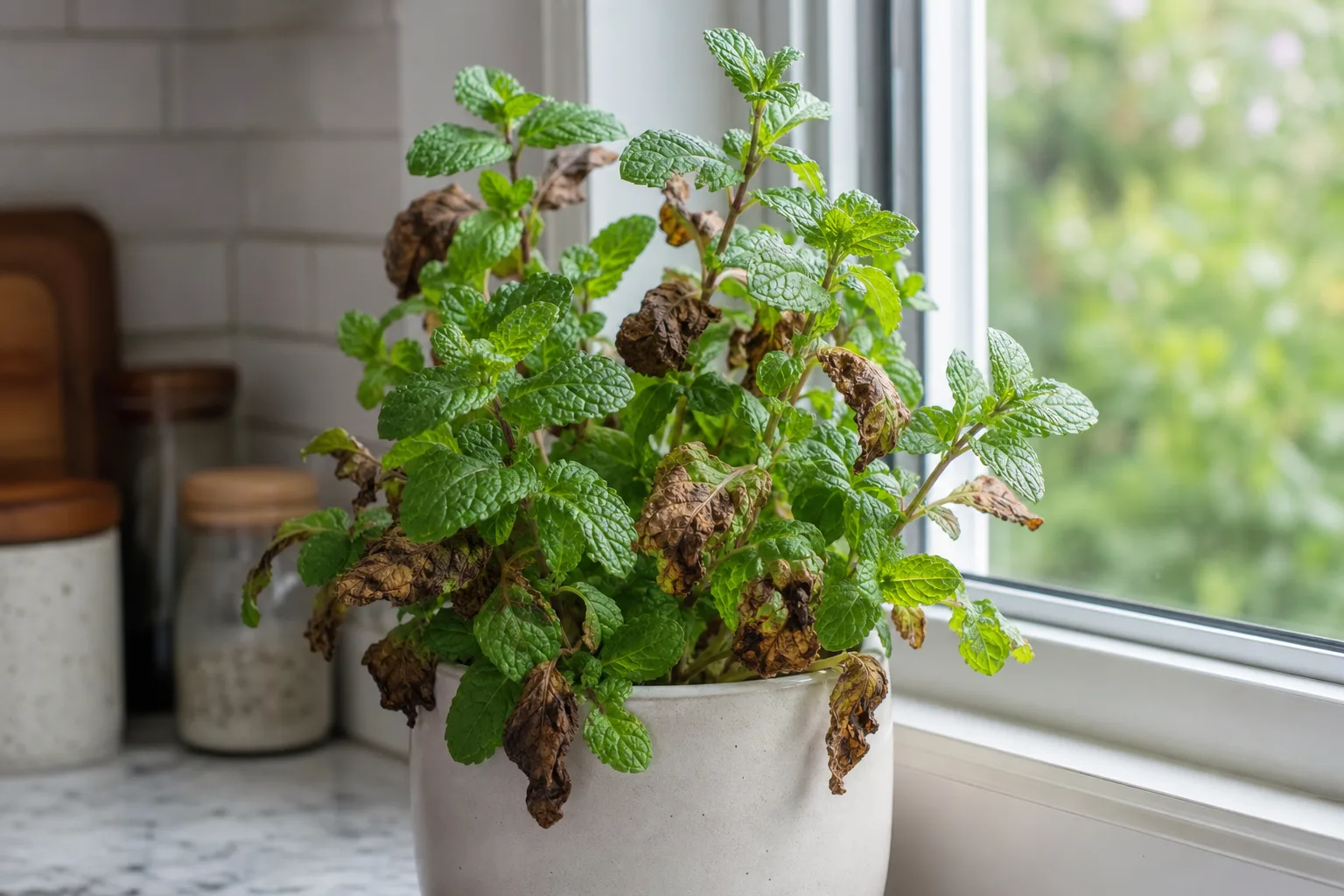
Brown Leaves on Mint: Causes, Checks & Fixes
This guide covers brown leaves on Mint. See also the general Brown Leaves guide, watering, and light pages for this plant.
Brown Leaves on Mint: Causes, Checks & Fixes
Quick answer
Brown leaves on mint almost always fall into one of five buckets: drought stress, root rot from excess moisture, sun scorch, mint rust, or fertilizer-salt injury. Mint is a shallow-rooted, moisture-sensitive herb that grows fastest in rich, moist soils, so rapid drying in small pots and prolonged saturation can both cause fast decline.
First step: check moisture and root condition-not spray or feed. Brown tissue is already dead; only new growth tells you whether recovery is working.
Use this page when entire leaves or large patches turn brown, especially with wilting, soft stems, or disease signs. If only narrow tips are browning while most of the leaf stays green, see brown tips on mint first-that pattern often tracks salts, dry-air stress, or watering inconsistency.
For chronic wet-soil patterns that precede rot, see overwatering on mint. For dedicated rust treatment depth, see rust disease on mint.
What brown leaves look like on mint
Photo check (add when available): compare dry crispy whole leaves (drought), tan one-sided patches (scorch), orange pustules on undersides (rust), and dark mushy roots after unpotting (rot). Until photos are on-page, use the pattern table below.
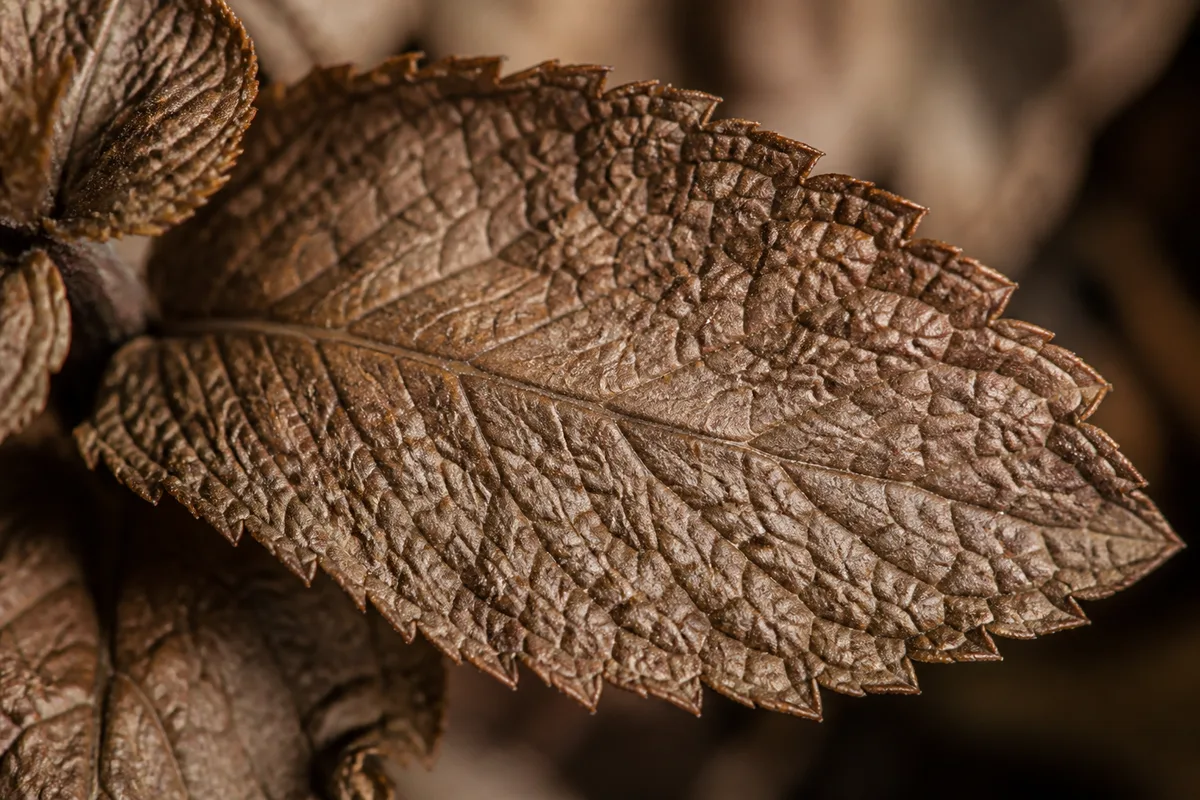
Brown Leaves symptoms on Mint - compare with healthy tissue on the same plant.
| Pattern you see | Leaf / stem signs | Mix / pot | What confirms it | Likely cause | First action |
|---|---|---|---|---|---|
| Drought | Thin, crisp, papery leaves; pot very light | Dry throughout; mix may shrink from pot wall | Plant perks up within hours of thorough soak | Missed watering in hot small pot | Rehydrate until runoff; resume even moisture |
| Root rot | Brown after yellow/dull phase; wilting on wet soil | Heavy, damp 2+ cm down for days | Soft dark roots, sour smell, soft stem base | Oxygen-starved roots in saturated mix | Stop water; trim rot; repot airy mix |
| Sun scorch | Tan-brown patches on sun-facing side only | Often dry surface but not always bone-dry | Damage maps to afternoon sun or reflected heat | Sudden heat + fast pot dry-down | Move to morning sun; afternoon shade |
| Mint rust | Pale shoots, then orange/yellow/black pustules | Variable; wet foliage worsens spread | Powdery pustules on undersides and stems | Puccinia menthae fungal infection | Remove infected shoots; keep foliage dry |
| Salt injury | Tips and margins brown first, then larger necrosis | May feel adequately moist | White crust on mix rim; recent heavy feeding | Soluble salt buildup in container media | Leach with clear water; reduce feed |
Drought pattern
Leaves feel thin, crisp, and papery. Pots feel much lighter than normal, and the mix often shrinks away from the container wall. This is common in small containers and hot exposures, because container mint dries faster than in-ground mint.
Root-rot pattern
Leaves brown after a yellowing or dull phase, but soil still feels wet for days. Stems may soften near the base and roots can appear dark, mushy, or sloughing. Browning can move quickly once roots stop supplying water. The classic trap: wilted, thirsty-looking foliage while the pot stays heavy-see root rot on mint when roots confirm mushy tissue.
Sun-scorch pattern
Tan to brown patches appear mostly on the side facing intense afternoon sun. Tissue is dry and scorched rather than soft. Mint tolerates full sun to partial shade, but sudden heat waves, reflected patio light, or a move from shade to full sun can scorch leaves when pots dry quickly. For heat-specific guidance, compare heat stress and sunburn on mint.
Rust progression pattern
Mint rust often starts with pale, distorted shoots and then orange pustules, especially on leaf undersides. As disease pressure rises, leaves yellow, then brown, then drop. Severe defoliation can look like generalized browning if you inspect late.
Fertilizer-salt pattern
Tips and margins brown first, then larger necrotic areas form if buildup continues. A white crust on potting mix or pot rim supports this diagnosis. High soluble salts can cause tip and margin dieback and root injury. See overfertilization on mint when feeding history points to salt stress.
Why mint gets brown leaves
Mint is vigorous above ground but shallow-rooted in typical cultivation, so it reacts quickly when moisture swings from very dry to very wet. It prefers medium-to-wet, well-drained conditions rather than prolonged drought. In containers, missed watering and excess water promoting root disease are equally risky.
Disease pressure also matters. Mint rust is a common fungal disease of mint caused by Puccinia menthae, and infected plants can progress from pustules to major leaf death if not managed early. Finally, overfeeding or frequent liquid fertilizer can accumulate salts in potting media, causing classic brown margins even when moisture seems adequate.
How to confirm the cause (in order)
- Check moisture and pot weight: very light and bone dry points to drought; heavy and persistently wet points to rot risk.
- Check root condition if wet: healthy roots are firm and light-colored; rotting roots are soft, dark, and may smell sour.
- Map leaf pattern to light direction: one-sided damage in hot afternoon exposure suggests scorch.
- Inspect leaf undersides and stems: orange, yellow, or black rust pustules strongly support mint rust.
- Check for salt deposits: visible crust plus tip burn supports fertilizer-salt injury.
- Review recent care changes: missed watering, sudden full sun, heavy feed, or overhead watering in humid weather often explains timing.
When two causes overlap
Mint sometimes shows mixed signals because fast top growth masks early stress:
- Wet soil + rust pustules: treat root stress first-stop watering until the top 2 cm dries, improve drainage, then remove rust-infected shoots once stems are firm. Wet crowns and fallen debris spread rust spores faster.
- Drought + heat scorch during a heat wave: a light pot plus one-sided tan patches on a west-facing balcony often means the mix dried completely while afternoon sun burned exposed leaves. Rehydrate first, then add afternoon shade for 7–10 days.
- Salt buildup + drought: white crust with brown margins can look like simple thirst, but adding more fertilizer makes it worse. Leach salts before resuming moderate feeding.
- Root rot + yellow lower leaves: browning may follow a dull yellow phase on wet soil-route to yellow leaves on mint for the early-yellow branch, then confirm roots before treating as drought.
When patterns conflict, fix the branch that threatens roots or spreads spores first-usually wet soil or active rust-then reassess in one week.
The first fix to try
Pick one primary fix based on the strongest evidence.
- If drought is clear: rehydrate thoroughly until runoff, then allow excess to drain.
- If rot is clear: stop watering, trim rotted roots, and repot into airy fresh mix in a draining container.
- If scorch is clear: move to morning sun/bright light with afternoon protection.
- If rust is clear: remove infected growth immediately and dispose of it (do not compost), then improve airflow and keep foliage dry.
- If salts are clear: leach the pot with clear water and reduce feed intensity/frequency.
Do not fertilize as your first move on a stressed mint plant.
Step-by-step recovery by cause
Drought recovery
Rewet the root zone completely, not just the top surface. If media has become hydrophobic, water in stages until the root ball is fully moist. Then resume even watering before the mix becomes brick-dry again.
Root-rot recovery
After trimming rotted roots, reduce top growth slightly so the reduced root system can support regrowth. Use fresh, free-draining mix and a pot with clear drainage. Water lightly after repotting, then wait until the upper layer starts to dry before rewatering.
Scorch recovery
Move mint out of harsh afternoon sun for 7–10 days, keep moisture steady, and remove only fully dead leaves. Gradually reintroduce stronger light if needed, rather than moving from shade to full sun in one step.
Rust recovery
Cut and discard infected shoots quickly; avoid composting infected material. If rust is recurring, the disease may persist in underground parts, so replacing with clean divisions or clean stock is often more reliable than repeated cosmetic pruning.
Salt-injury recovery
Remove crusted top salts if present, then flush with clear water and drain fully. If symptoms persist and roots are weak, repot into fresh media and use gentler feeding intervals.
Recovery case snapshot
Observed pattern (container spearmint, June): A 1.5 L pot on a west-facing rail browned on the sun-facing half after two missed waterings during a 95°F (35°C) week. Leaves were crisp, pot was very light, and no pustules appeared on undersides.
Intervention: Deep soak until runoff, saucer emptied, pot moved to morning sun only. No fertilizer, no full defoliation.
Outcome: New clean tips visible in 10 days; old scorched leaves trimmed for appearance. Full harvestable flush returned by week three once evening temperatures moderated.
This case fits drought-plus-scorch overlap-not rust or rot. Root inspection was skipped because stems stayed firm and mix was dry, not sour.
Recovery timeline
Damaged brown tissue does not turn green again. For mild drought or scorch, mint often shows cleaner new tips in about 1–3 weeks once conditions are corrected. Root rot and severe rust recovery is slower and may require restart from clean divisions. Improvement means new growth is healthy and spread has stopped, not that old leaves heal.
Mistakes to avoid
- Treating all browning as drought and adding more water to already wet roots.
- Fertilizing immediately after stress.
- Removing all foliage at once when some healthy leaf area can still support recovery.
- Ignoring rust pustules until black spores and major defoliation occur.
- Composting rust-infected debris.
How to prevent brown leaves on mint
Keep mint in a container or managed bed where moisture stays even and drainage stays reliable. Mint is vigorous and rhizomatous, so container culture and regular maintenance help keep growth and watering predictable. Keep foliage as dry as practical when watering, improve airflow, and remove diseased foliage promptly to reduce rust pressure.
For feeding, use moderate rates and periodic leaching if you see salt crust or repeated tip burn. This prevents salt accumulation that can mimic drought by limiting root water uptake.
When to escalate
Escalate quickly if:
- stems are browning from the base upward in wet media,
- foul root odor persists after corrective steps,
- rust keeps returning despite sanitation,
- or most new growth browns within days.
In these cases, restarting from clean, healthy divisions in fresh media is often faster than trying to rescue heavily compromised plants. Contact your local cooperative extension office if rust or root failure persists after two weeks of corrected care on edible herbs.
Limits of this guide
This page covers the five most common brown-leaf branches on mint. It does not replace diagnosis for leaf spot disease, powdery mildew, pest feeding damage, or cold damage after frost-each has distinct lesion patterns. When brown patches have defined halos or spreading spots rather than whole-leaf crisping or pustules, switch to the matching sibling guide.
Related mint problem guides
- Mint overview
- Mint watering
- Brown tips on mint - margin-only browning
- Yellow leaves on mint - early yellow phase before brown
- Root rot on mint - mushy roots on wet soil
- Rust disease on mint - full rust protocol
- Overwatering on mint - upstream wet-soil cause
- Underwatering on mint - dry-pot lookalike
- Sunburn on mint - scorch depth
- Overfertilization on mint - salt-burn branch
- Wilting on mint - limp leaves with overlapping causes
Related tool
Use the Plant Problem Diagnosis Tool to narrow causes for brown leaves on this plant before changing multiple variables at once.