Root Rot on Mint: Causes, Checks & Fixes
Quick answer
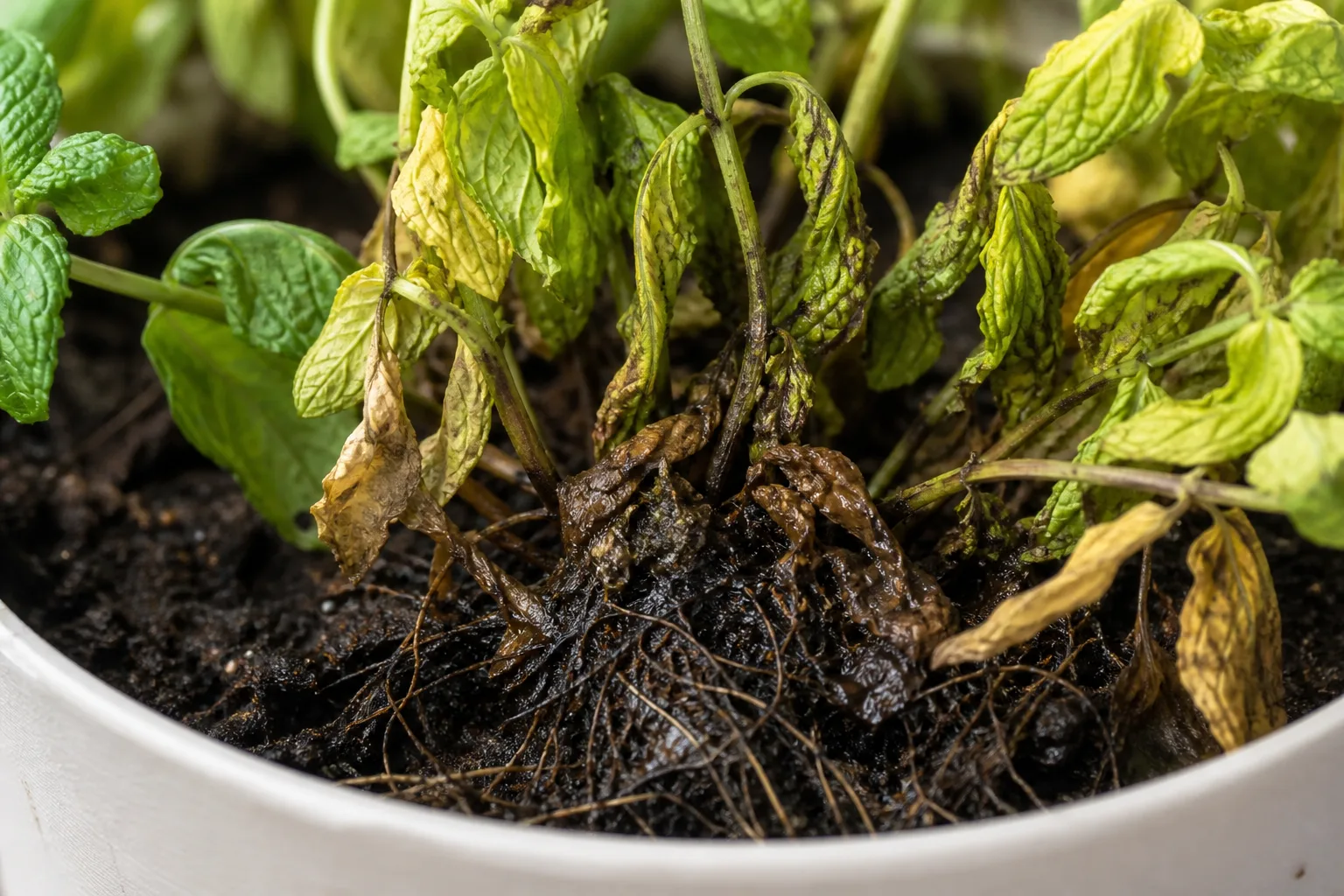
Root rot on Mint shows as mushy brown rhizomes, a sour smell from wet mix, and wilting despite damp soil. First step: unpot, rinse roots, and trim all soft dark tissue before repotting into fresh perlite-amended mix with drainage holes.
Root Rot on Mint: Causes, Checks & Fixes
This guide covers root rot on Mint. See also the general Root Rot guide, watering, and light pages for this plant.
Root Rot on Mint: Causes, Checks & Fixes
Quick answer
Root rot on Mint (Mentha spicata, spearmint and close relatives) means rhizomes and roots are decaying-usually after days or weeks of oxygen-starved, waterlogged soil. The telltales are a sour smell when you lift the pot, brown mushy rhizomes below soil, and wilting on wet mix because damaged roots cannot move water.
First step: unpot the plant, rinse rhizomes gently, and trim away all soft dark tissue with clean scissors. Repot only the firm white rhizome sections into fresh compost with perlite and a pot with open drainage holes. Do not pour more water because leaves look limp-that deepens rot through mint’s interconnected rhizome network.
Judge recovery by firm new shoot tips, not by hoping old yellow leaves green up again.
When to use this page vs. the overwatering guide
Use this page when you have already found mushy rhizomes, sour-smelling mix, or widespread decay and need a salvage plan-trim, repot, cuttings restart, or discard.
Start with the overwatering guide if soil has simply stayed wet too long but stems still feel firm, roots are mostly white, and you want to break the wet cycle before rot advances. Overwatering is the upstream cause; root rot is the damage that follows when wet conditions persist.
If you are unsure which stage you are in, work through the confirmation checklist below-unpotting settles the question in minutes.
What root rot looks like on Mint
Above soil, root rot on container mint often shows as:
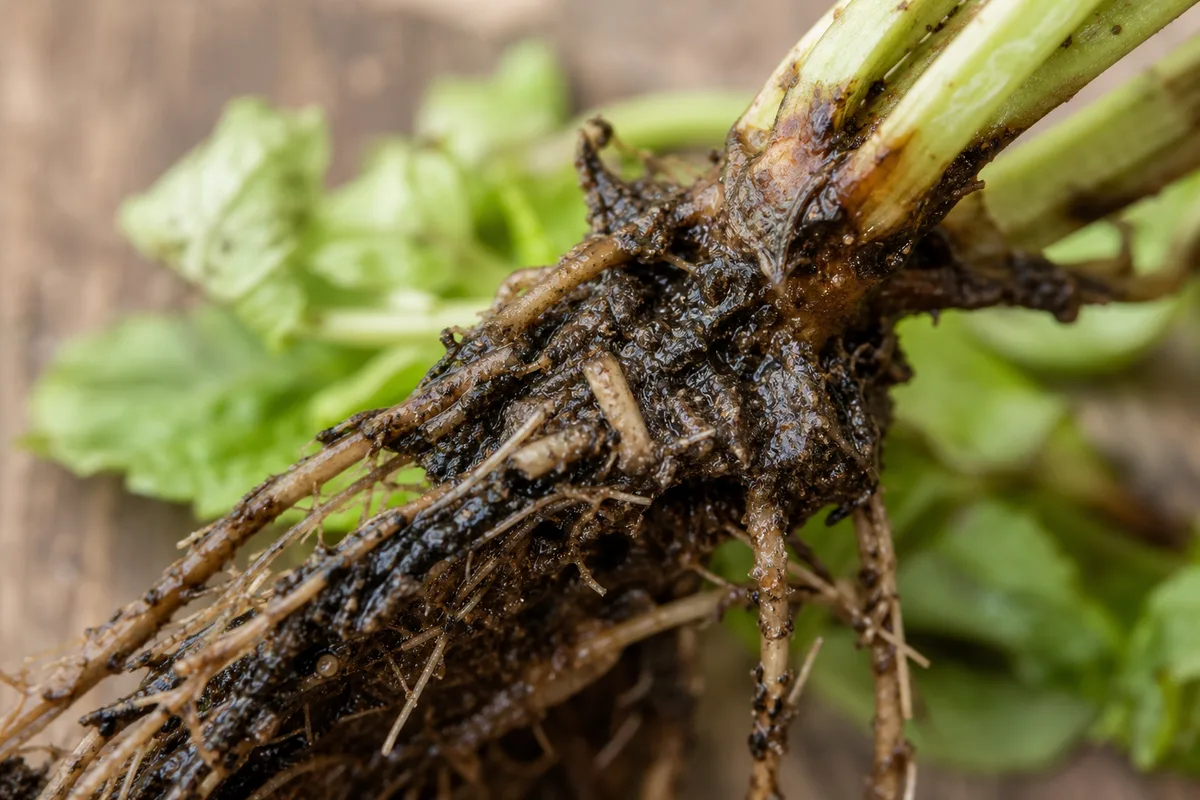
Root Rot symptoms on Mint - compare with healthy tissue on the same plant.
- Yellow lower leaves that drop while the mix still feels damp
- Wilting or drooping even though you watered recently-the classic wet-soil wilt trap
- Soft, dark stems at the soil line where rhizomes sit deepest
- Stalled or collapsing new shoots while older foliage yellows
- Sour or swampy smell when you tilt the pot or brush soil aside
- Fungus gnats hovering above chronically wet surfaces-a warning sign that often appears before full rot
Below soil, healthy mint rhizomes are firm, pale cream, or white with fine root hairs. Rotting tissue turns brown, black, or slimy and may pull away when you rinse the root ball. On mint, rhizome damage often spreads sideways through the pot before every stem looks sick, because interconnected rhizomes share the same wet zone.
Normal aging to ignore: A few yellow bottom leaves on a heavily harvested plant in good light, evenly moist (not soggy) soil, and firm rhizomes can be simple old foliage. Root rot is a pattern: persistent wetness, smell, mushy bases, and spreading decline-not one leaf alone.
Why Mint gets root rot
Mint evolved for stream margins and moist ground. Missouri Botanical Garden lists spearmint as preferring medium to wet conditions and spreading by rhizomes-so growers assume frequent watering is always safe. In a sealed kitchen pot, that reputation masks failure until rot is advanced.
Containers hold less oxygen than open ground. Mint rhizomes fill pots within months. Dense root mass plus organic-rich compost traps moisture longer than gardeners expect-especially on a cool, shaded windowsill when winter growth slows and the same summer watering schedule keeps mix wet for a week.
Rhizomes spread rot fast in one pot
Unlike a single-stem houseplant, mint’s lateral rhizome network lets decay move from one soft section to neighboring stems before every shoot looks sick. One mushy rhizome junction can undermine several upright stems sharing the same wet core.
Stream margins vs. container oxygen limits
UF/IFAS notes spearmint prefers consistently moist soil in the garden-moist after drainage, not stagnant. In pots, “loves water” gets confused with “never let it dry.” Standing water causes roots to rot; glazed cachepots, saucers left full, and pots without holes are common kitchen-window triggers.
Winter slowdown and kitchen-window pots
Mint in short winter days or a north window grows slowly and drinks little. Watering every other day while growth stalls leaves mix saturated. University of Minnesota Extension warns that constantly wet soil encourages root rots, especially during winter-the most common failure mode for herbs grown indoors.
Pathogens on dying root tissue
Once oxygen drops, water molds such as Pythium and Phytophthora colonize weakened roots. UC IPM notes these pathogens thrive under poor drainage and excess irrigation, and mint is among herbs confirmed with Pythium root rot in production systems. The primary cause is still culture-too much water, poor drainage, or both-not random infection from clean stock.
Root rot vs. overwatering vs. underwatering
| Clue | More likely cause |
|---|---|
| Soil soggy for days; stems still mostly firm; roots mostly white | Early overwatering - stop watering and fix drainage before rot |
| Mushy brown rhizomes, sour smell, wilt on wet soil | Root rot - unpot, trim, repot or restart |
| Soil dry throughout, light pot, wilt revives within hours after soak | Underwatering |
| Orange-yellow pustules on leaf undersides | Mint rust - not a root issue |
| Small black gnats; surface stays wet; roots still firm | Chronic wetness - see fungus gnats and dry the mix before rot |
How to confirm the cause
Work through these checks in order:
- Soil moisture at 2 cm depth - Soggy or cold-wet for days after one watering confirms chronic excess moisture. Bone-dry mix with a light pot points to underwatering instead.
- Wilting pattern - Wilt plus wet soil means suspect root failure, not thirst. Damaged roots cannot absorb water even when the pot is heavy.
- Stem base firmness - Pinch rhizomes at soil level. Firm and green-white is salvageable; mushy or hollow means advanced rot.
- Smell and surface - Sour odor, mold, or fungus gnats point to long-term wetness. Fungus gnats are commonly associated with overwatered houseplants.
- Unpot and rinse - Lift the plant, rinse rhizomes gently, and compare firm white tissue to brown slime. Healthy mint roots are pale and firm; rotting roots are brown, mushy, and may pull away easily.
- Severity estimate - If more than one-third of rhizome tissue is mushy, treat as urgent and move straight to trim-and-repot or cuttings restart.
Urgency: one-third mushy roots rule
When roughly one-third or more of rhizome mass is soft and dark, partial drying rarely saves the plant. Trim aggressively, repot only firm tissue, or take cuttings the same day. Waiting while soil stays wet lets decay climb stems.
First fix for Mint
Unpot, rinse rhizomes, and trim all soft dark tissue before doing anything else.
That single inspection tells you whether mild trim-and-repot will work or whether you need cuttings. Do not fertilize, mist heavily, or water again until firm tissue is in fresh mix with drainage. Stacking pesticide, heavy leaf pruning, and extra water on the same day hides what actually helped.
Mild rot: trim and repot
Use this path when most rhizomes are still firm and only scattered sections are mushy:
- Trim decay - Cut away brown, slimy rhizomes and roots with clean scissors. Leave only firm white or cream tissue.
- Discard sour mix - Do not reuse wet, smelly compost; pathogens persist in organic matter.
- Repot into airy mix - Fresh potting compost with 15% perlite in a pot with drainage holes sized to the trimmed root mass-not dramatically larger.
- First water after repot - Water once until drainage runs, then wait for the top 2 cm to dry before the next drink. See mint watering for probe depth and seasonal adjustments.
- Hold fertilizer - Stressed roots cannot handle salts. Resume half-strength feed only after new shoots look healthy for two weeks.
For repotting technique and mix ratios, see the mint repotting guide.
Severe rot: stem cuttings and restart
Use this path when most rhizome tissue is rotten but upper stems are still green and firm:
- Take 8–10 cm cuttings from healthy stem tips with no soft bases.
- Root in water or moist perlite - Mint roots quickly from clean cuttings; see mint propagation for detail.
- Discard the parent plant and old mix - Do not compost mushy rhizomes back into herb beds.
- Sterilize or replace the pot if sour smell soaked into porous clay or cracks.
When to discard the plant
Throw away the plant and start fresh when:
- Softness spreads well above the soil line into multiple stems
- More than two-thirds of rhizome tissue is brown slime with no firm sections to save
- Sour smell returns within a week after repotting despite correct watering
- No new shoots appear for three weeks in warm, bright conditions
Discarding is cheaper than fighting advanced rot in a cramped kitchen pot-and cuttings give you clean stock faster than nursing a hollow rhizome mass.
Recovery timeline
Recovery depends on how much rhizome tissue you lost. These ranges are general observations for container spearmint in warm, bright conditions-not guarantees.
| Severity | What you did | What to expect |
|---|---|---|
| Mild | Trimmed scattered mush; repotted firm rhizomes | Firm new tips within 10–14 days; old yellow leaves may stay ugly |
| Moderate | Removed 30–50% of rhizome mass; repotted | Rough foliage for 2–3 weeks while new roots form; judge by new shoots |
| Severe | Restarted from stem cuttings | Roots in 2–4 weeks; bushy regrowth after a hard pinch |
Signs recovery is working: New shoots emerge, stem bases stay firm, soil dries at a predictable rate between waterings, fungus gnat numbers drop.
Signs it is getting worse: Spreading softness up stems, more yellowing while soil stays wet, sour smell returns after repot, no new growth for three weeks in warm light.
Damaged leaves rarely return to perfect green. Recovery means the problem stops spreading and new growth comes in clean.
What not to do
- Keep watering because leaves look limp when soil is already wet - Overwatering on wet mix deepens rot; pause and inspect roots instead
- Repot into garden soil or a pot without holes - Compacted outdoor soil waterlogs containers; mint needs well-drained potting mix
- Place stones over drainage holes - Gravel layers reduce usable root space without improving drainage
- Harvest all foliage during severe salvage - Stripping every leaf stresses a plant already rebuilding roots; leave some green tissue for photosynthesis
- Fertilize to “perk up” a rotting plant - Salt stress on damaged roots worsens decline
- Reuse sour mix or compost mushy rhizomes - Spores and water molds persist in wet organic matter
How to prevent root rot on Mint
Match water to how fast this specific pot dries, not to mint’s stream-margin reputation.
- Check before every drink - Water when the top 2 cm feels dry during active growth; wait longer in cool, low-light months. Full schedule detail is in the watering guide.
- Use drainage holes and empty saucers - Most container plants prefer moist, not soggy, soil; standing water at the base suffocates rhizomes
- Amend mix with 15% perlite - Keeps moisture retention without compaction; see mint soil for ratios
- Right-size the pot - Divide when rhizomes circle the container; oversized pots stay wet in the center
- Give enough sun - Mint grows best in full sun or partial shade; light-starved plants use less water than you pour
- Harvest regularly - Pinching stems improves airflow through dense mats
- Fix chronic wetness early - Gnats, mold on soil, and a always-heavy pot are warnings-address them before rot, not after
In an open garden bed, mint tolerates more moisture than a sealed indoor pot because drainage and oxygen exchange are far better. Container growers carry most of the risk.
Food-safe harvest after salvage
Mint is a culinary herb, so recovery timing matters for the kitchen-not just the plant.
During active rot: Do not eat yellowed, wilted, slimy, or sour-smelling leaves. Decay and wet organic matter are not food-safe even after rinsing.
After trim-and-repot: Wait until firm new shoots have grown for two to three weeks in clean mix before harvesting those fresh tips. Older damaged leaves will not become palatable; remove them for airflow instead of cooking with them.
After cuttings restart: Treat rooted cuttings as new plants-harvest lightly once several nodes have rooted and new growth is vigorous.
When flavor, smell, or appearance raises doubt, restart from clean cuttings rather than risking contaminated foliage in food.
Related mint guides
- Mint overview - care hub and species context
- Overwatering on mint - stop wet soil before rot advances
- Underwatering on mint - dry-soil wilt looks different
- Fungus gnats on mint - chronic wetness warning sign
- Mint repotting - division and fresh mix technique
- Mint propagation - stem cuttings when rhizomes are lost
- Poor drainage - fix pots and mix before rot returns