Underwatering on Mint: Causes, Checks & Fixes
Quick answer
Underwatered mint wilts dramatically, feels light in the pot, and loses fragrance. First step: soak the root ball until water runs from drainage holes, then wait until the top 1–2 cm of mix dries before watering again.
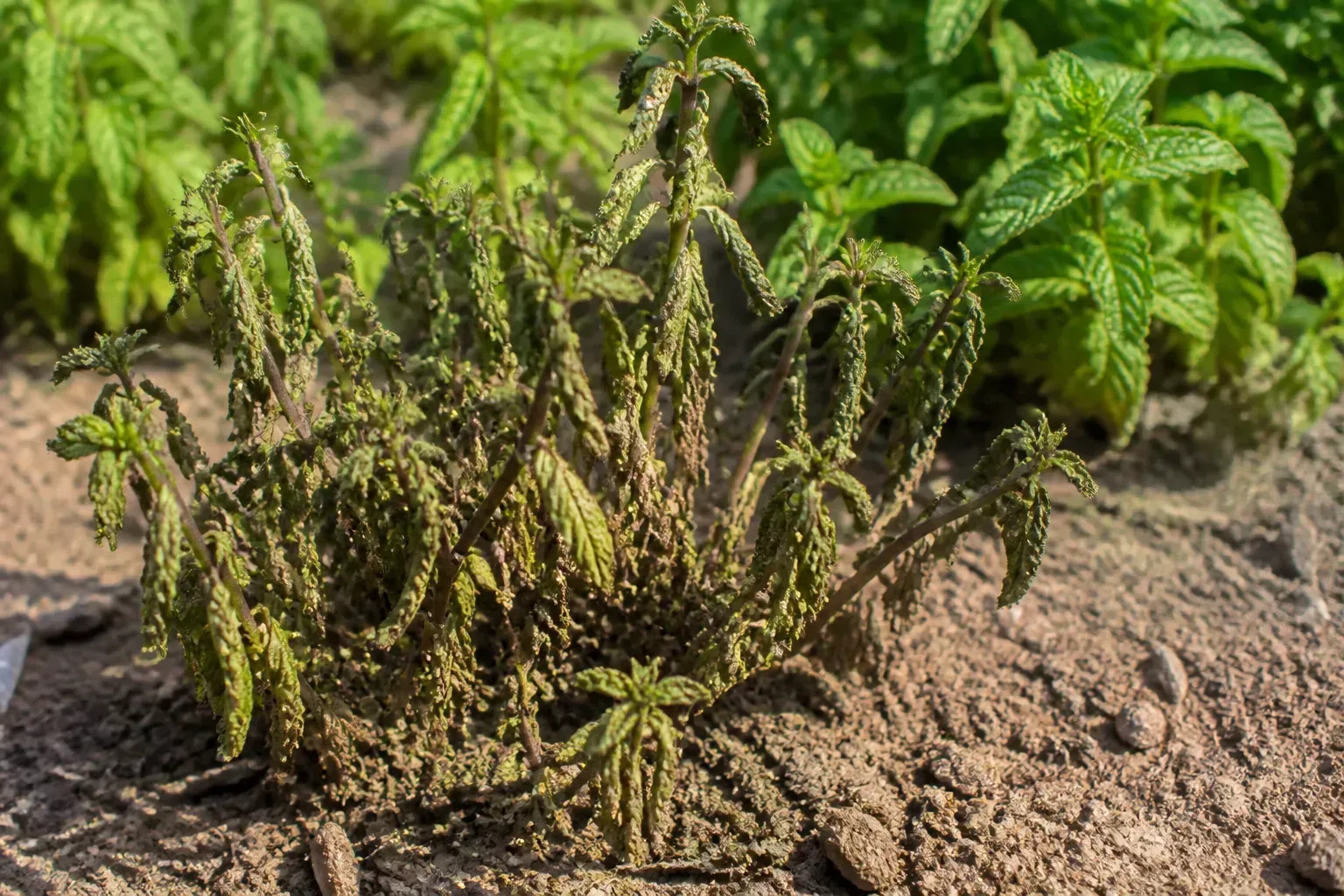
Underwatering on Mint: Causes, Checks & Fixes
This guide covers underwatering on Mint. See also the general Underwatering guide, watering, and light pages for this plant.
Underwatering on Mint: Causes, Checks & Fixes
Quick answer
Underwatered mint (Mentha spicata, spearmint and close relatives) wilts fast, smells less minty, and often sits in a pot that feels almost weightless. Unlike slow-to-wilt houseplants, mint is a thirsty herb whose shallow, spreading rhizomes use water quickly-especially in small containers on a sunny sill.
First step: soak the root ball until water runs freely from drainage holes. Use a slow pour or bottom-water for 20–30 minutes if the mix has gone hydrophobic and water runs straight through. After that single rescue drink, reset your routine to water when the top 1–2 cm of mix feels dry, not on a calendar day.
What underwatering looks like on Mint
Mint does not hide drought stress. The most reliable early sign is dramatic wilting-stems and leaves flop as if the plant overheated, even on a mild day. Extension guidance for herbs warns never to allow plants to wilt between waterings. Touch the leaves: they feel thin and soft rather than crisp and springy. Crush a leaf between your fingers; fragrance is noticeably weaker when the root zone has been dry too long.
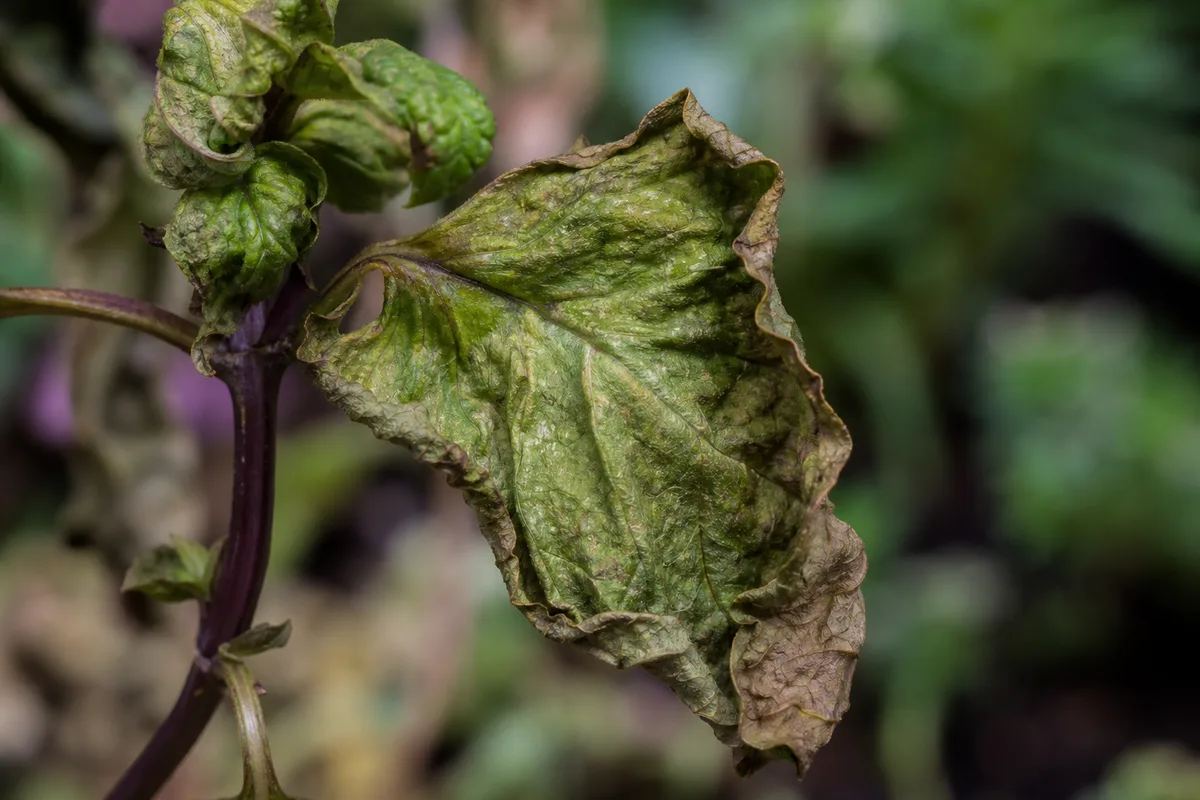
Underwatering symptoms on Mint - compare with healthy tissue on the same plant.
Other patterns that point to dry roots rather than disease:
- Dry, pale soil that pulls slightly away from the pot sides
- Crispy brown edges on older leaves, especially lower ones
- Light pot weight when you lift it-waterlogged mint feels heavy; drought-stressed mint feels hollow
- Slowed shoot tips even though light and feeding seem fine
- Afternoon collapse on hot days that repeats until you increase watering frequency
Chronic underwatering adds premature yellowing and leaf drop on the oldest foliage. Mint redirects water to new tips; lower leaves sacrifice first. That yellowing can look like nitrogen deficiency, but dry mix and daily wilting cycles tell you moisture is the root cause.
Why Mint gets underwatered
Mint evolved as a moisture-loving herb with aggressive rhizomes that colonize damp ground. In a pot, that biology meets conditions that dry out fast: limited soil volume, porous terracotta, direct sun, and air movement from fans or open windows.
Small pots are the most common trigger. Plants in containers dry out more quickly than those in the ground, and mint outgrows nursery containers within weeks. A dense root mass circling a 10–12 cm pot can go from evenly moist to bone dry in a single sunny afternoon. Edge shoots may still look green while the centre wilts because water never reaches the middle of the root ball.
Calendar watering causes repeated dry spells. Mint in active summer growth often needs water every one to three days in hot weather-outdoor container herbs may need daily water on hot, sunny days-while the same plant in a cool room may need water only every three to four days. Watering every Sunday regardless of pot dryness guarantees underwatering in July and overwatering on Mint in January.
Fear of root rot on Mint pushes care too far the other way. Mint does rot in soggy, airless mix-but skipping drinks because the plant wilted once last month leaves rhizomes dry and brittle. The fix for rot is better drainage and less frequency, not letting the entire root ball desiccate.
Hydrophobic peat-based mix creates a hidden drought layer. The surface may look briefly damp after a quick splash while the centre stays dry. Water channels down the gap between soil and pot wall instead of rewetting the root ball.
Heavy harvesting increases demand. Cutting large bundles of leaves removes transpiring surface area temporarily, but regrowth pulls more water from roots. A freshly harvested mint often needs a deep soak the same day.
Heat and sun multiply water loss. Mint in full sun to partial shade (four to six hours of direct light) is healthy, but unshaded afternoon sun on a dark pot can bake the root zone while leaves lose moisture faster than roots can replace it.
How to confirm the cause
Work through these checks before changing anything else:
- Soil moisture at depth - Push a finger 2 cm into the mix. Dusty and dry confirms drought. Damp or cool at that depth points away from simple underwatering.
- Pot weight - Lift the container. Very light weight with wilted foliage strongly suggests dry roots.
- The recovery test - Water deeply once. If turgor returns within two to six hours and stems stand upright again, drought was the issue. Wilt that persists on wet soil suggests root rot or heat damage instead.
- Soil gap test - Look for a visible gap between mix and pot wall; that indicates shrinkage from prolonged dryness.
- Smell at the base - Sour or swampy odour means rot, not drought. Dry, earthy smell fits underwatering.
- Root peek (if still unsure) - Slide the plant out gently. Healthy mint roots are pale and firm with white tips. Dry-damaged roots look tan and brittle; mushy brown roots mean overwatering.
If the mix is wet throughout, stems are soft at the soil line, and wilt continues after soaking, stop treating this as underwatering and inspect for root rot.
First fix for Mint
Soak the entire root ball until water drains freely from the bottom holes.
Place the pot in a sink or saucer. Water slowly in two or three passes, waiting thirty seconds between pours so the mix absorbs instead of flooding out instantly. For a badly dried root ball, set the pot in a tray of water for 20–30 minutes so capillary action rewets the centre-then let excess drain for fifteen minutes before returning it to its spot.
Do not fertilize, repot, or prune heavily on the same day. One thorough rehydration tells you whether the plant still has viable roots. If it perks up, your only job next is to keep moisture steady-not to stack extra interventions.
Step-by-step recovery
After the rescue soak, stabilize care in this order:
- Move out of harsh afternoon sun temporarily - Bright morning light is fine; direct late-day heat on a recovering plant dries the mix again before roots regain function.
- Set a finger-test schedule - Check the top 1–2 cm every morning during warm weather. Water when that layer feels dry, not when leaves already look limp.
- Bottom-water once more if needed - If the next top-water runs through in seconds, repeat a shallow tray soak to fully rewet hydrophobic mix.
- Trim only dead tissue - Snip fully brown, crispy leaves at the stem. Leave yellowing leaves until the plant pushes new growth; they still photosynthesize weakly.
- Harvest lightly for one week - Take small sprigs rather than cutting the plant back hard while roots re-establish fine absorptive tips.
- Repot only if the pot is clearly too small - If roots circle densely and the mix dries twice daily, move to a container at least 20–25 cm wide with drainage holes and fresh, moisture-retaining but free-draining mix. Do not repot a wilted plant on day one unless the current mix is completely hydrophobic and cannot be rewet.
Hold fertilizer until new growth looks normal for seven to ten days. Salt on drought-stressed roots adds stress without speeding recovery.
Recovery timeline
Hours: Mildly wilted mint often stands upright again within two to six hours of a deep soak. Fragrance returns gradually as turgor restores.
Days: New shoot tips should look perky within three to five days if watering stays consistent. Crispy leaf margins remain brown permanently.
One to two weeks: Expect normal harvestable regrowth once fine roots rebuild. If the plant still wilts daily despite wet mix, suspect rot or a pot that is too small-not ongoing underwatering.
Worsening signs: Stems turn brittle and brown at the base, leaves stay limp after repeated soaks, or the centre dies while only edge runners survive. Those patterns mean root damage went beyond simple drought-inspect roots and consider dividing out healthy rhizome sections.
Lookalike symptoms
- Root rot - Wilt on wet soil, mushy lower stems, sour smell. Soaking makes it worse; inspect roots instead.
- Heat stress alone - Wilting on a hot afternoon with slightly dry but not desiccated mix; plant recovers overnight without a dramatic soak if soil moisture was adequate.
- Transplant shock - Wilt for one to two weeks after Mint repotting guide or division with otherwise moist mix; keep compost evenly moist and avoid full sun until new white root tips appear.
- Spider mites - Pale stippling and fine webbing on undersides with otherwise moist soil; rinse and treat pests, not water.
- Nitrogen deficiency - Lower yellow leaves on moist, well-fed soil without repeated wilting; light feeding after confirming moisture is stable.
The fastest separator remains dry mix plus rapid recovery after one deep soak. Rot and drought both wilt mint; only drought perks up quickly when roots are still healthy.
Mistakes to avoid
Do not mist leaves instead of soaking soil-mint drought is a root problem, and surface misting does not rewet a dry root ball.
Avoid waiting for a calendar reminder when the pot is light and leaves droop in the afternoon. Mint needs moisture checks, not fixed weekly dates.
Do not assume all wilting means overwatering and skip a drink. Many growers underwater mint because they fear rot; confirm dryness at 2 cm depth first.
Skip heavy pruning during recovery-stripping the plant removes leaves that help it rebuild energy after drought.
Do not leave the pot in a full saucer after soaking for days; drain excess so you do not swing from drought to waterlogged roots.
Avoid fertilizing a collapsed plant before it rehydrates. Feed only after steady new growth returns.
How to prevent underwatering on Mint
Match watering to how fast your specific pot dries, not a generic herb schedule. In summer active growth, many container mints need water every one to three days; in cooler months, every three to four days may suffice. Always use the top 1–2 cm dryness test-water indoor herbs when the soil feels dry a half inch below the surface.
Size the container for spreading rhizomes. Mint is less forgiving in tiny pots than many kitchen herbs. A wider pot holds moisture longer and reduces panic wilting on hot weekends.
Check daily during heat waves-container mint needs regular checks in hot, dry weather-and move pots to afternoon shade if they repeatedly go limp by 3 p.m. Light-coloured pots reduce root-zone heat compared with dark plastic.
Refresh or amend peat-heavy mix that has started repelling water. Adding compost and perlite improves both retention and rewetting.
Harvest regularly but water after large cuts when regrowth surges. Steady moisture during flush growth keeps flavour strong-dry stress produces weaker-tasting leaves even before visible wilt.
For indoor mint, a bright south- or west-facing window plus a moisture check every morning prevents the classic weekend-dry pattern.
When to worry
Treat same-day if the plant lies flat, stems feel brittle at the base, or it has wilted severely more than twice in one week. Mint is resilient, but repeated collapse kills fine roots and leaves only edge runners alive.
Escalate to root inspection if deep soaking fails to restore turgor within 24 hours, soil stays wet without improvement, or a sour smell develops-those are rot clues, not drought.
If the centre is dead but firm rhizomes remain at the pot edge, divide healthy sections into fresh mix rather than nursing an empty middle.
Conclusion
Underwatering on mint is usually a volume-and-frequency problem: a thirsty, fast-growing herb in a pot that dried faster than you expected. Confirm it with dry mix at depth, light pot weight, and rapid perk-up after one thorough soak. Prevent it by checking moisture every warm day, sizing the container for spreading roots, and watering when the top layer dries-not when the calendar says so. Mint forgives a single missed drink; it struggles when drought becomes a weekly habit.
When to use this page vs other Mint guides
- Mint watering guide - Use for routine moisture checks before assuming underwatering is the main issue.
- Mint problems hub - Browse all 40 common issues on this species.
- Wilting on Mint - Different entry point when symptoms overlap with underwatering.
- Brown Tips on Mint - Different entry point when symptoms overlap with underwatering.
- Yellow Leaves on Mint - Different entry point when symptoms overlap with underwatering.