Drooping Leaves on Mint: Causes, Checks & Fixes
Quick answer
Drooping leaves on Mint often signal water mismatch, heat stress, or root damage. First step: Feel soil depth and pot weight before watering.
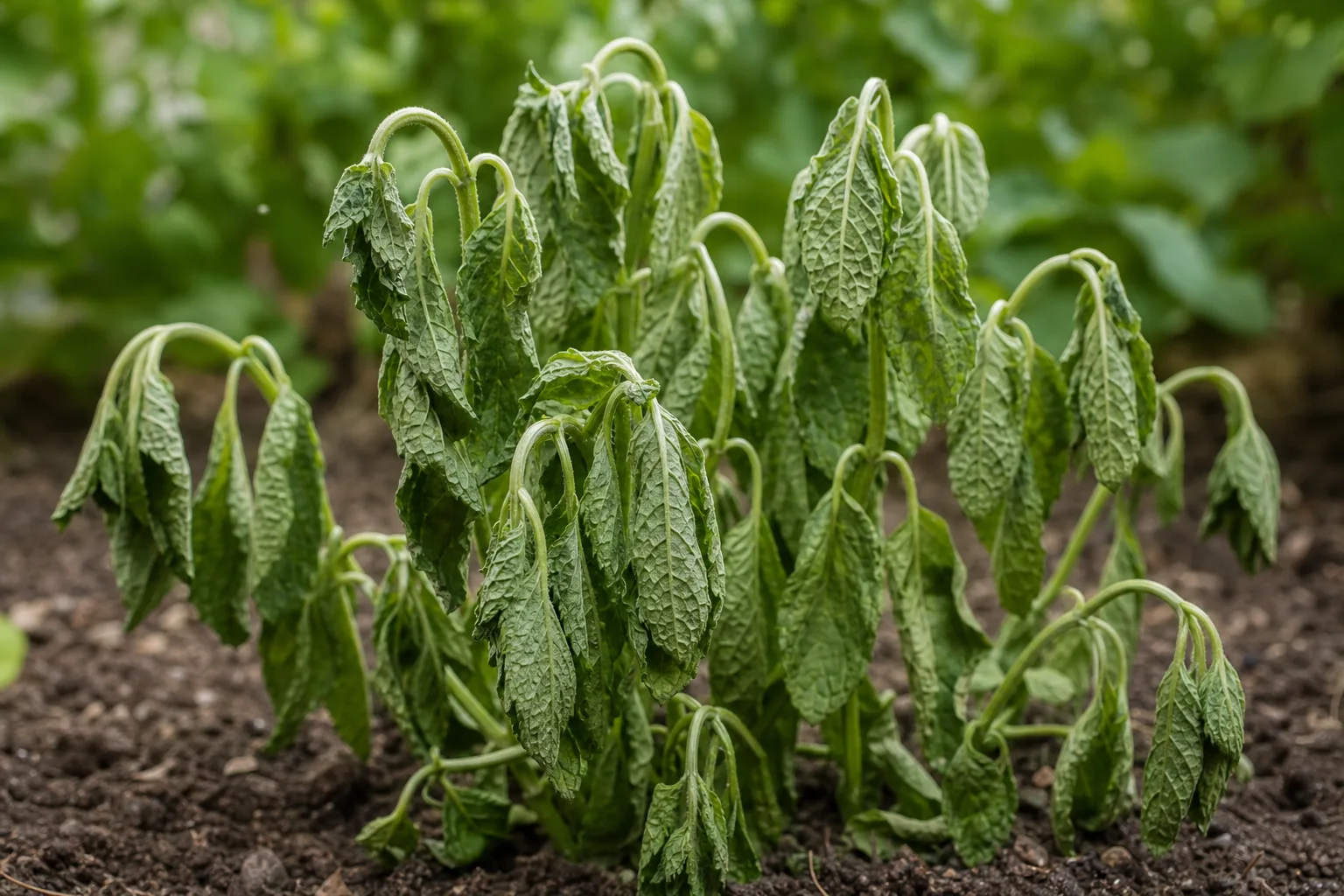
Drooping Leaves on Mint: Causes, Checks & Fixes
This guide covers drooping leaves on Mint. See also the general Drooping Leaves guide, watering, and light pages for this plant.
Drooping Leaves on Mint: Causes, Checks & Fixes
Quick answer
Drooping leaves on Mint often signal water mismatch, heat stress, or root damage. First step: Feel soil depth and pot weight before watering.
Soft downward leaves on spearmint (Mentha spicata) are usually a hydration or root issue-not a mystery disease. Mint loses leaf firmness when cells lose turgor pressure, and on this fast-drinking herb the cause is almost always how water moves between soil and roots, not a leaf spot you can spray away.
What drooping leaves look like on Mint
On mint, droop shows as leaves and petioles hanging downward with less spring when you touch them. The whole plant may slump, or only the side facing a hot window may fold first. Early droop often keeps leaves green; brown crispy edges come later with heat or drought.
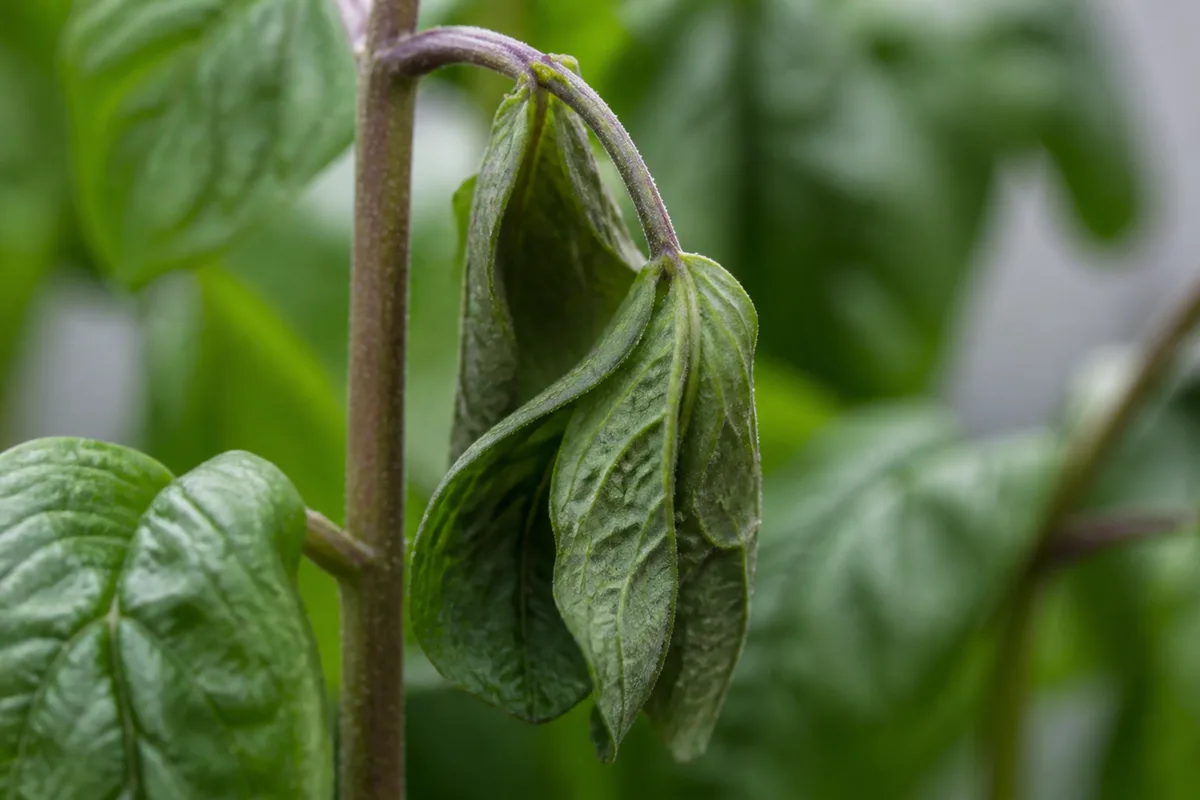
Drooping Leaves symptoms on Mint - compare with healthy tissue on the same plant.
Three patterns matter for diagnosis:
- Midday flop that perks up by evening - common in summer on dry, sun-exposed pots
- Persistent droop on wet, heavy soil - classic sign roots are failing to move water upward
- Long, soft stems with small pale leaves - often shade stress or overcrowded growth, not thirst alone
Drooping differs slightly from full collapse wilting: droop can be partial and reversible within hours when the root zone is corrected. Chronic droop that lasts through cool mornings points past simple thirst.
Why Mint leaves droop
Mint wants evenly moist compost during active growth but cannot sit waterlogged. That tension makes droop confusing-both drought and rotting roots produce the same floppy look.
underwatering on Mint and fast-drying pots. Container mint dries faster than in-ground plants, especially in full sun or partial shade on a kitchen sill. Small pots and root-bound rhizomes can go from moist to parched in one hot afternoon. When the root ball dries, stems lose turgor even though lower soil may still hold a little moisture.
Heat and transpiration overload. Broad mint leaves lose water quickly in afternoon heat. Dark pots on hot paving raise root-zone temperature, slowing uptake while leaves keep transpiring. The plant droops to reduce exposed surface area-a temporary stress response if water is restored before roots overheat.
overwatering on Mint and root failure. Wet soil displaces oxygen mint roots need. Damaged roots cannot supply water to leaves, so foliage droops despite moist mix-the same drought look on soggy soil. Adding more water makes this worse.
Transplant shock and recent Mint repotting guide. Dividing mint or moving store-bought pots breaks fine roots. Limited uptake for one to two weeks can droop tops even with reasonable watering.
Root-bound or undersized containers. Aggressive mint rhizomes circle pots within months. A cramped root ball drinks unevenly-edge stems stay firm while the centre droops, or the whole plant wilts within hours after watering because water channels through dry pockets without rewetting the core.
How to confirm the cause
Work through these checks before changing anything:
- Morning firmness - If leaves are still drooped in cool morning air, the problem is not just midday heat. Evening-only flop points to heat or thirst.
- Soil at depth - Press a finger 2–3 cm into the mix. Dry throughout with a light pot confirms drought. Wet deep soil with sour smell or mushy stem bases confirms root stress.
- Pot weight - Lift the container. Light and dry needs water; heavy and wet needs a pause, not another drink.
- Recovery test - Water dry pots deeply once. Turgor returning within hours confirms underwatering. No improvement on wet soil after 48 hours means inspect roots.
- Light and placement - Leggy, widely spaced leaves on drooping stems in a dim corner suggest insufficient light. Scorched margins on sun-facing leaves suggest heat overload.
- Recent changes - Repotting, moving to a brighter window, or a heatwave in the last week narrows the cause quickly.
Confirmed diagnosis before action matters on mint because the wrong first response-watering wet soil or withholding from a dry root ball-can push a recoverable plant into rot or crispy collapse.
First fix for Mint
Before adding or withholding water, check soil moisture at depth and lift the pot.
That single inspection separates the two most common causes: dry mix that needs a soak, and wet mix where roots are failing. Mint recovers fast when the first move matches actual moisture-not when you guess from how dramatic the leaves look.
If the top 2–3 cm is dry and the pot feels light, water thoroughly until drainage runs, then empty the saucer. If soil is wet, stems are soft at the base, or the pot smells sour, stop watering and plan a root inspection-do not pour more water because leaves look limp.
Step-by-step recovery
Once moisture is confirmed, follow the matching path:
Dry soil path
- Water at the base until the root ball is fully rewetted and water exits drainage holes
- For very dry mix that repels water, bottom-water 20–30 minutes so the core absorbs moisture
- Move out of scorching afternoon sun until turgor returns, then return to morning sun with afternoon shade in peak summer
- Resume watering when the top 2 cm dries-not on a fixed calendar
Wet soil path
- Stop watering until the top 2 cm is dry
- Empty saucers after every watering; confirm drainage holes are open
- If droop persists beyond 48 hours on wet mix, unpot and rinse roots-trim mushy tissue, repot into fresh perlite-amended mix
- Hold fertilizer until new shoots look firm
Heat-stress path
- Water early morning before heat builds
- Provide afternoon shade or move pots off hot surfaces
- Upsize or divide root-bound plants before the next heat spell
Transplant-shock path
- Keep soil evenly moist but not soggy
- Provide partial shade for one week
- Avoid fertilizing until new growth resumes
Recovery timeline
Drought-related droop often improves within hours of a deep soak. Heat flop that recovers overnight should firm up within days once morning watering and shade align. Root-related droop takes one to three weeks-you are waiting for firm new shoot tips, not for old floppy leaves to stand upright again. Badly damaged leaf tissue rarely returns to perfect form; judge success by stopped spread and clean new growth.
Lookalike symptoms
Wilting covers full stem collapse; drooping can be softer and partial. Both share causes on mint-moisture checks apply to either.
Leggy growth from low light produces long floppy stems with pale small leaves. More sun and a hard cutback to 5 cm fixes structure; watering alone will not.
Aphid clusters on new tips can curl and weigh down shoots. Look for sticky residue and insects on undersides before assuming drought.
Normal post-harvest slump after heavy picking is temporary if soil moisture stays steady and new buds are visible within days.
Mistakes to avoid
- Watering immediately because leaves look limp without checking whether soil is already wet
- Assuming droop always means underwatering-wet-soil droop is root failure until proven otherwise
- Misting leaves instead of correcting root-zone moisture; surface moisture does not restore turgor
- Repotting on day one without confirming whether the issue is simple drought or established rot
- Fertilizing a stressed plant before moisture and roots are stable
- Leaving pots in full saucers after watering, especially in dim winter light
How to prevent drooping leaves on Mint
Match watering to how fast your pot dries, not to a habit from last season. Check containers regularly during hot dry weather-mint in pots needs more frequent attention than in-ground plants. Use pots with drainage holes and perlite-amended mix so compost stays moist but never stagnant.
Give mint full sun to partial shade with at least four to six hours of direct light for strong stems; rotate pots weekly indoors. Harvest shoot tips regularly to keep plants bushy and airflow reaching inner stems. Divide and repot every six to twelve months before rhizomes choke the centre. In summer, water early, shade during peak heat, and upsize small pots before they dry out by noon daily.
When to worry
Treat as urgent if stem bases soften and darken while soil stays wet, droop spreads to all shoots over 48 hours despite correct moisture correction, or blackening climbs stems from the soil line. Same-day action is warranted when a root-bound small pot collapses every afternoon and soil is bone dry by mid-day-shade and repotting cannot wait.
Non-urgent: evening recovery after a hot day, mild droop for a few days after repotting, or lower leaf softness on an otherwise firm plant you just harvested heavily.
Practical checks
Urgency check
Act same day if wet soil droop pairs with sour smell or mushy stems. Act within the week if daily midday collapse happens on parched small pots.
Best inspection order
Morning leaf firmness, soil moisture at 2–3 cm depth, pot weight, overnight recovery pattern, then roots only if wet-soil droop persists 48 hours after pausing water.
Mint care cross-check
Mint is a moisture-loving herb in active growth but a poor match for sealed decorative pots, oversized containers that stay wet, or dark corners where stretched stems sag under their own weight. If the pot stays heavy for days, fix light and drainage before the next drink.
When to use this page vs other Mint guides
- Mint watering guide - Use for routine moisture checks before assuming drooping leaves is the main issue.
- Mint problems hub - Browse all 40 common issues on this species.
- Underwatering on Mint - Different entry point when symptoms overlap with drooping leaves.
- Overwatering on Mint - Different entry point when symptoms overlap with drooping leaves.
- Root Rot on Mint - Different entry point when symptoms overlap with drooping leaves.