Mint Light Needs: Best Window, Sun & Warning Signs
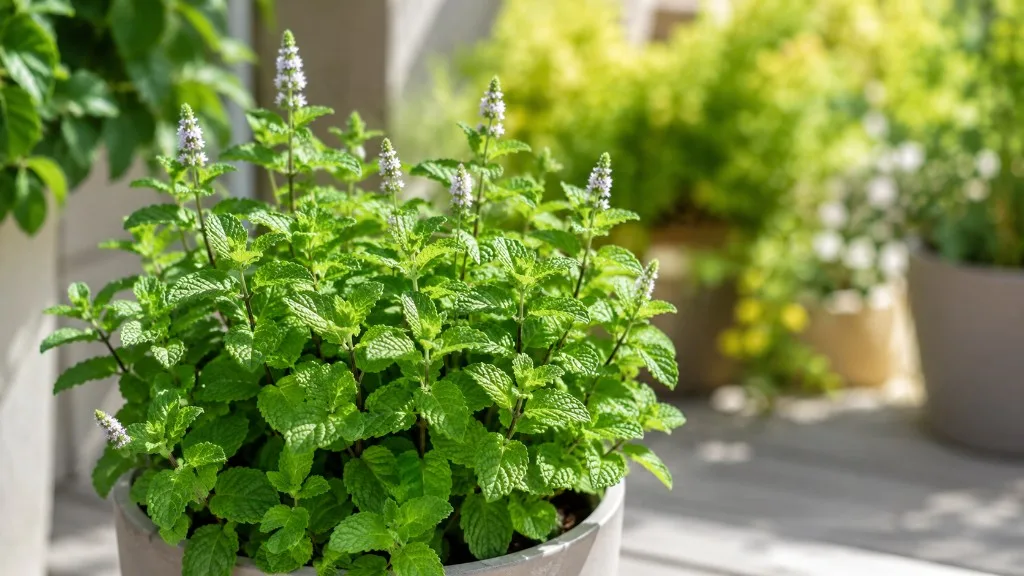
Mint Light Needs: Best Window, Sun & Warning Signs
Mint Light Needs: Best Window, Sun & Warning Signs
Mint is grown for fresh shoots and flavor, not for keeping one tired stem alive on a dim counter. Mentha spicata (spearmint) and Mentha × piperita (peppermint) both want real brightness: Missouri Botanical Garden lists spearmint in full sun to part shade, NC State Extension defines full sun as six or more hours of direct sunlight daily for spearmint, and University of Minnesota Extension notes that most culinary herbs need at least six hours of direct sun outdoors. Indoors, the practical goal is compact new growth, strong scent when you crush a tip, and fast regrowth after harvest - not a pale plant that survives because mint is “easy.”
Light also sets the pace for everything else on a mint pot. A bright plant dries its mix faster and uses water actively. A dim plant transpires slowly, which is why leggy growth and soggy soil often appear together on the same windowsill. For watering rhythm tied to brightness, see the mint watering guide. For mix and drainage context, see soil guidance. This page covers placement; for step-by-step low-light diagnosis, see not enough light on mint.
How Much Light Mint Actually Needs
Outdoors, treat 4 to 6 hours of direct sun as the practical minimum for dense culinary mint, with 6+ hours ideal when heat and moisture stay manageable. MOBOT’s full sun to part shade range maps to that band. Indoors, window glass, distance, and season cut intensity sharply, so many kitchen pots need either the brightest sill you have within 12 inches (30 cm) of the glass or a supplemental grow light running 12 to 16 hours daily on a timer - the range University of Minnesota Extension recommends for hydroponic lettuce and herbs, and the longer end of what overwintered culinary herbs often need when natural light is weak.
Judge success by new growth, not old leaves. Within two to three weeks of better light, new stems should show shorter gaps between leaf pairs, deeper green color, and a sharper scent when you crush the newest tip. Old stretched tissue will not fully compact again.
The Short Answer for Busy Growers
If you remember three rules, use these. Outdoors: place pots or beds where mint gets at least 4–6 hours of direct sun, aiming for 6+ hours in cool climates; add afternoon shade in hot humid regions where extension sources recommend lighter exposure. Indoors at a window: put the pot within 12 inches of the glass on your brightest exposure - usually south, west, or east depending on climate - and rotate weekly. Indoors without enough sun: add a full-spectrum LED 6–12 inches (15–30 cm) above the canopy and run it 12–16 hours daily; UMN Extension notes twelve hours of artificial light daily is enough for most indoor-grown herbs, while many kitchen setups perform better toward the longer end when windows contribute little.
North windows: treat as supplemental-light territory for harvest-grade mint, not a primary recommendation. North may sustain slow growth in high-latitude summer, but it rarely delivers the direct-sun hours mint uses for compact form and strong flavor.
Know Your Mint: Spearmint, Peppermint, and Others
When this guide says “mint,” it focuses on common culinary types: spearmint (Mentha spicata) and peppermint (Mentha × piperita). University of Maryland Extension notes spearmint grows best in moist soil and full sun to part shade, while peppermint is most productive in full sun though it tolerates shade. UF/IFAS Gardening Solutions adds a climate nuance: in Florida’s hot, humid weather, mint prefers light or part shade rather than all-day blazing sun - the opposite emphasis from cool-climate full-sun beds.
Apple mint, chocolate mint, and other Mentha hybrids follow the same general rule: bright light for flavor and density, with afternoon protection when leaf scorch appears. RHS guidance describes mint as happy in full sun or partial shade and notes young shoot tips carry the most intense flavor when plants are well lit and regularly picked.
Mint spreads by runners and rhizomes - a crowded pot can self-shade inner stems even when the outer shoots sit on a bright sill. That is one reason a “sunny” placement still produces weak inner growth until you harvest, divide, or repot. See propagation and division when runners overcrowd the surface.
Best Window Placement Indoors
Indoor mint fails when the pot sits where the room looks bright rather than where leaves receive photons for enough hours. Place mint on the sunniest unobstructed window available. Keep the pot close to the glass without pressing leaves against cold winter panes or scorching summer glass. A plant on a table six feet from a south window is not getting south-window light; intensity drops sharply with distance, as UMN Extension explains for high-light culinary herbs.
Rotate the pot a quarter turn every few days when growth leans toward the glass. Leaning confirms directional light starvation even when the plant still looks green.
South, East, West, and North Compared
A south-facing window delivers the strongest winter sun in northern latitudes and is the default for sun-loving herbs when heat is managed. Low winter sun angle can still fall short of mint’s appetite; summer afternoon sun through glass can overheat leaves. South works when the pot sits 12–24 inches (30–60 cm) from the pane and shows compact new shoots.
An east-facing window is often ideal for kitchen mint: morning sun is bright but cooler than late-day sun. Many east-exposure kitchens produce excellent spearmint from spring through autumn without scorch. If east-window plants still stretch, add grow-light hours rather than jumping to harsh west exposure.
A west-facing window can be excellent in spring and fall and risky in midsummer. Late-afternoon sun carries heat. Watch for bleached or crisp leaf edges and pull the pot back or use a sheer curtain during heat spikes.
A north-facing window rarely provides enough direct sun for compact culinary mint on its own. North may keep mint alive with slow, leggy growth - acceptable for temporary holding, not for harvest-grade flavor. If north is your only option, add a grow light or accept that the plant is in survival mode until you upgrade brightness.
Distance From the Glass
Compass labels are shortcuts. A south window blocked by a building may lose to an unobstructed east window. Use a field test: on a clear day, watch whether direct sunbeams touch most of the canopy for several hours. If sun hits only briefly, you are below target. If leaves wilt on moist soil during midday against hot glass, heat and light may both be excessive - increase distance slightly.
Grower observation (LeafyPixels, March 2026): Two spearmint divisions from the same parent pot were placed 15 cm from an east kitchen window versus 60 cm back on the same counter. After 14 days, the near-glass plant showed internode gaps under 2 cm on new stems and a strong scent on crushed tips; the distant plant showed gaps of 4–5 cm, paler new leaves, and faint aroma despite identical watering. Distance mattered more than the room feeling “bright.”
How Indoor Light Differs From Outdoor Sun
Human eyes adapt to dim rooms, so a kitchen that looks adequately lit may still fall short for a fast-growing culinary herb. University of Minnesota Extension groups culinary herbs such as basil with high-light plants that need south- or southwest-facing windows or supplemental lighting - mint belongs in that same practical category even though it survives dim corners longer than basil does.
Three structural reasons windows underperform compared with open garden beds. Glass filters and reflects part of the light spectrum and intensity. Day length shrinks in winter while mint’s appetite for daily light total does not. Inverse-square distance means moving a foot away from the pane can dramatically reduce intensity at the leaf surface. A south-facing window from May through September at mid-latitudes may grow decent mint if the pot stays close and you harvest regularly. The same window from October through March commonly requires supplementation for harvest-grade regrowth.
Winter Light Drop and What to Expect
Winter changes two variables at once: lower intensity and shorter photoperiod. Mint is not dormant like a deciduous tree; it keeps metabolizing, but growth slows when energy input drops. You may see yellowing lower leaves, smaller new foliage, and increased susceptibility to fungus gnats or root stress if soil stays wet in cool, dim conditions. Do not compensate for weak winter light by overwatering or over-fertilizing. Move the pot to the brightest pane, add a grow light on a timer, and reduce watering frequency to match slower growth. If the plant is already woody and exhausted in the pot center, starting fresh cuttings under a light often beats rescuing a leggy October transplant - see propagation for water-rooted starts.
Outdoor Sun and Patio Placement
Outdoor mint is the simplest light scenario when containers sit in open sun. Choose a site with 4–6+ hours of direct sunlight and moist, rich, well-drained soil or potting mix. NC State Extension describes spearmint thriving in full sun in organically rich, moist soils, tolerating partial shade but not dry soils. Space pots so runners do not shade each other - mint in a crowded tub fights itself for light by midsummer.
Spring seedlings started indoors need 7 to 14 days of hardening off - gradual outdoor exposure - before they sit in full patio sun all day. Skipping acclimation causes bleached patches even in a “correct” sunny spot.
Hot-Climate Afternoon Shade
In hot, humid climates, all-day sun on a dark patio can scorch mint even though the species is sun-loving in temperate gardens. UF/IFAS Gardening Solutions recommends light or part shade in Florida, where intense afternoon heat and moisture stress leaf tissue. Provide morning sun with afternoon shade when you see repeated crisp edges on sun-facing leaves, when dark pots overheat on pavement, or during heat waves. Afternoon shade is a stress reducer, not a permanent low-light lifestyle - mint still needs a high daily light total for flavor.
Can Mint Take Direct Sun?
Yes - when acclimated and when heat at the leaf surface stays manageable. Spearmint evolved in open, moist habitats and handles direct rays once tissue hardens. Problems start with sudden jumps from a dim shop shelf to harsh south glass or from indoors to unfiltered midsummer patio sun.
Warning signs of too much sun too fast include bleached white or tan patches on exposed leaves, crisp brown margins, downward curling during peak hours, and wilting on wet soil when root-zone heat spikes. Pull the plant back, filter glass, or restart a 7–14 day staged move rather than abandoning direct sun altogether.
Low-Light Limits and Flavor Decline
Low light is a poor long-term setup for mint. The plant may survive for weeks on stored energy, but internodes stretch, new leaves stay small and pale, regrowth after harvest slows, and scent weakens - crush a fresh tip and compare with outdoor sun mint if you can. These patterns overlap the dedicated not enough light diagnostic page; this guide focuses on placement and prevention, while that page walks through confirmation checks and recovery steps.
In lower light, reduce watering frequency to match slower transpiration. Do not compensate for dim conditions with extra fertilizer - fix light first. If inner stems are shaded by crowded runners, pinch or divide before assuming the window is solely at fault.
Using Grow Lights for Kitchen Mint
When natural glass cannot deliver enough daily light - north-only rooms, deep kitchens, short winter days - a full-spectrum white LED labeled for seedlings or herbs is the reliable fix. Standard ceiling room lights are optimized for human vision, not the daily totals fast herbs need. UMN Extension classifies culinary herbs such as basil as high-light plants suitable for south- or southwest-facing windows or supplemental lighting - mint belongs in that same practical tier.
Fixture, Distance, and Timer Setup
A workable starting setup for kitchen mint:
- Spectrum: full-spectrum white LED, roughly 4000K–6500K
- Distance: 6–12 inches (15–30 cm) above the tallest shoots; UMN Extension lists 6–12 inches for hydroponic lettuce and herbs
- Duration: 12–16 hours daily on a timer; extension benchmarks range from 12 hours for indoor herbs to 12–14 hours for hydroponic herbs, with many kitchen mint pots performing better at 14–16 hours when window contribution is low
- Heat check: if leaf edges crisp only under the lamp, raise the fixture; if stems stretch toward the bulb, lower it slightly or extend the timer - change one variable at a time
Combine overhead LED with the brightest window when possible. Hybrid setups often recover flavor fastest after harvest because the canopy receives both directional window light and even overhead fill.
How to Move Mint Safely Between Light Levels
Change placement gradually when upgrading from dim to bright conditions. Mint reacts to sudden shifts with leaf drop, curling, scorch, or stalled growth depending on prior habit. Use a 7–14 day protocol: start several feet back from the target window, move halfway, then settle 12–24 inches from east or filtered south/west glass unless bleach appears. Hold at the last safe distance an extra week if stress shows.
Do not combine a major light jump with repotting, heavy feeding, or division in the same week. Fix light first; adjust watering after new growth confirms success. Store-bought mint often arrives from low-light retail shelves - quarantine in moderate bright indirect light for a few days before pushing toward your sunniest window.
Too Much Light: Warning Signs and Fixes
Read new tissue first after any move; old scorch does not green up again.
| Symptom | Likely cause | Fix |
|---|---|---|
| Bleached or white-yellow patches on sun-facing leaves | Direct sun too intense or too fast | Pull back; sheer curtain; restart acclimation |
| Crisp brown leaf edges after a move | Sunburn / hot glass | Increase distance; morning sun only in heat |
| Downward curling at midday on moist soil | Heat + light load | Afternoon shade; lighter pot color |
| Sudden wilt on wet mix in peak sun | Root-zone heat, not drought | Shade pot base; move off hot pavement |
If scorch coincides with soft stems and sour soil in a formerly dim corner, inspect roots - light stress and rot can overlap after months of slow transpiration.
Too Little Light: Warning Signs and Fixes
| Symptom | Likely cause | Fix |
|---|---|---|
| Long gaps between leaf pairs on new stems | Etiolation from insufficient light | Move closer; add grow light; see leggy growth |
| Pale or yellow-green new foliage | Chronic low light | Extend photoperiod; rotate pot |
| Weak mint scent on fresh tips | Light-limited flavor chemistry | Upgrade brightness before fertilizing |
| One-sided lean toward window | Directional starvation | Rotate; add overhead LED |
| Slow regrowth after harvest | Energy deficit | Brighter placement; pinching after light improves |
Fix light before stacking other interventions. For a full diagnostic workflow - rotate test, internode measure, scent check - use the not enough light page.
Why Mint Light Confuses Growers
Three mint-specific traps cause bad placements. First, mint tolerates neglect longer than basil, so growers assume dim counters are “fine.” Second, vigorous spread self-shades inner stems in one pot, mimicking low room light when the outer rim still looks acceptable. Third, flavor declines before color - a pale-green mint on a north sill can look alive while tasting flat, which is why scent checks matter as much as leaf count.
Climate adds a fourth split: cool-climate extension sources emphasize full sun; UF/IFAS emphasizes light or part shade in Florida. Both are correct in context - match your placement to local heat and scorch risk, not to a single generic “full sun everywhere” rule.
Practical Checks: New Growth and Watering Link
New-growth test: judge light by the newest node after any change. Old damage is historical. Firm, correctly colored, closely spaced new leaves mean today’s placement works.
Watering link: every light change changes water use. If mint moves brighter, check moisture more often; if it moves dimmer, let the top 2 cm dry longer before watering. A rhythm that worked on a sunny sill will overwater the same plant in a dim corner because the root zone stays saturated longer. Pair this page with the mint overview for buying and first-month checks.
At-a-Glance Window Direction Table
| Window | Direct sun (typical) | Scorch risk | Best use for mint |
|---|---|---|---|
| South | High; strongest winter sun | High in midsummer heat | Primary bright placement when heat managed |
| East | Moderate; cool morning rays | Low | Excellent kitchen default |
| West | Moderate–high; hot afternoon | High in summer | Strong with distance or curtain |
| North | Low; mostly indirect | Very low | Survival only; add grow light for harvest |
Editorial bands for home placement - not laboratory requirements. Obstructing trees, tint, and pot distance change real intensity more than compass labels alone.
Related Mint Care Guides
Use these sibling pages when light is only part of the picture:
- Mint overview - buying checks, first-month settling, and the full care hub
- Watering - moisture rhythm after light changes
- Soil - mix and drainage that keep bright-light watering safe
- Propagation - restarting tired pots under better light
- Not enough light - diagnostic workflow for pale, stretched mint
- Leggy growth - stretch-specific fixes after placement upgrades
Conclusion
Mint light needs reduce to a simple harvest standard: enough brightness for compact new shoots and strong scent, without scorching leaves or baking roots against hot glass. Outdoors, aim for 4–6+ hours of direct sun, pushing toward six or more hours when climate allows, and add afternoon shade in hot humid regions per UF/IFAS guidance. Indoors, place pots within 12 inches of your brightest window, treat north exposure as grow-light territory, and run a full-spectrum LED 12–16 hours daily when glass falls short.
Read new growth, not old damage. Distinguish bleach from stretch, fix one variable at a time, and link light changes to watering adjustments. When symptoms persist despite a bright-looking room, walk through not enough light before repotting or feeding. For the full care picture, start with the mint overview.