Leaf Drop on Mint: Causes, Checks & Fixes
Quick answer
Mint drops lower yellow leaves from overwatering, rust, or spider mites. First step: Fix watering rhythm, inspect for rust pustules or mite webbing, and clear fallen leaves from soil.
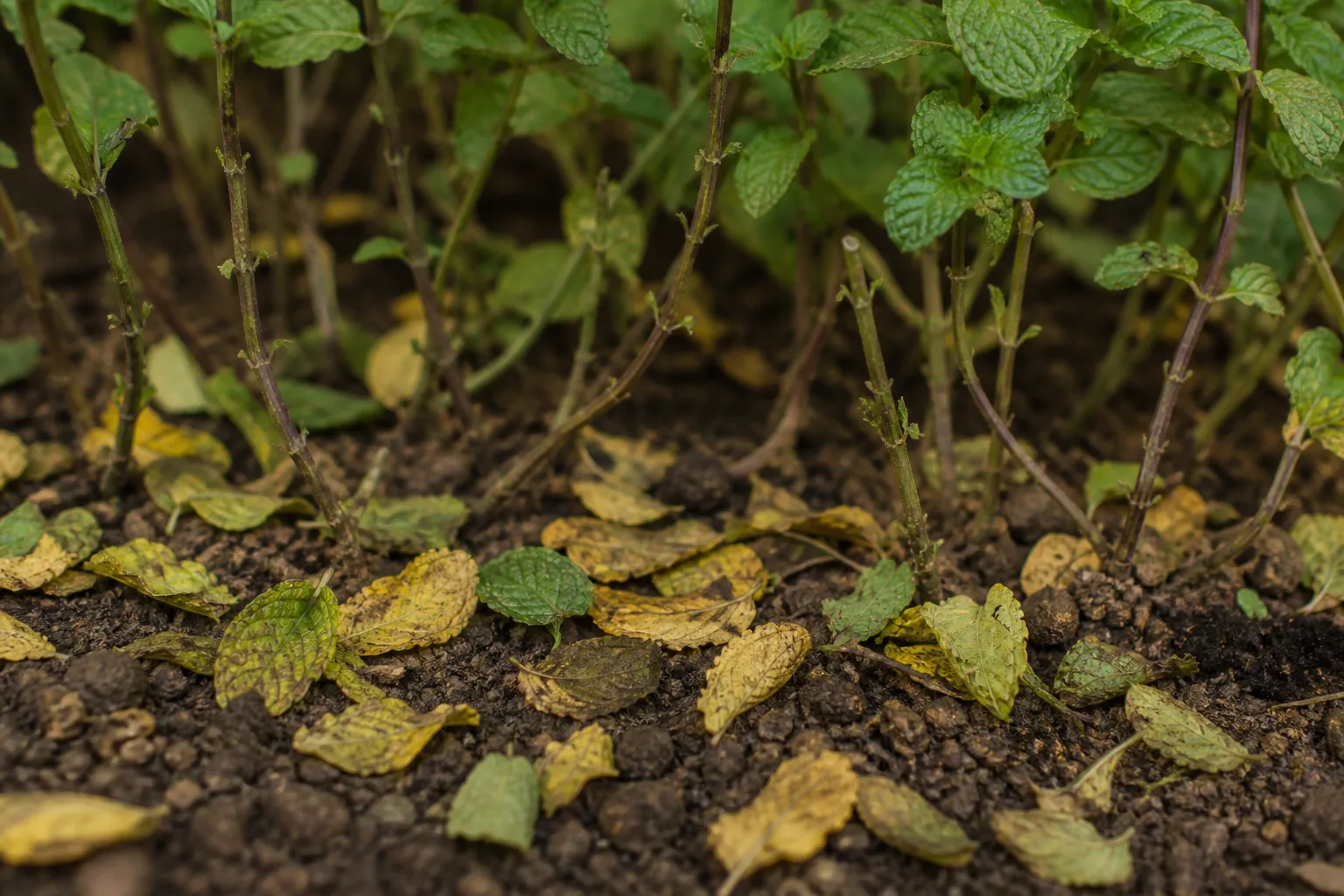
Leaf Drop on Mint: Causes, Checks & Fixes
This guide covers leaf drop on Mint. See also the general Leaf Drop guide, watering, and light pages for this plant.
Leaf Drop on Mint: Causes, Checks & Fixes
Quick answer
Mint leaf drop is usually one of four patterns: wet-soil root stress, mint rust, spider mites, or normal aging after heavy growth. The first move is to identify which pattern you have, because each one needs a different fix.
First fix: pause watering and run a 3-minute inspection-soil moisture at 2 cm depth, leaf undersides for pustules or webbing, then stem firmness at the base. If soil is wet and stems soften, treat root stress first. If you see orange-to-black pustules, treat mint rust. If you see stippling and webbing, treat spider mites.
Why Mint drops leaves
Mint grows fast and spreads by rhizomes, so it can look vigorous right before leaf drop begins. In containers, the most common trigger is chronic wet media: roots lose oxygen, function drops, and older leaves yellow then fall while the pot still feels heavy. Extension guidance for herbs and houseplants repeatedly flags persistent wet soil and poor drainage as a root-rot risk, especially in lower-light periods (University of Minnesota Extension, Oklahoma State Extension).
Rust is the second major branch. Puccinia menthae produces dusty orange pustules that later darken; severe infections can yellow leaves and cause defoliation (Pacific Northwest Plant Disease Handbook).
Spider mites are a third branch, especially in hot, dry indoor air. Their feeding causes stippling, bronzing, and eventual leaf loss; webbing usually appears after the infestation has grown (UC IPM, NC State Extension).
A smaller amount of drop can be normal on mint after rapid flushes of growth or heavy harvesting. Normal turnover is slow and limited to older leaves; new tips stay firm and expanding.
What leaf drop looks like on Mint
Use this pattern table before taking action:
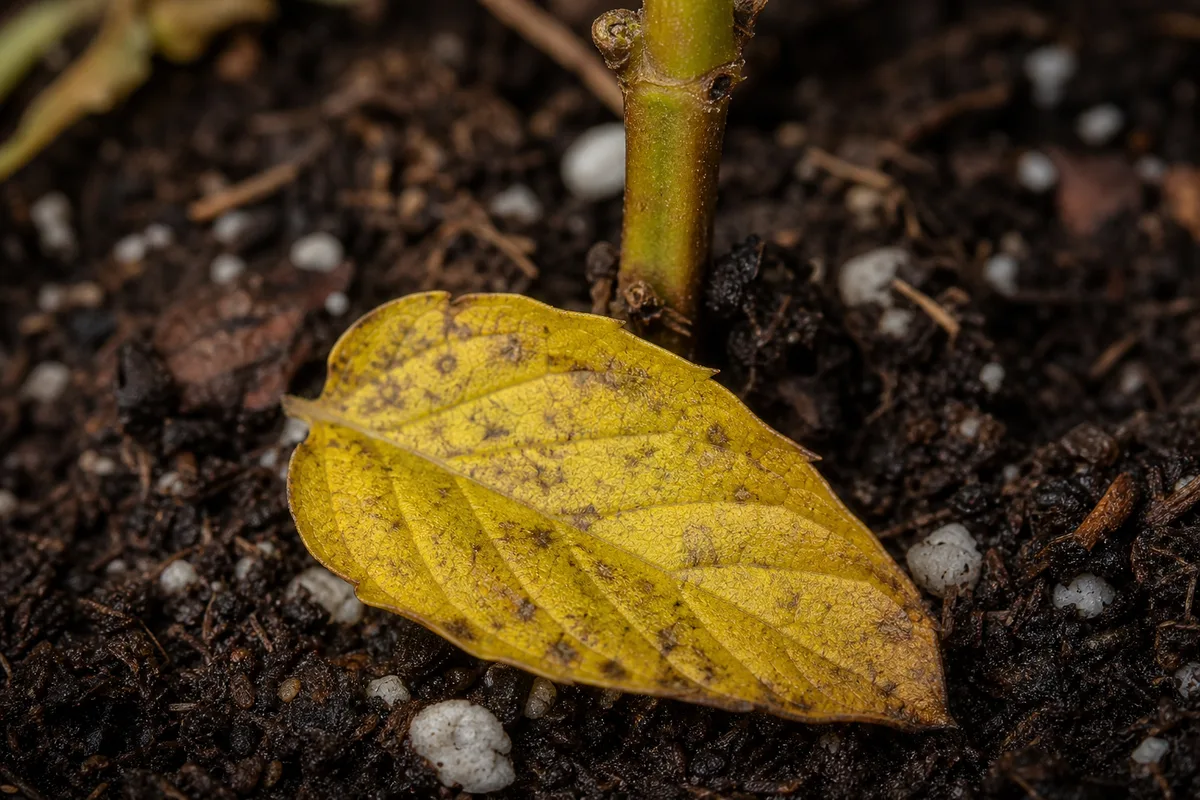
Leaf Drop symptoms on Mint - compare with healthy tissue on the same plant.
| Pattern you see | Most likely cause | What confirms it | Next page |
|---|---|---|---|
| Lower leaves yellow and drop while soil stays wet and pot feels heavy | Root stress from overwatering | Soft stem base, sour smell, gnats, slow new tips | Overwatering on mint |
| Orange pustules, then yellow/black dusty lesions with drop | Mint rust | Pustules on leaf backs/stems; distorted shoots possible | Rust disease on mint |
| Fine stippling first, then webbing and drop | Spider mites | Moving mites/webbing on undersides, bronzing leaves | Spider mites on mint |
| Only a few oldest leaves drop while tips stay vigorous | Normal aging or harvest stress | No pests, no rust pustules, roots/stems remain firm | Keep routine and monitor weekly |
How to confirm the cause
Run this sequence once, then decide:
- Check moisture at 2 cm depth. If mix is still wet days after watering, root stress is likely; if pot is very light and dry throughout, look at underwatering instead.
- Inspect undersides of 6–10 leaves. Rust gives powdery pustules and color progression (orange/yellow to dark spores) (RHS); mites give stippling and webbing (UC IPM).
- Pinch the stem base at soil line. Firm tissue supports recovery; soft or hollow tissue means immediate root-zone intervention.
- Look at growth direction. If only old lowers drop while new tips push strongly, this may be normal turnover rather than a crisis.
When two causes overlap
Mint sometimes shows mixed signals because fast growth masks early stress:
- Wet soil + rust pustules: treat root stress first-stop watering until the top 2 cm dries, improve drainage, then remove rust-infected shoots once stems are firm. Wet crowns spread rust spores faster on fallen debris.
- Dry air mites + drought: stippling and a light pot together mean mites are draining an already water-stressed plant. Rinse undersides, then stabilize watering before repeating soap or oil sprays (University of Minnesota Extension).
- Heavy harvest + normal turnover: if you stripped a large flush for tea and only lower leaves drop over two weeks with firm new tips, wait before escalating to fungicides or Mint repotting guide.
When patterns conflict, fix the branch that threatens roots or spreads spores first-usually wet soil or active rust-then reassess in one week.
First fix for Mint
Take one first action based on what you found:
- Wet-soil branch: stop watering until the top 2 cm approaches dry, empty saucers, and improve airflow around the pot. If stems are soft or sour-smelling, move straight to root rot protocol.
- Rust branch: remove infected shoots, bag debris, and keep foliage dry. Do not leave diseased leaves on media because rust survives via spores and infected debris around mint plantings (RHS).
- Mite branch: rinse leaf undersides thoroughly and repeat with labeled soap/oil coverage aimed at undersides; contact products need direct coverage to work (University of Minnesota Extension).
Do not fertilize as a first response during active shedding. Fix diagnosis first, then feed once stable new growth resumes.
Recovery timeline
When the correct cause is treated early, shedding usually slows within 7–10 days. A meaningful recovery sign is 2–3 weeks of stable, attached new tips with no new rust pustules and no expanding mite webbing.
Severe root stress or widespread rust can take longer and may require hard pruning, division, or resetting into fresh mix. Judge success by new growth quality, not by old damaged leaves. Old leaves that are already yellowing will not recover.
What not to do
- Do not water again just because leaves are limp if the pot is already wet.
- Do not compost heavily rust-infected mint debris.
- Do not ignore fine webbing; by the time webbing is obvious, mite pressure is usually already high.
- Do not repot and spray and fertilize all at once unless collapse is rapid; stack interventions only when needed.
How to prevent leaf drop on Mint
Keep mint in the middle zone: evenly moist, not saturated. Water by media check, not by calendar, and keep drainage clear (University of Minnesota Extension). Give enough light for active use of water and inspect leaf undersides weekly for early rust and mite signs. Remove fallen leaves promptly so infected debris does not sit near crowns and rhizomes.
When to worry
Treat as urgent if more than half the foliage drops in under a week, stems soften at the base, or rust has advanced to black spores on multiple stems. If shedding continues after two weeks of corrected care, contact your local cooperative extension office for help identifying persistent rust or mite pressure on edible herbs.
Related mint problems
- Mint overview
- Mint watering
- Poor drainage on mint
- Wilting on mint
- Yellow leaves on mint
- Drooping leaves on mint
When to use this page vs other Mint guides
- Mint watering guide - Use for routine moisture checks before assuming leaf drop is the main issue.
- Mint problems hub - Browse all 40 common issues on this species.
- Yellow Leaves on Mint - Different entry point when symptoms overlap with leaf drop.
- Drooping Leaves on Mint - Different entry point when symptoms overlap with leaf drop.
- Root Rot on Mint - Different entry point when symptoms overlap with leaf drop.