Not Enough Light on Mint: Causes, Checks & Fixes
Quick answer
Not enough light on Mint causes pale, stretched stems and weak flavor. First step: Move the pot to the brightest available spot with at least 4–6 hours of direct sun, or run a full-spectrum grow light 12–16 hours daily.
Not Enough Light on Mint: Causes, Checks & Fixes
This guide covers not enough light on Mint. See also the general Not Enough Light guide, watering, and light pages for this plant.
Not Enough Light on Mint: Causes, Checks & Fixes
Quick answer
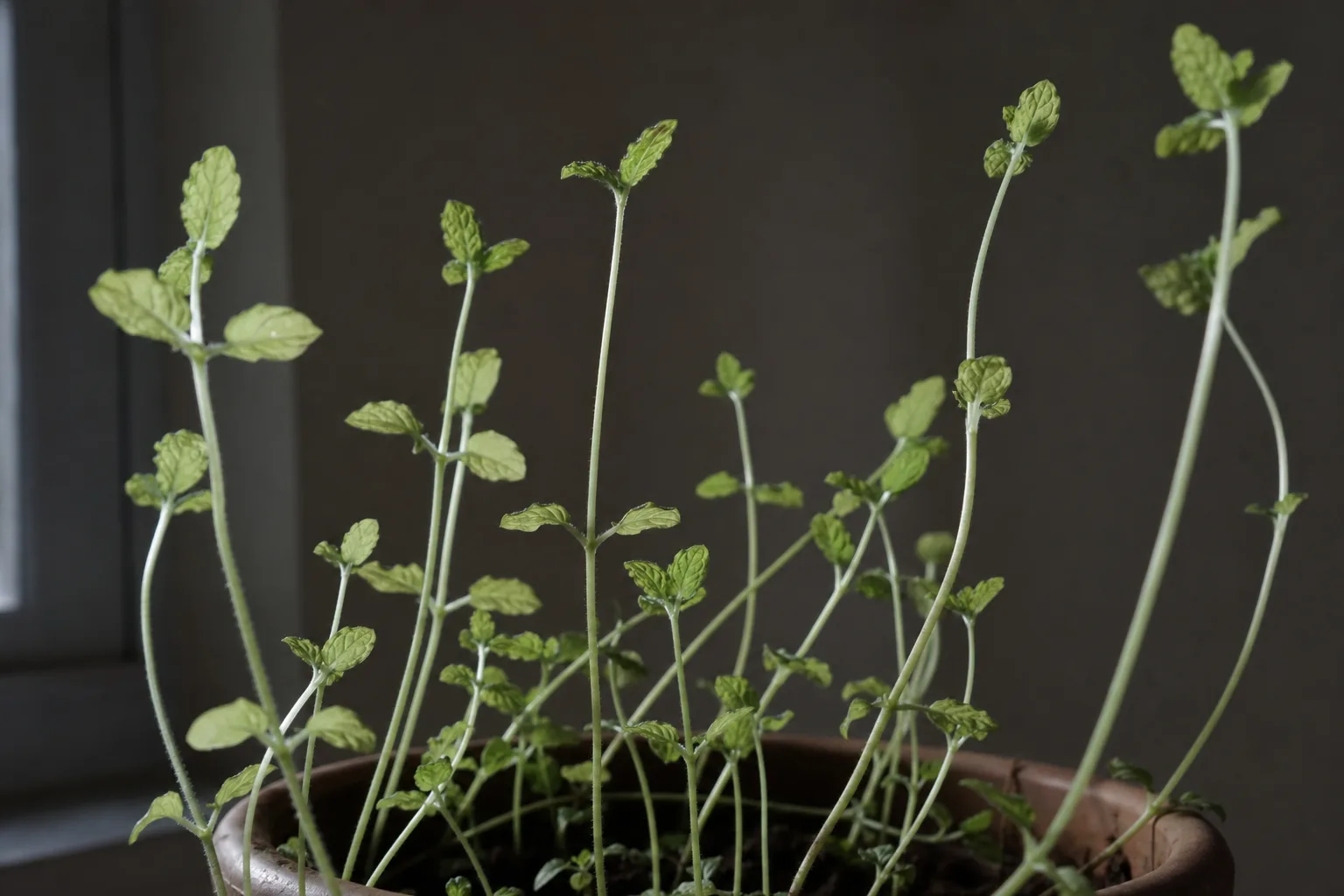
Mint (Mentha spicata, spearmint) is a sun-loving herb that grows best in full sun to part shade outdoors-but indoors it often sits on a dim counter or north window where photosynthesis cannot keep up with its fast growth habit. The result is etiolation: long internodes, small pale leaves, and mint that smells flat when you crush a tip.
First step: move the pot today to the brightest spot you have with at least 4–6 hours of direct sun. If no window delivers that, place a full-spectrum LED grow light 30–45 cm above the foliage and run it 12–16 hours daily on a timer. Do not fertilize, repot, or soak the plant before you fix light-that stacks stress on a plant already failing to produce energy.
What not enough light looks like on Mint
Low light on mint is easy to misread as thirst or hunger because the plant still looks alive. The pattern is structural:
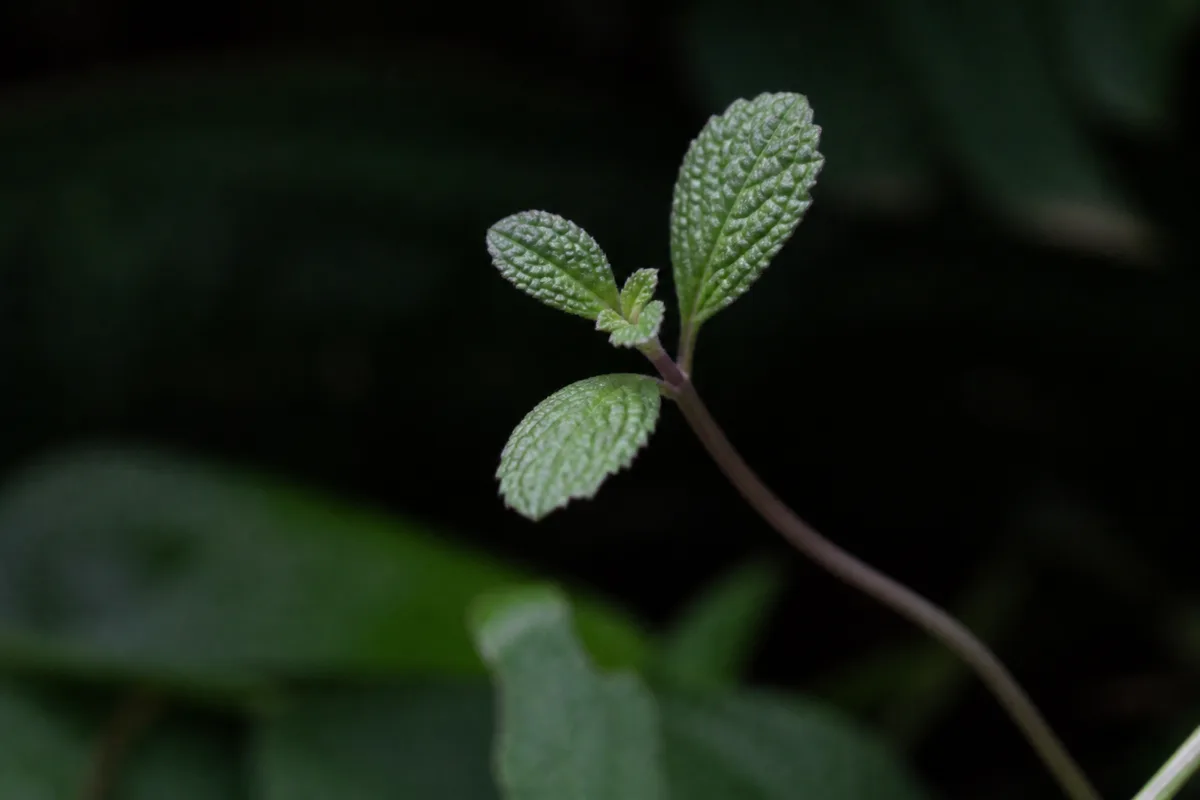
Not Enough Light symptoms on Mint - compare with healthy tissue on the same plant.
- Stems stretch toward the nearest window, leaving bare lower nodes and wide gaps between leaf pairs
- New leaves stay smaller and lighter green than older outdoor-grown mint, sometimes yellow-green rather than deep emerald
- Fragrance weakens-crush a fresh tip and compare with a sprig from a sunny outdoor pot if you have one; light-starved mint often smells watery or faint
- Regrowth after harvest is slow-cut stems take longer to push side shoots, unlike the quick rebound mint shows in bright sun
- One-sided growth-the side facing the glass may look slightly better while the shaded side goes sparse
These signs differ from sun scorch, which shows as crispy brown leaf edges on tissue that received sudden harsh direct sun. Low-light mint looks soft and elongated, not burnt.
Lower leaves may yellow and drop as the plant sheds shade leaves it can no longer support. That overlap with overwatering on Mint is why you confirm soil moisture and root health-not just window direction-before treating light alone.
Why Mint gets not enough light
Spearmint evolved as an upright, spreading perennial that thrives in full sun in moist, rich soil. NC State Extension defines full sun as six or more hours of direct sunlight daily; partial shade is two to six hours. Kitchen mint rarely gets even the partial-shade minimum once glass, sheers, and distance from the pane cut intensity.
Common triggers in home growing:
Dim placement for convenience. Mint lands on a counter or shelf because it is an edible herb, not because the spot is bright. University of Maryland Extension notes that light intensity drops sharply with distance from the window-what feels bright to you may be medium or low light for a fast-growing herb.
North or obstructed windows. North exposures and windows blocked by buildings, tint, or dirty glass deliver far less usable energy than a south- or west-facing sill. Winter short days make the same window weaker even if the pot never moved.
Seasonal daylight loss. Mint brought indoors in autumn for winter harvest often lands in a darker room than its summer patio spot. UMN Extension notes that herbs in poor winter light may die back or stall until brighter sun returns-mint follows the same pattern.
Self-shading in crowded pots. Mint spreads by runners and rhizomes. One long stem can arch over and shade younger shoots inside the pot, so even a reasonably lit windowsill may leave inner stems starved.
Overcast climates and deep balconies. Outdoor mint in permanent shade beds-under trees or on shaded balconies-shows the same stretch and pale leaves as indoor pots, just more slowly.
Mint tolerates partial shade better than many vegetables, but flavor and density suffer when light is consistently low. RHS guidance ties the best minty flavor to young shoot tips grown in adequate sun with regular picking-not to dark, moist corners.
How to confirm the cause
Work through these checks in order so you do not treat overwatering or pests as a light problem:
- Hours of direct sun - Count how many hours unfiltered sun hits the pot between 10 a.m. and 4 p.m. Fewer than four hours on most days confirms insufficient light for dense culinary mint.
- Rotate test - Turn the pot 180° and mark which side was facing the window. After one week, new growth should lean toward the glass. Strong one-sided lean confirms phototropism from low light.
- Internode length - Measure the gap between two leaf pairs on a new stem. Stems with gaps longer than 3–4 cm on a windowsill mint usually indicate stretch; compact outdoor mint in sun often shows gaps under 2 cm.
- Soil moisture and roots - Press the top 2 cm. Constant wetness with soft lower stems points to root stress; very dry soil with wilt points to drought. Fix moisture first if either is true.
- Leaf undersides and webbing - Pale stippling with fine silk suggests spider mites, not simple low light. Honeydew or curled tips suggest aphids.
- Scent check - Crush the newest tip. Weak aroma with long pale stems supports light deficiency; strong scent on thin stems may mean you only need harder harvesting.
If the pot gets good sun but stays sparse, the issue may be leggy growth from infrequent pinching rather than location-see lookalikes below.
First fix for Mint
Move the pot to the brightest location available-ideally a south- or west-facing window where the plant receives at least 4–6 hours of direct sun.
If the only bright spot is much sunnier than the old one, move gradually over three to five days if the plant was in deep shade-sudden jumps to hot afternoon glass can scorch leaves adapted to dim light. For most kitchen mint already getting some indirect daylight, a direct move is fine.
No suitable window? Add a full-spectrum LED grow light 30–45 cm above the top of the plant, on a timer for 12–16 hours daily. Maryland Extension recommends limiting total daily light-including artificial-to about 16 hours so plants still receive a dark period.
That single relocation or light upgrade is the first fix. Pinching, rotating, and watering adjustments come after the plant has a brighter baseline.
Step-by-step recovery
Once light improves, support compact regrowth in this order:
- Rotate weekly - A quarter turn every few days keeps stems from leaning hard to one side and exposes more leaf surface to light.
- Pinch or harvest stem tips - Cut or pinch the top two nodes on long stretched stems. Regular harvesting encourages bushy, full growth on spearmint and redirects energy to side shoots.
- Hard reset if needed - Severely stretched plants can be cut back to about 5 cm from the base after light is fixed; fresh shoots emerge with tighter spacing in two to three weeks.
- Match watering to new light - Brighter light dries the pot faster. Check the top 2 cm and water when barely moist-do not keep the old schedule while soil stays soggy.
- Hold fertilizer - Skip feed until new growth looks green and stable for two weeks. Mint in recovery does not need nitrogen pushing soft stretch in marginal light.
- Thin crowded runners - Pull or cut one dominant long stem if it shades the rest of the pot; mint spreads aggressively and inner shoots need light too.
For winter kitchen mint, accept slower growth rather than keeping a dark pot constantly moist-wet soil plus weak light invites fungus gnats and root decline.
Recovery timeline
One to two weeks: New tips should look slightly darker and closer together; leaning should slow after rotation and brighter exposure.
Two to four weeks: Side shoots break below pinch points; crushed new leaves should smell noticeably stronger. Old stretched internodes remain long-they do not shrink.
Four to eight weeks: With weekly harvest and adequate light, the pot should look bushy enough for regular kitchen use. Stems that were pale and woody lower down may never fully green; many growers cut those out and keep only fresh basal growth.
Signs the fix is working: Shorter gaps on new nodes, upright side branches, faster regrowth after cutting, and stronger scent on young tips.
Signs the problem is worsening: Continued stretch despite 4–6 hours sun or 12+ hours under a grow light; yellowing lower leaves with wet soil; soft stems at the base; no new shoots four weeks after a hard cutback. Those warrant root inspection or pest checks-not just another window shuffle.
Lookalike symptoms
- Leggy growth from infrequent harvest on Mint - Long stems in adequate light with strong scent on tips; fix by weekly pinching, not relocation.
- Nitrogen deficiency - Oldest leaves yellow first while new growth stays green; light is adequate but heavy harvesting depleted nutrients. Use half-strength balanced feed after light and watering are stable.
- Overwatering / root stress - Yellow lower leaves, sour soil smell, mushy stem bases; may occur alongside low light because dim pots dry slowly. Reduce water and check roots before assuming light alone.
- underwatering on Mint - Wilting with light pot and dry soil throughout; deep soak once, then resume even moisture-leaves may look dull but stems stay relatively short.
- Spider mites - Pale stippling and webbing on undersides in hot dry indoor air; rinse and treat pests-light alone will not clear stippling.
- Normal winter slowdown - Slower growth in short days even on a windowsill; supplement with a grow light or expect limited harvest until spring.
What not to do
Do not fertilize heavily in a still-dim spot-soft, floppy stretch gets worse. Avoid keeping a dark corner moist on a fixed calendar; mint uses less water when it is not photosynthesizing strongly. Do not assume all “bright kitchens” are bright enough-measure sun hours at the pot, not at eye level across the room. Do not discard the plant after one week if only old stems look pale; judge recovery on new growth after light improves.
How to prevent low-light stress on Mint
Place outdoor pots in full sun to part shade with moist, rich soil-spearmint adapts widely but produces the best flavor in strong light. Indoors, plan for a south or west sill or a dedicated grow light before autumn short days.
Harvest shoot tips every week during active growth to keep plants compact. Rotate the pot regularly. When bringing patio mint inside for winter, move it to the brightest window or add supplemental light the same week-do not let it sit in a hallway while you find a spot.
Repot or divide crowded pots every 6–12 months so inner rhizomes are not shaded by their own runners. Clean windows and open sheers in winter to recover lost intensity.
When to worry
Low light alone rarely kills mint quickly-it is a tough perennial. Worry when soft stems, sour soil, and widespread yellowing appear together, because root rot on Mint in a dim, wet pot progresses faster than stretch alone. Worry when no new shoots appear within four weeks after improving light and cutting back-rhizomes may be damaged or the pot may be root-bound with only edge growth receiving light.
If better light and corrected watering still fail, divide the healthiest outer runners into fresh compost in a smaller bright pot. Mint recovers from division more reliably than from nursing one long shaded stem in the original container.
When to use this page vs other Mint guides
- Mint watering guide - Use for routine moisture checks before assuming not enough light is the main issue.
- Mint problems hub - Browse all 40 common issues on this species.
- Leggy Growth on Mint - Different entry point when symptoms overlap with not enough light.
- Slow Growth on Mint - Different entry point when symptoms overlap with not enough light.
- Yellow Leaves on Mint - Different entry point when symptoms overlap with not enough light.