Yellow Leaves on Mint: Causes, Checks & Fixes
Quick answer
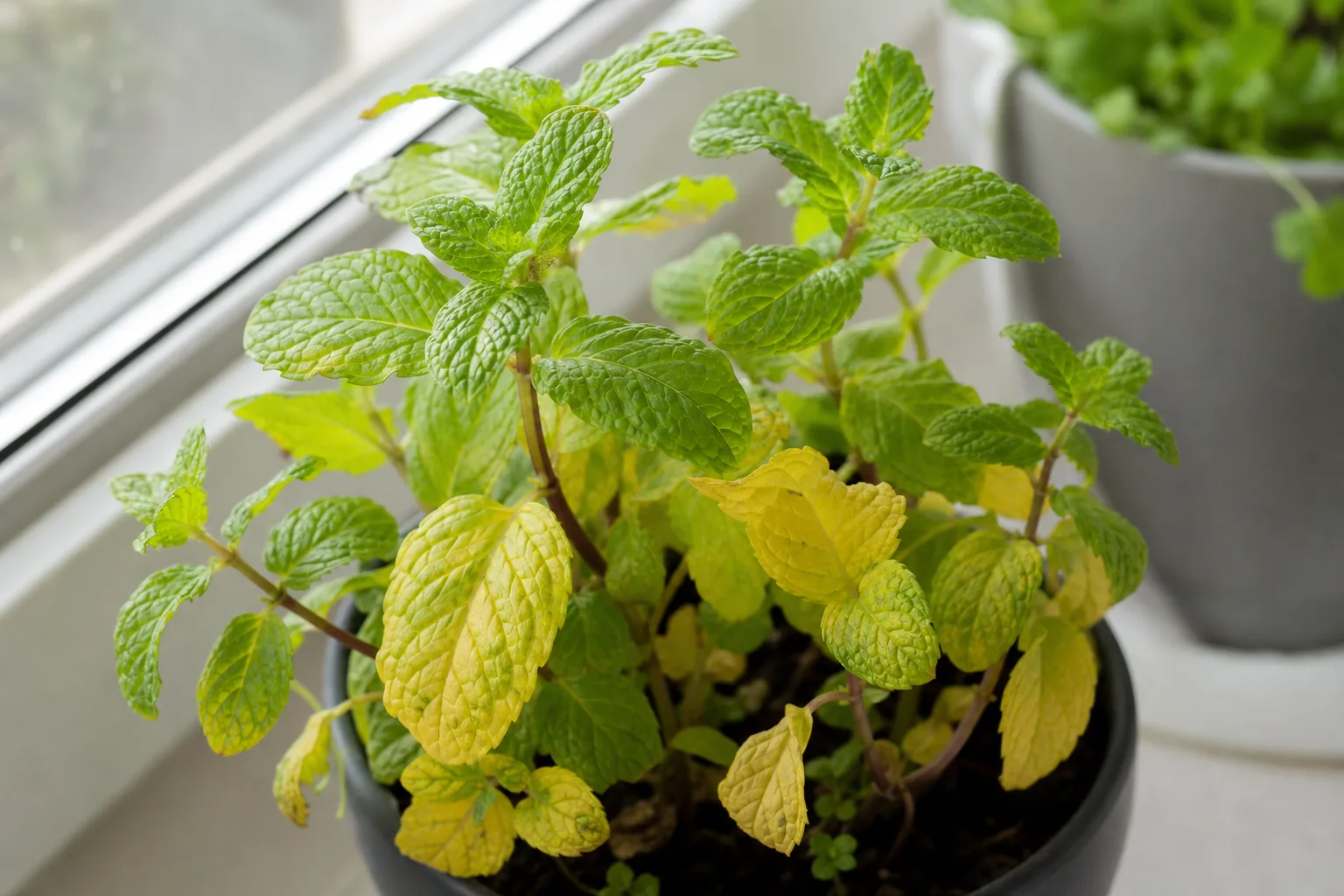
If you harvest mint every week and lower leaves turn pale yellow while tips stay light green, nitrogen drain in a small pot is likely-after you rule out wet soil. First step: press the top 2 cm of mix; dry light pot with firm roots gets half-strength feed; heavy wet pot needs water fixed before any fertilizer.
Yellow Leaves on Mint: Causes, Checks & Fixes
This guide covers yellow leaves on Mint. See also the general Yellow Leaves guide, watering, and light pages for this plant.
Yellow Leaves on Mint: Causes, Checks & Fixes
Quick answer
You clipped mint for tea last weekend and now the bottom leaves are turning pale yellow while the shoot tips still look light green. On spearmint (Mentha spicata) and close culinary relatives in small kitchen pots, that pattern usually means one of two things: constant harvest drained nitrogen from the container, or wet roots cannot take up nutrients even though you watered on schedule.
First step: press your finger into the top 2 cm of mix and lift the pot before you reach for fertilizer.
| What you find | Likely cause | First action |
|---|---|---|
| Dry top 2 cm, light pot, firm roots, uniform pale lower leaves | Nitrogen drain from heavy harvest | Half-strength balanced liquid fertilizer once on moist soil |
| Wet or cold-wet mix, heavy pot, soft lower stems, sour smell | Overwatering / root stress | Stop watering until top 2 cm dries; see overwatering on mint |
| Speckled yellow dots, fine webbing on undersides | Spider mites | Rinse undersides; treat pests-not feed |
| Orange dusty pustules on stems or leaf backs | Mint rust | Remove infected shoots; see rust disease on mint |
| Pale leaves, long stretch toward window, weak scent | Low light | Move to brighter sun or add grow light-not enough light guide |
| A few yellow lowers only; dark green new tips; even moisture | Normal aging after harvest | Trim old leaves; no emergency feed |
Do not fertilize mint whose roots smell sour or sit in constantly wet mix-that pushes yellowing leaves faster through damaged roots.
What yellow leaves look like on Mint
Yellowing on container mint follows predictable patterns once you know what harvest rhythm does to a small pot.
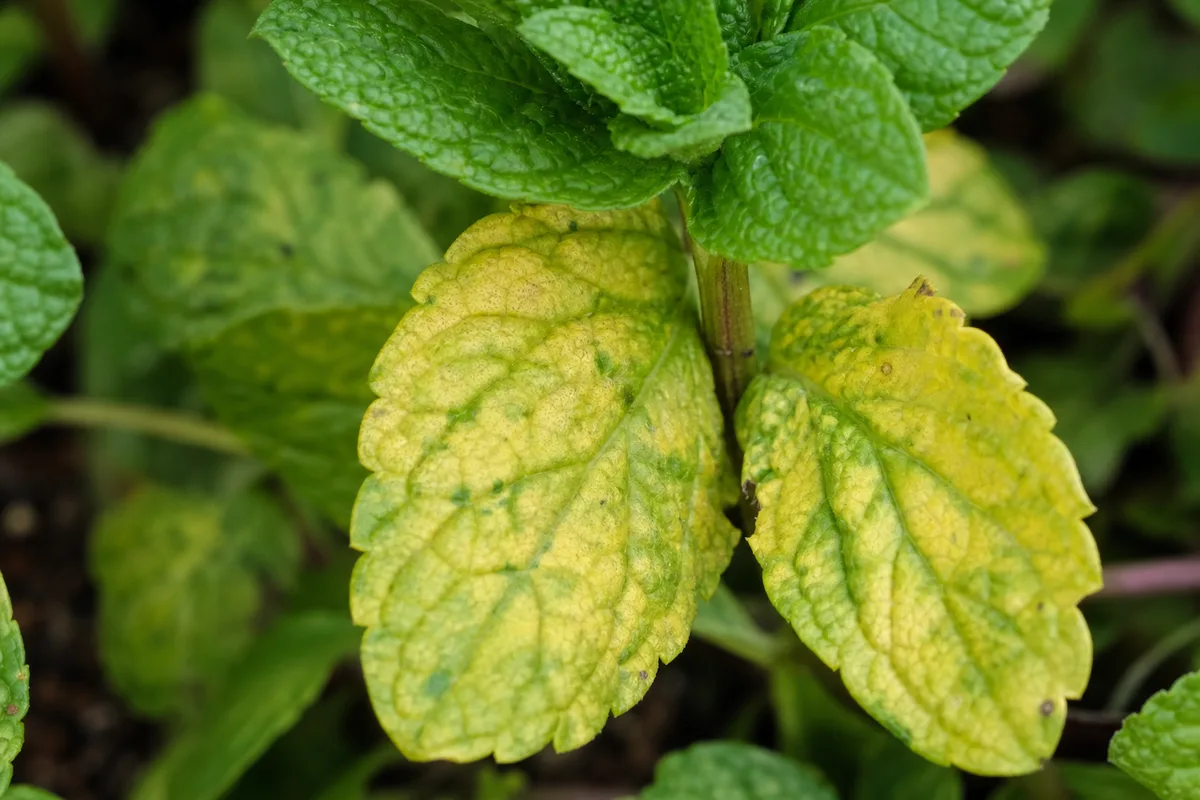
Yellow Leaves symptoms on Mint - compare with healthy tissue on the same plant.
Hunger / nitrogen drain: Uniform pale yellow on oldest lower leaves first. New tips may stay light green but still grow. Veins can remain slightly greener briefly. Soil cycles normally-dry top, moist below after a soak-and stems at the base stay firm. This matches mobile nitrogen moving from old tissue to new growth when harvest outpaces feeding.
Wet-root failure: Yellow lowers while mix stays damp for days. Stems may soften at soil level. Pot feels heavy long after watering. Plant may wilt on wet soil because damaged roots cannot absorb water. Sometimes mistaken for thirst-more water makes it worse.
Pest speckling: Tiny yellow-white dots (stippling) on upper leaf surfaces, often with fine silk on undersides. Not uniform wash of pale green-pattern is speckled. See spider mites on mint for full ID.
Mint rust: Dusty orange, yellow, or black pustules on stems and leaf backs-not a smooth pale fade. Shoots may look distorted in spring. Distinct from hunger; see rust disease.
Low-light fade: Older leaves yellow or bleach while stems stretch toward the brightest window. Weak scent on crushed tips. Overlaps with hunger in dim winter kitchens where the plant drinks little and soil stays wet-check both light hours and moisture.
Normal aging: One or two yellow bottom leaves on a heavily harvested plant in good light, with dark green new tips and evenly moist (not soggy) soil. Trim and move on-no rescue feed needed.
Why Mint gets yellow leaves
Constant harvest drains nitrogen from small pots
Mint is cut constantly for cooking, tea, and garnish. Every harvest removes leaf tissue rich in nitrogen. In a 12 cm kitchen pot, that drain can outpace what roots pull from exhausted compost within weeks-especially during summer when you clip weekly. Container herbs benefit from light feeding during active growth because pot volume is tiny compared with in-ground spread.
Wet roots block uptake even when you water faithfully
Mint evolved for moist stream margins, so growers assume frequent water is always safe. In a pot, dense rhizomes plus organic mix hold moisture longer than expected-especially in dim winter rooms where growth slows. Constantly wet soil encourages root rots and blocks nutrient uptake. Leaves yellow from starvation while the mix is wet-a classic feed-vs-water trap.
Low light fades older leaves first
Spearmint grows best in full sun to part shade outdoors. Indoors, short winter days and north windows slow photosynthesis. Older leaves lose chlorophyll first. Low light also reduces water use, so the same watering habit that worked in July keeps soil wet in January-pairing light fade with hidden overwatering.
Normal aging on heavily harvested lower stems
Lower leaves on mint stems naturally senesce after repeated pinching shades them. If new tips are deep green and only the lowest pair yellows, you are often seeing turnover-not crisis.
Pests and disease masquerade as hunger
Spider mites cause stippled yellowing with webbing. Mint rust shows orange pustules. Both get misdiagnosed as “needs fertilizer” because leaves pale overall from a distance.
How to confirm the cause
Work through this numbered checklist before you feed, flush, or repot:
- Soil moisture at 2 cm depth - Dusty dry and light pot points to drought or hunger after dry-down. Soggy or cold-wet for days after one watering points to overwatering or poor drainage.
- Pot weight - Lift after watering and again three days later. No weight loss with wilted leaves on damp soil suggests root failure, not thirst.
- New tip color and size - Pale, small tips on firm roots in dry cycling soil fit nitrogen drain or low light. Dark green new tips with only bottom yellow may be normal aging.
- Stem base firmness - Pinch rhizomes at soil level. Mushy, hollow, or sour-smelling tissue means fix water and inspect roots-see root rot on mint-before any fertilizer.
- Leaf pattern - Uniform pale lowers vs. speckled stippling vs. orange rust pustules. Speckles plus webbing = pests. Pustules = rust.
- Light at the pot - Count direct sun hours. Under four hours indoors in winter? Suspect light fade and slow drying together.
- Harvest history - Heavy weekly cutting from a pot not fed in a month strongly favors nitrogen drain when roots are firm and soil is not wet.
Lookalikes to rule out
| Pattern | Soil / pot | New growth | Smell / pests | Likely cause | Read next |
|---|---|---|---|---|---|
| Uniform pale lower leaves | Dry top 2 cm, light pot | Light green tips still growing | Firm roots, no webbing | Nitrogen drain / hunger | This page + nitrogen deficiency |
| Yellow lowers, wilt on wet soil | Heavy, wet days after water | Tips may stay green briefly | Soft stems, gnats, sour smell | Overwatering / root stress | Overwatering |
| Crispy edges, very dry throughout | Dust dry, very light | Wilts then perks after soak | Firm roots | Underwatering | Underwatering |
| Speckled yellow dots, webbing | Any moisture | Stippled, dull | Mites on undersides | Spider mites | Spider mites |
| Orange dusty pustules | Any | Distorted shoots | Fungal pustules on backs | Mint rust | Rust disease |
| Pale all over, long stems | Often stays wet in dim spot | Small pale tips, weak scent | No pests | Low light | Not enough light |
First fix for Mint
Choose one branch based on your checklist-not all at once.
If roots are firm and soil is dry - light feed
Apply half-strength balanced liquid fertilizer once, directed at moist (not bone-dry) soil. Wait two weeks. Judge recovery on new shoot color, not old yellow leaves.
Documented kitchen-sill case (June 2026): 12 cm spearmint on a south window sill, harvested weekly for drinks; lower leaves turned uniform pale yellow while tips stayed light green; top 2 cm dry, pot light, roots firm white. One half-strength feed on moist soil; deeper green harvestable shoots visible in 12 days. Old yellow leaves were trimmed, not expected to re-green.
If soil stays wet - fix water before feeding
Stop watering until the top 2 cm feels dry. Empty saucers within 15 minutes after any soak. If stems soften or soil smells sour, unpot and trim mushy rhizome-full protocol on root rot. Do not fertilize sour roots.
If speckled with webbing - treat pests, not feed
Rinse leaf undersides with plain water. Confirm mites with a hand lens or white-paper shake test per UC IPM guidance. Feeding a mite-infested pot wastes nutrients and delays real treatment.
If orange pustules - remove infected tissue
Pick off rust-affected shoots and bag them. Do not compost infected material. See mint rust for disposal and replacement stock.
If light is the limiter - brighten first
Move to four to six hours of direct sun or run a grow light 12–16 hours daily before feeding. Fertilizing shade-stretched mint often produces soft floppy growth, not deep green flavor.
Recovery timeline
Old yellow leaves will not turn fully green again-judge success on new tissue.
| Milestone | What to expect |
|---|---|
| Days 1–3 | Correct stressor removed; yellowing stops spreading to new leaves |
| Days 7–10 | New nodes show greener color on hungry plants after one light feed |
| Days 10–14 | Harvestable tips look deeper green once water, light, or pests are resolved |
| Weeks 3+ | Persistent pale new growth after correct care warrants division, repot, or local extension help |
Hold heavy harvest during root-rot recovery-let the plant rebuild leaf surface before you strip tips again.
What not to do
Do not fertilize mint with sour-smelling roots or soil that stays wet for days. Do not assume every yellow leaf needs more water-wilting on wet mix is a rot clue. Do not strip every leaf at once; harvest young tips and leave nodes to push new shoots. Do not feed drought-stressed bone-dry roots without a light soak first-salts can burn stressed tissue. Do not ignore speckling as hunger-mites need rinsing and control, not nitrogen.
How to prevent yellow leaves on Mint
Give mint full sun to part shade with at least four to six hours of direct sun indoors during active growth-more is better on a south sill. Water when the top 2 cm approaches dry, then soak until drainage runs. Feed lightly every three to four weeks during heavy harvest months. Divide crowded rhizomes every six to twelve months so inner stems do not shade themselves. Inspect undersides when you pinch tips. In winter, cut watering frequency when short days slow growth-wet soil in a dim corner is the most common yellow-leaf trap.
When to use this page vs. sibling guides
| Your main question | Start here | Or use sibling page |
|---|---|---|
| ”Bottom leaves yellow after I harvest-is it feed or water?” | This page - feed-vs-water fork and lookalike table | |
| ”Soil stays wet, pot heavy, gnats, sour smell” | Skim checklist here, then | Overwatering |
| ”Pale stretchy mint, weak scent, window lean” | Rule out wet soil here, then | Not enough light |
| ”Mushy roots, sour odor, collapsing stems” | Root rot | |
| ”Only pale lowers on firm roots-I know it is hunger” | Nitrogen deficiency |
This URL is the yellow-leaf differential hub for container mint. Sibling pages go deeper on one cause; start here when the symptom is pale or yellow foliage and you need to split hunger, water, light, pests, and rust.
When to worry
Escalate if yellowing spreads to new tips while soil stays wet-root failure may be advanced. Escalate if several shoots collapse same-day on damp mix. Escalate if speckling and webbing cover most stems-mite populations explode in dry heated air. Escalate if orange rust pustules return after cutting-replace with clean stock rather than repeated salvage.
If yellowing persists three weeks after correct feed-or-dry-down care on firm roots, contact your local cooperative extension office with photos of leaves, roots, and pot setup-persistent chlorosis can involve pH, iron, or root-bound exhaustion beyond a single feed.
Related tool
Use the Yellow Leaves Diagnosis Tool to narrow causes for yellow leaves on this plant before changing multiple variables at once.