Poor Drainage on Mint: Causes, Checks & Fixes
Quick answer
Poor drainage keeps mint roots waterlogged and drives container root rot. First step: unpot, clear every drainage hole, and repot into perlite-amended mix sized to the root mass-never leave pots in standing water.
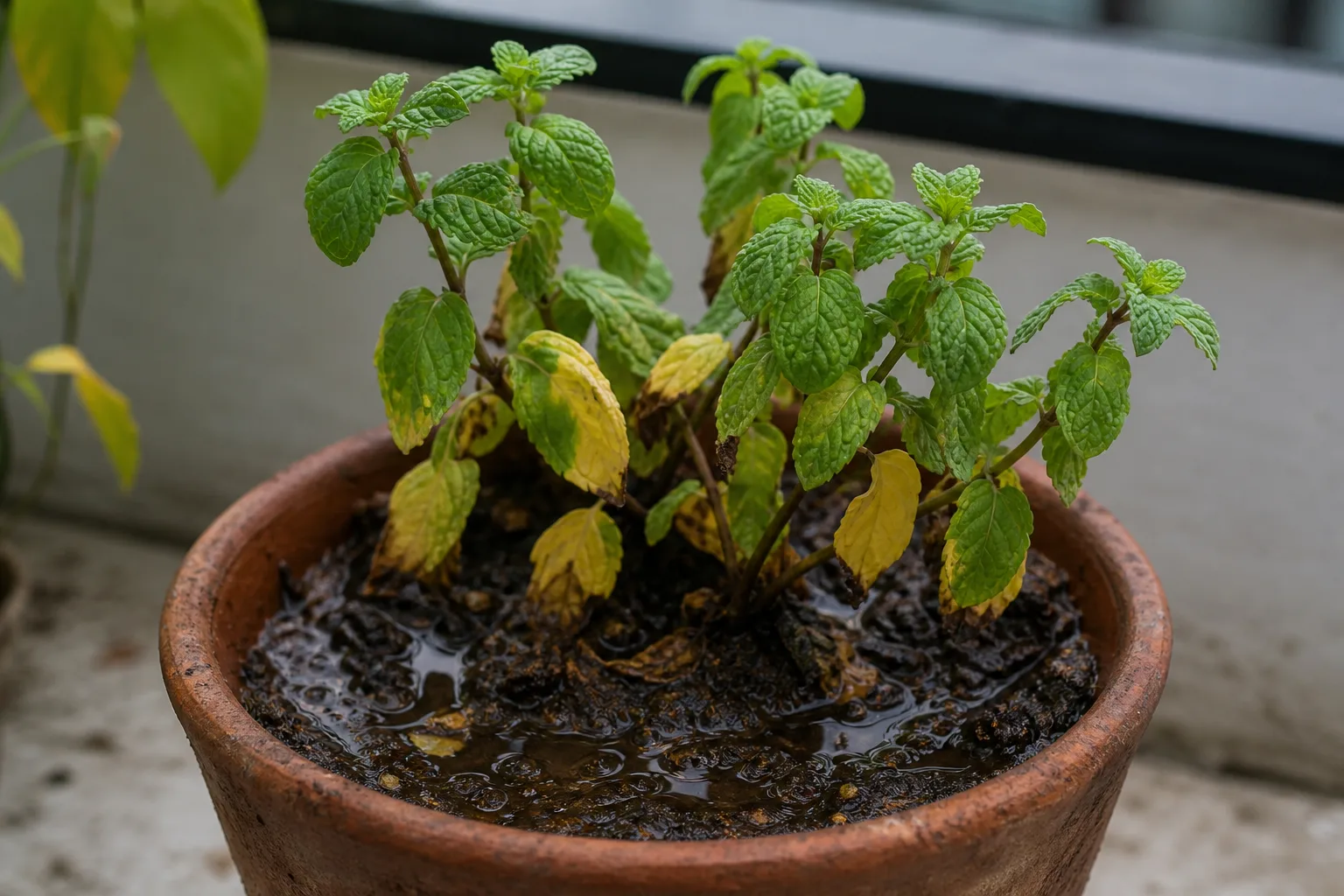
Poor Drainage on Mint: Causes, Checks & Fixes
This guide covers poor drainage on Mint. See also the general Poor Drainage guide, watering, and light pages for this plant.
Poor Drainage on Mint: Causes, Checks & Fixes
Quick answer
Poor drainage on Mint (Mentha spp.) means water cannot leave the root zone fast enough-even when you water correctly. Mint wants evenly moist compost during active growth, but rhizomes still need oxygen between drinks. Heavy mix, blocked holes, oversized pots, and gravel layers at the bottom turn “moist” into “soggy” and drive container root rot.
First step: unpot the mint, clear every drainage hole, and repot into fresh mix with 15–20% perlite in a container sized to the root mass. Empty any saucer water and never let the pot stand in runoff.
Wet soil decision line: If mix stays saturated 48+ hours after one normal watering and holes flow freely when tested, you are on the right page. If holes are sealed or absent, see no drainage hole on mint. If you water on schedule into an otherwise airy mix, see overwatering on mint.
What poor drainage looks like on Mint
Mint’s stream-margin biology makes drainage failure easy to miss. The plant tolerates damp soil longer than succulents, so symptoms build quietly until rhizomes suffocate.
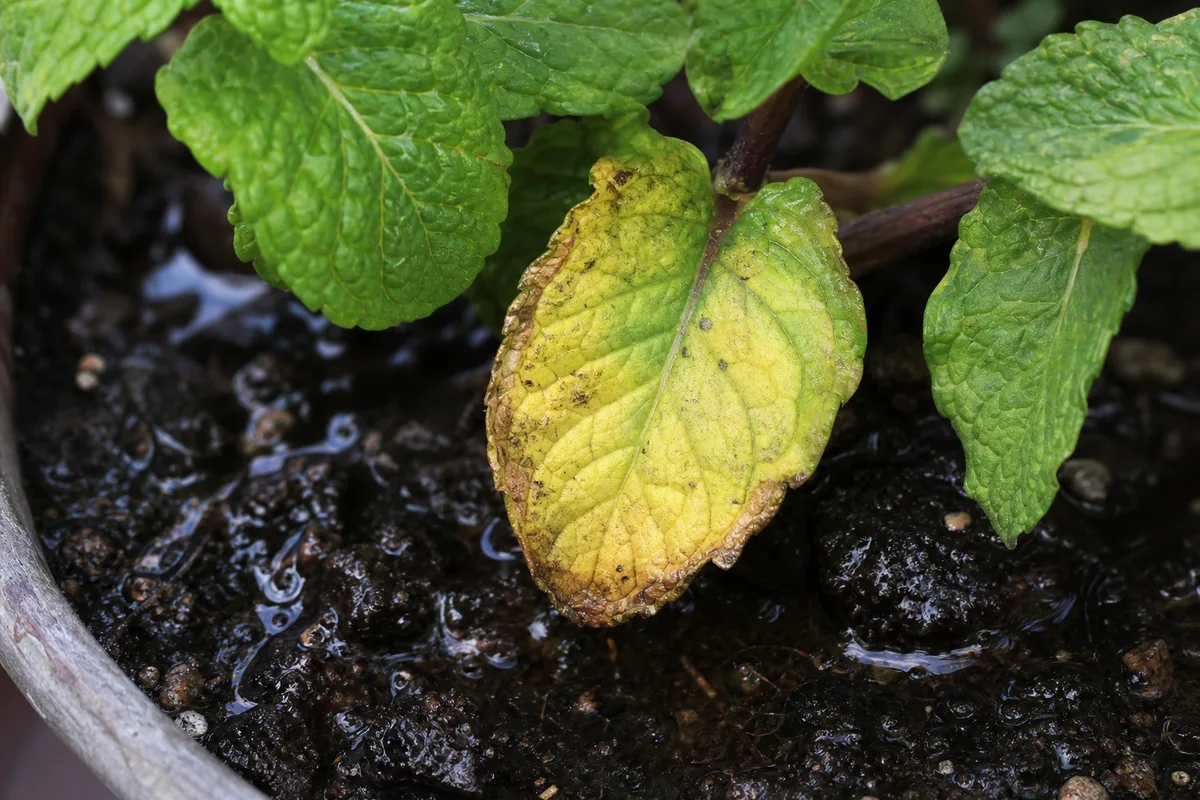
Poor Drainage symptoms on Mint - compare with healthy tissue on the same plant.
Normal moist mint to ignore: Top 2 cm dries between waterings in good light; lower leaves may yellow after heavy harvest on firm stems; soil feels damp at depth but not cold, swampy, or sour.
Poor drainage pattern:
- Soil stays wet 48+ hours after one watering in moderate indoor temperatures
- Pot feels heavy for days while the surface may look deceptively dry
- Yellow lower leaves on persistently wet mix-not a single old leaf after harvest
- Wilting despite wet soil-damaged roots cannot move water even when the pot is heavy
- Soft, dark stems at the soil line where rhizomes sit deepest
- Sour or swampy smell from the root zone
- White or green mold on the compost surface in chronic cases
- Small black fungus gnats hovering when you move the pot-chronic wet mix crossover
- Growth stalls to edge stems only as the centre rhizome mass rots in dense, airless mix
- Mushy brown roots when you tip the plant out-firm white rhizome tissue is healthy
Below soil, Mint’s spreading rhizomes make drainage physics worse than tap-rooted herbs. Dense mix traps moisture along lateral runners; rot spreads sideways through the mat before top growth looks dramatic.
Why Mint gets poor drainage
Mint evolved for stream margins and moist ground. Missouri Botanical Garden lists spearmint as preferring medium to wet conditions-so growers assume frequent watering is always safe. In a pot, that logic breaks down: containers hold less oxygen than open ground, and Mint rhizomes fill pots within months.
Stream-margin biology vs. container physics: In the wild, water moves through soil profiles and groundwater drains away. In a kitchen pot, every excess millilitre stays until it exits the hole or evaporates. Mint’s tolerance of moisture masks how fast a dense root mat plus organic-rich compost becomes anaerobic.
Common Mint-specific drainage triggers:
- Heavy garden soil or pure cocopeat - Compacts in containers, stays wet in the centre while the surface dries; see wrong soil mix on mint for composition fixes
- Blocked or missing drainage holes - Soil, roots, or saucer buildup stops flow; decorative cache pots hide standing water
- Oversized pots - A small division in a 30 cm decorative pot creates a large wet zone the roots never dry out
- Stones or gravel over holes - Illinois Extension explains that gravel inside the pot creates a perched water table: water gathers in soil above the stones instead of draining freely
- Dim light plus retentive mix - Mint in a north window or short winter days transpires slowly; moisture cycles stall even when holes work
- Double-pot setups with trapped runoff - Water pools in the outer decorative shell while the inner liner looks fine from above
- Rhizome overcrowding - Dense mats reduce pore space; repotting cadence matters as much as mix choice
University of Minnesota Extension warns that constantly wet soil encourages root rots, especially during winter-the most common failure mode for herbs grown indoors. Poor drainage is the structural cause; overwatering is the behavioural one. Both end at the same soggy root zone.
How to confirm the cause
Work through these checks before assuming you simply water too much:
- Hole flow test - Water once until drainage runs. Excess should exit within seconds. Slow drip or pooling at the base means blocked holes or saturated mix-not a scheduling problem alone.
- 48-hour saturation test - After one normal watering in moderate temperatures, press a finger 2 cm deep. Still cold-wet 48 hours later confirms drainage failure.
- Pot weight pattern - Heavy for days after watering means water is not leaving. Very light with wilted leaves points to drought instead.
- Wilting on wet soil - Wilt plus damp mix means root oxygen loss, not thirst. More water worsens decline.
- Stem base firmness - Pinch rhizomes at soil level. Mushy or hollow tissue means advanced stress; firm white tissue is salvageable.
- Smell and surface - Sour odor, mold, or fungus gnats point to chronic wetness in poorly drained mix.
- Pot size vs. root mass - Tip out the plant. A small root ball in a large wet pot is an oversized-container trap.
- Mix composition - Pure cocopeat, garden clay, or unamended heavy compost in a closed pot signals mix-driven drainage failure.
Unpot if the base is soft, smell is sour, or yellowing spreads while soil stays wet. Rinse rhizomes gently and compare firm white tissue to brown slime.
Lookalikes to rule out
| Clue | More likely cause | Where to read |
|---|---|---|
| Soil dry throughout, pot light, wilt recovers after soak | Underwatering | Mint watering |
| Watering on calendar into airy perlite mix; holes flow well | Overwatering | Overwatering on mint |
| Zero holes, sealed decorative pot, water pools at base | No drainage hole | No drainage hole on mint |
| Pure cocopeat or garden clay; mix never dries at centre | Wrong soil mix | Wrong soil mix on mint |
| Mushy rhizomes, sour smell, spreading yellow on wet soil | Root rot escalation | Root rot on mint |
| Gnats plus chronic surface wetness | Fungus gnat crossover | Fungus gnats on mint |
First fix for Mint
Unpot, clear every drainage hole, and repot into fresh perlite-amended mix sized to the root mass.
That single structural correction fixes the physics problem: oxygen returns to the root zone, perched water tables shrink, and you can read whether rhizomes are still firm. Do not keep watering on schedule while soil is already saturated-pause until you inspect roots if stems are soft or the mix smells sour.
If holes were merely blocked and roots stayed firm, clearing holes and refreshing only the bottom third of mix may suffice. Full repot is required when mix is sour, roots are mushy, or the pot is dramatically oversized.
Step-by-step: clear holes, amend mix, trim roots
Work in this order for moderate to advanced drainage failure:
- Unpot and inspect - Tip the mint out gently. Shake off wet mix and rinse rhizomes. Keep firm white tissue; note how much is brown or slimy.
- Clear every drainage hole - Poke blocked openings with a skewer. Confirm water runs freely through an empty pot before replanting.
- Choose the right container - Match pot width to the root ball plus one finger’s space-not a large decorative cache. RHS container herb guidance recommends gritty, well-drained compost and warns against overpotting mint.
- Amend the mix - Blend fresh potting compost with 15–20% perlite by volume. For a 20 cm pot holding about 3 litres of mix, that is roughly 450–600 ml of perlite stirred through the entire volume-not a bottom layer. UMN Extension advises watering indoor herbs when soil feels dry a half inch below the surface-only possible when mix drains properly.
- Trim damaged rhizomes - Cut mushy brown sections with clean scissors. Sterilize blades between cuts if rot is advanced.
- Repot and settle - Centre the firm rhizome mass, backfill amended mix, and water once until drainage runs. Empty the saucer within 15 minutes.
- Hold fertilizer - Stressed roots cannot handle salts. Resume light feeding only after new shoots look healthy for two weeks.
If most rhizome tissue is rotten but upper stems are still firm, divide healthy sections or take cuttings and discard the parent. Mint recovers fast from clean stock when the root mass is gone.
For a full repotting walkthrough, see the mint repotting guide.
Recovery timeline
Minor waterlogging - Mix was too retentive but rhizomes stayed firm. After repot with perlite and cleared holes, expect perky leaves within a few days and new side shoots within 10–14 days.
Moderate damage - Some mushy roots trimmed, plant repotted. Foliage may look rough for 2–3 weeks while new roots form. Judge success by firm new tips, not old yellow leaves.
Severe rot - Most rhizomes lost. Recovery from division or cuttings takes 2–4 weeks for roots, then bushy regrowth after a hard pinch. Old damaged leaves will not green up again.
Signs recovery is working: New shoots emerge, stem bases stay firm, soil dries at a predictable rate between waterings, gnat numbers drop.
Signs it is getting worse: Spreading softness up stems, more yellowing while soil stays wet, sour smell returns after repot, no new growth for three weeks in warm light-escalate to root rot on mint.
What not to do
- Add a gravel layer inside the pot - Illinois Extension confirms gravel beneath soil creates a perched water table that keeps the root zone saturated longer; mix perlite through the entire volume instead
- Keep watering on schedule when soil is already wet - Fixes the wrong variable when drainage has failed
- Repot into a much larger decorative pot - Extra wet compost around a small root ball prolongs saturation
- Use pure heavy garden clay in containers - Compacts and waterlogs; use potting mix plus perlite
- Leave runoff in saucers or double pots - Standing water causes roots to rot even when top mix looks acceptable
- Mist leaves instead of fixing mix and holes - Surface moisture does not replace root-zone oxygen
- Assume wilting means thirst - On Mint, wet-soil wilt means stop watering and fix drainage, not soak again
How to prevent poor drainage on Mint
Match container physics to Mint’s moisture preference-not its reputation for loving water.
- Use pots with open drainage holes - Test flow before each growing season; clear blockages when repotting
- Amend mix with 15–20% perlite - Keeps moist but not soggy conditions Mint prefers
- Right-size the pot - Divide or repot when rhizomes circle the container; avoid planting small divisions in oversized cache pots
- Empty saucers within 15 minutes - Never let the pot stand in runoff
- Give enough sun - Mint grows best in full sun or partial shade; light-starved plants transpire less and stall dry-down
- Harvest regularly - Pinching stems improves airflow through dense mint mats at soil level
- Repot every 1–2 years - Refresh compacted mix before rhizomes eliminate pore space entirely
- Pair with smart watering - Check the top 2 cm before every drink; see mint watering for seasonal rhythm
In-ground mint in heavy clay beds is a different problem-amend soil with organic matter and consider raised beds. For container kitchen mint, drainage physics in the pot is what matters most.
When to worry
Act same day when:
- Stems soften at the base while soil is wet
- Soil smells sour at the drainage hole
- Mint wilts on wet mix with a heavy pot-classic root oxygen loss
- Yellowing spreads within a week while saturation persists
Also escalate when repotting reveals more brown slime than firm white rhizome, or when no new tips appear for three weeks after drainage correction in warm light.
Lower urgency when soil drains within 48 hours, stems stay firm, and only the mix texture needs upgrading before the next scheduled repot.
Conclusion
Poor drainage on mint is a container physics problem-mix texture, hole flow, pot sizing, and perched water tables-not a single bad watering. The moist-vs-soggy paradox trips many growers: Mint likes damp compost but cannot live in anaerobic rhizome mats. Confirm with the 48-hour test and hole-flow check, rule out overwatering and no drainage hole siblings, then repot with perlite-amended mix sized to the roots. Trust firm new tips within two weeks as your recovery signal.
Related tool
Use the Plant Problem Diagnosis Tool to narrow causes for poor drainage on this plant before changing multiple variables at once.