Rust Disease on Mint: Causes, Checks & Fixes
Quick answer
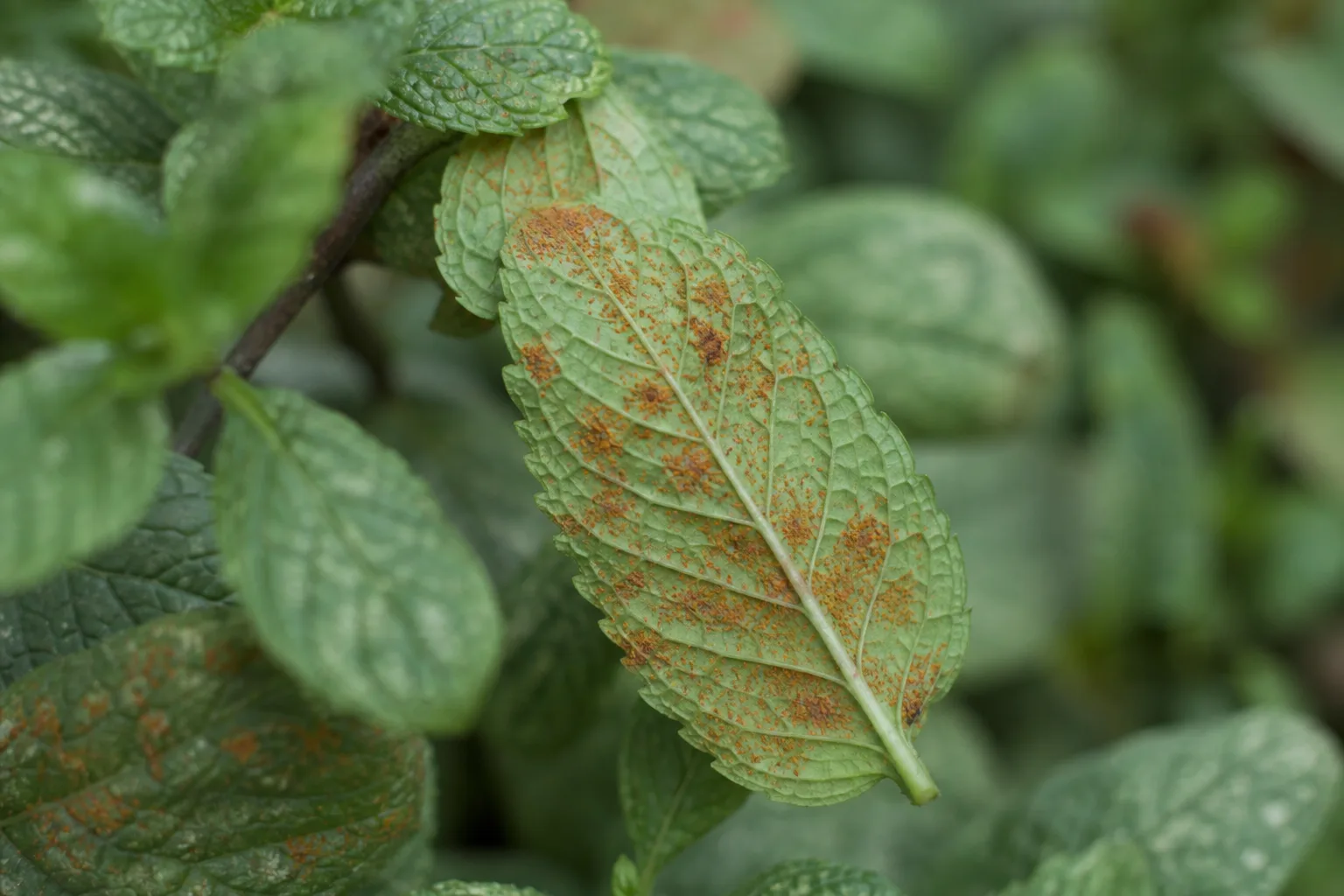
Mint rust shows orange-yellow pustules under leaves from Puccinia menthae. First step: remove infected shoots before spores turn black, bag and trash them, and replant clean divisions in fresh compost. Do not brew tea from leaves bearing active pustules.
Rust Disease on Mint: Causes, Checks & Fixes
This guide covers rust disease on Mint. See also the general Rust Disease guide, watering, and light pages for this plant.
Rust Disease on Mint: Causes, Checks & Fixes
Quick answer
Mint rust shows dusty orange-yellow pustules on leaf undersides, caused by the fungus Puccinia menthae. Your first fix is to cut out all infected shoots before pustules turn black, bag and trash the material, and replant only clean-looking divisions in fresh compost away from the old pot.
Do not brew tea or cook with leaves that still bear active pustules. For broader mint care context, see the mint overview.
Why Mint gets rust disease
Mint rust spreads when spores land on wet foliage in cool, humid weather-common on crowded kitchen-shelf pots and in spring-to-autumn garden beds RHS. Utah State Extension notes that excess moisture and wet leaves promote mint foliar diseases, and that overwatering on Mint and heavy feeding can increase rust pressure USU Extension.
Mint-specific risk factors include:
- Wet foliage overnight from evening misting, overhead watering, or dense canopies that dry slowly
- Infected nursery stock introducing spores to a clean windowsill pot
- Rhizome and compost carryover-mint’s aggressive underground stems let rust survive in old mix and debris even after you trim visible leaves RHS
- Crowded stems trapping humidity between leaves on fast-growing Mentha spp.
Spearmint and peppermint are both hosts, though rust races can differ between cultivars in commercial fields PNW Handbooks. Home growers should treat any orange pustules as rust regardless of variety.
What rust looks like on Mint
Early rust may show pale, distorted spring shoots. As infection progresses, you will see:
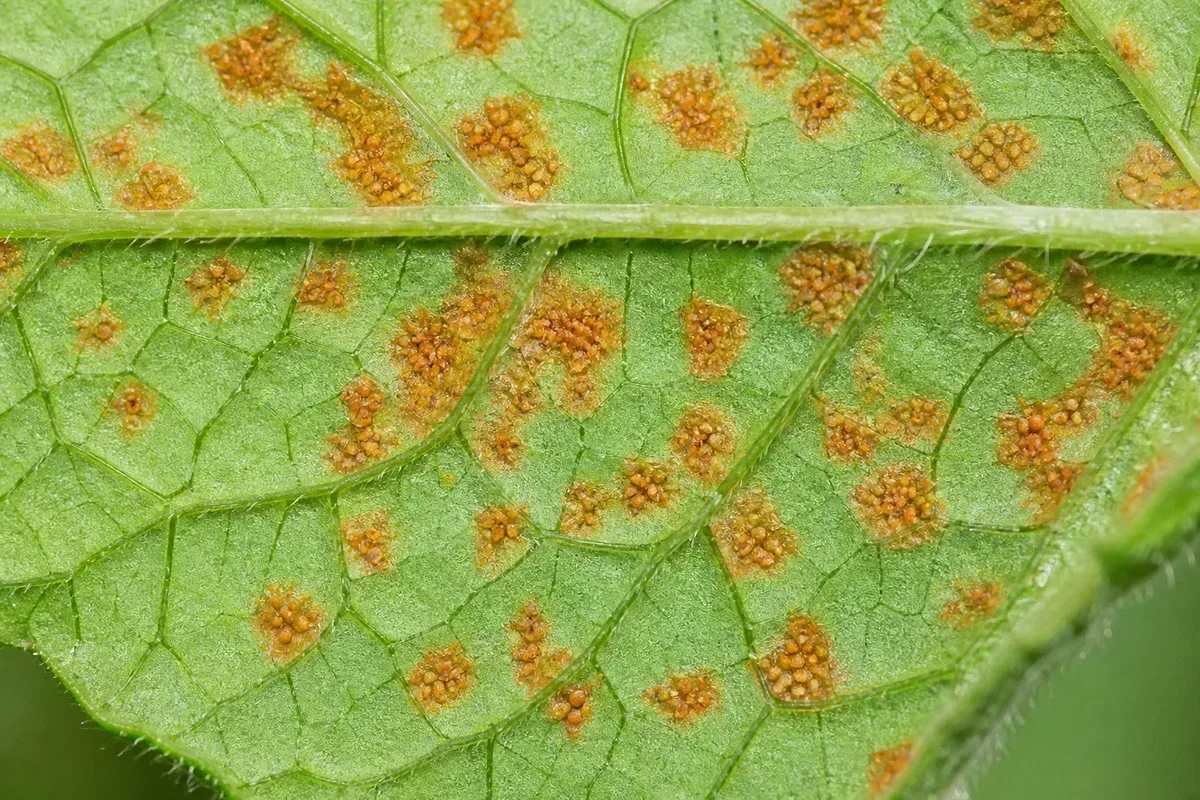
Rust Disease symptoms on Mint - compare with healthy tissue on the same plant.
- small orange-yellow powdery pustules on leaf undersides
- yellow-brown spots on upper leaf surfaces before tissue dies
- twisted or stunted stems on heavy infections
- defoliation when pustules cover much of the canopy
Unlike powdery mildew, rust does not coat upper leaf surfaces with dry gray-white powder. Unlike leaf spot disease, rust pustules are powdery and orange-not water-soaked tan lesions that enlarge slowly.
| Sign | Mint rust | Powdery mildew | Leaf spot |
|---|---|---|---|
| Main location | Underside pustules | Upper-surface powder | Upper or lower lesions |
| Color/texture | Orange-yellow powder | Gray-white, rubs off dry | Water-soaked → tan/brown |
| Stem effect | Distorted shoots possible | Crowded soft growth | Usually leaf-focused |
| Spread trigger | Wet foliage, cool humidity | Stagnant humid air | Splash + wet leaves |
How to confirm the cause
Use this inspection order before you cut anything:
- Flip leaves and scan undersides for orange-yellow dusty pustules.
- Paper-rub test: gently rub a pustule on white paper. An orange streak confirms rust spores; mildew leaves white powder on the leaf surface instead.
- Check pustule color: bright orange-yellow means active spread; dark black pustules are overwintering spores that will reinfect next season RHS.
- Rule out lookalikes: no powder on undersides and white upper coating points to powdery mildew; water-soaked expanding spots point to leaf spot.
- Review recent watering: repeated evening leaf wetness or misting raises rust probability on dense mint.
If diagnosis is still uncertain after the rub test, compare photos and patterns on the powdery mildew and leaf spot guides before treating.
First fix for Mint
First action only: remove all shoots showing pustules-ideally while spores are still orange-yellow and before they blacken. Bag infected stems, leaves, and any fallen debris; trash them. Do not compost rust-infected mint.
Then decide salvage vs. restart:
- Salvage divisions only if you can find stems with zero pustules on inner leaves and rhizomes look firm and white. Dig out uninfected-looking sections and move them to a new container with fresh compost, away from the old site RHS.
- Abandon and restart when every shoot shows pustules, black spores are already present, or rhizomes feel soft. Buy clean nursery stock or start a new pot rather than nursing heavily infected roots.
- Replant in fresh compost every time after rust. Reusing the same mix or an old mint bed is how rhizome-borne inoculum returns PNW Handbooks.
Fungicides are a distant second step for home culinary mint. The RHS notes that no fungicides with activity against mint rust are available for herbs destined for the kitchen RHS. Cultural removal of infected tissue remains the practical first line for windowsill and patio growers.
Tea and culinary harvest safety
Do not harvest leaves with active orange or black pustules for tea, cocktails, or cooking. Spores and damaged tissue are not something you want in food or drink.
After cleanup, wait for clean new shoots with no pustules before harvesting again. Trim away any remaining spotted leaves and use only firm, healthy foliage-similar to guidance for less-than-perfect garden produce where damaged tissue should be removed and discarded UW Extension.
Recovery timeline
Infected leaves do not heal; recovery means the spread stops and new growth emerges clean. When you catch rust early and replant uninfected divisions in fresh compost during active growth, clean shoots often appear within a few weeks-timing depends on season, light, and how much rhizome tissue you had to discard.
Severe infections that defoliated most of the plant may be faster to replace with new stock than repeated salvage attempts. Judge success by new leaves without pustules, not by old spotted foliage greening up.
Warning signs the problem is worsening: pustules turning black, rapid defoliation stem to stem, and fresh orange pustules on new shoots after your first cleanup.
What not to do
- Do not compost infected mint-spores survive in debris.
- Do not replant into the same compost or unwashed pot without a thorough cleanup.
- Do not harvest pustule-bearing leaves for tea.
- Do not ignore black spores; they overwinter and infect next season’s growth RHS.
- Do not work around wet mint; wait until foliage is dry to avoid spreading spores on hands or tools.
How to prevent rust disease on Mint
Experienced mint growers often divide pots yearly-not because mint always needs it for vigor, but because rust is the main reason to refresh rhizomes and compost before inoculum builds in a single container.
Prevention habits that matter for mint:
- buy clean, uninfected stock from reputable sources
- water at soil level and avoid evening leaf wetness USU Extension
- thin crowded stems so inner leaves dry quickly
- rotate to fresh compost at division time; do not reuse old mint mix after rust
- remove volunteer mint weeds nearby that may harbor spores
- sanitize scissors between pots when cutting multiple herbs
For related diagnosis and care:
- Mint overview
- Powdery mildew on mint
- Leaf spot on mint
- Yellow leaves on mint - when spots are yellow without pustules
Practical checks
Urgency check
Treat as urgent when pustules darken to black, defoliation spreads across most stems, or every division you inspect shows underside powder. At that stage, prioritize bag-and-trash removal and fresh compost over trying to save the old root mass.
Best inspection order
Underside pustule scan → paper-rub test → pustule color (orange vs. black) → fallen leaf debris in the pot → rhizome firmness when dividing.
Mint care cross-check
Mint tolerates moist soil but rust is driven by leaf wetness and carryover in rhizomes, not by underwatering on Mint. If yellowing appears without orange underside pustules, start with yellow leaves triage before assuming rust.
When to use this page vs other Mint guides
- Mint watering guide - Use for routine moisture checks before assuming rust disease is the main issue.
- Mint problems hub - Browse all 40 common issues on this species.