Leaf Spot Disease on Mint: Causes, Checks & Fixes
Quick answer
On mint, leaf spot often starts as water-soaked dots that expand into tan or brown lesions. First fix: remove infected leaves and switch to soil-level watering so foliage dries quickly.
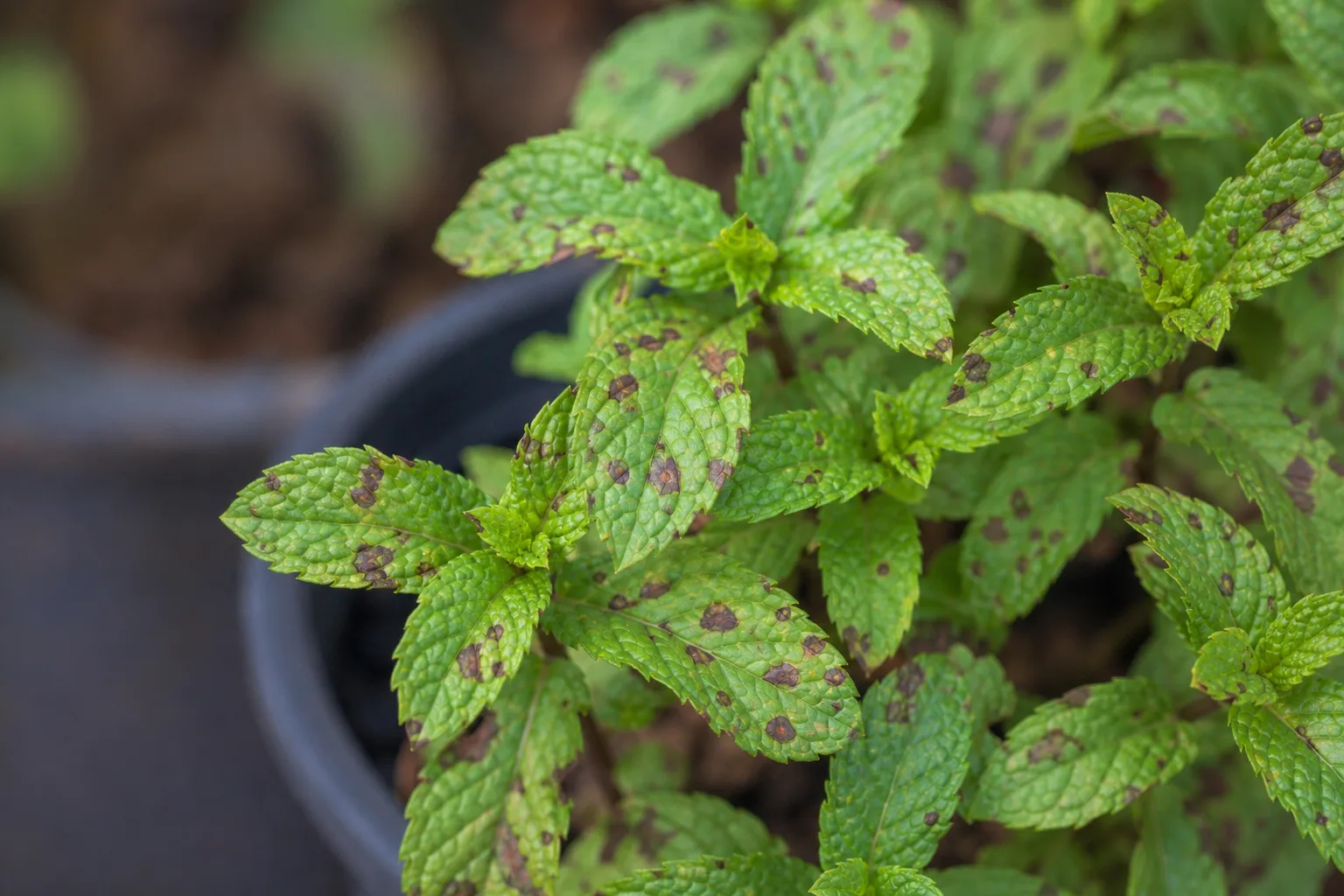
Leaf Spot Disease on Mint: Causes, Checks & Fixes
This guide covers leaf spot disease on Mint. See also the general Leaf Spot Disease guide, watering, and light pages for this plant.
Leaf Spot Disease on Mint: Causes, Checks & Fixes
Quick answer
Leaf spot on mint usually starts as small water-soaked dots that enlarge into tan or brown lesions, sometimes with yellow margins. Your first fix is to prune infected leaves and keep all future irrigation at the soil surface so leaves dry fast.
Mint can host several foliar pathogens, including anthracnose by Sphaceloma menthae, Septoria menthae, and Ramularia menthicola. In home herb setups, crowding plus splash watering is usually the practical trigger.
Why mint gets leaf spot in pots and beds
Mint grows quickly and forms thick, humid foliage. Utah State Extension notes that excess moisture promotes leaf and root diseases in mint and recommends practices that keep foliage dry in mint plantings.
Risk is higher when:
- leaves stay wet overnight
- stems are crowded in one pot or drip tray
- infected leaves are left in containers or nearby soil
- repeated overhead watering splashes spores between leaves
What leaf spot looks like on mint
Early lesions are typically tiny and water-soaked. They then enlarge into tan-to-brown spots, and some lesions develop yellow halos or dry, papery centers. Older heavily infected leaves can yellow and drop.
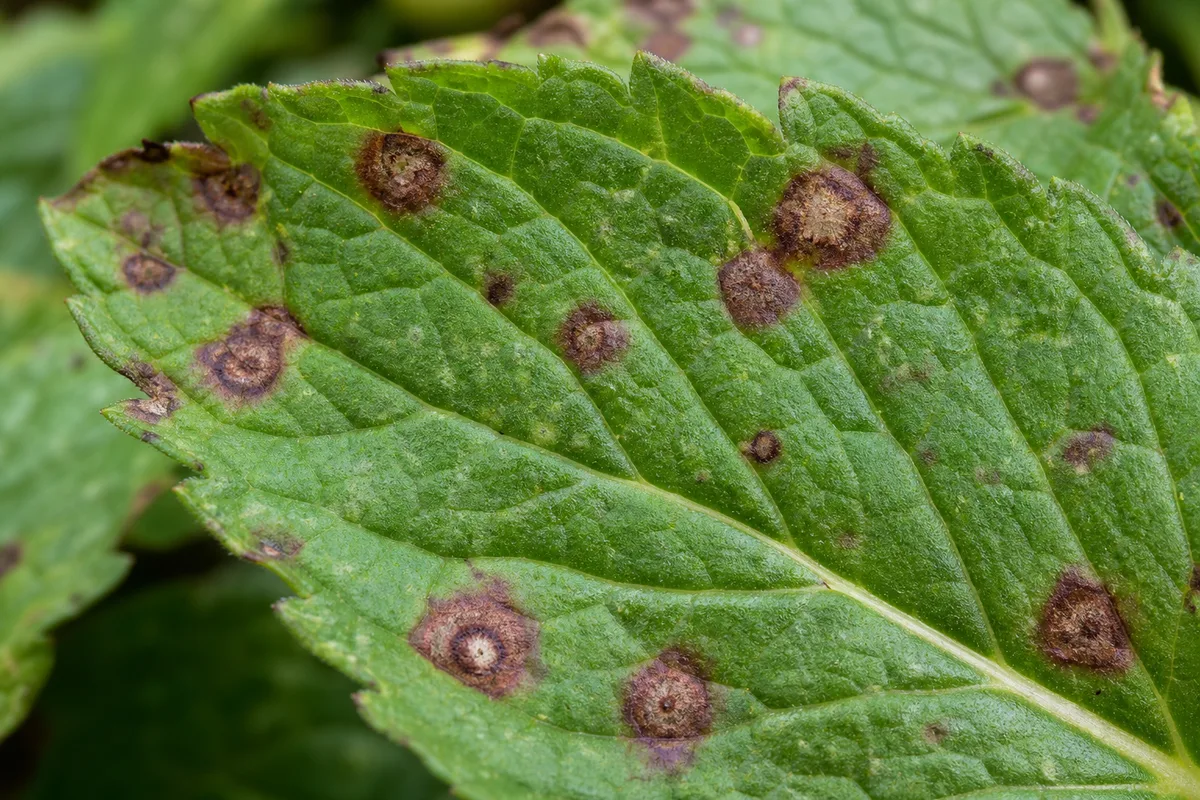
Leaf Spot Disease symptoms on Mint - compare with healthy tissue on the same plant.
Pattern helps diagnosis: mint leaf spot often starts on lower foliage where splash and humidity are highest, then progresses upward if wet-leaf conditions continue.
Confirm leaf spot vs common lookalikes
Mint rust
Rust is caused by Puccinia menthae, and symptoms include dusty orange, yellow, then black pustules plus distorted shoots rather than simple tan lesions.
Powdery mildew
Powdery mildew appears as a white or gray powdery coating on leaf surfaces, not water-soaked spots that later turn brown.
Non-disease damage
Salt/fertilizer injury usually burns tips and margins first, while sun scorch appears on exposed surfaces in fixed patches. Those patterns do not spread lesion-by-lesion after wet foliage cycles.
How to confirm the cause at home
Use this inspection order:
- Check newest lesions: water-soaked then tan lesions favor leaf spot.
- Flip leaves and stems to look for rust pustules.
- Review the last week of watering and leaf wetness.
- Inspect for crowded stems, poor airflow, and infected debris.
If new spots keep appearing after overhead or late-day watering events, fungal leaf spot is the likely diagnosis.
First fix: dry-leaf watering plus cleanup
First action: remove infected leaves with clean scissors, bag them, and discard them. Then water only at the base. Extension guidance for mint emphasizes dry foliage and avoiding overnight wet leaves to reduce disease pressure during mint rust management.
After that first step, do secondary corrections in order:
- thin crowded stems to improve airflow
- space pots so leaves are not touching
- sanitize tools between plants
- avoid heavy feeding until clean new growth appears
Can you still harvest mint leaves?
For edible produce, many superficial spots are cosmetic, but damaged tissue should be trimmed away according to UW guidance on less-than-perfect garden produce. For mint, harvest only clean leaves and discard anything spotted, soft, slimy, or moldy.
If lesions are active on most foliage, skip harvest until regrowth is clean.
Recovery timeline and warning signs
When conditions are corrected quickly, spread often slows in about 7 to 14 days. Clean new growth usually appears over the next 2 to 3 weeks. Spotted leaves generally do not return to normal.
Escalate if lesions keep spreading despite dry-leaf watering, stems darken or soften, or nearby herbs begin spotting. At that point, local extension or a plant clinic can confirm pathogen identity and next options.
Windowsill pots vs garden beds
Container mint on a kitchen sill spots faster than in-ground plantings because crowded stems trap humidity and drip trays hold splash water. A single 20 cm pot with six rooted cuttings creates a solid green dome where lower leaves never dry—exactly where excess moisture promotes leaf disease in mint.
In garden beds, spacing rows 30 cm apart and using drip irrigation at soil level keeps foliage drier. If your windowsill mint spots every few weeks, divide the pot into two smaller containers or harvest aggressively to open the canopy rather than only removing spotted leaves.
Organic options when sanitation is not enough
Cultural fixes—dry-leaf watering, thinning, debris removal—resolve most home mint leaf spot. If lesions keep appearing after two weeks of corrected habits, a copper-based fungicide labeled for edible herbs may help on outdoor plantings. Always follow label pre-harvest intervals before picking leaves for tea or cooking.
Indoor windowsill mint rarely needs chemical treatment; splitting the plant and starting fresh cuttings in clean mix is often faster than spraying in a kitchen. Discard heavily spotted stock rather than propagating from infected stems.
How to prevent recurrence
Keep mint canopies open, water at the root zone, and avoid late-day wet foliage. Utah State Extension specifically recommends drip-style watering and thinning as core prevention practices for garden mint.
For related diagnosis and care:
When to use this page vs other Mint guides
- Mint watering guide - Use for routine moisture checks before assuming leaf spot disease is the main issue.
- Mint problems hub - Browse all 40 common issues on this species.