Powdery Mildew on Mint: Causes, Checks & Fixes
Quick answer
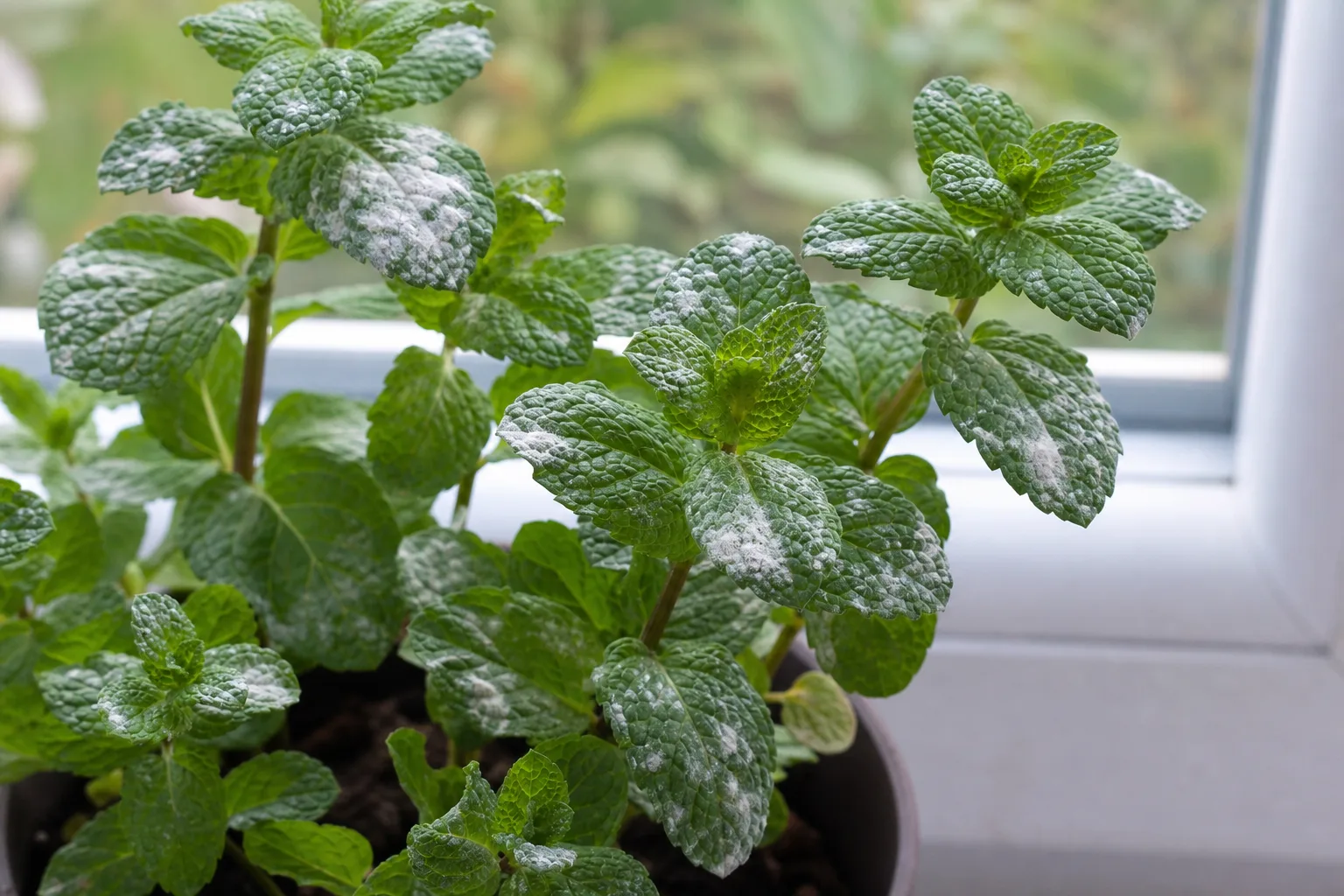
Powdery mildew coats Mint leaves with gray-white powder, especially in crowded humid pots. Rub a white patch-powder transfers if it is mildew. First step: thin stems for airflow and remove affected leaves.
Powdery Mildew on Mint: Causes, Checks & Fixes
This guide covers powdery mildew on Mint. See also the general Powdery Mildew guide, watering, and light pages for this plant.
Powdery Mildew on Mint: Causes, Checks & Fixes
Quick answer
Powdery mildew coats Mint leaves with gray-white talcum-like powder, especially on inner shaded leaves in crowded humid pots. The fungus Golovinomyces biocellatus causes powdery mildew on peppermint and spearmint. Unlike many leaf diseases, spores can germinate on dry leaf surfaces in humid, stagnant air-common on indoor herb shelves where stems trap moisture between leaves.
Rub a white patch with your finger-dry powder transfers if it is mildew. Your first fix: remove heavily coated leaves, thin crowded stems to open the canopy, and improve airflow. Do not mist leaves to clean them.
For broader mint care context, see the mint overview. If you see orange pustules on leaf undersides instead of white upper-surface powder, start with the rust disease guide.
Why Mint gets powdery mildew
Mint’s fast, dense stem growth is part of the problem. Kitchen pots and crowded herb trays pack stems so tightly that humidity pools between leaves while the outer canopy looks fine. Poor airflow in closed kitchens and shared drip trays accelerates spread-conditions that differ from open-garden mildew, where wind moves air through the bed.
Crowded stems and stagnant indoor air
Harvested irregularly, mint fills a container within weeks. Inner leaves stay shaded, dry slowly after watering, and sit in the humid microclimate powdery mildew fungi prefer. University of Minnesota Extension notes that powdery mildew thrives when plant canopies trap humidity even though the fungi do not need free water on leaves to infect.
Dry-surface spore germination
Unlike rust or leaf spot, powdery mildew does not require rain or dew on the leaf surface to start an infection. UMN Extension explains that spores land, germinate, and form the characteristic white mat on the leaf surface while specialized structures draw nutrients from the plant. That biology is why evening misting and overhead watering do not wash mildew away-and why stagnant humid air between dense mint stems matters more than occasional splashing.
Cool humid nights followed by warm days favor spore production and spread-a pattern common on windowsills and patios from spring through autumn.
Soft nitrogen growth
Heavy feeding produces tender, fast-flushing foliage that infections colonize quickly. PNW Handbooks note that interactions with some herbicides can increase susceptibility; home growers should also avoid over-fertilizing soft growth during humid indoor seasons.
Cultivar susceptibility
Powdery mildew is seldom serious enough on peppermint to warrant field control in the Pacific Northwest, but it can be very destructive on Scotch spearmint PNW Handbooks. Garden spearmint and peppermint in home pots can both show coating-treat any white upper-surface powder as actionable, especially when spread is fast.
Other mint-specific triggers include infected nursery stock, tools moved between herb pots without cleaning, and volunteer mint weeds nearby that harbor overwintering inoculum on stubble and debris.
What powdery mildew looks like on Mint
Early infection shows small gray-white patches on upper leaf surfaces, often starting on older inner leaves before spreading to new tips. As it progresses:
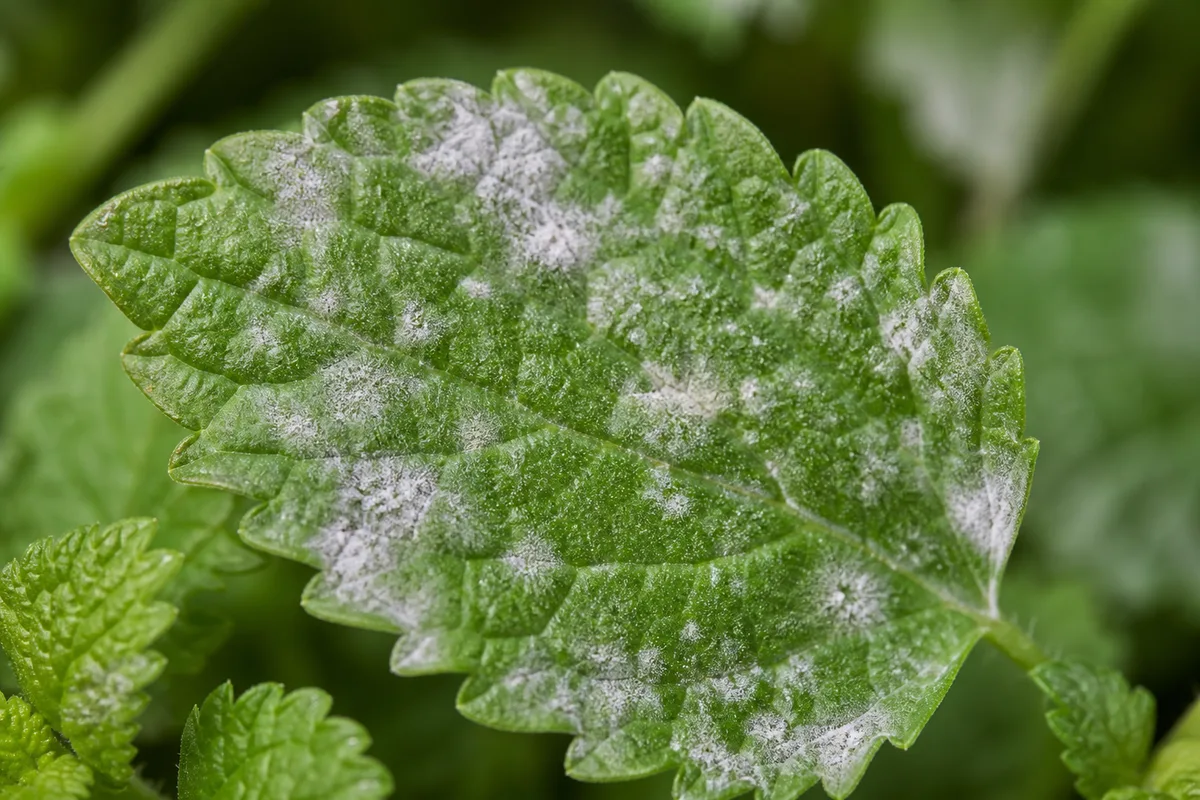
Powdery Mildew symptoms on Mint - compare with healthy tissue on the same plant.
- talcum-like white coating on leaves and sometimes stems
- young leaves curling or distorting on heavy infections
- yellowing and leaf drop when coverage is extensive
- fastest spread on shaded, crowded inner growth
Unlike mint rust, there are no orange-yellow pustules on leaf undersides. Unlike leaf spot disease, the coating is dry powder-not water-soaked tan lesions with yellow halos. Unlike downy mildew on other crops, mint powdery mildew rubs off dry rather than appearing as a water-soaked, downy growth.
| Sign | Powdery mildew | Mint rust | Leaf spot |
|---|---|---|---|
| Main location | Upper-surface powder | Underside pustules | Upper or lower lesions |
| Color/texture | Gray-white, rubs off dry | Orange-yellow powder | Water-soaked → tan/brown |
| Paper-rub test | White powder on finger | Orange streak on paper | No powder; tissue may tear |
| Spread trigger | Stagnant humid air, crowding | Wet foliage, cool humidity | Splash + wet leaves |
| Stem effect | Soft crowded growth | Distorted shoots possible | Usually leaf-focused |
If yellowing appears without white powder or orange pustules, start with yellow leaves triage before assuming a fungal coating.
How to confirm the cause
Work through this checklist before reaching for sprays:
- Rub test: gently rub a white patch on the upper leaf surface. Dry gray-white powder on your finger confirms mildew; an orange streak on white paper points to rust instead.
- Flip leaves: scan undersides for orange-yellow pustules. Clean undersides with white powder on top fits mildew.
- Check crowding: are inner stems packed tight with little air gap? Stagnant canopy humidity supports mildew more than a single isolated spot on one leaf.
- Rule out dust and hard-water residue: wipe evenly with a damp cloth-dust and mineral spray leave no spreading pattern and do not return on new growth within days.
- Track spread rate: mildew on multiple stems in a humid crowded pot within a week confirms active disease, not a one-off splash stain.
- Review watering habits: evening overhead watering or misting raises humidity without removing spores.
- Compare lookalikes: water-soaked expanding spots suggest leaf spot; orange underside powder means rust.
If diagnosis is still uncertain after the rub test, compare patterns on the rust and leaf spot guides before treating.
First fix for Mint
First action only: remove heavily coated leaves and thin crowded stems to open airflow through the canopy.
Bag infected leaves and trash them-do not compost powdery mildew material indoors. Cut back dense stems so inner leaves can dry and light reaches the center. Water at soil level in the morning so foliage dries quickly. Run a fan on low near the pot if the shelf is enclosed.
Then decide salvage vs. discard:
- Salvage when coating is on a minority of stems, rhizomes feel firm, and you can remove all powdery tissue while leaving clean growing tips. Continue thinning and airflow for two weeks before judging recovery.
- Discard and restart when every shoot is coated, tips are badly distorted, or mildew returns within days after aggressive pruning. A fresh division from clean nursery stock or a new pot is faster than nursing a saturated inoculum load in old compost.
- Escalate to labeled fungicides only when cultural fixes fail on valuable stock. For culinary mint, potassium bicarbonate products such as Kaligreen are registered for powdery mildew on mint in commercial production-home growers must verify the label allows use on edible herbs and follow reentry and preharvest intervals exactly. UMN Extension lists low-impact options including sulfur, potassium bicarbonate, and horticultural oils; oils and sulfur can burn foliage in heat-never combine sulfur and oil within two weeks PNW Handbooks.
Fungicides protect healthy green tissue-they do not restore already coated leaves. Remove infected tissue first, then spray if the label fits your harvest plan.
Tea and culinary harvest safety
Do not harvest leaves with active white powder for tea, mojitos, chutney, or everyday cooking. The fungal growth and damaged tissue are not something you want in food or drink.
After cleanup and airflow fixes, wait for clean new shoots with no coating before harvesting again. Use only firm, healthy leaves and discard any remaining powdery or yellowed tissue-similar to guidance for garden produce where damaged portions should be removed before consumption.
If you applied potassium bicarbonate or other fungicides, follow the product label’s preharvest interval before eating leaves from treated plants.
Recovery timeline
Powdery coating does not wash off infected tissue-remove it. Spread should halt within one to two weeks after thinning, base watering, and improved airflow when growing conditions are favorable.
Clean new leaves often emerge within a few weeks during active spring or summer growth; indoor winter mint may recover more slowly under short days. Judge success by new growth without powder, not by old coated leaves greening up.
Warning signs the problem is worsening: coating reaches every shoot within days, tips curl and drop, yellowing spreads despite pruning, or fresh white patches appear on new shoots right after your first cleanup.
What not to do
- Do not mist leaves to “clean” them-that raises humidity and can favor mildew in some species UMN Extension.
- Do not compost infected mint indoors or on open kitchen compost where spores can spread.
- Do not ignore early spots on one inner stem-mildew spreads fast in crowded mint.
- Do not harvest coated leaves for tea while powder is active.
- Do not apply sulfur when temperatures will exceed 90°F within a few days, or within two weeks of an oil spray PNW Handbooks.
- Do not move wet tools between herb pots without rinsing-spores spread by wind and can travel on hands and shears.
How to prevent powdery mildew on Mint
Prevention on culinary mint is mostly spacing and airflow, not constant fungicide sprays.
- Harvest regularly to keep stems spaced-pinching stems is both harvest and canopy thinning RHS.
- Give full sun to part shade with good air movement; rotate pots weekly so inner growth gets light Missouri Botanical Garden.
- Water at soil level in the morning; avoid evening leaf wetting on dense mats.
- Thin before mildew spreads through the inner canopy-divide overcrowded pots yearly if stems pack solid.
- Space herb pots on the shelf; do not let canopies touch between mint, basil, and other Lamiaceae herbs.
- Clean shared drip trays and sanitize scissors when cutting multiple pots.
- Buy clean stock and isolate new white patches before they share a tray with other herbs.
- Moderate nitrogen during humid indoor seasons so new growth stays firm, not floppy.
For related diagnosis and care:
- Mint overview
- Rust disease on mint
- Leaf spot on mint
- Yellow leaves on mint
- Overwatering on mint - when yellowing appears on wet soil without powder
Practical checks
Urgency check
Treat as urgent when coating covers most leaves within days, growing tips distort or yellow, or mildew jumps to neighboring herbs on a shared tray. At that stage, prioritize bag-and-trash removal, pot isolation, and discard-vs-restart decisions over waiting for coated tissue to recover.
Best inspection order
Upper-surface white patch scan → rub test on finger → underside check for orange rust pustules → inner canopy crowding → humidity around the pot and shared trays → spread rate over three to five days → recent misting or evening watering habits.
Mint care cross-check
Mint tolerates moderate humidity in moist soil, but stagnant air between dense stems is different from outdoor garden humidity. Powdery mildew is driven by crowded canopy microclimates and dry-surface spore biology-not by underwatering. If leaves yellow on persistently wet mix without white powder, see overwatering before assuming mildew.
Related tool
Use the Plant Problem Diagnosis Tool to narrow causes for powdery mildew on this plant before changing multiple variables at once.