Cold Damage on Mint: Causes, Checks & Fixes
Quick answer
Hard frost blackens mint foliage; potted mint roots freeze more easily than in-ground rhizomes. First step: Wait until frost passes, cut blackened stems to firm tissue, and move containers to a sheltered bright cool spot-not a hot radiator.
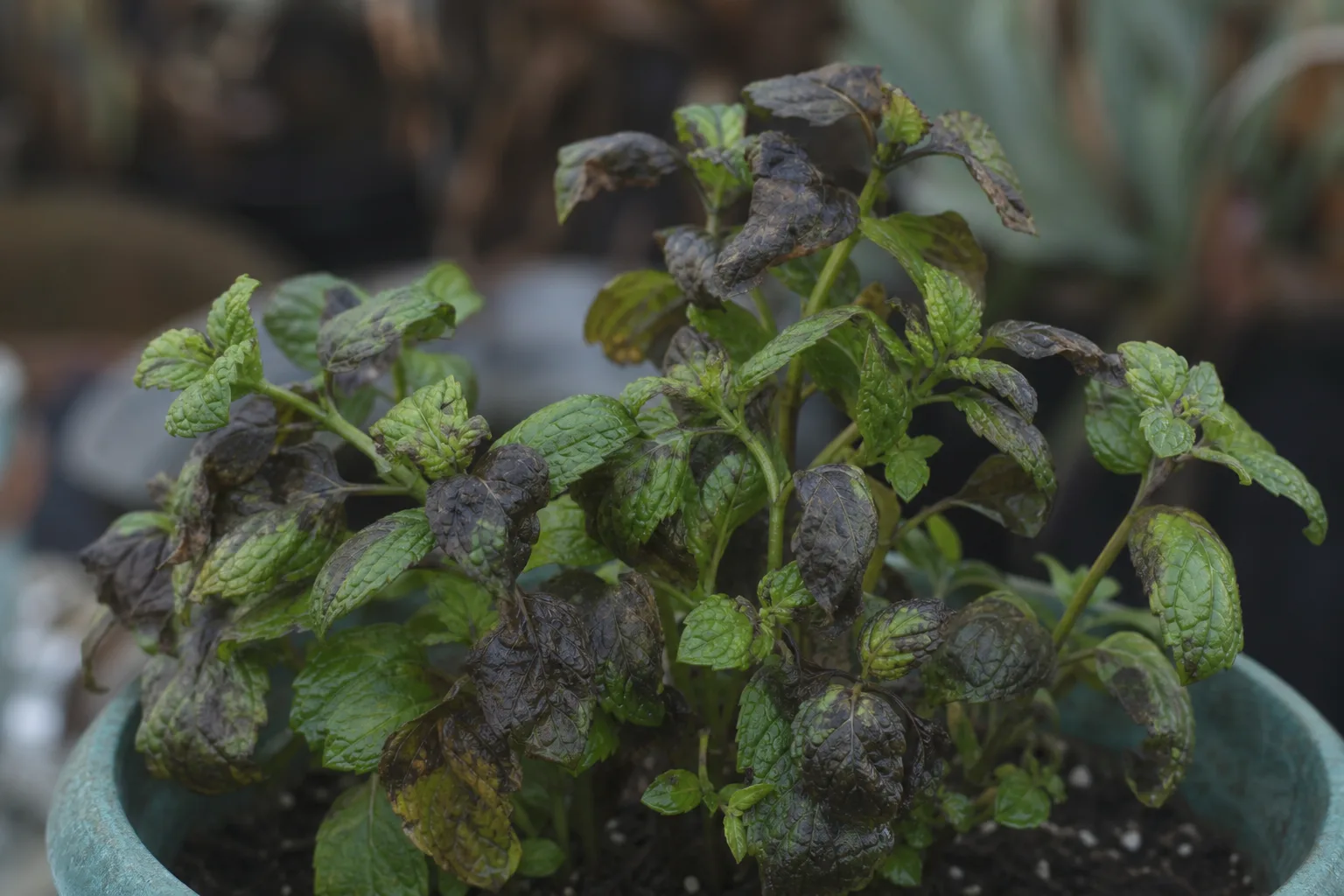
Cold Damage on Mint: Causes, Checks & Fixes
This guide covers cold damage on Mint. See also the general Cold Damage guide, watering, and light pages for this plant.
Cold Damage on Mint: Causes, Checks & Fixes
Quick answer
Your balcony spearmint turned black overnight after the first frost-is the plant dead? Often no. Mint (Mentha spicata, spearmint) is a rhizomatous hardy perennial rated USDA zones 5–9 when roots stay insulated in soil, but exposed container roots on cold pavement freeze while the same variety survives in a garden bed.
First step: wait until the frost period ends, then cut blackened stems back to firm green tissue or soil level and move pots to a sheltered bright cool spot-not a hot radiator.
Scope on this site: This page covers frost and freezing damage on container and in-ground mint. For summer afternoon collapse on dry hot pots, see heat stress on mint. For post-repot sag without a frost event, see transplant shock on mint.
Container vs. in-ground - why outcomes differ
Mint spreads through underground rhizomes that store energy below the frost line in garden soil. In-ground crowns benefit from soil mass that buffers temperature swings; University of Minnesota Extension notes that mints sunk in garden soil-or pots left in place over winter-are quite winter hardy in cold climates.
Above-ground pots lose heat fast. Roots in a 12 cm plastic pot on a north balcony experience air temperatures, wind chill, and conductive cold from concrete-none of which protect rhizomes the way 15–30 cm of soil does. That is why identical spearmint can die in a kitchen pot while a garden mat two metres away resprouts in spring.
| Factor | In-ground mint mat | Container on balcony |
|---|---|---|
| Root insulation | Soil mass buffers freeze | Thin pot wall; roots at air temperature |
| Typical frost outcome | Tops blacken; rhizomes often survive zones 5–9 | Small pots may freeze solid |
| First protection move | Mulch crown after die-back | Move indoors or cluster/wrap before hard frost |
| Recovery signal | Spring shoots from soil line | New shoots from firm rhizomes in pot |
What cold damage looks like on mint
Frost injury on mint is sudden and weather-linked, not gradual:
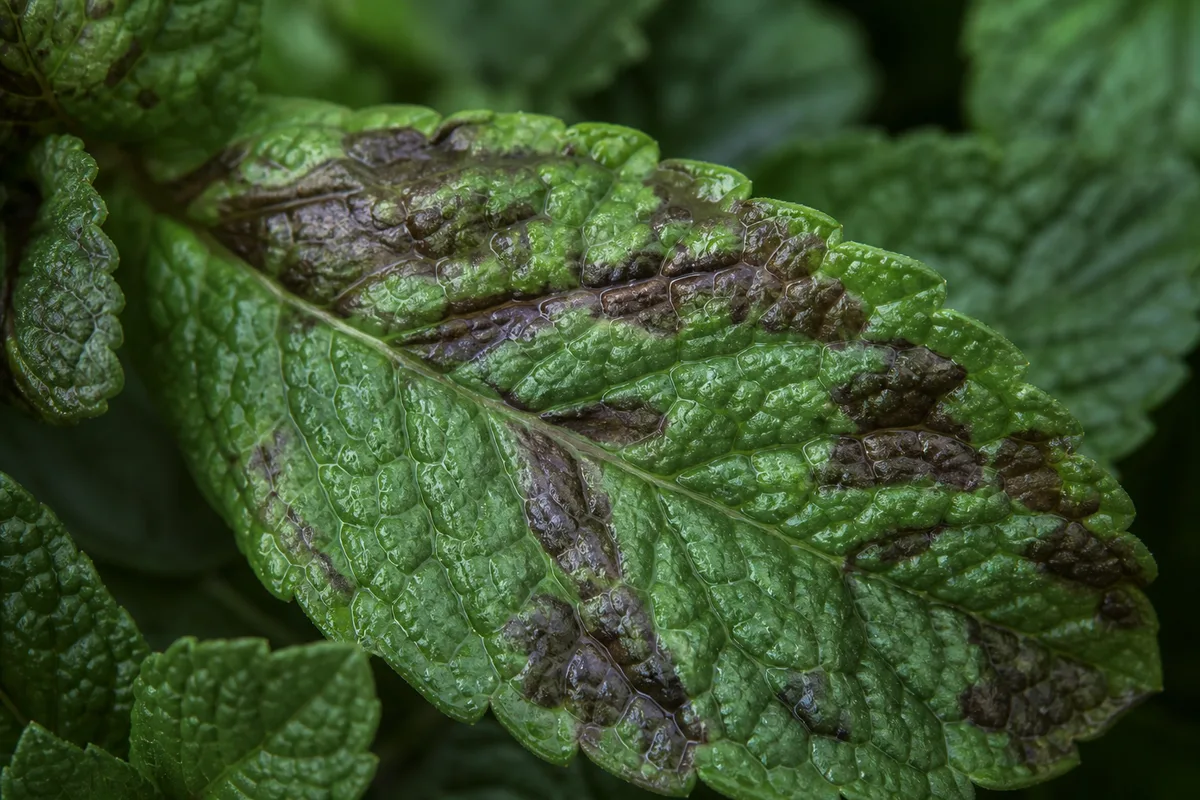
Cold Damage symptoms on Mint - compare with healthy tissue on the same plant.
- Blackened, water-soaked, or translucent leaves the morning after freezing nights
- Collapsed stems that look cooked or limp, then dry brown
- Entire top growth dead while rhizomes below may still feel firm if the freeze was mild
- Pot on cold pavement more damaged than a mulched in-ground patch after the same low
Healthy mint leaves are soft, fragrant, and bright green. Frost ruptures leaf cells-damage appears within hours of exposure, not over weeks.
Visual check without a photo: Pinch a blackened leaf. Frost-killed tissue feels wet then papery; it will not smell minty when crushed. Green tissue below a cut stem should smell strongly aromatic.
Unlike drought stress, cold damage follows a known frost or sub-freezing night-not gradual dry soil. Unlike heat stress, there is no afternoon wilt that recovers overnight; tops stay black after temperatures drop.
Why mint gets cold damage
Air frost and exposed top growth
Mint tops are not evergreen in cold climates. Light frost may bronze edges first; hard frost kills foliage quickly. Air temperature at leaf level on an exposed railing can dip below forecast lows in wind tunnels between buildings.
Container root freeze vulnerability
Container-grown mint dries out faster than in-ground plants in summer-and freezes faster in winter. Small pots, dark plastic that radiates cold, and saucers sitting in pooled ice accelerate root death. Repeated freeze-thaw on wet saucers is especially lethal: expanding ice damages roots, then thaw leaves soggy mix that invites rot.
Cold windowsills and wet dormant soil
Indoor rescue fails when pots sit against single-pane glass or on cold sills while leaves touch freezing glass. Wet cold soil compounds stress on dormant roots-extension herb guidance warns that constantly soggy mix encourages root rots, especially during winter. Reduce watering once growth stops; do not keep frost-hit mint saturated in dim light.
Late-season outdoor mint without protection
Mint planted or left outdoors in northern and high-elevation climates without mulch or shelter is vulnerable when nights drop below freezing for the first time each autumn. Balcony pots left out “one more week” often pay the price on the first hard frost.
How to confirm the cause
Work through these checks in order:
- Match weather records - Symptom onset should align with overnight lows at or below freezing (0°C / 32°F) or a documented frost advisory. No frost event? Rule out cold damage first.
- Stem-base scratch test - Cut a stem near soil level. Firm green tissue inside means recovery is possible; mushy brown means that stem is dead.
- Rhizome feel in soil - Gently brush soil from the crown. Firm, pale rhizomes suggest survival; soft, smelly tissue suggests rot after freeze-thaw on wet mix.
- Pot location - Was the container on cold pavement, a metal rail, or an open windy corner? Exposure explains severity better than variety alone.
- Soil smell and moisture - Sour odor on wet compost points to overwatering or root rot, not frost alone.
- Bud watch - As temperatures rise, watch for tiny green nubs at nodes near soil level within two to four weeks on survivors.
In-ground mint with black tops but firm rhizomes often resprouts in spring. Fully frozen small pots may need division and repotting from any firm sections-or propagation from healthy stem cuttings if the rootball rotted after thaw.
First fix for mint
After the frost period passes, cut blackened stems to healthy tissue or soil level-then move containers to a sheltered unheated porch or bright cool room.
Do not cut during active freezing nights; wait until temperatures stabilize above frost. Removing dead tissue reduces mold habitat and lets you see new buds. Move pots off cold pavement and away from glass that freezes at night.
Reduce watering while growth is dormant-let the top 2 cm dry between drinks. Mulch in-ground crowns with straw or shredded leaves in zones 5–7 for extra insulation after tops die back.
Step-by-step recovery
Mild frost on in-ground mint
- Confirm overnight frost in weather records.
- Wait until hard frost season ends before major cut-back.
- Trim blackened stems to 2–5 cm above soil or to firm green tissue.
- Apply 5–8 cm loose mulch around the crown after the ground cools-avoid packing wet mulch against stems.
- Watch for spring shoots; divide crowded mats when soil warms if regrowth is thin.
Frozen container - salvage vs. restart
- Move the pot to a sheltered spot immediately if more frost nights are forecast.
- After thaw, unpot if the rootball feels questionable. Rinse lightly and inspect rhizomes.
- Firm sections: Trim dead tops, repot firm rhizomes in fresh mix per the mint repotting guide, water once, and place in bright cool light.
- Mushy rootball: Cut away soft tissue; pot surviving firm fragments only. If nothing firm remains, discard and restart from nursery plants or stem cuttings in water.
- Hold fertilizer until active green growth resumes.
Indoor overwintering after rescue
- Choose the brightest window or supplement with a grow light 12–14 hours daily.
- Keep air 10–18°C (50–65°F)-cool and bright beats warm and dim for dormant mint.
- Water when the top 2 cm is dry; empty saucers. Avoid constant soggy soil in winter.
- Do not place pots on radiators or directly against freezing glass.
- Resume normal watering rhythm and light feeding only after spring growth appears.
Documented balcony recovery (zone 7, spearmint): A 20 cm spearmint in a 12 cm pot on a north-facing rail hit −2°C overnight on 15 March; tops blackened by morning. Rhizomes felt firm after thaw. Stems cut to soil level on 18 March; pot moved to a bright unheated porch. New shoots visible 2 April-about two weeks after cut-back once nights stayed above freezing.
Recovery timeline
Black leaves will not re-green. Damaged leaf tissue is dead; judge success by new shoots, not old foliage.
| Severity | What to expect |
|---|---|
| Light frost, firm rhizomes | New shoots in 2–4 weeks once temperatures rise consistently |
| Hard freeze, container survived | May wait until mid-spring for first buds; be patient before discarding |
| Fully frozen small pot, firm core | Division and repot; regrowth in 3–6 weeks in bright cool conditions |
| Mushy rootball after thaw | Salvage fragments only or restart; do not expect tops alone to recover |
Signs of improvement: firm rhizomes, green tissue when you scratch stems, minty smell from new nubs. Signs of worsening: sour soil, stems softening at the base after thaw, black creeping into previously firm tissue-shift to rot protocol on the overwatering guide.
Causes to rule out (lookalikes)
| Problem | Timing | Leaf pattern | Stem / soil feel |
|---|---|---|---|
| Cold damage (this page) | After frost or freeze | Black/translucent overnight | Firm rhizomes possible; cool soil, no sour smell |
| Overwatering / rot | Weeks of wet mix | Yellow then brown, not sudden black | Mushy base, sour smell, wet heavy pot |
| Transplant shock | Days after repot | Wilt, pale edges | Firm roots; follows division or pot move |
| Heat stress | Hot afternoons | Crispy margins, wilt | Dry light pot; recovers overnight |
| Drought | Gradual dry spell | Crispy brown tips | Very dry soil throughout |
When to use this page vs. heat-stress: Use this guide when damage follows freezing temperatures and tops blacken after a cold night. Use heat stress when the plant wilts in afternoon heat on dry pots and often perks up overnight without any frost event.
What not to do
Do not fertilize frozen-back mint immediately-wait for active growth. Do not pull living rhizomes because tops look dead; scratch stems or wait for spring buds before discarding. Do not leave wet pots outdoors through repeated freeze-thaw cycles without protection. Do not harvest blackened leaves for cooking. Do not repot aggressively on day one unless you need to salvage firm rhizome sections-stability and bright cool light come first.
How to prevent cold damage on mint
- Move pots indoors before hard frost or to an unheated garage, porch, or bright cool room.
- Cluster containers and wrap pots in burlap or bubble wrap in marginal zones; elevate off cold pavement.
- Mulch in-ground mint crowns after tops die back in zones 5–7.
- Sink pots in garden soil for winter if you cannot bring them inside-UMN Extension recommends this for hardy mints to add insulation.
- Choose sheltered microclimates on balconies away from wind tunnels.
- Reduce watering as growth slows; dry dormant mix is safer than soggy cold mix.
- Track local frost dates and move balcony herbs a week early rather than a day late.
For year-round placement and acclimation when moving pots in spring, pair this page with the mint light guide and mint overview.
Practical checks (ordered checklist)
Use this sequence before you discard a frost-hit plant:
- Recent frost dates - Confirm sub-freezing overnight low within 48 hours of symptom onset.
- Stem base firmness - Scratch lower stems; green and firm beats mushy brown.
- Rhizome feel in soil - Firm and pale rhizomes suggest survival; soft smelly tissue suggests rot.
- Pot exposure - Elevated rail, pavement contact, wind corridor, or glass contact increases severity.
- Soil moisture and smell - Wet and sour points to rot compounding cold stress.
- Bud watch - Wait two to four weeks in bright cool conditions before declaring the plant dead.
Urgency check
Higher urgency: Mushy stem bases after thaw, fully frozen rootball that smells sour, or repeated winter loss on the same exposed balcony-inspect for salvage divisions vs. restart and consider repotting into better-draining mix next season.
Lower urgency: Black tops only with firm rhizomes on an in-ground mat in zone 6–8-wait for spring cut-back and mulch; the plant likely resprouts.
Conclusion
Cold damage on mint is a hardy rhizome meeting exposed cold-not a mystery disease. Confirm with weather timing and stem-base firmness, cut back after frost passes, shelter containers, and judge recovery by new shoots in spring-not by hoping black leaves re-green. When tops die but rhizomes stay firm, patience beats premature discard. For the summer temperature extreme on the same plant, pair this drill-down with heat stress on mint; for moisture mistakes during winter rescue, see overwatering on mint.
Related tool
Use the Plant Problem Diagnosis Tool to narrow causes for cold damage on this plant before changing multiple variables at once.