Sunburn on Mint: Causes, Checks & Fixes
Quick answer
Sunburn scorches mint leaf edges to brown when unhardened tissue meets harsh afternoon sun. First step: Move to morning sun with afternoon shade, water if dry, and trim badly damaged leaves-then harden off gradually before returning to full sun.
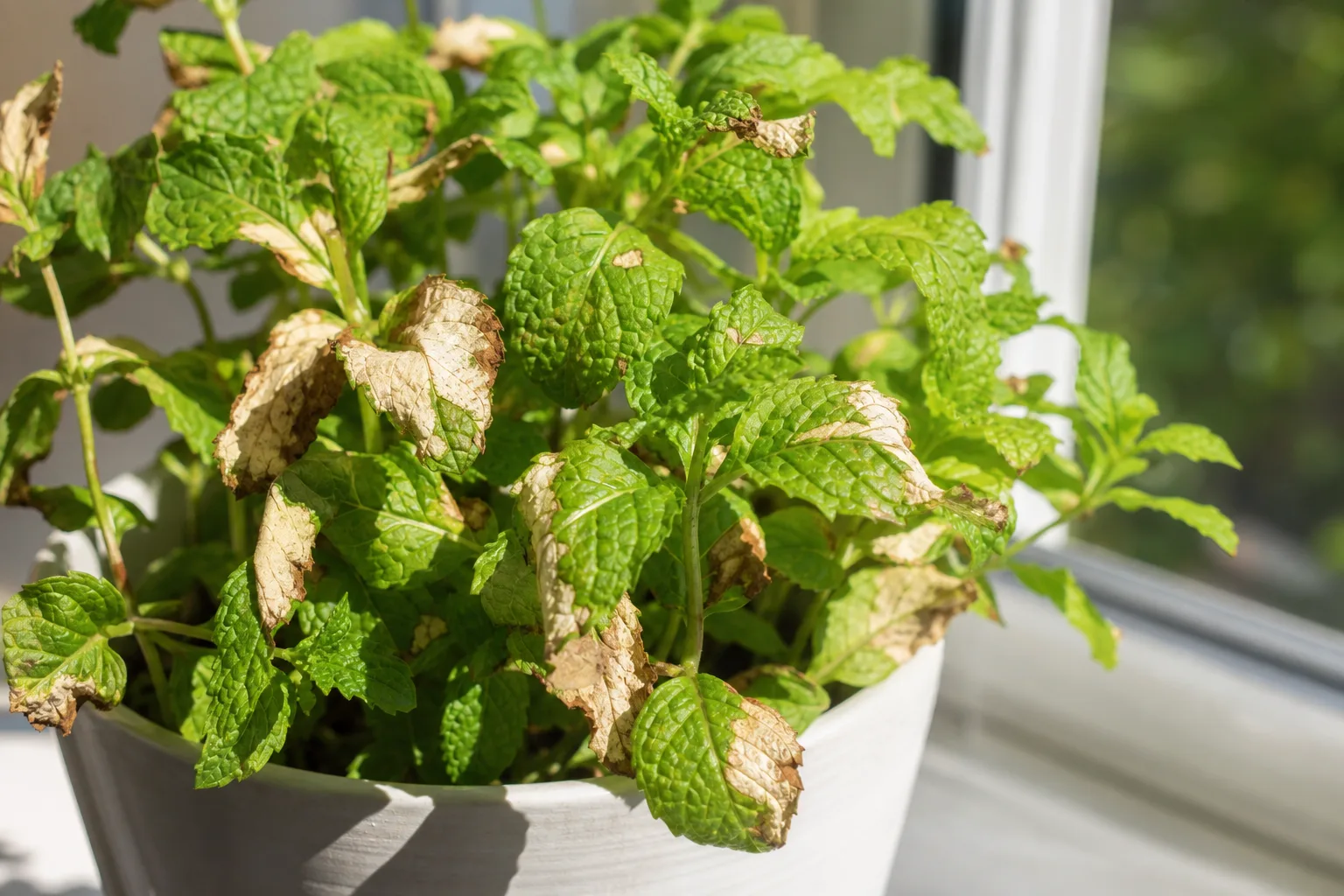
Sunburn on Mint: Causes, Checks & Fixes
This guide covers sunburn / scorched leaves on Mint. See also the general Sunburn / Scorched Leaves guide, watering, and light pages for this plant.
Sunburn on Mint: Causes, Checks & Fixes
Quick answer
Mint (Mentha spicata, spearmint) is a full-sun to part-shade herb that still sunburns when tissue adapted to dim windows meets sudden patio rays. The classic trigger is moving kitchen windowsill mint outdoors without hardening off, or parking a pot on south-facing concrete where reflected heat cooks the sun-facing rim.
Scorched leaves show directional tan-to-brown dry patches on the side that took the harshest light. Bleaching can precede browning within the first day after a light jump. Damaged tissue will not re-green.
First step: move the pot to morning sun with afternoon shade, water deeply if the top 2 cm of soil is dry, and trim heavily scorched leaves so energy shifts to new shoots. Do not plunge the plant back into all-day terrace sun the next day-use the recovery steps below.
Scope on this site: This page covers directional scorch after a sudden light increase. For year-round brightness, grow-light placement, and the full outdoor acclimation calendar, start with the mint light guide. For afternoon wilt on dry pots that recovers overnight, see heat stress on mint.
Sunburn vs heat stress vs drought on mint
These three problems overlap on summer patios but need different first fixes:
| Signal | Sunburn (this page) | Heat stress | Drought without scorch |
|---|---|---|---|
| Timing | Damage appears within 24–48 hours of a light jump or first blazing day | Worst wilting peaks mid-afternoon on hot days | Builds over several dry days |
| Pattern | Tan-brown dry patches on sun-facing leaves only; shaded inner leaves often stay green | Whole pot wilts; brown crispy margins on outer leaves | Even wilt; leaves dull or limp without distinct bleached patches on one side |
| Soil at noon | Can be moist or dry | Often dry and light pot weight | Dry throughout; pot very light |
| Overnight | Scorched tissue stays brown; plant may look unchanged | Turgor often returns by morning if roots rehydrate | Perks up after a deep soak |
| Stems/roots | Firm stems; roots white and firm when checked | Firm roots if caught early | Firm roots |
| First fix | Shade + gradual hardening | Deep morning water + afternoon shade | Deep soak; then adjust watering rhythm |
If wilting returns every afternoon on a dry small pot but leaves lack directional bleaching, read heat stress before treating sunburn alone.
What sunburn looks like on mint
Sun scorch on mint has a clear directional signature on broad, soft leaves:
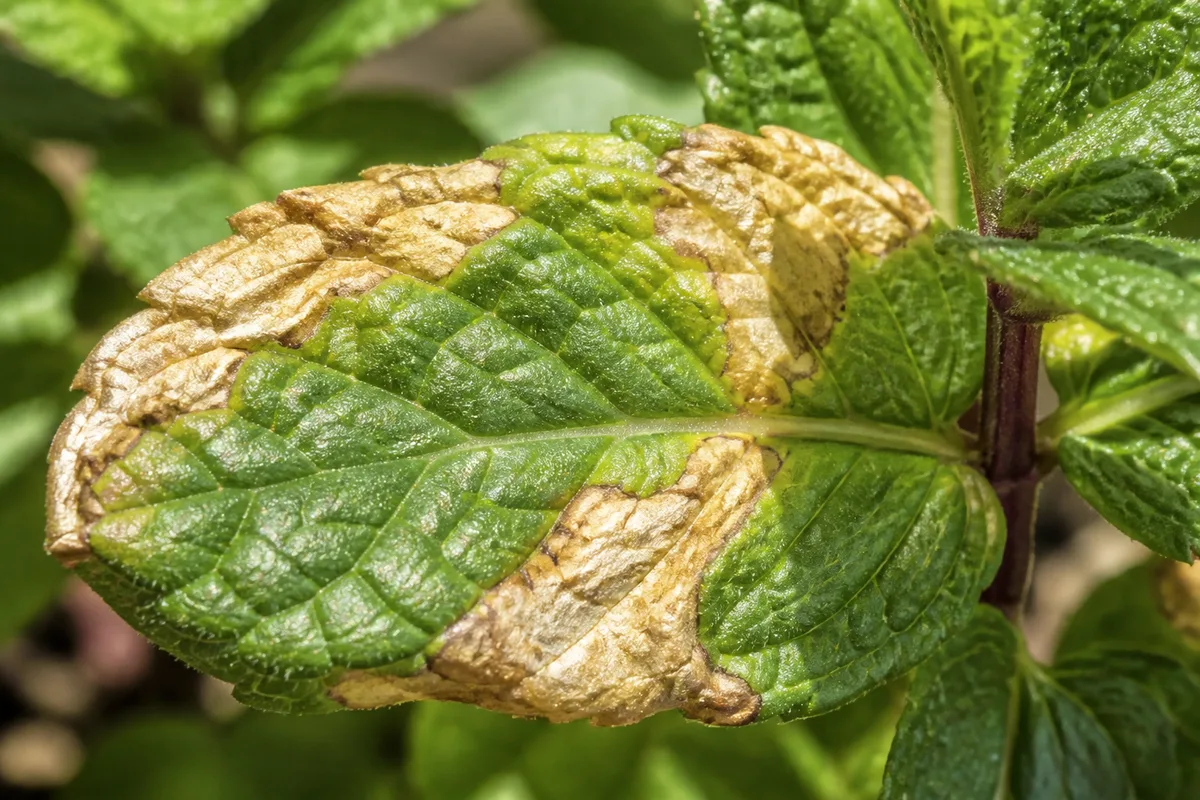
Sunburn / Scorched Leaves symptoms on Mint - compare with healthy tissue on the same plant.
- Bleached or silvery patches on upper leaf surfaces that faced afternoon sun-often before tissue turns tan-brown
- Crispy brown margins and dry patches confined to the sun-exposed side of each leaf, while the shaded half may stay green briefly
- Pot-rim concentration - outer stems at the sun-facing edge of a crowded mint pot scorch first because rhizomes fill the container and self-shade the center
- Sudden onset after moving indoors-to-outdoors, cleaning glass and shifting a pot closer to the pane, or the first clear hot day after overcast weather
- Firm stems and no sour soil smell-unlike root rot
Photo callout - directional scorch: Imagine a patio spearmint pot after one afternoon on south-facing concrete: the three outer leaves facing the railing show dry tan wedges on their top surfaces; leaves tucked behind the rim are still bright green.
Photo callout - bleaching stage: On day one after an abrupt outdoor move, exposed mint leaves may look pale yellow-green or whitish before margins crisp-treat that as an urgent signal to shade immediately.
Unlike rust on mint, sunburn never produces orange, yellow, or brown pustules on leaf undersides. Unlike salt burn after heavy feeding, scorch follows a light or heat event-not a recent fertilizer spike (though both can brown margins; see lookalikes below).
Why mint gets sunburn despite tolerating sun
Mint’s sun-tolerance paradox trips up kitchen growers: spearmint grows best in full sun to part shade in moist soil, and peppermint is most productive in full sun-yet leaves that developed under indoor windows or winter dimness lack the thickened cuticle and pigment load needed for open UV exposure. University of Minnesota Extension notes that houseplants moved straight into direct sun often burn because leaves need time to adjust, just like human skin.
Mint-specific triggers:
Indoor-to-outdoor spring moves without hardening. Kitchen mint on a bright sill is still receiving far less intensity than open patio sun. UF/IFAS Gardening Solutions recommends increasing outdoor sun exposure gradually-starting with morning hours-and moving plants indoors if brown patches appear.
Rhizome-filled pots and edge heating. Mint spreads by runners and rhizomes, packing container edges densely. Outer stems catch full rays while inner shoots stay shaded; the sun-facing rim also dries faster, compounding scorch when you move a pot without increasing water.
Dark containers on hot surfaces. Black nursery pots on stone, concrete, or metal rails heat the root zone. Outer leaves transpire faster than roots can supply water during peak heat-scorch shows on foliage before you notice dry soil.
Reflected glare. White walls, glass balustrades, and light pavement bounce extra light and heat onto one side of the pot-damage clusters on that face.
Drought during heat waves. Mint prefers consistently moist soil during active growth. Dry roots plus sudden sun multiply scorch severity on exposed tissue.
Flavor loss during scorch. Scorched leaves lose aroma as essential-oil cells rupture. Recovery means new clean tips, not salvaging papery burnt tissue for tea.
In hot humid climates, UF/IFAS recommends light or part shade for mint-afternoon protection is normal productive culture, not failure.
How to confirm the cause
Work through these six checks in order:
- Timeline - Did bleaching or browning appear within one to three days of an outdoor move, window shift, or first intense sunny day after cloud cover? Sunburn timing is fast.
- Leaf pattern - Are damaged leaves mostly on the sun-facing side of the pot, with shaded inner leaves still green? Directional dry tan-brown tissue strongly suggests scorch.
- Soil moisture - Press the top 2 cm. Dry soil with scorched outer leaves fits drought-compounded sun stress; soggy mix with mushy stems points to root rot, not sunburn alone.
- Root and stem feel - Gently tug a stem at the base. Firm white roots and solid stems support light-stress diagnosis. Soft brown roots and sour smell need rot treatment before any return to sun.
- Underside inspection - Hold leaves to the light. Orange or dusty pustules underneath mean rust-remove infected shoots per the rust disease guide.
- Weather and pot context - Note dark pot color, small volume, reflected heat, and whether a feeding happened in the last week (salt-burn margins can mimic scorch-see lookalikes).
If all six support sunburn with firm roots, skip fungicides and emergency repotting. The fix is shade, hydration, and gradual hardening-not less sun forever.
Confirmation decision table
| If you find… | Likely cause | Next step |
|---|---|---|
| Directional dry scorch + recent light jump | Sunburn | Shade, water if dry, begin hardening schedule |
| Afternoon wilt + dry light pot + overnight recovery | Heat stress | See heat stress |
| Orange pustules under leaves | Rust | Rust disease protocol |
| Mushy stems + wet sour soil | Root rot | Root rot-do not increase sun |
| White soil crust + margins after feeding | Salt burn | Flush, hold feed; see brown tips |
| Even wilt + very dry soil throughout | Drought | Deep soak; review watering guide |
First fix for mint
Move the pot to a spot with morning sun and afternoon shade for the rest of the day, then water deeply if the top 2 cm of soil is dry.
This single step stops active burning on unhardened tissue while rehydrating leaves that desiccated faster than roots could supply moisture. Soak until water runs from drainage holes, then let the pot drain fully-mint hates waterlogged crowns, so do not leave the saucer full during recovery shade.
RHS grow-your-own guidance places mint in sun with protection from hot midday rays in warm weather. Eastern exposure, dappled afternoon shade, or a few feet back from a blazing west railing all work as temporary bridges.
Trim only leaves that are more than half papery brown-leave partially green tissue to photosynthesize during recovery. Do not fertilize burned mint until new growth looks clean for two weeks.
Do not permanently tuck mint into deep shade to “fix” scorch. Shade-grown mint stretches, weakens flavor, and invites not enough light problems. Shade is a temporary bridge during hardening, not the destination.
Step-by-step recovery
After the initial shade move and watering:
- Harden off over 7–10 days - UMN Extension advises starting with a few shaded outdoor hours, then increasing direct sun exposure daily over two weeks. For mint: Day 1–2, 2–3 hours morning sun; Day 3–4, add late-morning exposure; Day 5–7, extend to early afternoon; Day 8–10, full sun if temperatures stay moderate and soil stays moist.
- Increase watering outdoors - Brighter exposure dries pots faster. Check the top 2 cm daily and match rhythm to the mint watering guide.
- Harvest or trim scorched foliage - Once the plant stabilizes, cut papery leaves at the stem. Mint is a harvest crop; removing damaged tissue encourages fresh shoots from nodes.
- Move off reflected heat - Shift pots away from white walls and dark paving that radiate afternoon heat onto one side.
- Divide overcrowded rims if needed - Pull a few outer runners if the pot edge is a solid mat of sun-exposed leaves with a bare shaded center.
- Hold fertilizer - Resume light feeding only after new tips emerge without fresh bleaching.
Recovery note (container spearmint, spring 2025): A kitchen windowsill clump moved to a south patio on a clear 32°C afternoon showed whitish upper leaves within 24 hours. After seven days of morning-sun placement, afternoon shade, and daily top-2-cm moisture checks, clean new tips appeared on day 12-old scorched margins never re-greened.
Recovery timeline
Scorched leaf tissue is permanent on affected leaves-it will not turn green again. Judge recovery by new growth, not old margins.
3–7 days: Active burning should stop once exposure is moderated and soil moisture is steady. No new bleaching on youngest leaves is the key signal.
7–14 days: Clean new shoot tips typically appear during active summer growth. In cool spring weather, allow up to three weeks.
One harvest cycle: Full bushy canopy may take several weeks of weekly pinching. Lower woody stems that were heavily scorched may never look perfect-many growers cut those back and keep fresh basal growth.
Signs the fix is working: New leaves emerge green without bleaching; scorch does not spread to previously shaded leaves; crushed new tips smell minty again.
Signs the problem is worsening: Spreading brown lesions with orange pustules (rust); wilt on wet soil with mushy stems (rot); daily collapse despite shade and watering (wilting workup needed).
Lookalike symptoms to rule out
Rust (Puccinia menthae) - Dusty orange pustules on leaf undersides, sometimes with yellow upper spots-not sudden directional papery scorch after a light move alone. Confirmed rust needs infected material removed; see rust disease on mint.
Root rot - Yellowing and wilt on wet soil, sour smell, mushy brown roots. Moving a rotting pot to shade without fixing drainage worsens collapse. See root rot.
Salt / fertilizer burn - Brown margins on many leaves after recent feeding, sometimes with white crust on soil surface. Flush the pot and hold fertilizer-not the same as directional scorch after a patio move. Overlap with brown tips and overfertilization.
Heat stress wilt - Afternoon droop on dry pots that often recovers overnight; may lack distinct one-sided bleaching. See heat stress.
Simple drought - Even wilting with dry soil throughout, without the fast directional bleaching pattern of sunscald. Deep soak once, then stabilize watering.
Low light stretch - Long pale stems reaching toward glass-not crispy directional burn. See not enough light.
Mistakes to avoid
Do not return shade-grown mint to all-day western sun the day after scorch because “mint likes sun.” Re-acclimate over 7–10 days.
Do not confuse scorch with thirst and overwater a firm-rooted plant sitting in soggy mix-wet soil plus damaged leaves invites rot during recovery shade.
Do not fertilize burned mint immediately. Nitrogen pushes soft growth while roots are stabilizing.
Do not harvest heavily while the plant has mostly papery leaves-leave enough green tissue to rebuild.
Do not spray fungicides on bleached leaves with no rust pustules-cosmetic sunscald does not need chemical treatment.
How to prevent sunburn on mint
Plan a 7–10 day hardening window each spring before permanent outdoor placement, following the calendar in the mint light guide. Moving houseplants outdoors should start in wind-sheltered, indirect light-not open afternoon blaze.
Water the evening before or morning of heat spikes so roots enter peak hours hydrated.
Use afternoon shade cloth or eastern exposure when temperatures climb above 30°C on exposed terraces-common in hot climates and not a sign you failed as a grower.
Keep soil consistently moist during heat; mint in full sun dries faster than indoor counters.
Prefer lighter-colored pots or elevate dark containers off hot paving. Rotate pots weekly so one side does not face reflected glare all season.
Spearmint vs. peppermint: Both scorch when unhardened; peppermint’s darker leaves may show bleaching less visibly at first but still crisp at margins. Neither tolerates a sudden full-sun jump from dim indoor culture.
When to worry
Treat as urgent when an entire newly moved plant bleaches or crisps within 48 hours-shade immediately and check moisture.
Also escalate when:
- Scorched mint sits in wet soggy soil with soft stems-shade plus rot risk; see root rot
- Orange pustules spread to new leaves-rust, not sunburn
- The plant collapses daily despite shade and deep watering-heat, drought, or rot overlap needs broader triage on wilting and water stress
Lower urgency when only a few outer leaves on a firm, well-rooted patio pot show directional tan patches after one hot afternoon-shade, water, and harden off.
Conclusion
Sunburned mint needs hydration, temporary shade, and gradual hardening-not permanent dim placement. The sun-tolerance paradox is real: this herb wants bright light long term, but unhardened leaves burn when exposure jumps. Confirm directional scorch with the table above, rule out rust and rot on undersides and roots, trim papery tissue, and trust clean new tips within one to two weeks once exposure is moderated. For placement year-round, pair this drill-down with the mint light guide; for afternoon wilt on dry pots, use heat stress instead.