Mealybugs on Mint: Causes, Checks & Fixes
Quick answer
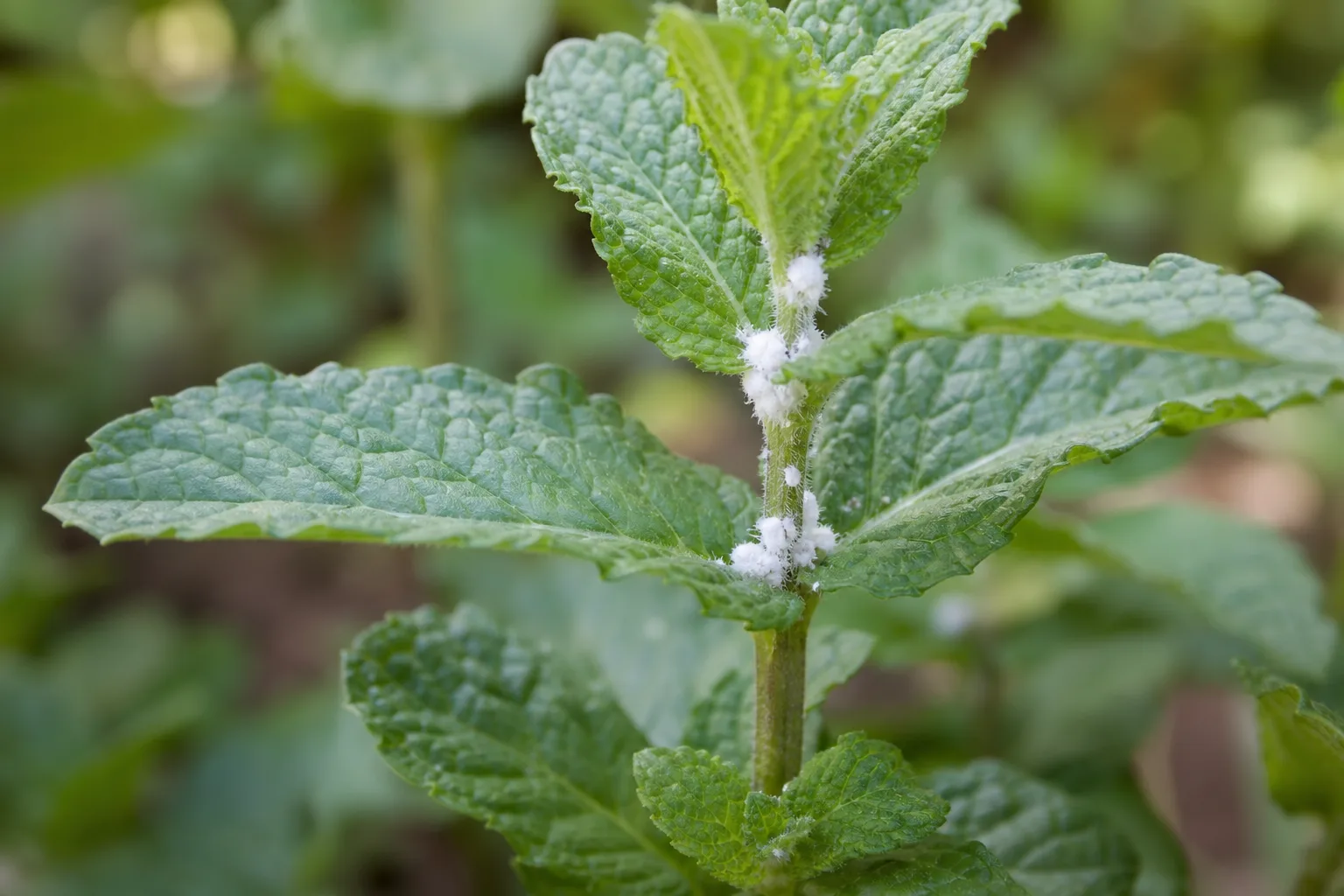
Mealybugs on Mint show up as white cottony clumps in stem joints and leaf axils, often with sticky honeydew. First step: move the pot away from other herbs and dab every visible cluster with a cotton swab dipped in rubbing alcohol.
Mealybugs on Mint: Causes, Checks & Fixes
This guide covers mealybugs on Mint. See also the general Mealybugs guide, watering, and light pages for this plant.
Mealybugs on Mint: Causes, Checks & Fixes
Quick answer
Mealybugs on mint (Mentha spicata, spearmint) appear as white, cottony wax patches tucked into leaf axils, stem joints, and the crown where new shoots emerge. They feed slowly but hide well in the dense, overlapping stems mint produces when it is happy-and that same bushy habit makes them easy to miss until honeydew or sooty mold shows up on lower leaves.
First step: isolate the pot and dab every visible cluster with a cotton swab dipped in rubbing alcohol. Mealybugs stay put unlike aphids, so direct contact kills adults on the spot. After that, you can follow with repeated insecticidal soap sprays to catch newly hatched crawlers-but isolation and alcohol dabs come first, before treating the rest of your herb shelf.
What mealybugs look like on Mint
On mint, the earliest sign is usually cottony white wax at a node-not a dusting on the leaf surface, but a small tuft wedged where a leaf meets the square stem. Mature mealybugs are soft-bodied, about 3/16 inch long, with a powdery coating and sometimes thin white filaments along the body margin.
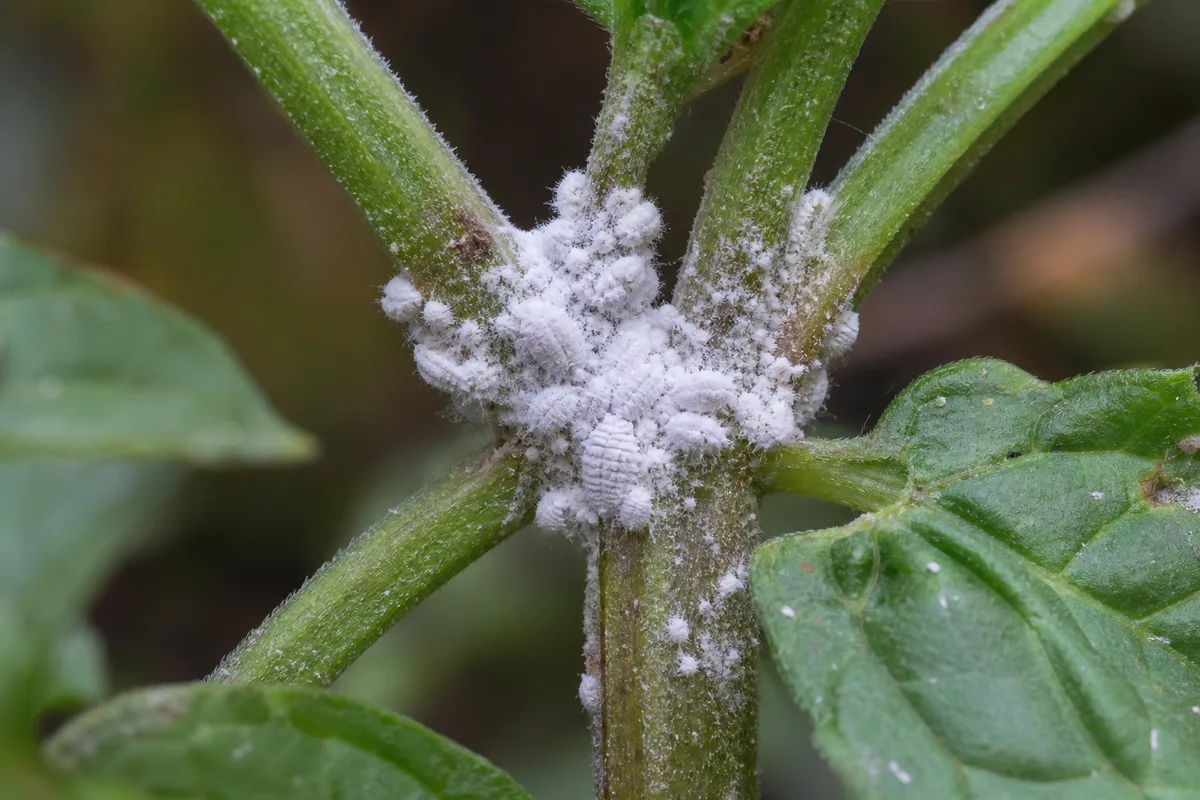
Mealybugs symptoms on Mint - compare with healthy tissue on the same plant.
Mint-specific places to inspect:
- Leaf axils on the newest shoots you harvest most often
- The crown where multiple stems sprout from rhizomes
- Undersides of lower leaves where honeydew drips and collects
- The soil line and upper roots, where root-feeding mealybugs can hide on container mint
Feeding damage on mint shows as stunted shoot tips, yellowing lower leaves, and a general loss of vigor even though you are watering on schedule. Because mint normally regrows quickly from rhizomes, a sudden slowdown in fresh tips while white clumps are present strongly points to sap-feeding pests rather than ordinary harvest stress.
Honeydew-a shiny, sticky coating on leaves or the counter below the pot-is a common companion sign. Black sooty mold may follow on honeydew-covered leaves; it does not infect mint directly but blocks light and makes leaves unappetizing for kitchen use.
Why Mint gets mealybugs
Mint is not more prone to mealybugs than other soft-stemmed herbs, but how we grow it indoors creates favorable hiding spots. Spearmint in a kitchen window often sits in a crowded cluster of pots, stays moist at the root ball, and gets regular nitrogen feeding to push tender new leaves for harvest. Mealybugs thrive on that combination: protected crevices, steady sap flow, and soft new tissue.
Common entry routes on mint:
- New nursery herbs brought home without quarantine
- Plants moved indoors for winter after summer outside
- Weak, overwatered mint with yellow lower leaves and limp stems-stressed plants attract pests faster
- Over-fertilized lush growth, which mealybugs prefer over tough older foliage
Mint’s spreading rhizome habit matters in containers. Dense root crowns and overlapping stems create humid pockets that rinsing misses. A quick shower knocks aphids off tips but may not reach mealybugs deep in the crown unless you pull stems apart and inspect deliberately.
Because mint is edible, avoid systemic insecticides labeled for ornamental houseplants-chemical controls are not recommended on indoor culinary herbs. Stick to contact methods you can time around harvest.
How to confirm the cause
Work through these checks before spraying everything on the shelf:
- Location of the white material - Mealybugs sit in joints and axils. Powdery mildew coats leaf surfaces evenly in a flour-like film. Mineral deposits from hard water are flat and wipe off dry.
- Movement - Aphids and whiteflies shift when disturbed. Mealybugs crawl slowly or stay still; you may see tiny crawlers (wax-free nymphs) near adults.
- Alcohol test - Touch a cluster with an alcohol-dipped swab. Mealybugs turn light brown or gray when killed. Test one leaf first if you worry about alcohol burn on tender mint foliage.
- Honeydew and ants - Sticky leaves or ant trails on the pot suggest sap feeders. Confirm whether the stickiness is pest honeydew rather than spilled food nearby.
- Below the soil line - If stems look clean but the plant keeps declining, gently scrape soil from the crown. Some mealybugs feed on stems and roots at the soil surface.
- Neighbor herbs - Check basil, parsley, and other Lamiaceae family pots within a few feet. Mealybugs spread by crawlers and on tools, hands, and touching leaves.
Confirmed mealybugs: stationary waxy clusters plus sap-feeding signs. Suspected only: a single white speck with no honeydew and vigorous new mint growth-recheck in three days with magnification before treating.
First fix for Mint
Move the mint pot away from other plants-isolate infested plants in another room or at least several feet of separation with no touching leaves. Mealybugs spread slowly, but isolation stops the easiest route while you treat.
Then dab every visible cluster with a cotton swab dipped in 70% isopropyl alcohol. Work stem by stem into the crown; crush or wipe off bugs you cannot reach with a swab. On light infestations, this alone can drop numbers sharply.
Do not harvest leaves for eating the same day you treat. Do not spray soap or oil in the same session before alcohol has dried-you need to confirm how much of the population you removed by hand first.
After dabbing, rinse the plant under lukewarm water in a sink or shower to wash off honeydew and loose wax. Let foliage dry before the next step.
Step-by-step recovery
Once isolation and alcohol dabs are done, continue in this order:
- Prune heavily infested stems - Cut out shoots coated end-to-end and dispose of them in sealed bags, not the compost pile indoors. Mint will regrow from rhizomes if the crown is still firm.
- Spray insecticidal soap - Use a product labeled for houseplants or edible herbs. Coat stems, leaf undersides, and axils until runoff. Soaps work on contact only; they do not linger to kill insects that arrive later.
- Repeat on a schedule - Reapply every 5–7 days for at least three weeks to catch newly hatched crawlers before they build new wax coats. Inspect with bright light each time you water.
- Manage honeydew residue - Wipe sticky leaves with a damp cloth. Sooty mold clears once honeydew stops and new clean growth replaces old coated leaves.
- Address ants if present - Ants protect mealybugs for honeydew. Break ant trails on shelves so natural predators and your sprays can work.
- Hold fertilizer - Skip nitrogen feeds until new tips emerge clean for two weeks. Soft lush growth after an infestation invites reinfestation.
- Repot only if root mealybugs persist - If bugs reappear at the soil line after repeated sprays, knock off old mix, rinse rhizomes gently, and repot into fresh sterile potting soil in a clean container. Not day-one treatment-only when crown inspection demands it.
Neem oil and horticultural oil can supplement soap on tough infestations, but test a few mint leaves first; oils can burn foliage in hot, sunny windows. For kitchen herbs, insecticidal soap on a repeat schedule is usually the safer primary spray.
Recovery timeline
Small infestations often stabilize within two to three weeks if alcohol dabs and weekly soap sprays continue until you see two consecutive inspections with zero live bugs.
Moderate infestations on a large mint pot may need four to six weeks and one hard pruning round. Expect new clean shoots from rhizomes within 7–14 days after stress lifts-that is the best success marker.
Old leaves coated in honeydew or sooty mold will not become pristine again. Harvest them away as clean tips replace them.
Worsening signs: new cottony clusters after three full spray cycles, shrinking new leaves despite good light and water, or ants increasing while stems soften. Those point toward root-zone infestation or a plant that is cheaper to replace than to keep treating.
Lookalike symptoms
- Powdery mildew - Flat gray-white dust on leaf tops, not cottony tufts in axils. Common when mint pots are crowded and airflow is poor. Fix spacing and avoid wetting foliage; fungicides are a different tool than pest sprays.
- Aphids - Green, black, or pink mobile insects packed on tender shoot tips, often with curled new leaves. Blast with water first; mealybugs stay waxy in joints instead.
- Spider mites on Mint - Fine webbing and pale stippling in hot, dry conditions, not white wax clusters. Rinse and raise humidity; mites favor drought-stressed mint near heaters.
- Fungus gnats - Small flying adults from wet soil surface; larvae in soggy mix, not cotton on stems. Let the top 2 cm of soil dry between waterings.
- Hard-water or dust - Wipes off dry without leaving a sticky residue or embedded wax.
What not to do
Do not return mint to the herb shelf after one treatment. Two weeks with zero new clusters is a safer minimum.
Do not use homemade dish-soap mixes on mint-they can burn foliage and leave residue you do not want on edible leaves.
Do not apply systemic soil insecticides on kitchen mint. They have long residuals and are inappropriate for herbs you harvest regularly.
Do not harvest immediately after spraying. Wait for label dry times and rinse before use.
Do not over-fertilize to “help recovery.” Nitrogen-rich flushes produce the soft growth mealybugs prefer.
Do not ignore ants-they farm honeydew and shield mealybugs from natural enemies.
When handling heavily infested pots, keep mint away from pets. Mint is toxic to cats and dogs; treatment chemicals add another reason to isolate the pot on a counter pets cannot reach.
Mint care cross-check
Mealybugs exploit weak culture more than they cause it outright. After treatment, align basics so mint outgrows the problem:
- Light - 4–6 hours of direct sun or strong supplemental light keeps stems sturdy, not floppy and humid in the crown.
- Water - Keep soil consistently moist but not soggy; empty saucers within 15 minutes. Chronic wetness weakens roots and pairs with fungus gnats, not mealybugs directly, but stressed mint recovers slowly.
- Harvest rhythm - Regular pinching opens the crown for inspection and improves airflow between stems.
- Pot size - Root-bound mint packed into a small pot produces dense top growth with many hiding joints; divide or repot in spring if roots circle the container.
How to prevent mealybugs on Mint
Quarantine new herbs for at least two weeks before placing them next to mint. Inspect axils under bright light when you unpack store-bought pots.
During weekly care, part stems at the crown and check joints you normally skip when harvesting top sprigs. Early dabs with alcohol stay easy; crown-wide infestations are not.
Space pots so leaves do not touch. Wipe counters under sticky plants. Avoid high-nitrogen feeds that push excessive soft foliage; half-strength balanced liquid every 3–4 weeks in active growth is enough for container mint.
If you move mint outdoors for summer, inspect before bringing it back indoors in fall. Outdoor predators disappear once the pot is inside, and any hitchhiking mealybugs can spread through the whole herb collection.
When to worry
Escalate if multiple stems show new wax within a week of treatment, if new growth stops while older leaves yellow, or if root-zone inspection reveals cottony masses below the soil line after foliar sprays fail.
Mint is inexpensive to replace from a clean division. If more than half the visible crown is coated and rhizomes feel soft, start a fresh pot from uninfected stock rather than cycling pesticides for months.
Conclusion
Mealybugs on mint are a contact-and-patience problem: they hide in the same dense axils that make spearmint productive in a kitchen pot. Confirm waxy stationary clusters-not mildew or aphids-isolate the plant, dab alcohol on every bug you see, then repeat insecticidal soap until inspections stay clean. Mint’s fast rhizome growth is your ally; judge success by new unsticky shoots, not by salvaging every old honeydew-coated leaf.
When to use this page vs other Mint guides
- Mint watering guide - Use for routine moisture checks before assuming mealybugs is the main issue.
- Mint problems hub - Browse all 40 common issues on this species.
- Sticky Leaves on Mint - Different entry point when symptoms overlap with mealybugs.
- Yellow Leaves on Mint - Different entry point when symptoms overlap with mealybugs.
- Slow Growth on Mint - Different entry point when symptoms overlap with mealybugs.