Sticky Leaves on Mint: Causes, Checks & Fixes
Quick answer
Sticky mint leaves mean honeydew from sap-sucking pests-not normal mint sap. First step: move the pot away from other herbs and blast new shoot tips and leaf undersides with a strong stream of water before any spray.
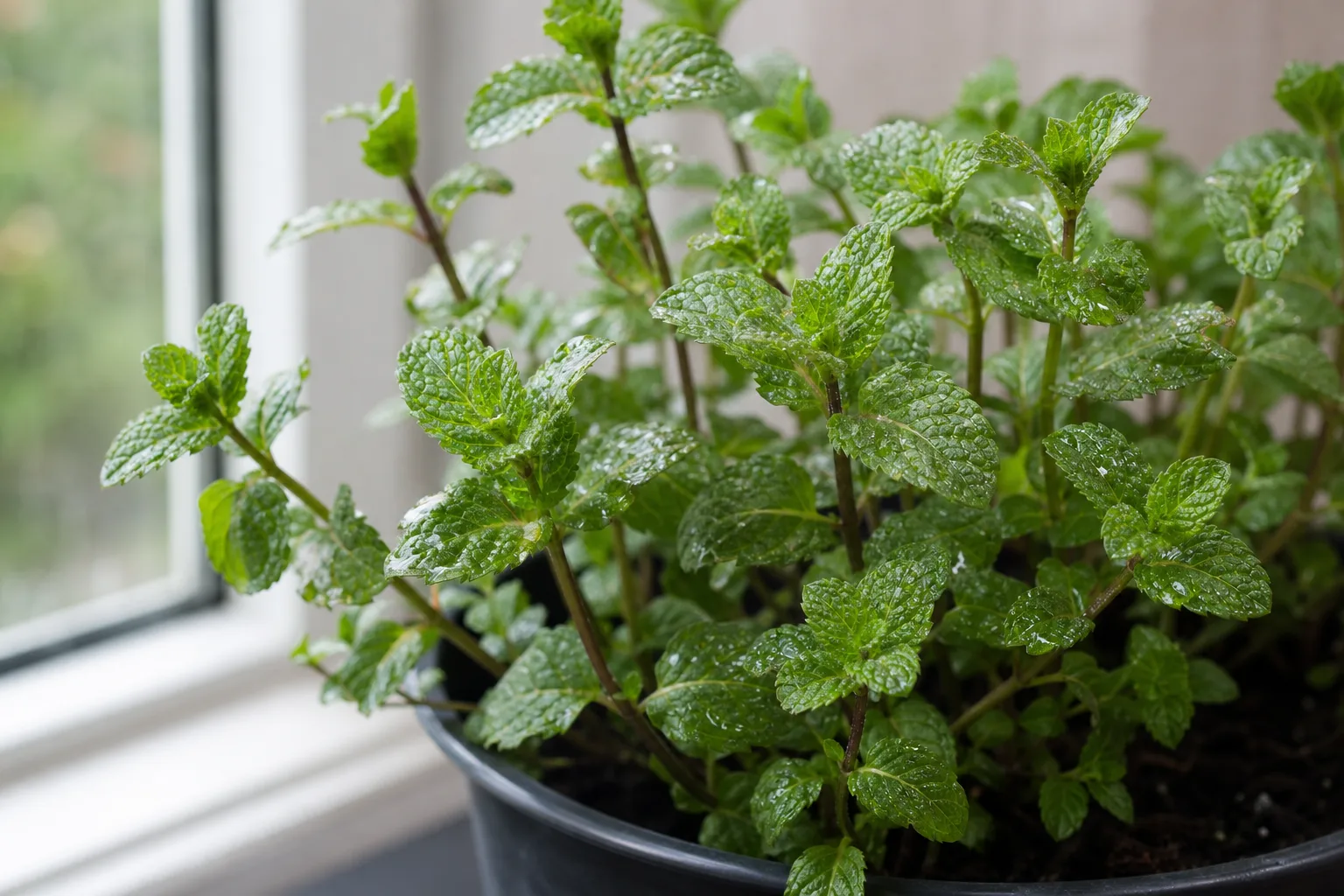
Sticky Leaves on Mint: Causes, Checks & Fixes
This guide covers sticky leaves on Mint. See also the general Sticky Leaves guide, watering, and light pages for this plant.
Sticky Leaves on Mint: Causes, Checks & Fixes
Quick answer
You reached for mint to muddle into a drink and the newest leaves feel tacky-not dewy, not dusty, but genuinely sticky. On culinary mint (Mentha spp., including spearmint and peppermint) in kitchen pots, that almost always means honeydew: sugary waste from sap-sucking insects feeding on the same soft tips you harvest.
First step: move the pot away from basil, parsley, and other herbs, then blast stem tips and leaf undersides with a strong stream of water. That mechanical knock-down is the safest start on an edible plant. Only after you still see living pests should you follow with labeled contact sprays.
This page is the sticky-leaf symptom hub for container mint. Once you confirm honeydew, use the pest-ID table below to open the right sibling guide-aphids on mint, mealybugs on mint, or whiteflies on mint-for species-specific treatment depth.
What sticky leaves look like on Mint
Stickiness on mint follows pest feeding patterns, not random leaf aging.
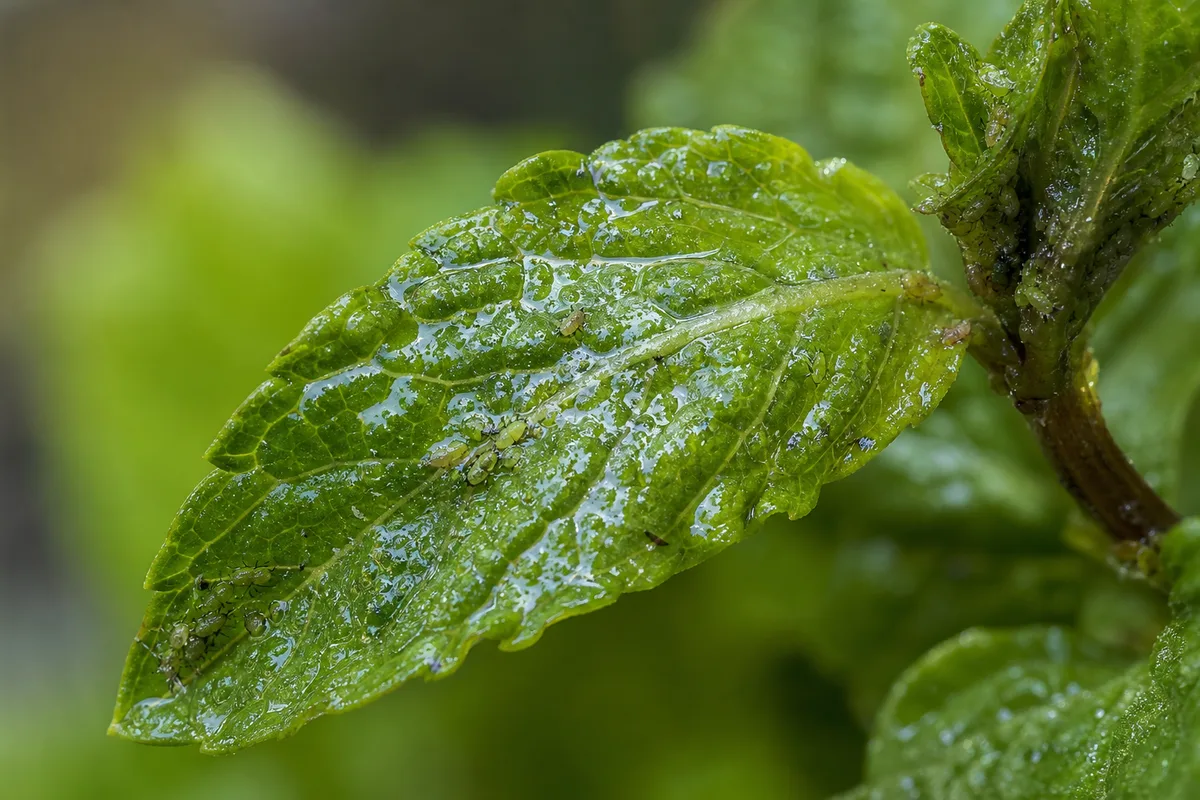
Sticky Leaves symptoms on Mint - compare with healthy tissue on the same plant.
Honeydew pattern: Glossy, tacky coating on newest shoots and upper leaf surfaces first-the same tissue you pinch for tea. Pot rims, saucers, and nearby windowsills may glisten. Fingers stick slightly when you rub a coated leaf.
Insects at the source: Undersides of tender tips hold pear-shaped aphids, white cottony mealybug clusters in leaf axils, or flat immature whiteflies. Ant trails on stems often point upward to the colony ants are farming for honeydew.
Sooty mold follow-up: Black powdery film on top of stickiness means honeydew has persisted long enough for sooty mold fungi to grow. It wipes off but returns until pests stop.
Outdoor vs. indoor cues: Summer mint on a patio may show stickiness only on sheltered undersides after dry spells when aphid numbers peak. Indoor winter mint on a heated sill can host mealybugs in humid axils between overlapping stems-stickiness without obvious insects on top still warrants axil inspection.
Mint does not normally bleed sticky sap across whole leaves. Tacky foliage with insects, ants, or cast skins is a pest signal-not a watering or fertilizer problem.
Why kitchen mint gets sticky leaves
Mint aphid and other sap feeders
The mint aphid (Ovatus crataegarius) is the documented pest on commercial and garden mint: wingless forms are apple green to yellow-green, populations stunt shoots, distort leaves, and secrete honeydew. Green peach aphid and other aphids also feed on mint and many kitchen herbs.
Mealybugs lodge in stem joints and axils on crowded indoor pots. Whiteflies excrete honeydew like aphids; adults fly up in a small cloud when you brush the plant-common on herbs brought indoors from summer outdoors or on nursery transplants.
Sooty mold follows honeydew
Honeydew is not a disease-it is insect waste. Several fungi grow on those sugar deposits, creating washable black film that can reduce photosynthesis on leaves you planned to eat. Fix the insect; the sooty coating stops accumulating.
Fast pinching creates soft tips aphids prefer
Mint regrows rapidly after harvest. Constant pinching for drinks and garnish keeps producing soft, new plant growth-exactly what aphids colonize. Heavy nitrogen feeding pushes even softer shoots. On a kitchen sill where you harvest weekly, you are effectively maintaining an all-you-can-eat buffet for sap feeders unless you scout between cuttings.
Crowded herb shelves let ants move between pots, protecting aphids on mint while they also visit basil and oregano. Skipping quarantine on new nursery herbs is the most common introduction route.
Confirm sticky leaves vs. kitchen grease and other lookalikes
Work through this numbered checklist before spraying anything beyond water:
- Touch test - Honeydew feels tacky when dry. Plain water from misting feels wet but not glue-like once the surface dries.
- Newest shoots first - Stickiness concentrates on tender tips and upper leaves, not uniformly on old lower foliage unless the infestation has spread.
- Magnify undersides and axils - Pear-shaped aphids, cottony mealybugs, or flat whitefly nymphs confirm sap feeders. No insects after careful search? See lookalike table.
- Ant trails - Ants marching on stems strongly suggest honeydew-producing colonies nearby.
- Neighbor herbs - Check basil, thyme, and other pots on the same sill; shared infestations are common.
- Harvest history - Sticky tips you were about to clip for garnish? Honeydew fits. Grease splatter from cooking usually coats outer leaves facing the stove, not just new growth axils.
Symptom lookalike comparison
| What you notice | Touch / location | Insects or ants? | Likely cause | Next step |
|---|---|---|---|---|
| Tacky new tips, glossy pot rim | Sticky when dry | Aphids, mealybugs, ants, or whiteflies | Honeydew from sap feeders | This page → pest routing table below |
| Greasy film on outer leaves | Wipes off with dish soap on cloth | None | Kitchen grease or cooking splatter | Wash leaves; move pot away from stove |
| White crusty spots after tap water dries | Not tacky; mineral feel | None | Hard-water mineral deposits | Rinse with filtered water; cosmetic only |
| Brief morning wetness outdoors | Dries by midday | None | Dew or irrigation | Recheck in afternoon |
| Sticky but no live pests after treatment | Residue only | None recently | Old honeydew not yet rinsed | Wipe leaves; monitor weekly for return |
| Fine stippling, webbing, no gloss | Dry texture | Microscopic mites | Spider mites | Spider mites on mint |
Confirmed diagnosis requires tacky residue plus visible pests, cast skins, or ant activity on new mint growth-not stickiness alone after a single rinse.
First fix: isolate, rinse, and treat safely on edible mint
Move the pot away from other herbs and blast new shoots with water.
Isolation limits spread to basil, cilantro, and other kitchen herbs on the same shelf. Spray or shower stems forcefully-a forceful spray of water knocks many soft-bodied pests off sturdy mint. Aim at undersides and stem joints. Repeat every two to three days until live insects stop appearing after rinsing.
Do not jump to neem, horticultural oil, and pruning the same afternoon. Water knock-down alone often clears light indoor infestations on mint and leaves no residue on leaves you harvest.
Water blast before spray
On edible mint, mechanical removal is the first-line treatment extension services recommend before chemical options. Hold fertilizer while pests are active-lush new shoots feed the next generation.
Which pest page to read next
| What you find on mint | Read next |
|---|---|
| Pear-shaped insects packed on softest shoot tips, shed white skins | Aphids on mint - water blast cadence, soap cycles, harvest intervals |
| White cottony tufts in leaf axils and stem joints | Mealybugs on mint - alcohol swabs, axil treatment, indoor spread control |
| Tiny white adults fly when disturbed; flat immatures on undersides | Whiteflies on mint - rinse schedule, repeat sprays, quarantine |
| Unsure after inspection | Re-check with a hand lens in bright light; start with water blast while you identify |
If colonies remain after two or three thorough rinses, proceed to contact sprays labeled for edible plants-not before.
Step-by-step recovery
Once water alone is insufficient, work in this order:
- Pinch out heavily infested shoot tips - Drop curled or coated tips into soapy water rather than composting them indoors. Aphids inside curled leaves escape sprays that do not reach the crease (UC IPM).
- Apply insecticidal soap - Use a product labeled for herbs. Soaps work by smothering with no residual activity; coat undersides until runoff, not just tops.
- Repeat on a schedule - Treat every five to seven days for two to three cycles to catch nymphs hatching from eggs soap missed. One spray rarely ends an outbreak on fast-regrowing mint.
- Wipe remaining honeydew - Damp cloth on leaves and pot rim removes stickiness and reduces sooty mold food. Rinse harvest sprigs before use even after water-only treatment.
- Manage ants if present - Disrupt ant trails so lady beetles and lacewings can reach aphids outdoors. Ants defend colonies to protect honeydew access.
- Quarantine until clean - Keep mint separated until two weekly inspections show no live pests on new tips. Check neighboring herbs you grow beside mint.
Harvest safety on edible mint
Wait until the product label’s re-entry or harvest interval passes before eating leaves treated with soap or oil. Rinse harvested sprigs under running water after any treatment. Water-blast-only cycles generally allow harvest the same day after leaves dry-still rinse before muddling into drinks.
Neem oil and horticultural oils are options when soap fails, but they can leave taste residue on edible leaves and burn foliage in hot sun. Morning or evening application reduces risk. Avoid systemic insecticides on herbs you harvest weekly.
Documented kitchen-sill case (June 2026): 15 cm spearmint on a south window sill, sticky new tips discovered before weekend drinks; pear-shaped aphids on undersides, ants on the pot rim. Isolated, water-blasted every three days for one week, then one insecticidal soap application on day 8; pot rim lost gloss by day 10, clean harvestable shoots by day 14. Old coated lower leaves were trimmed, not expected to polish up.
Recovery timeline
Judge success on new clean tips, not old leaves that were coated.
| Milestone | What to expect |
|---|---|
| 24–48 hours | Live pest count drops after first thorough rinse; honeydew may still feel sticky until wiped |
| 3–7 days | With repeated water or soap cycles, fewer insects on inspection; new openings look glossier |
| 7–14 days | New tips emerge without tacky coating if treatment matched the pest |
| 2–3 weeks | Bushy regrowth resumes; pinch once after control to reset shape for harvest |
Worsening signs: winged aphids on multiple stems, sooty mold coating most leaves, stickiness jumping to every neighboring herb, or colonies rebounding within days of rinsing-these need faster escalation and wider inspection across the whole collection.
Mint’s fast rhizome growth means a saved pot can look harvest-ready again within a month; a severely weakened plant with few clean shoots may be easier to replace from a division than to nurse through repeated generations.
What not to do
Do not only wipe leaves-pests re-secrete honeydew overnight. Do not harvest treated leaves the same day you spray if the label requires a waiting period. Do not use homemade dish soap mixes-UMN Extension warns they can burn leaves; use potassium fatty acid products sold as insecticides.
Do not respond with more fertilizer or water-honeydew is a pest signal, not thirst or hunger. Do not ignore ants on outdoor mint. Do not compost heavily infested tips indoors without killing insects first. Do not confuse kitchen grease with honeydew-grease coats outward-facing leaves near cooking areas without axil insects.
How to prevent sticky leaves on Mint
Prevention is scouting and culture-not permanent immunity.
- Quarantine new herbs two weeks before placing them beside established mint (UMN Extension recommends isolating infested plants).
- Inspect tips weekly during active growth-the same rhythm as regular harvest keeps plants bushy and catches pests early.
- Keep mint in bright sun - at least four to six hours of direct light indoors so it outgrows light infestations; see mint overview and mint watering for culture that supports vigorous regrowth without excess softness.
- Rinse indoor foliage monthly in dry heating season; outdoor summer rinsing knocks early colonizers before honeydew builds.
- Avoid excess nitrogen on small pots; modest feeding produces flavorful mint without aphid-friendly softness.
- Improve airflow between crowded herb pots on one windowsill.
- Check after outdoor season - Mint brought inside in autumn often carries hitchhiking pests on sheltered undersides.
When to use this page vs. sibling guides
| Your main question | Start here | Or use sibling page |
|---|---|---|
| ”My mint leaves feel sticky-is it pests or something else?” | This page - honeydew confirmation and lookalike table | |
| ”I see green aphids on new tips” | Skim routing here, then | Aphids on mint |
| ”White cottony clumps in stem joints” | Mealybugs on mint | |
| ”White insects fly when I touch the plant” | Whiteflies on mint | |
| ”Black mold on sticky leaves after pests” | Honeydew context here | Pest page for active control |
This URL is the sticky-leaf differential hub for container mint. Sibling pest pages go deeper on one insect; start here when the symptom is tacky foliage and you need to confirm honeydew, rule out grease, and route to the right treatment guide.
When to worry
Escalate if sooty mold coats most harvestable shoots and you need clean garnish within days. Escalate if ants fully protect colonies and rinsing no longer reduces pest counts. Escalate if stickiness spreads to every herb on the same sill within a week-isolate the whole collection and inspect all pots.
If stickiness returns three weeks after correct treatment on firm roots, contact your local cooperative extension office with photos of leaves, insects, and pot setup-chronic infestations on outdoor mint beds may need different tactics than windowsill pots.
Practical checks
Urgency check
Treat today if sooty mold covers most leaves, ants farm the pot heavily, stickiness spreads to every new tip, or you need clean harvest sprigs within a week. A light honeydew film on one pinchable tip can start with isolation and water blast.
Best inspection order
Newest shoot tips → leaf undersides and axils with magnification → honeydew stickiness on pot rim → ant trails on stems → neighboring herbs on the same sill → pest routing table above.
Related tool
Use the Plant Problem Diagnosis Tool to narrow causes for sticky leaves on this plant before changing multiple variables at once.