Caterpillars (Loopers) on Mint: ID, Bt & Hand-Picking
Quick answer
If you planned to harvest mint tonight and find dark frass pellets on the stems, you are likely dealing with alfalfa or cabbage loopers-not random chewing. First step: inspect leaf undersides at dusk with a torch, handpick loopers into soapy water, then apply Bt only if feeding continues on outdoor plants.
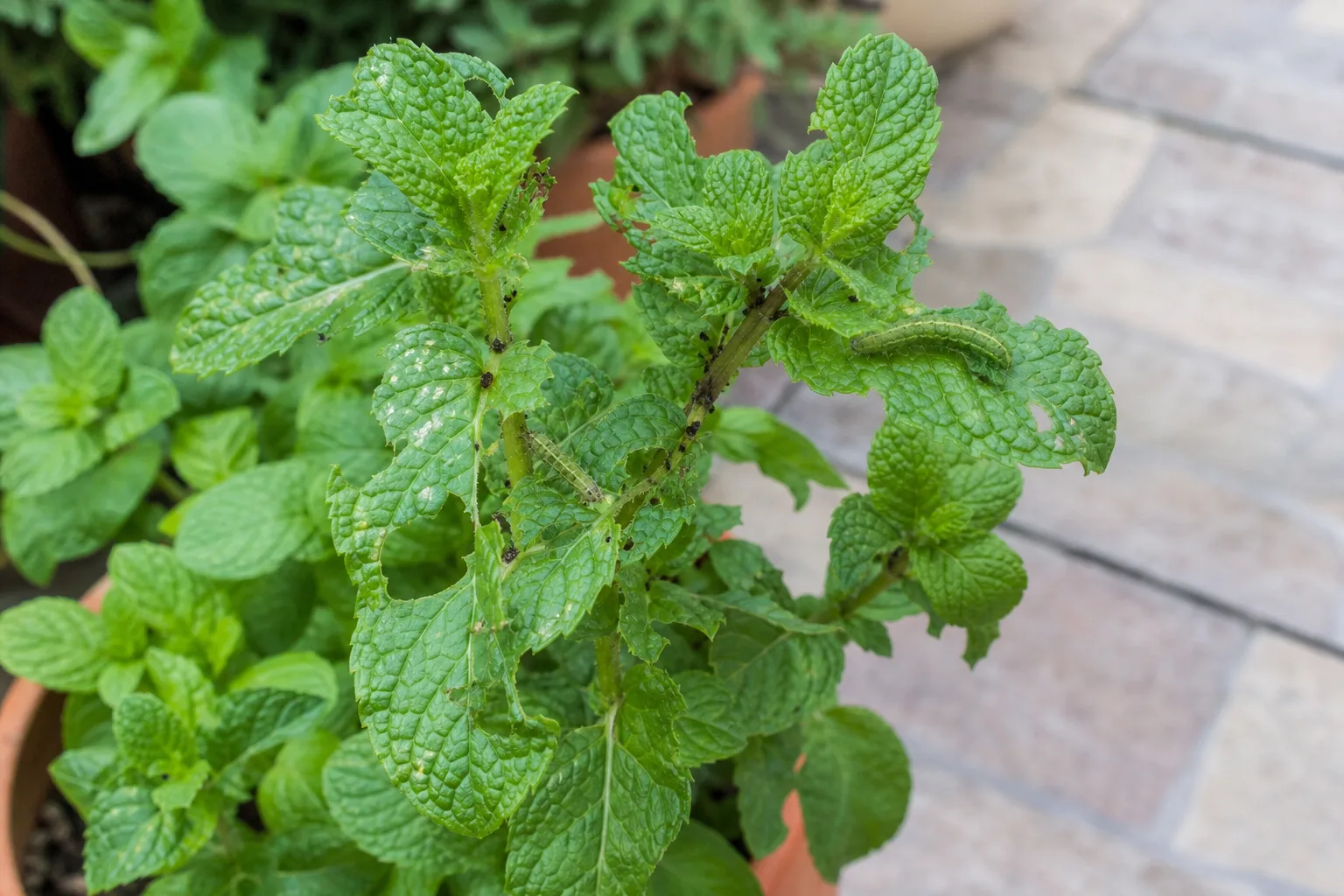
Caterpillars (Loopers) on Mint: ID, Bt & Hand-Picking
This guide covers caterpillars on Mint. See also the general Caterpillars guide, watering, and light pages for this plant.
Caterpillars (Loopers) on Mint: ID, Bt & Hand-Picking
Quick answer
You reach for mint to steep tonight and find dark frass pellets stuck to stems plus ragged leaf edges-that pattern points to alfalfa looper (Autographa californica) or cabbage looper (Trichoplusia ni) caterpillars, not a mystery nutrient problem.
Loopers move with a looping gait (inchworm-style) and feed actively at night while hiding on leaf undersides by day. Because mint regrows quickly from rhizomes, early hand removal often saves the harvest without harsh chemicals-critical when leaves go straight into chutney, tea, or garnish.
First step: inspect undersides at dusk with a torch, handpick loopers into soapy water, and apply Bacillus thuringiensis kurstaki (Bt) only if chewing continues on outdoor plants.
This page owns looper-specific depth on mint. If you are not sure which pest made the holes, start with holes in leaves on mint for shot-hole, slug, and caterpillar routing.
What loopers look like on mint
Alfalfa and cabbage loopers
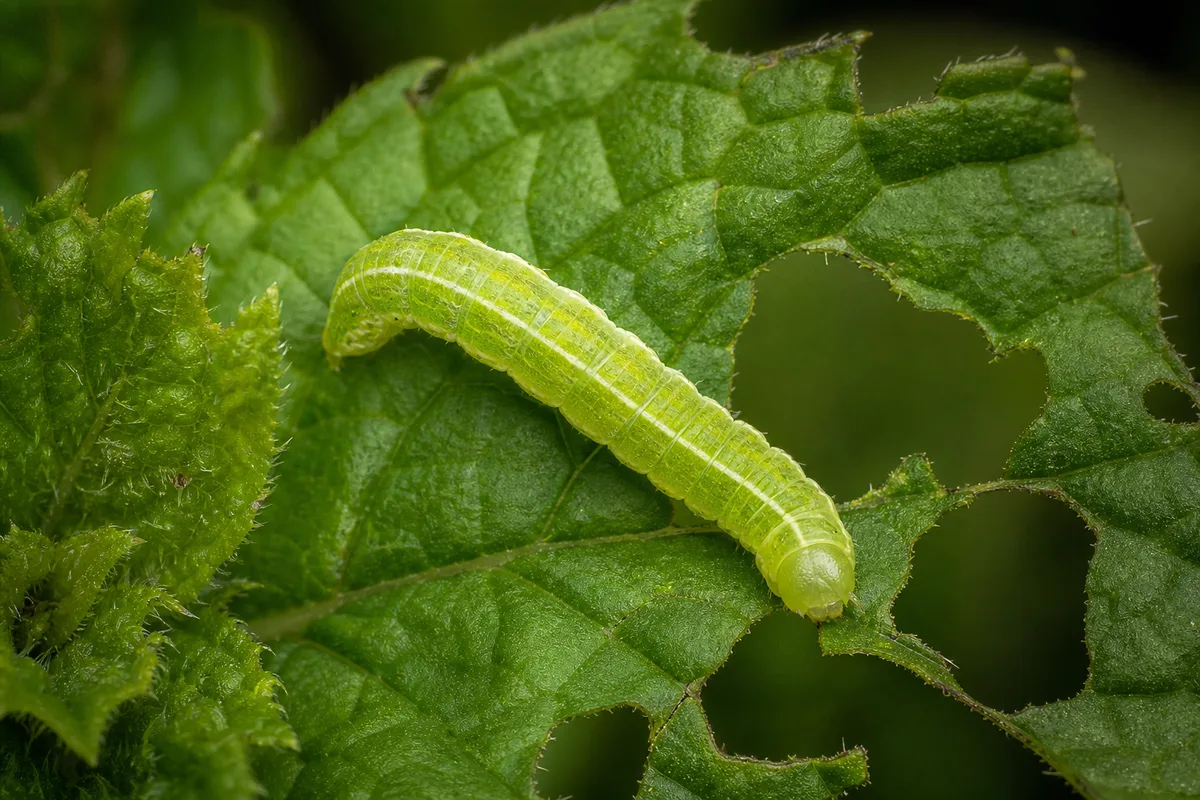
Caterpillars symptoms on Mint - compare with healthy tissue on the same plant.
Both species produce pale green larvae with white lines along the back and sides, ranging from about 1 to 1.5 inches at maturity. Loopers have three pairs of abdominal prolegs-cutworms and armyworms have five- and arch their bodies when they move. Moths are gray-brown with silvery markings on the forewings.
On mint you will usually see:
- Ragged holes starting on outer, soft stems-not the tiny round shot-holes flea beetles leave
- Dark pellet-like frass on leaves and stem joints near feeding sites
- Green or pale caterpillars tucked along undersides or folded leaf tips during the day
- Damage that accelerates over several nights, unlike slow-spreading disease spots
Night feeding behavior
Loopers feed most actively after dusk. A daytime check that finds only holes but no larvae is inconclusive-return with a torch. Small loopers especially hide in folded mint tips where the dense foliage matches their color.
Why mint gets caterpillars
Mint fields and gardens host alfalfa looper and cabbage looper larvae, especially in spring when moths lay eggs on soft new growth. Dense mint tips provide cover and food. Plants near cabbages, legumes, or weedy beds see more moth traffic because loopers feed on a wide host range-eggs laid on brassicas can yield larvae that move onto neighboring mint.
Soft spring flush growth is the highest-risk window. In commercial mint regions, early-season feeding (May–June in the Pacific Northwest) often hits first regrowth leaves; many of those leaves senesce before harvest, and natural parasites and viruses frequently knock populations down before a second summer generation builds. Kitchen pots skip that commercial buffer-one missed week of scouting can strip a small container.
Indoor kitchen mint - usually low risk
Mint kept year-round on a windowsill rarely develops looper outbreaks unless it recently moved indoors from outdoor beds, sat on an open sill while moths were active, or arrived on nursery stock with hitchhiking eggs. If your indoor mint has holes but you never find larvae or frass after two dusk inspections, rule out flea beetle shot-holes and slugs on mint before spraying anything edible.
Patio pots vs in-ground beds
Elevated patio pots can see slightly less ground-level moth traffic than mint planted along vegetable bed edges, but loopers still arrive when mint touches neighboring kale or beans. In-ground mint near brassicas and legumes typically faces the heaviest repeat flushes-scout those borders weekly in spring.
Confirm before you treat
Work through this chain before reaching for sprays:
- Find frass plus live larvae - pellet droppings with a green looper confirms caterpillars, not aphid honeydew (sticky and clear) or slug slime.
- Check at night - loopers feed actively after dusk; daytime-only inspection misses small larvae.
- Watch the gait - looping movement and three proleg pairs separate loopers from cutworms.
- Rule out shot-holes - many tiny round holes without frass point to flea beetles, not loopers. See the table below and holes in leaves on mint.
If you only see holes without larvae, keep checking for three evenings. Small loopers hide in folded tips; abandoning the search after one daytime pass often leads to mis-treatment.
Lookalike symptoms on mint
| Pest or cause | Hole pattern | Droppings / residue | Active when | First fix on mint |
|---|---|---|---|---|
| Alfalfa / cabbage looper | Ragged edges, missing leaf sections | Dark frass pellets on stems | Night (hide by day) | Handpick at dusk; Bt if feeding continues |
| Flea beetle | Many tiny round shot-holes | No pellets; may see jumping beetles | Day | Row cover on soft growth; soapy-water knockdown |
| Slugs / snails | Irregular tears, edge notching | Slime trails on leaves or pot rim | Night | Handpick; remove damp shelter |
| Aphids | Rare true holes; more yellowing / curling | Sticky clear honeydew | Day | Treat aphid colony first-not loopers |
First fix: hand-pick and Bt on outdoor mint
Handpick caterpillars into soapy water at night when you can see larvae actively feeding. That is the safest first response for culinary mint because it leaves no residue on harvestable foliage.
For larger outdoor infestations where handpicking cannot keep pace:
- Apply Bt kurstaki to foliage when larvae are small and actively feeding-caterpillars must ingest Bt for it to work, so cover leaf undersides thoroughly.
- Reapply per product label if rain washes spray away or new small larvae appear-many labels allow repeat applications at 5–7 day intervals when populations persist; never exceed seasonal limits on the label.
- Remove heavily frass-covered leaves you planned to eat.
- Harvest safety: PNW mint looper guidance lists PHI 0 days and REI 4 hr for Bt on mint, meaning many registered formulations allow harvest the same day after spray dries and the re-entry window passes-but always verify your specific product label for mint or herbs before steeping or cooking treated leaves.
Do not harvest the same day as any pesticide treatment unless the label explicitly permits it. For tea and garnish, rinse leaves after any allowed harvest interval.
Can I still use lightly chewed mint?
Torn leaves do not heal-appearance will stay ragged. For tea, broth, or cooked dishes, lightly chewed tips without visible frass can be trimmed and rinsed; heat processing addresses surface contamination from minor feeding. Discard any leaf coated in frass pellets or slime. If you applied Bt, wait until the label REI passes and confirm PHI before using treated foliage-when PHI is 0 days, harvest after foliage is dry and rinse before use.
Recovery timeline and cutback option
Torn leaves remain torn. Clean new shoots typically appear within 10–14 days once larvae are gone or Bt stops feeding and growing conditions stay favorable. Mint regrows vigorously from rhizomes when established-judge recovery by pest-free new tips, not by old chewed foliage greening up.
Severe stripping on a small pot may require cutting stems back to about 5 cm to force bushy regrowth from nodes rather than waiting on damaged top growth. Keep soil evenly moist and provide bright light after cutback; avoid fertilizing until new shoots are several centimeters tall.
What not to do on edible mint
- Do not confuse looper frass with aphid honeydew-honeydew is sticky and clear, not pellet-shaped.
- Do not spray broad-spectrum insecticide on kitchen mint without checking edible-crop restrictions and pre-harvest intervals.
- Do not ignore a second flush-cabbage loopers can complete a life cycle in as little as about 18 days under warm conditions, so mid-summer egg lays can follow spring damage within weeks. Scout weekly through early summer.
- Do not assume Bt failed instantly-it targets feeding larvae; allow several days and one label-directed reapplication before escalating.
How to prevent loopers next season
Scout outdoor mint weekly in spring and early summer, especially after soft new flush and when neighboring brassicas or beans are present. Remove weeds that harbor alternate hosts. Floating row cover on young plants blocks egg laying while still allowing light and water. Harvest tips regularly so you spot larvae when they are small.
After the first generation, watch for a mid-summer repeat-moths can lay again within weeks when temperatures stay warm. A second dusk inspection cycle after you thought the problem cleared catches small larvae before they strip harvestable tips.
Practical checks
Urgency check
Treat as urgent when:
- Most leaves on a small pot are stripped within three nights
- Frass contaminates tips you planned to harvest for food within 24 hours
- Chewing continues after one full week of nightly handpicking
Non-urgent: a few ragged outer leaves on established in-ground mint with parasites visible (black spots on pale larvae indicate parasitization)-beneficials may resolve light pressure without spray.
Best inspection order
- Outer soft stems at dusk with a torch
- Leaf undersides and stem joints for frass pellets
- Looping gait confirmation on any green larvae found
- Nearby vegetable beds (cabbage, beans) for shared looper pressure
- If no larvae after three evenings, pivot to holes in leaves on mint for flea beetle or slug diagnosis
Related mint problems
- Holes in leaves on mint - multi-pest hole routing when ID is unclear
- Slugs and snails on mint - slime trails and night feeding without frass
- Aphids on mint - honeydew vs frass
- Mint care overview - growing conditions that support fast regrowth after pest damage
When to use this page vs other Mint guides
- Mint watering guide - Use for routine moisture checks before assuming caterpillars is the main issue.
- Mint problems hub - Browse all 40 common issues on this species.