Holes in Leaves on Mint: Causes, Checks & Fixes
Quick answer
Holes in Mint leaves come from flea beetles, loopers, slugs, or caterpillars. First step: Match hole shape-shot-holes mean flea beetle; ragged edges mean caterpillars or slugs.
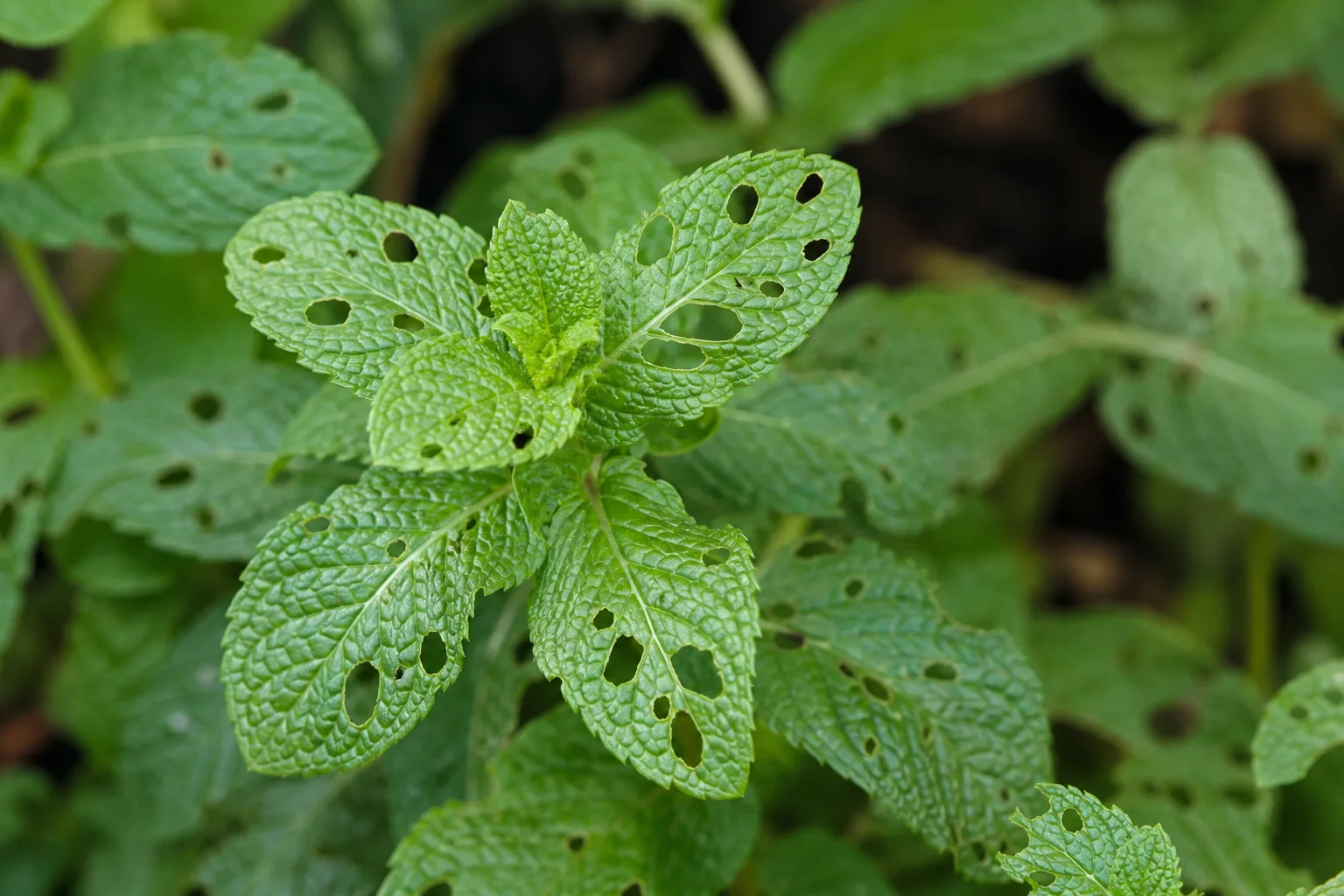
Holes in Leaves on Mint: Causes, Checks & Fixes
This guide covers holes in leaves on Mint. See also the general Holes in Leaves guide, watering, and light pages for this plant.
Holes in Leaves on Mint: Causes, Checks & Fixes
Quick answer
Holes in mint leaves are usually chewing damage from flea beetles, caterpillars, or slugs and snails-not a nutrient problem. Your first fix is not a spray; it is accurate identification by hole pattern and a dusk inspection.
The mint flea beetle typically causes small round shot-holes, while caterpillars and slugs create larger irregular tears. Mint used for tea or cooking should be managed with mechanical control first, then targeted treatment only if needed.
Use this page to ID the chewer. For looper-specific depth, see caterpillars on mint; for slug recovery, see slugs and snails on mint.
Why Mint gets holes in leaves
Mint pushes soft, tender growth that attracts chewing pests, especially in spring flushes and after rain. Flea beetles are common on mints and other garden hosts, and their feeding pattern is often the first clue in outdoor beds. Slugs and snails feed at night and favor damp, shaded container setups, while alfalfa and cabbage loopers often hide on leaf undersides during the day.
If mint is near brassicas, caterpillar pressure can be higher because looper pressure often builds in crucifer-heavy plantings and can overlap with nearby hosts, including mint (Pacific Northwest Pest Management Handbooks). Established mint often survives light cosmetic feeding because rhizomes push replacement growth quickly.
Indoor kitchen mint - usually a hitchhiker
Mint kept year-round on a windowsill rarely develops new chewing damage unless plants recently came indoors from outdoor beds, sat on an open sill while moths were active, or arrived on nursery stock with hitchhiking eggs. If indoor holes appear without frass or slime after two dusk inspections, rule out brief outdoor exposure before spraying anything edible.
What holes look like on Mint
| Pest or cause | Hole pattern | Droppings / residue | Active when | First fix on mint |
|---|---|---|---|---|
| Mint flea beetle | Many tiny round shot-holes | No pellets; may see jumping beetles | Day | Row cover on soft growth; soapy-water knockdown |
| Alfalfa / cabbage looper | Ragged edges, missing sections | Dark frass pellets on stems | Night | Handpick at dusk; Bt if feeding continues |
| Slugs / snails | Irregular tears, edge notching | Slime trails on leaves or pot rim | Night | Handpick; remove damp shelter |
| Leafminers | Serpentine tunnels inside tissue | No open holes or frass | Day (larvae inside leaf) | Remove affected leaves; not a chewing pest |
| Leaf spot disease | Necrotic spots with borders | No frass or slime | - | See leaf spot on mint |
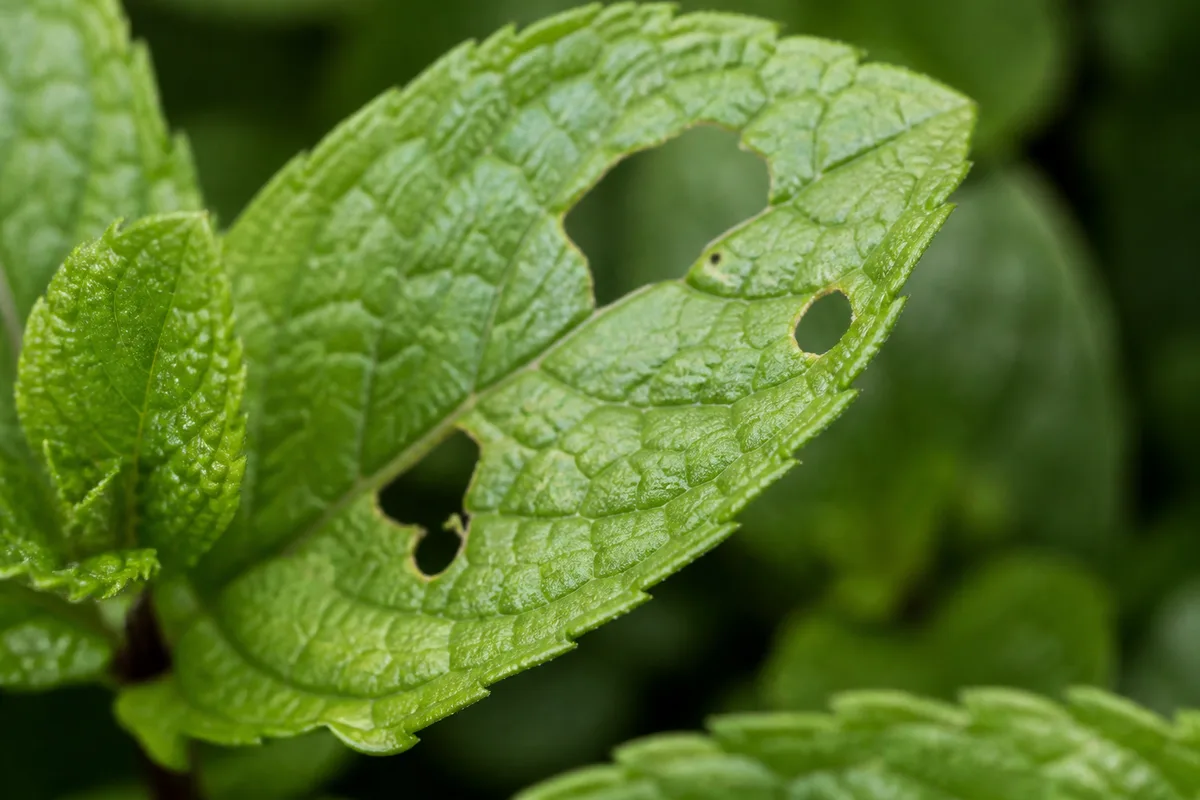
Holes in Leaves symptoms on Mint - compare with healthy tissue on the same plant.
- Flea beetles: many tiny round shot-holes scattered through thinner leaf tissue, sometimes with visible jumping beetles when disturbed.
- Caterpillars (including loopers): ragged holes or missing sections plus pellet-like droppings (frass) near feeding sites. Bacillus thuringiensis (Bt) is useful only for caterpillars, which is why correct ID matters.
- Slugs/snails: irregular edge-notching and larger tears, usually with slime trails on leaves, pot rims, or nearby surfaces.
How to confirm the cause
- Inspect in daylight for shot-holes and jumping flea beetles.
- Inspect again at dusk with a flashlight for slugs, snails, and active caterpillars.
- Check undersides and stem joints for caterpillars and frass.
- Look for slime or droppings to separate slugs from caterpillars.
If you see serpentine tunnels inside leaves instead of open holes, that points to leafminers, not chewers. If tissue is spotty or necrotic without real bite marks, consider disease rather than insect feeding.
First fix for Mint
First, isolate the likely pest group by pattern, then use one targeted action:
- Shot-holes (flea beetles): protect seedlings or fresh regrowth with lightweight row cover and knock visible beetles into soapy water.
- Ragged holes with frass (caterpillars): handpick first; apply Bt only if feeding continues.
- Irregular tears with slime (slugs/snails): handpick at dusk and remove hiding spots under and around containers.
For culinary mint, start with non-residual control and always follow product labels and harvest intervals before using treated leaves.
Step-by-step recovery by pest type
Flea beetle recovery
Reduce pressure for 7–10 days with row cover on vulnerable growth, remove weeds near mint, and harvest heavily damaged tips to stimulate cleaner new shoots. Minor shot-holes on mature outdoor mint are often cosmetic if new growth is healthy.
Caterpillar recovery
Remove larvae by hand, then monitor every evening for several days. If new chewing continues, apply Bt to leaf surfaces where feeding occurs. PNW mint looper guidance lists PHI 0 days and REI 4 hr for Bt on mint-many registered formulations allow harvest the same day after spray dries, but always verify your specific product label before steeping or cooking treated leaves. Recheck label timing for repeat application at 5–7 day intervals if populations persist.
Slug and snail recovery
Handpick after dark, improve airflow, and remove boards, dense debris, and persistent moisture pockets near pots. In persistent outbreaks, use iron-phosphate bait labeled for edible gardens with bait placement away from harvestable foliage.
Recovery timeline
Mint can replace damaged foliage quickly because established plants regrow from stems and rhizomes. Expect cleaner tips within about one to two weeks if feeding is controlled and growing conditions remain strong. Holed leaves do not heal, so judge recovery by new clean growth and stable leaf production, not by old leaves becoming perfect.
Lookalike problems to rule out
- Leafminers: winding tunnels in leaf tissue rather than open chewing holes.
- Leaf spot diseases: dark lesions with yellow halos or defined borders, not irregular bite patterns - see leaf spot on mint.
- Mechanical damage: tears from wind or handling, usually without frass, slime, or repeated progression.
What not to do
Do not apply neem, soap, or other sprays before identifying the pest type. Do not ignore slime trails on mint because night-feeding slugs can escalate quickly. Do not harvest mint the same day as any pesticide treatment unless the label specifically permits it.
How to prevent holes in leaves on Mint
Scout mint weekly through spring and early summer, especially after rain. Elevate pots and clear sheltered damp zones that protect slugs. Keep mint vigorous in bright conditions because healthy plants outgrow light feeding faster.
Mint grows best in moist but well-drained soil and can tolerate full sun to partial shade, which helps maintain replacement growth after minor chewing injury.
When to worry
Treat holes as urgent when new growth is stripped faster than it forms, seedlings lose most leaf area, or chewing continues despite one full week of targeted control. If pest identity remains unclear, local extension resources can help confirm diagnosis for edible-herb beds.
Related mint problems
- Mint overview
- Caterpillars on Mint
- Slugs and Snails on Mint
- Aphids on Mint
- Spider Mites on Mint
- Leaf Spot on Mint
When to use this page vs other Mint guides
- Mint watering guide - Use for routine moisture checks before assuming holes in leaves is the main issue.
- Mint problems hub - Browse all 40 common issues on this species.