Slugs and Snails on Mint: Causes, Checks & Fixes
Quick answer
Slugs and snails chew irregular holes in mint leaves overnight and leave shiny slime trails on foliage and pot rims. First step: go out after dark with a flashlight and hand-pick every slug on the plant, pot base, and nearby paving before scattering food-safe bait.
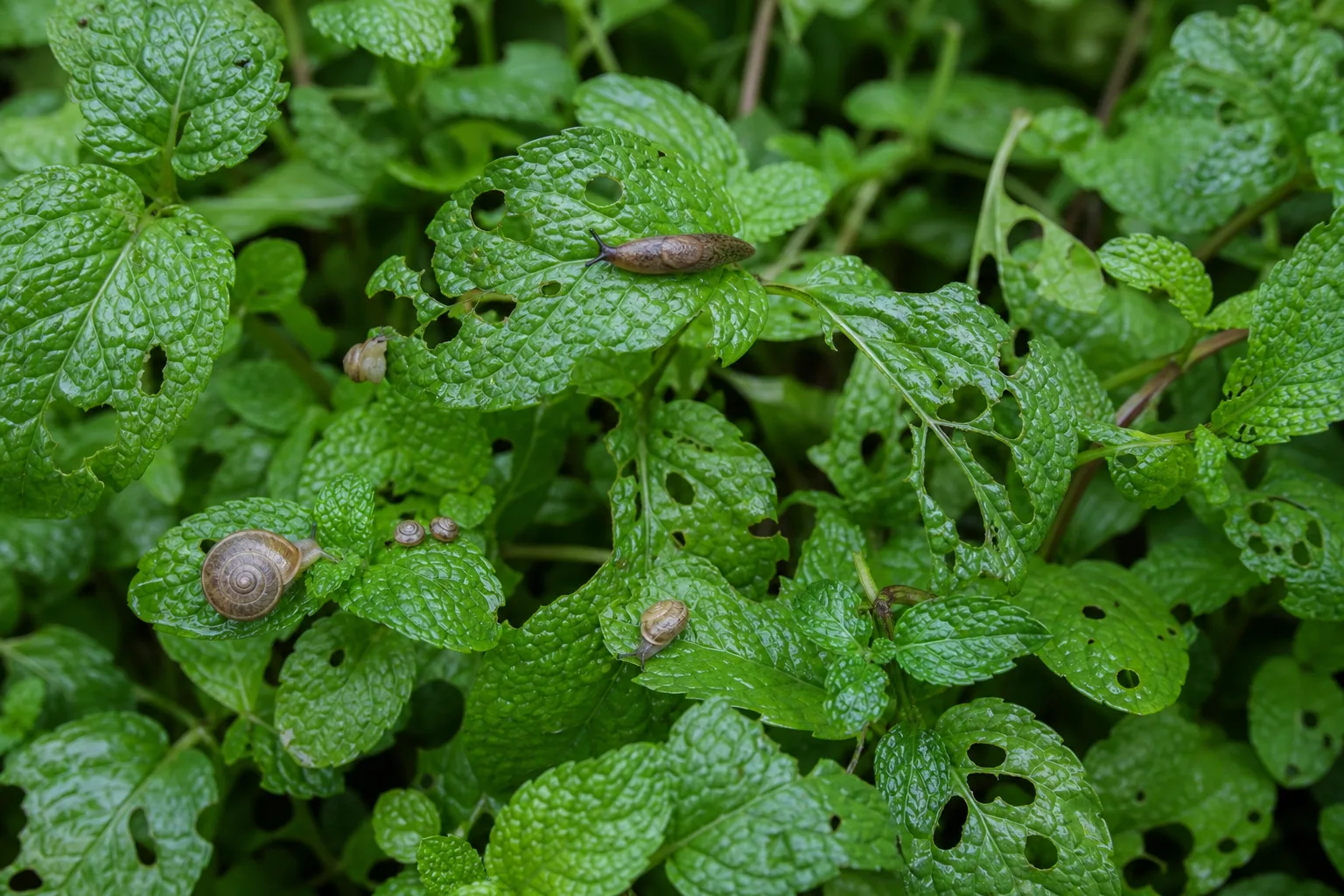
Slugs and Snails on Mint: Causes, Checks & Fixes
This guide covers slugs and snails on Mint. See also the general Slugs and Snails guide, watering, and light pages for this plant.
Slugs and Snails on Mint: Causes, Checks & Fixes
Quick answer
Slugs and snails on mint (Mentha spp.) show up on outdoor patio pots, balcony herb gardens, and in-ground beds-not on mint that stays indoors year-round. After cool wet nights they chew large, irregular holes in soft herb leaves and leave silvery mucus trails on foliage, pot rims, and paving. That slime signature separates slugs from flea beetle shot-holes and caterpillar frass on the same plant.
First step: after dark, inspect the mint with a flashlight and hand-pick every slug or snail on leaves, stems, the pot underside, saucer, and nearby floor. Drop them into soapy water. Confirm active feeders before scattering bait or rearranging the whole herb display.
Why outdoor and balcony mint gets slugs and snails
Mint is a soft, moisture-loving herb whose rhizomes spread aggressively when grown in open soil or large containers. That growth habit creates exactly the habitat slugs prefer: dense lower leaves, damp mulch, and shaded soil at the pot base.
Patio and ground-level placement. Low herb pots on tiles, deck boards, or damp saucers sit in slug travel corridors. Mint’s spreading runners that touch soil or paving give slugs a ladder from ground to foliage.
Consistent moisture. Mint prefers evenly moist soil-not bone dry. Saucers that stay full, mulch tucked against stems, and morning dew on dense lower leaves keep the microclimate slugs need. This is normal mint care, but it means outdoor mint faces more slug pressure than drought-tolerant herbs.
Spring flush vulnerability. Cool wet nights in spring coincide with tender new shoots-the first leaves many gardeners want for tea and cocktails. Slugs feed primarily at night and on cloudy days, so damage appears before you see the pest.
In-ground vs container. In-ground mint mats can hold moisture and debris at the crown, especially where runners overlap. Containers elevated on feet dry faster underneath-but only if you actually empty saucers and lift pots to inspect.
The companion-planting myth. Mint is sometimes listed as a pest deterrent in companion planting charts, yet soft spearmint and peppermint leaves are still easy targets for slugs on herb plantings. Deterrent reputation does not mean immunity; confirm with slime trails, not assumptions.
Indoor windowsill mint without slime trails rarely has slugs unless the pot recently came inside from a patio.
What slug damage looks like on mint
Slug and snail feeding is mechanical and overnight. On mint, expect:
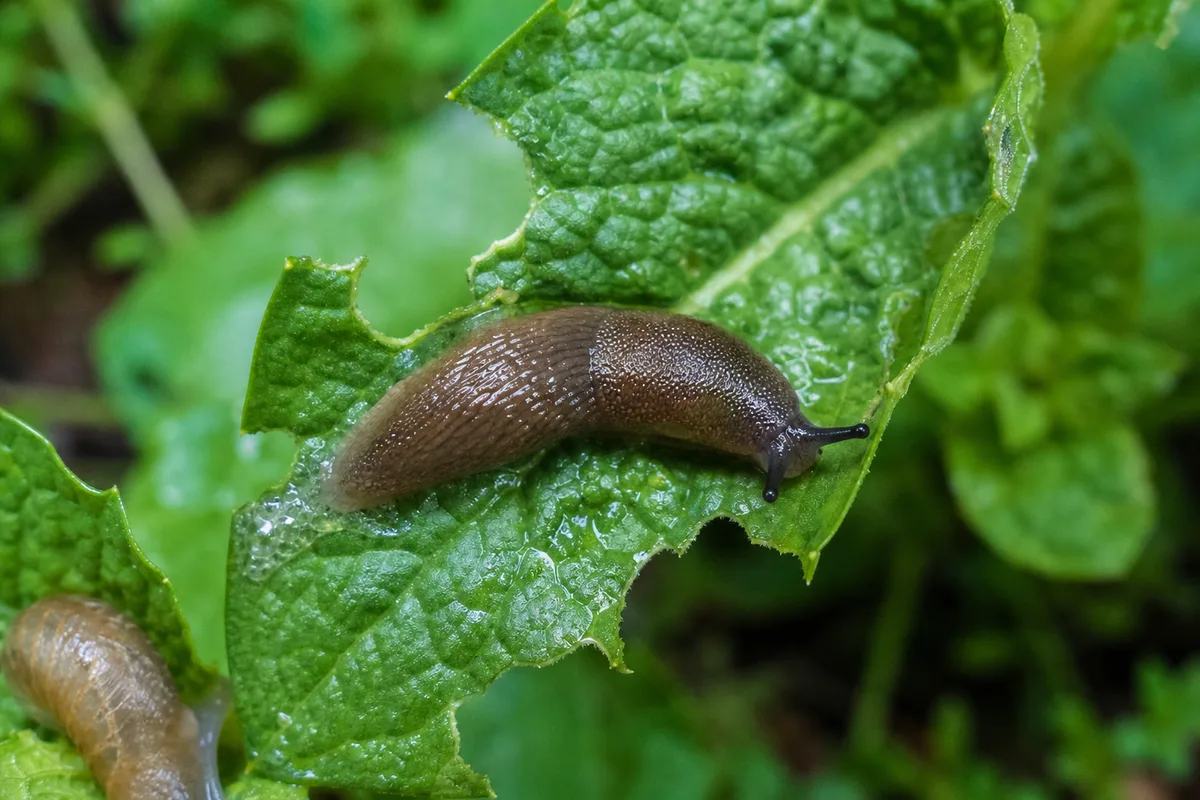
Slugs and Snails symptoms on Mint - compare with healthy tissue on the same plant.
- Irregular holes with ragged edges in soft leaves-often lower foliage and outer runners, not neat pinhead circles.
- Silvery slime trails on leaf surfaces, square stems, pot rims, and patio stones-the clearest slug signature.
- Chewed new shoots at the spring flush when slugs reach stem tips before you harvest.
- Damage clustered at the pot base where lower leaves shade the soil and hide slugs by day.
- Visible slugs or snails under the pot, inside a cache pot, or on stems during a dusk check.
Unlike flea beetles, you will not see tiny round shot-holes scattered across the leaf or beetles that jump when disturbed. Unlike caterpillars on mint, there are no dark frass pellets on leaves below the holes. Peppermint and spearmint leaves are similarly soft; both get chewed when slugs are present.
How to confirm slugs-not flea beetles or caterpillars
Slime trails plus ragged overnight holes confirm slugs faster than any single torn leaf.
Check in this order:
- Morning slime scan - Follow shiny trails from chewed leaves to the pot base, saucer, cache pot, or paving.
- Lift the pot - Slugs hide under flower pots and in debris during the day. Turn the pot slightly and inspect the underside and any standing saucer water.
- Dusk torch inspection - Slugs and snails feed primarily at night. A flashlight after sunset often reveals them on mint stems and leaf edges.
- Rule out flea beetles - Look for numerous small holes less than 1/8 inch across with a shot-hole pattern and tiny jumping beetles by day. That pattern points to holes in leaves from flea beetles, not slugs.
- Rule out caterpillars - Search leaf undersides and soil surface for larvae and frass pellets. Loopers chew too but leave pellets, not mucus on the pot rim.
- Trace recent weather - Did cool rain precede the damage? Slugs surge after wet nights on outdoor herbs.
If you find slugs under the pot but no slime on foliage yet, keep watching-damage may be starting on lower runners first.
Lookalike symptoms on mint
| Sign | Slugs / snails | Flea beetles | Caterpillars |
|---|---|---|---|
| Hole shape | Large, irregular, ragged | Tiny round shot-holes (< 1/8 in.) | Irregular, often with stem stripping |
| Slime trail | Yes, silvery on leaves or pot | No | No |
| Pest visible | Under pots at dawn; active at dusk | Small jumping beetles by day | Larvae and frass on undersides |
| Timing | After wet nights | Spring flush on young growth | Variable; frass confirms |
Flea beetles leave shot-hole patterns without slime-see the dedicated holes in leaves guide for beetle-specific fixes.
Caterpillars and loopers chew ragged gaps too but leave frass pellets and no mucus trails on paving.
Mechanical tears from dragging a pot or brushing past a runner can tear leaves without silvery trails.
Old lower leaves naturally age and yellow; slugs punch holes through otherwise green, firm tissue on active growth.
First fix for mint
Hand-pick at dusk before anything else. Removing active feeders tonight stops damage faster than bait alone, which takes time after slugs consume it.
After picking:
- Lift the pot and scrape debris, dead leaves, and slug eggs from the underside and saucer.
- Empty standing saucer water so the pot base dries faster overnight.
- Scatter iron phosphate bait per label around the base of the pot and along paving edges where slime trails lead-not on mint leaves. Iron phosphate stops feeding quickly and is safer around pets and wildlife than metaldehyde products. Most iron-phosphate-only labels allow use on herbs and up to the day of harvest-read your specific product label before harvesting; combination baits with spinosad may require a waiting period.
- Apply copper tape on the pot rim or stand legs where slugs climb from below-wide enough tape matters, and no leaf bridges should cross the barrier.
- Elevate the pot on feet so the base dries and slugs lose daytime shelter.
Repeat the dusk pick for several nights until slime trails and fresh holes stop. Beer traps buried level with the soil can supplement hand-picking on in-ground mint beds-check and refill every few days.
Do not pour salt on soil or slugs; salt harms mint roots and rhizomes. Do not spray insecticidal soap for slug holes-it targets insects, not mollusks.
What not to do
Do not pile bait on foliage or stems-it belongs on soil and paving near slug travel routes. Do not assume every hole is a slug without checking for flea beetles and caterpillar frass.
Do not use metaldehyde pellets on porch herbs if pets or children access the area; iron phosphate is the better default for edible mint. Metaldehyde is also restricted or banned in some regions-check local rules before buying.
Do not harvest mint for tea or cocktails the same evening you applied any bait unless the label allows same-day harvest. When in doubt, wash leaves thoroughly and wait until the label interval passes.
Do not mulch tightly against mint stems on wet patios-that keeps the crown damp and gives slugs daytime cover.
Recovery timeline
Holed mint leaves do not heal. Judge success by what happens next: new shoots at stem tips should open without fresh holes within one to two weeks once nightly feeding stops. Mint regrows from rhizomes quickly when light and watering stay steady.
A mature patio spearmint with a few torn lower leaves you planned to harvest anyway usually keeps flushing once slugs are gone. Small spring seedlings stripped to stubs need faster intervention-protect young plants with copper barriers and dusk patrols before damage, not after.
Holed leaves are safe to eat once slugs are gone if you wash them well-flavor comes from oils in the tissue, and cosmetic holes do not make mint toxic. Discard leaves that are slimy, rotting, or heavily soiled.
How to prevent slugs and snails on mint
Prevention combines habitat changes with mint’s normal harvest rhythm:
- Elevate pots on feet or a stand so saucers drain and the underside dries.
- Water in the morning so foliage and paving dry before night-pair with the mint watering guide so soil stays moist without constant saucer puddles.
- Harvest lower leaves regularly for kitchen use; that opens airflow at the base and removes slug hiding shade.
- Clear debris under pots, saucers, and runner mats where slugs hide during the day.
- Scatter iron phosphate around pot perimeters after rainy spells-not on leaves.
- Keep runners off damp paving-trim stems that root into wet ground beside the pot.
- Repeat dusk picks after cool wet weeks in spring and fall.
For in-ground mint, keep the crown from sitting under a wet leaf mat and consider copper banding around raised bed edges in severe infestations.
When to worry
Cosmetic holes on a few lower leaves of one patio mint after a rainy week are annoying, not fatal-hand-pick, bait the floor route, and elevate the pot. Treat as urgent when growing tips are shredded nightly, slime covers multiple stems, or a small seedling loses most of its foliage within days.
If hand-picking and iron phosphate for two weeks fail and slime trails keep appearing, look for a persistent moisture source-an always-full saucer, mint runners rooting into damp mulch beside the pot, or a pot sitting directly on a wet deck board-and fix placement before switching to stronger controls.
Mint care cross-check
Slug damage sometimes overlaps with care that keeps mint weak. Confirm the pot drains, the top inch of mix dries slightly between drinks per your watering rhythm, and the plant gets enough sun for compact growth as described in the mint overview. Fixing chronic overwatering on Mint helps both slug prevention and root health on the same herb.
Container mint that sprawls over the pot rim onto damp ground invites slugs up the stems-harvest and trim runners as part of normal kitchen use, not only as pest control.
Conclusion
Slugs on mint are an outdoor placement and moisture problem more than a mystery disease. Slime trails plus ragged overnight holes tell you what you are fighting; flea beetles, caterpillars, and indoor stress do not leave mucus on the pot rim. Pick feeders after dark, keep saucers dry, bait slug routes with iron phosphate-not foliage-and read bait labels before harvest on edible leaves. Once feeding stops, watch new shoots at the stem tips-that is where recovery shows on rhizomatous mint. For other hole patterns on the same plant, use the holes in leaves and caterpillars guides before you spray.
When to use this page vs other Mint guides
- Mint watering guide - Use for routine moisture checks before assuming slugs and snails is the main issue.
- Mint problems hub - Browse all 40 common issues on this species.