Curling Leaves on Mint: Causes, Checks & Fixes
Quick answer
Curling on mint usually starts when aphids feed on soft new shoot tips-the same tissue you harvest for tea. First fix: isolate the pot and rinse new growth and leaf undersides with a steady stream of water before deciding on sprays.
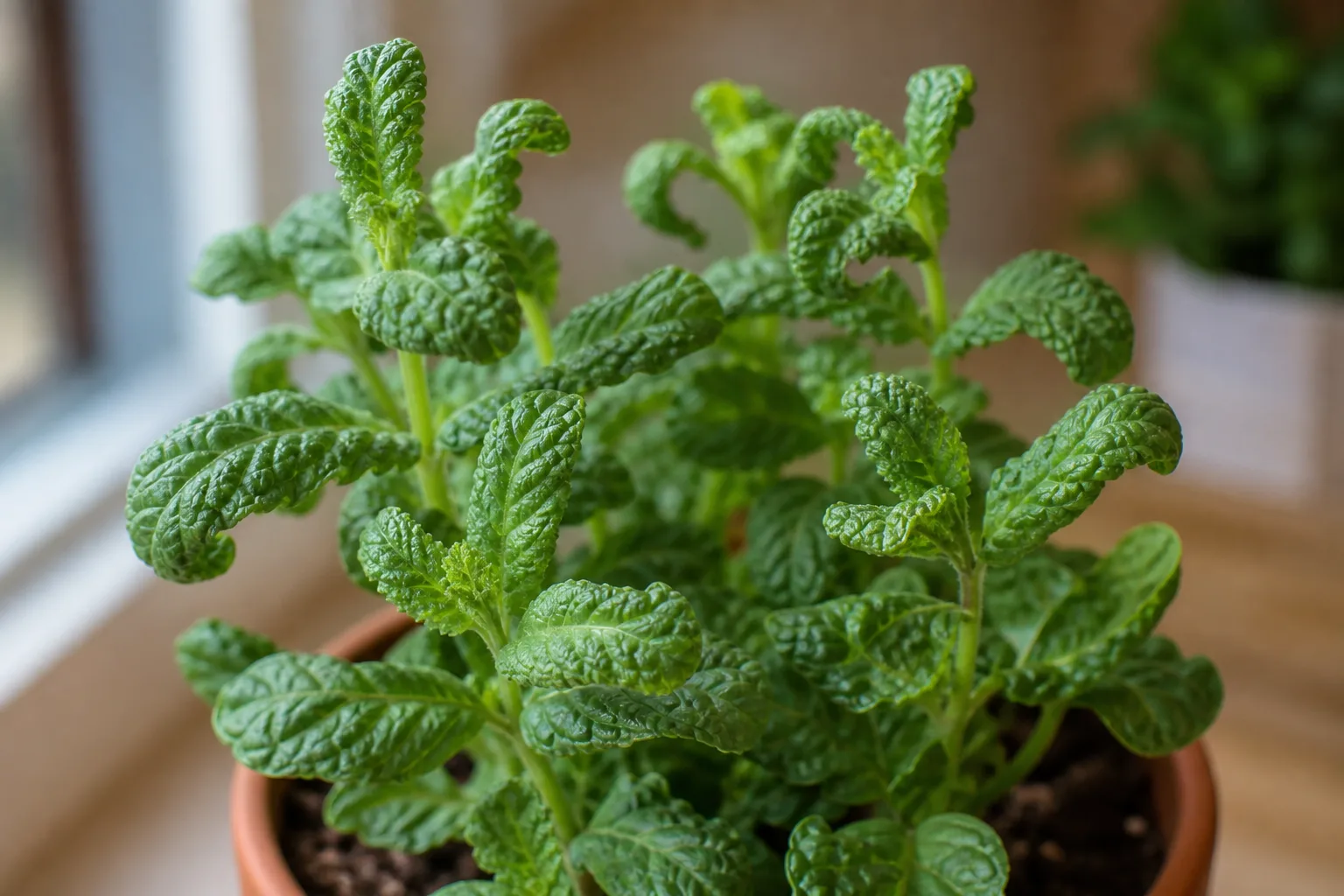
Curling Leaves on Mint: Causes, Checks & Fixes
This guide covers curling leaves on Mint. See also the general Curling Leaves guide, watering, and light pages for this plant.
Curling Leaves on Mint: Causes, Checks & Fixes
Quick answer
Use this page when mint shoot tips pucker, twist, or crumple-especially the tender growth you pinch for tea. On kitchen mint, aphid feeding is the most common trigger: soft-bodied insects cluster on new shoots, leave sticky honeydew, and can stunt and distort stems and leaves as populations build.
First fix: isolate the pot away from other herbs and rinse new shoots and leaf undersides with a steady stream of water. That mechanical knock-down is the safest start on an edible plant and matches home IPM guidance to dislodge aphids with water before sprays. Only after you still see living aphids should you follow with labeled contact treatments.
Curl often hits the exact tips you planned to harvest, so early action matters. Once leaves tighten around colonies, contact sprays reach fewer insects-a pattern extension sources note when curled tissue shelters aphids.
Curling leaves vs. aphids vs. drought - which guide to use
Mint leaf curl routes to different pages depending on what you confirmed:
| Your pattern | Best guide | Why |
|---|---|---|
| Puckered new tips + insects, honeydew, or shed skins on undersides | Aphids | Confirmed sap feeders-not a symptom-only triage |
| Tip curl only on newest shoots + sticky residue + ant traffic | This page | Symptom triage before or during early aphid treatment |
| Whole plant limp + dry soil throughout + no stickiness | Underwatering or water stress | Turgor loss, not localized tip distortion |
| Edge curl in afternoon heat + warm pot + moist soil | Heat stress | Environmental curl without pest signs |
| Fine stippling + webbing on undersides | Spider mites | Mite damage mimics curl on new growth |
| Silver scars or fast-running specks inside buds | Thrips | Distortion without classic aphid clusters |
When in doubt, inspect the newest three to five shoot tips and check soil moisture 2–3 cm down before choosing a fix. Treating drought-stressed mint with soap while the root zone is dry wastes time; spraying fungicide when aphids are visible wastes a harvest week.
What curling looks like on Mint
On mint (Mentha spp.), pest-related curl usually appears as puckered, crumpled, or twisted leaves at shoot tips while older lower foliage may still look flat. That localization matters: drought and heat stress more often affect the whole stem’s turgor, not just the newest node.
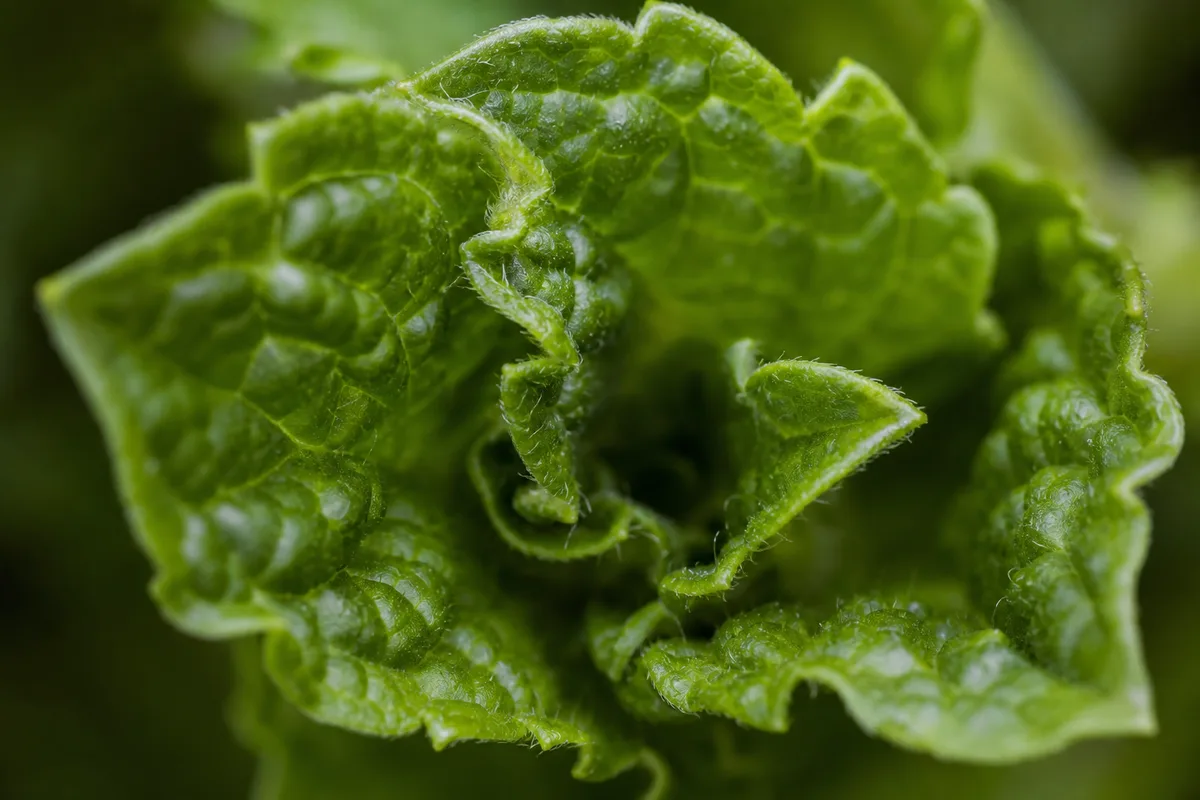
Curling Leaves symptoms on Mint - compare with healthy tissue on the same plant.
Early aphid-related curl:
- Young leaves cup inward or twist along the midrib at stem tips
- Glossy, sticky honeydew on leaves or pot rims
- Pale cast skins on undersides from molting nymphs
- Ants on stems farming honeydew
- Optional black sooty coating where honeydew persists outdoors
Progressed curl:
- Most new flushes stay distorted and fail to open flat
- Stems shorten between nodes; harvest quality drops
- Tips pack so tightly that rinsing no longer reaches hidden colonies
What drought or heat curl looks like instead:
- Leaves roll lengthwise or droop along the whole stem, not only the top bud
- Pot feels light; mix pulls from container sides
- Damage worsens in late afternoon on a sun-baked balcony pot
- No stickiness, no insects, no shed skins under magnification
Mint naturally prefers medium to wet moisture and performs poorly in repeatedly dry soil-so a dehydrated windowsill pot can mimic pest stress if you inspect leaves but skip the root zone.
Scenario checkpoints (no photo required):
- Windowsill pot: curl clusters on the sun-facing top shoots; lower shaded stems may look normal
- Outdoor container: curl plus sooty mold on upper leaves after dry spells when aphid numbers peak
- In-ground bed: spread is slower; look for ant lines between spearmint and peppermint patches-spearmint often hosts larger mint aphid populations than peppermint in commercial fields
Why Mint gets curling leaves
Most likely cause: aphids on new shoots
The mint aphid (Ovatus crataegarius) is a documented mint pest: wingless forms are apple green to yellow-green, roughly 1.5–2 mm long, and large populations stunt and distort stems and leaves while secreting honeydew that can sunburn foliage or support sooty mold. Green peach aphid and other species also colonize mint; management is similar when soft new tissue is the feeding site.
Aphids pierce plant cells and suck sap. That feeding sometimes causes leaf distortion even after insects are gone-LSU AgCenter extension staff documented puckered greenhouse mint where only shed skins and parasitized “mummy” bodies remained.
Why kitchen mint is a frequent target
Mint is pinched constantly for harvest, so plants keep producing tender tips aphids prefer. Crowded herb shelves, warm protected balconies, and dense indoor pots create pockets where rinsing misses colonies tucked between overlapping stems.
High-nitrogen feeding pushes soft flushes that aphids colonize quickly. UC IPM notes that over-fertilization can worsen aphid buildup; modest feeding suits edible mint better than chasing oversized leaves.
Environment-specific triggers
| Growing setup | Why curl shows up here | What to check first |
|---|---|---|
| Sunny windowsill pot | Fast soft regrowth + dry air between waterings | Undersides of top shoots, then soil moisture |
| Outdoor container | Heat-loaded pot + late-summer aphid peak | Stickiness on tips, pot weight, afternoon wilting |
| Shared herb shelf | Aphids spread from basil, peppers, or new nursery pots | Neighboring plants before spraying mint |
| Greenhouse or cold frame | Protected warmth speeds aphid generations | Newest buds, then ventilation and spacing |
RHS mint guidance recommends growing mint in containers because rhizomes spread aggressively in beds-pots also dry faster, so drought curl and aphid curl can overlap on the same plant if you only look at leaves.
How to confirm the cause in about three minutes
Work through this order so you can decide before reaching for sprays:
- Inspect the newest 3–5 shoot tips - Aphid curl localizes here; nutrient issues more often show on older leaves without insect clusters.
- Flip leaves and check undersides - Look for live aphids, honeydew shine, or white cast skins. Swollen tan or gray aphid mummies mean parasitic wasps are already working-avoid broad sprays that kill helpers.
- Watch for ant traffic - Ants on mint stems strongly suggest honeydew producers nearby.
- Feel for stickiness - Tacky leaves point to sap feeders. Dry, crispy wilt without stickiness points to drought or heat.
- Probe soil 2–3 cm down - Bone-dry mix with limp whole stems fits water stress. Evenly moist soil with puckered tips only fits aphids or lookalike pests better.
- Magnify if needed - Fast tan specks suggest thrips; fine stippling with webbing suggests mites instead of aphids.
Confirmed aphid curl = visible aphids or fresh honeydew on distorted new growth, not yellowing alone. Confirmed non-aphid curl = no insects, no stickiness, and soil or heat pattern matches drought or heat stress-fix environment first and re-check new growth in three to five days.
First fix for Mint (harvest-safe order)
Isolate the mint away from other kitchen herbs and rinse shoot tips and leaf undersides with a steady stream of water.
That sequence protects your harvest window:
- Move the pot - Break the bridge to basil, oregano, and peppers on the same shelf.
- Rinse, do not coat - Focus water on the softest tips and undersides. UC IPM lists strong water spray as an early aphid control step; LSU AgCenter recommends the same for home garden herbs.
- Pinch only the worst tips - Bag and discard heavily infested, tightly curled tissue instead of composting indoors. Leave partially clean lower stems if you need garnish this week and they show no insects.
- Hold sprays until reinspection - If living aphids remain after two rinses, see the step-by-step recovery below or the full aphids guide for soap, oil, and label details.
Edible-crop caution: Do not harvest leaves coated in fresh honeydew or recently treated with any product until you have met the label’s harvest or re-entry interval. When tea or garnish is urgent, use clean lower growth only and treat curled tips separately.
Step-by-step recovery
If curl continues after the first rinse, move in this order:
- Repeat water rinse every 2–3 days for one week - Knock down new nymphs before they tighten the next flush.
- Correct moisture if soil was dry - Water until excess drains; mint in pots needs regular moisture in the growing season without staying waterlogged.
- Apply labeled insecticidal soap if colonies persist - Full underside coverage matters because aphids hide under curled leaves. University of Minnesota Extension lists insecticidal soap as a contact option for indoor aphids; confirm the product is labeled for herbs and read harvest intervals before picking.
- Reinspect new tips twice weekly - Repeat contact treatments only as the label allows.
- Keep spacing and airflow - Thin overcrowded stems so rinses reach the center of the pot.
Avoid fungicide as a first response when pests are visible. Avoid heavy nitrogen feeds during active curl-that fuels more soft tissue aphids prefer.
Recovery timeline and what improvement looks like
Existing curled leaves usually stay misshapen; judge success by new flushes, not old tissue.
Typical checkpoint pattern (potted kitchen mint, water rinse plus one soap application if needed):
| Day | What you should see |
|---|---|
| 0 | Isolate, rinse, pinch worst tips |
| 1–3 | Fewer live aphids on reinspection; honeydew stops spreading |
| 7–10 | Next small flush opens flatter; stickiness reduced on new tissue |
| 14+ | Two clean flushes in a row = treatment working; old curled leaves can be snipped for aesthetics |
If each new flush still curls and stays sticky after two weeks of proper coverage, reassess neighboring infested herbs, rinse technique, and whether mites or thrips fit better. Growth that stalls entirely despite moist soil and pest control may need a harder prune and longer isolation.
Signs the problem is worsening:
- Curl spreads to most new shoots within a few days
- Honeydew coats multiple stems you planned to harvest
- Winged aphids appear on nearby herbs
- New growth stops while lower leaves yellow with wet, sour soil-escalate to root rot or overwatering checks
When this is not aphids
| What you see | More likely cause | Quick differentiator | Next step |
|---|---|---|---|
| Tip puckering + stickiness + insects on undersides | Aphids | Localized to soft shoots; ants often present | This page → aphids |
| Whole stem limp + dry soil + no stickiness | Drought / water stress | Pot light; wilt uniform, not tip-only | Underwatering |
| Afternoon roll-up + hot pot rim + moist soil | Heat / sun stress | Worsens mid-day; no honeydew | Heat stress |
| Fine stippling + bronze + webbing | Spider mites | Speckled leaves, mites under lens | Spider mites |
| Silvery scars inside buds; fast insects | Thrips | Distortion without aphid clusters | Thrips |
| Sudden twist after lawn herbicide use | Synthetic auxin drift | Nearby broadleaf weed spray timing | Remove affected growth; flush soil if residue suspected |
| Orange pustules on undersides | Mint rust | Fungal spots, not insect honeydew | Rust disease |
Herbicide drift from products such as 2,4-D can also curl leaves-relevant if mint sits beside recently sprayed turf or if compost contained herbicide-contaminated grass clippings.
Mistakes to avoid
- Spraying fungicide when aphids are visible - Wastes time and adds residue to edible tissue.
- Fertilizing heavily during active curl - Soft nitrogen-rich flushes attract faster aphid buildup.
- Composting infested tips indoors - Crawlers can reinfest clean pots.
- Harvesting honeydew-coated or freshly sprayed leaves - Wait for clean regrowth or label-safe intervals.
- Ignoring ants - They protect honeydew producers and signal ongoing feeding.
- One rinse then stop monitoring - Mint aphids can complete many generations per year in warm conditions; reinspect through the next flush.
How to prevent curling next time
- Scout new tips weekly during rapid spring and summer growth-especially before big harvests.
- Quarantine new herb starts for two weeks before placing them on a shared kitchen shelf.
- Grow mint in pots with consistent moisture rather than repeated dry-down cycles on a hot sill (RHS).
- Space pots so rinses reach the center and predators can access stems.
- Feed modestly - Enough vigor for harvest without pushing oversized soft tips.
- Rinse outdoor mint after dry spells when aphid numbers historically peak on your balcony or patio.
Full culture basics-light, water rhythm, and Mint repotting guide-live in the mint overview and watering guide.
When to escalate
Treat as urgent when:
- most new tips curl within a few days,
- honeydew coats stems you need for harvest this week,
- winged aphids appear on neighboring kitchen herbs,
- or growth stalls more than two weeks despite rinsing and labeled contact treatment.
Escalation branch:
- Hard prune - Cut back to healthy lower stems; bag all curled material.
- Isolate 14+ days - Break reinfestation from shared shelves.
- Switch to full aphid protocol - See aphids on mint for soap, oil, biological controls, and label-first edible handling.
- Rule out lookalikes - If no insects after moisture correction, open spider mites or thrips guides instead of repeating soap.
At that point, reset your weekly tip inspection before the next harvest cycle rather than stacking more products on the same flush.
About this guide
This guide was written by sai-ananth and reviewed by the LeafyPixels Review Board against botanical references including the Pacific Northwest Mint-Aphid Handbook, UC IPM aphid guidance, LSU AgCenter mint distortion case note, Oregon State Insects on Mint bulletin, Missouri Botanical Garden Mentha profile, University of Minnesota Extension indoor aphid management, RHS mint growing guide, and LeafyPixels aphids, watering, and overview pages. Recovery-day checkpoints and windowsill-vs-outdoor routing tables are editorial diagnostics synthesized from extension pest biology and mint harvest habit-not a single published field trial.
Conclusion
Curling mint tips are usually an early aphid signal on the tissue you harvest-not a mystery disease. Isolate, rinse new shoots and undersides, then confirm whether living aphids remain before sprays. Old curled leaves rarely flatten; watch for clean new flushes instead.
Routing reminder: confirmed insects and honeydew → aphids; dry soil and whole-plant wilt → underwatering; heat-loaded afternoon curl → heat stress. Full species context lives in the mint overview.
When to use this page vs other Mint guides
- Mint watering guide - Use for routine moisture checks before assuming curling leaves is the main issue.
- Mint problems hub - Browse all 40 common issues on this species.
- Spider Mites on Mint - Different entry point when symptoms overlap with curling leaves.
- Underwatering on Mint - Different entry point when symptoms overlap with curling leaves.
- Not Enough Light on Mint - Different entry point when symptoms overlap with curling leaves.